Artwork
Garden for Solitary Enjoyment

Garden for Solitary Enjoyment is an unspecified painting by the Ming dynasty painting artist Qiu Ying. It dates from 1534 and is held in the collection of the Cleveland Museum of Art.
About this work
Qiu Ying painted it 500 years later, but the scene feels timeless, like a snapshot of someone’s peaceful afternoon.
You see a quiet garden with winding paths, pavilions, and scholars strolling under willow trees.
This painting shows a real place—Sima Guang’s garden, built in 1073. Every building and plant honors a different Chinese poet or thinker. Qiu Ying painted it 500 years later, but the scene feels timeless, like a snapshot of someone’s peaceful afternoon.
If you like this, look up *china, ming dynasty (1368–1644)* for more paintings of gardens and scholars.
Overview
Garden for Solitary Enjoyment is a painting depicting a serene garden scene, created by Qiu Ying. The artwork illustrates a real historical site, Sima Guang's garden, built in 1073 in Luoyang, Henan province.
Subject & Meaning
The garden's structures and plants reference various historic Chinese figures, including poets and thinkers. Sima Guang, the garden's creator, wrote about the joy he derived from his retreat, comparing his activities to those of revered historical personages.
Technique & Style
Qiu Ying's painting is characterized by its tranquil atmosphere, with winding paths, pavilions, and scholars strolling under willow trees. The scene conveys a sense of timelessness, capturing a peaceful moment in the garden's history.
History & Provenance
Qiu Ying's work was influenced by an earlier, 11th-century depiction of Sima Guang's garden. It became a model for numerous copies produced in Suzhou workshops during the Ming dynasty, indicating its appeal to garden owners of the time.
Artist & collection


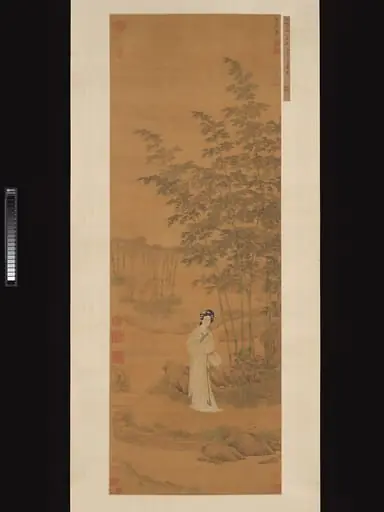 明 傳仇英 文玉圖 軸圖 軸|Lady in a Bamboo Grove
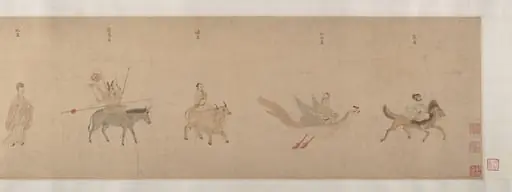 明 傳仇英 五星二十八宿神形圖 卷|Divinities of the Planets and Constellations
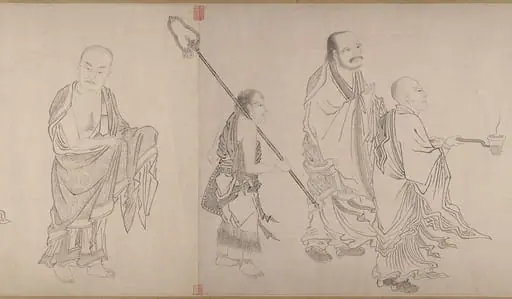 明 傳仇英 十六羅漢圖 卷|The Sixteen Luohans
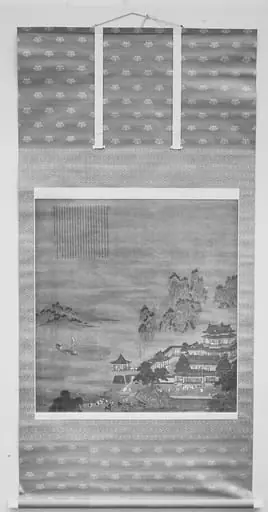 明 佚名 傳仇英 唐宫圖 軸|A Tang Palace
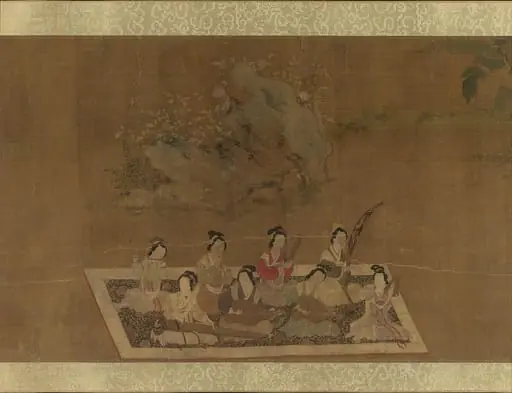 明 佚名 蘇蕙璇璣圖 卷|Lady Su Hui and Her Verse Puzzle
 Zhao Mengfu Writing the Heart (Hridaya) Sutra in Exchange for Tea
 Garden for Solitary Enjoyment
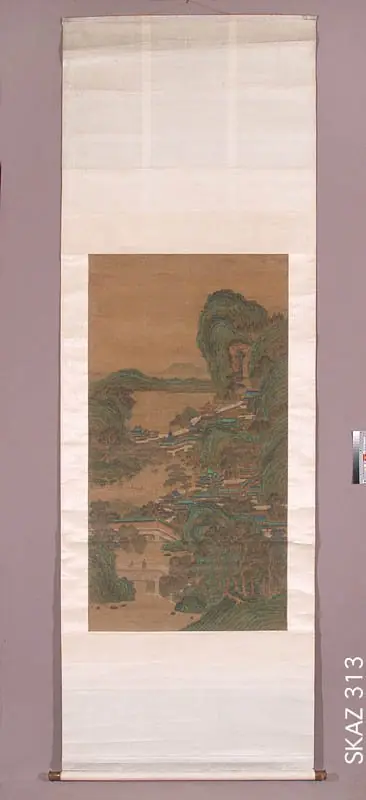 Pałac nad brzegiem jeziora - pejzaż
 Ten Thousand Li of the Yangzi
 Sketch Copy of Natural Disasters, from the Seven Fortunes and Misfortunes
 The Illustrated Miraculous Origins of the Yūzū Nenbutsu School
 Sketch Copy of Natural Disasters, from the Seven Fortunes and Misfortunes
 Untitled
 Portrait of a Man
 The Illustrated Tale of Oishi Hyōroku
 An Illustrated Marriage of Apparitions
 Ehrenbreitstein to Coblenz, No. 1