Artwork
Ruine Frauenkirch mit dem Grabmale der Genoveva und des Pfalzgrafen Siegfried (Ruins of the Church of Our Lady with the Tombs of Genevieve and Count Siegfried)
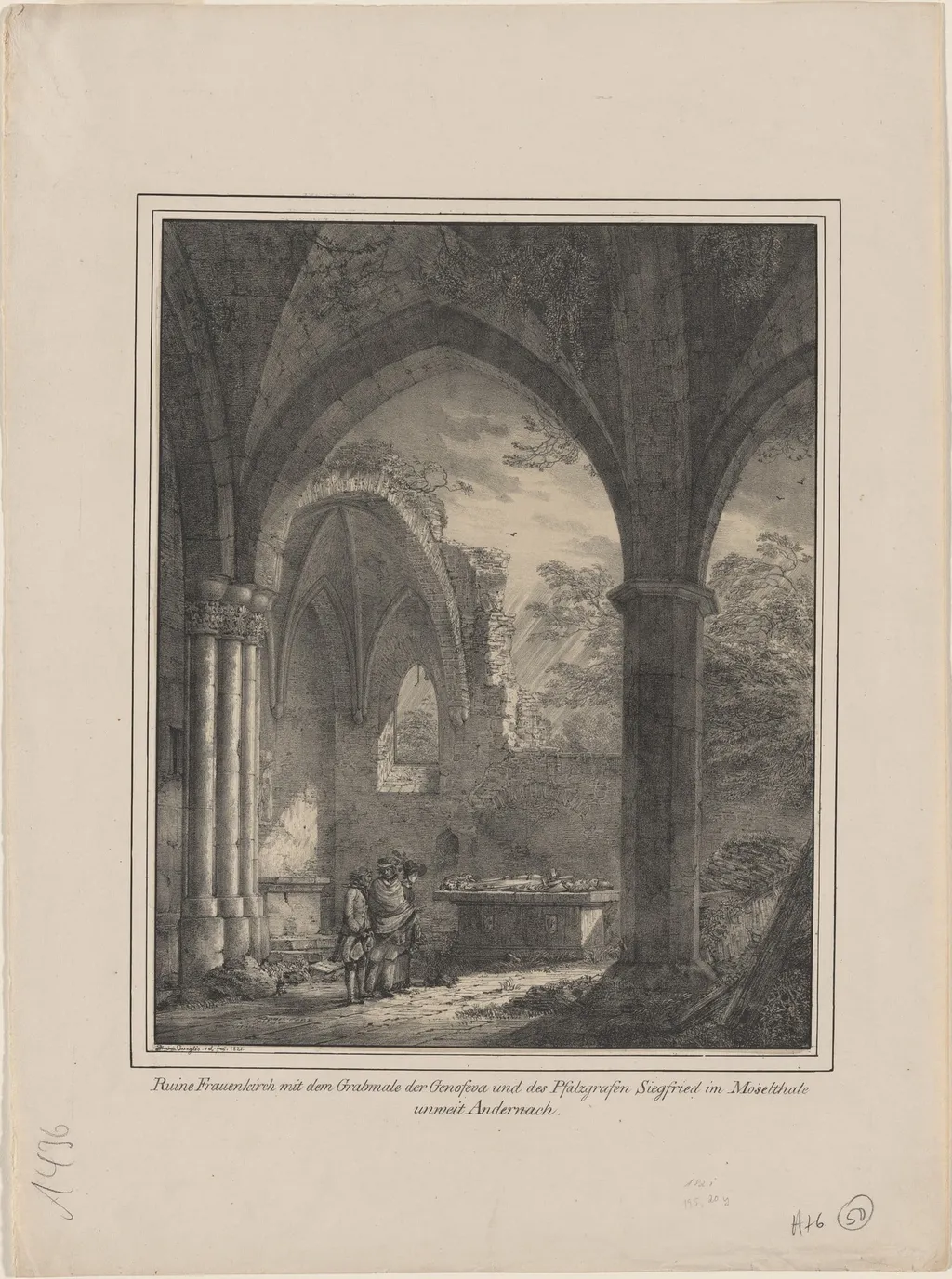
Ruine Frauenkirch mit dem Grabmale der Genoveva und des Pfalzgrafen Siegfried (Ruins of the Church of Our Lady with the Tombs of Genevieve and Count Siegfried) is an ink print by the Romanticist artist Domenico Quaglio. It dates from 1821 and is held in the collection of the National Gallery of Art.
About this work
This lithograph shows crumbling church walls and two old tombs in moonlight. The artist uses fine, grainy lines to give a ghostly glow to the ruins. You can almost feel the quiet night air.
Domenico Quaglio made this in 1821. He loved old buildings and spooky light in his art. Lithography was new then—ink on stone made sharp, detailed prints.
Look up lithography to see how it works.
Overview
Quaglio’s focus on architectural decay reflects a broader 19th-century interest in historical memory and the passage of time.
Created in 1821 by Domenico Quaglio, this lithograph depicts the decaying remains of the Frauenkirche in Munich, framed by the ancient tombs of Genevieve and Count Siegfried. Executed on wove paper using the then-emerging technique of lithography, the work captures a quiet, nocturnal atmosphere. Quaglio’s focus on architectural decay reflects a broader 19th-century interest in historical memory and the passage of time.
Subject & Meaning
The scene centers on the ruins of a medieval church, its fractured walls and arches standing as silent witnesses to centuries past. Two weathered tombs, positioned prominently in the foreground, suggest a connection between sacred space and mortality. The absence of human figures amplifies the sense of abandonment, inviting contemplation of faith, loss, and the impermanence of human endeavors.
Technique & Style
Quaglio employed lithography to achieve subtle tonal gradations and fine, delicate linework. The use of grainy, stippled strokes creates a luminous, almost ethereal moonlight effect across the stone surfaces. The composition avoids dramatic contrasts, favoring muted shadows and soft edges that enhance the stillness of the scene, characteristic of early Romantic sensibilities in printmaking.
History & Provenance
The lithograph was produced during Quaglio’s time in Munich, where he documented local architectural heritage. The Frauenkirche, originally built in the 12th century, had fallen into disrepair after secularization in the early 1800s. Quaglio’s print likely served as both artistic record and cultural memorial, preserving the site’s appearance before further deterioration or potential restoration.
Context
In the early 19th century, Romanticism fostered a fascination with ruins as symbols of lost grandeur and spiritual depth. Quaglio’s work aligns with contemporaries like Caspar David Friedrich, who used landscape and architecture to evoke introspection. Lithography’s rise allowed artists to disseminate such imagery widely, contributing to public engagement with historical preservation.
Legacy
Quaglio’s lithograph remains a documented example of early Romantic printmaking in southern Germany. While not widely exhibited today, it contributes to the historical record of how 19th-century artists responded to architectural decay. Its quiet precision offers insight into the evolving relationship between art, memory, and the physical remnants of the past.
Artist & collection

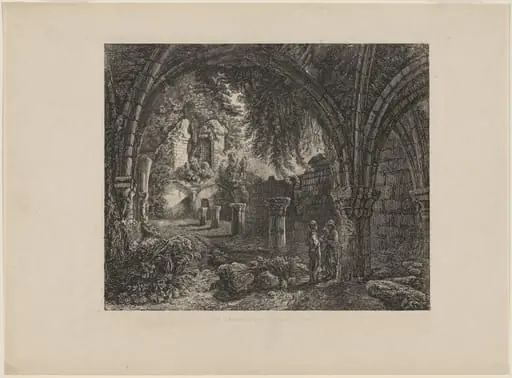 The Chapterhouse, Fountains Abbey
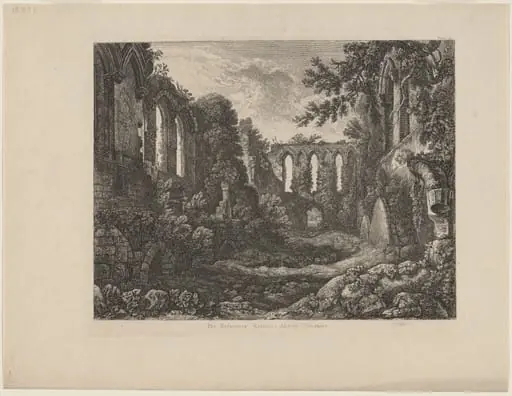 The Refectory, Rievaulx Abbey, Yorkshire
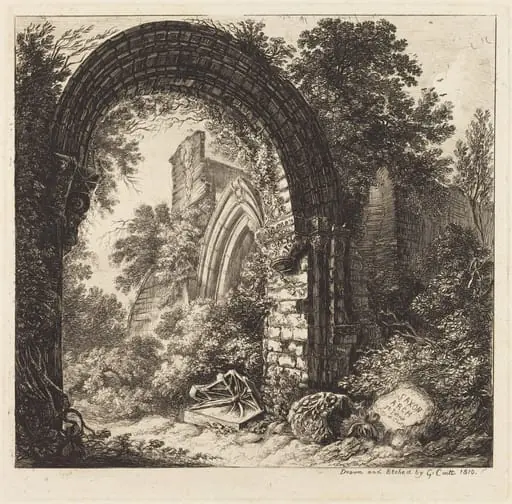 Saxon Arch
 Picturesque and Romantic Journeys in Old France: Ruins of the Palace of the White Queen
 Interior of the Temple Church
 Ruins with Two Women Washing Clothes in a River
 Manerbawr Castle from the Inward Court
 Riveaux
 Rivaux Abbey
 Easeby Abbey, Yorkshire