Artwork
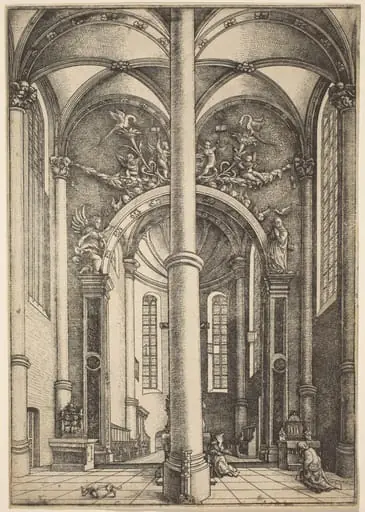
View in the interior of St. Catherine's chruch at Augsburg
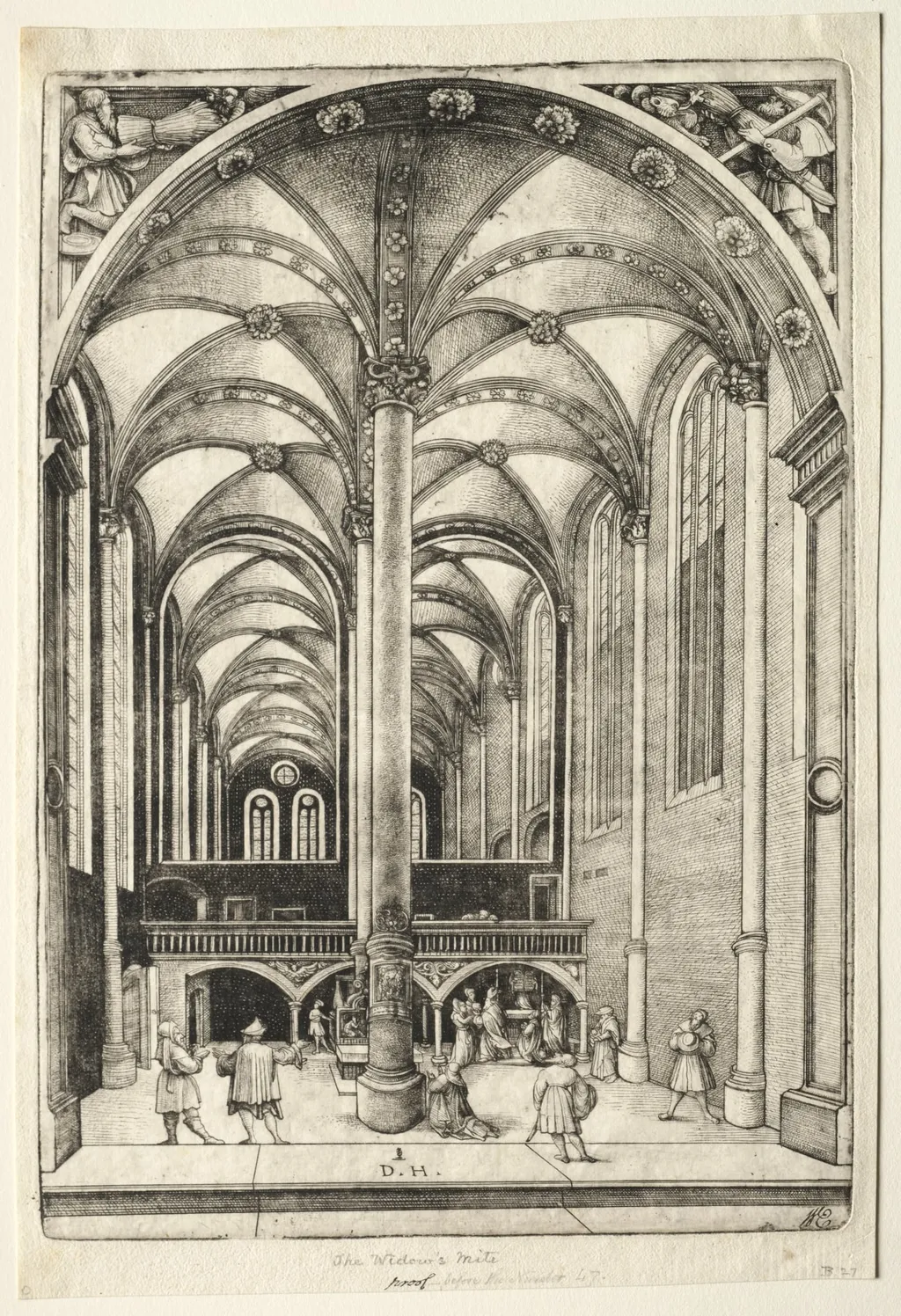
View in the interior of St. Catherine's chruch at Augsburg is a print by Daniel Hopfer. It dates from 1513 and is held in the collection of the Cleveland Museum of Art.
About this work
Overview
Created circa 1513, this etching by Daniel Hopfer captures the interior of St.
Created circa 1513, this etching by Daniel Hopfer captures the interior of St. Catherine’s Church in Augsburg. As one of the earliest practitioners of etching in Germany, Hopfer translated his experience in armor-making into printmaking, using iron plates and acid to incise lines. The work is a rare early example of architectural interior depiction in print, emphasizing spatial depth through careful line work and tonal variation rather than color.
Subject & Meaning
The scene portrays the nave of the church, with rows of pointed arches receding into the distance. Figures in the lower portion suggest daily activity—worshippers, passersby—grounding the sacred space in ordinary life. The absence of altars or religious iconography shifts focus to architecture and human presence, possibly reflecting a growing interest in the physical environment of worship rather than its ceremonial aspects.
Technique & Style
Hopfer employed etching on iron, a method derived from his work decorating armor. Fine, controlled lines define the arches and columns, while cross-hatching and varying line density model light and shadow. The effect is subtle chiaroscuro, creating volume and spatial recession. The ceiling’s carved ornamentation and corner figures are rendered with precision, contrasting with the plain walls to guide the viewer’s eye upward.
History & Provenance
The print originates from Hopfer’s active period in Augsburg, where he operated a workshop producing both prints and armor. While no early ownership records are documented, the work aligns with other known etchings from his studio dated to the early 1510s. Its survival in multiple institutional collections suggests early circulation among collectors and artisans interested in technical innovation in printmaking.
Context
In early 16th-century Germany, religious reform and urban growth reshaped perceptions of sacred space. Hopfer’s focus on architectural structure, rather than devotional imagery, mirrors a broader cultural shift toward documenting the physical world. His technique, influenced by metalworking traditions, distinguished German printmaking from contemporary woodcuts and engravings, establishing a new visual language for interior spaces.
Legacy
Hopfer’s use of etching to render architectural interiors influenced later Northern European printmakers, including Albrecht Dürer and his circle. The precision and spatial awareness in this work helped establish etching as a legitimate medium for topographical and ecclesiastical subjects. His fusion of craft knowledge with artistic practice laid groundwork for the technical sophistication of 16th-century printmaking.
Artist & collection

Artist
Daniel Hopfer (c. 1470 – 1536) was a German artist who is widely believed to have been the first to use etching in printmaking, at the end of the 15th century. He also worked in woodcut. Although his etchings were…

 Interior of the Church of Saint Maria Magdalena with the Parable of the Offering of the Widow
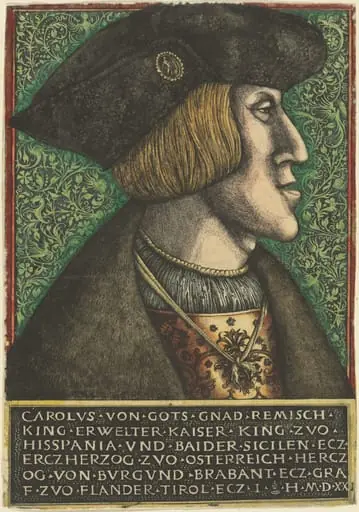 Emperor Charles V
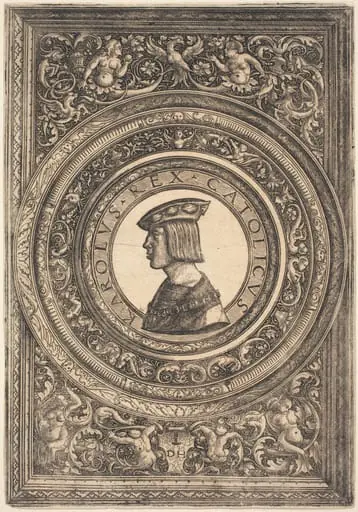 Emperor Charles V
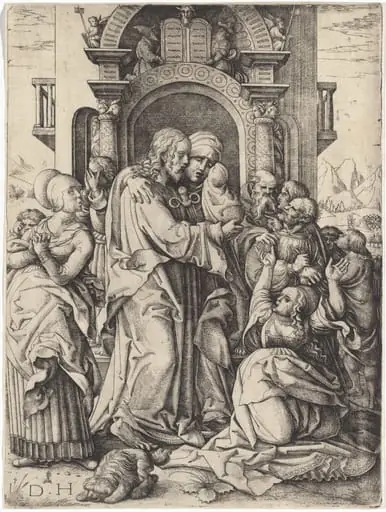 The Virgin Mary Taking Leave of Christ
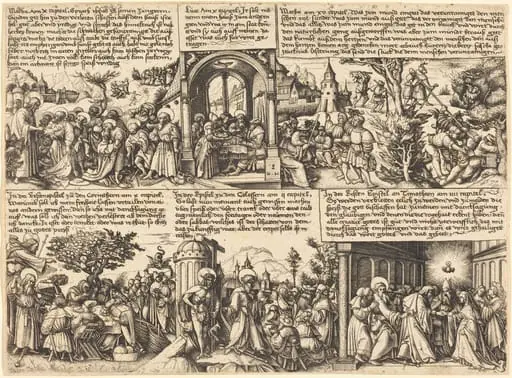 Jesus Christ Giving the Mission to the Apostles and Other New Testament Scenes
 Soldier Embracing a Woman
 Girolamo da Siena
 The Virgin and Child with Saint Anne by a Portal