Artwork
Horă
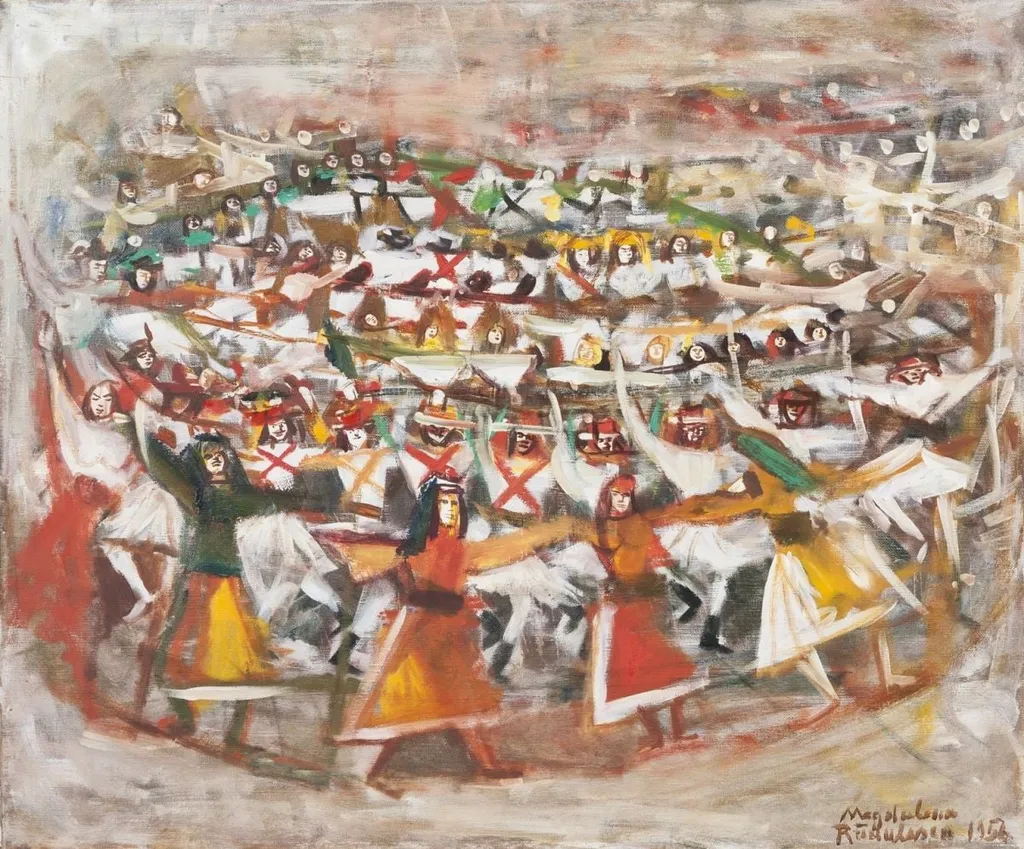
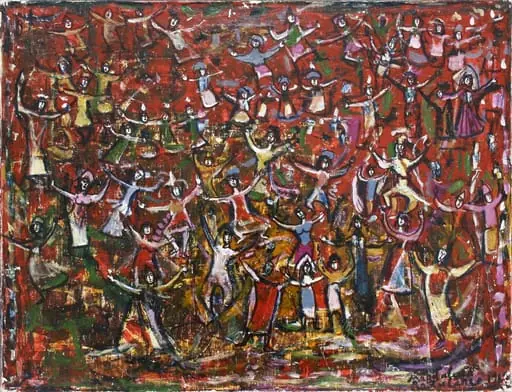
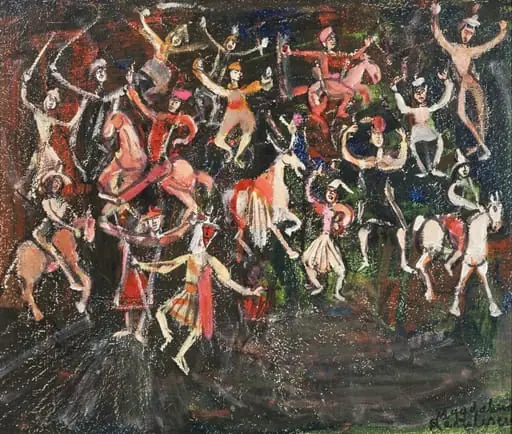
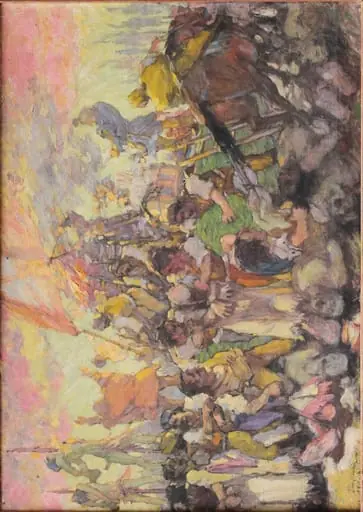
Horă is an unspecified painting by Magdalena Rădulescu. It dates from 1956 and is held in the collection of the National Museum of Art of Romania.
About this work
Overview
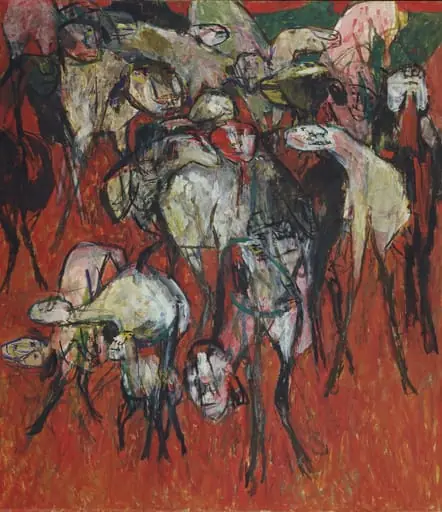
The composition teems with overlapping figures in dynamic poses, rendered with energetic brushwork and a limited palette dominated by red, yellow, and white.
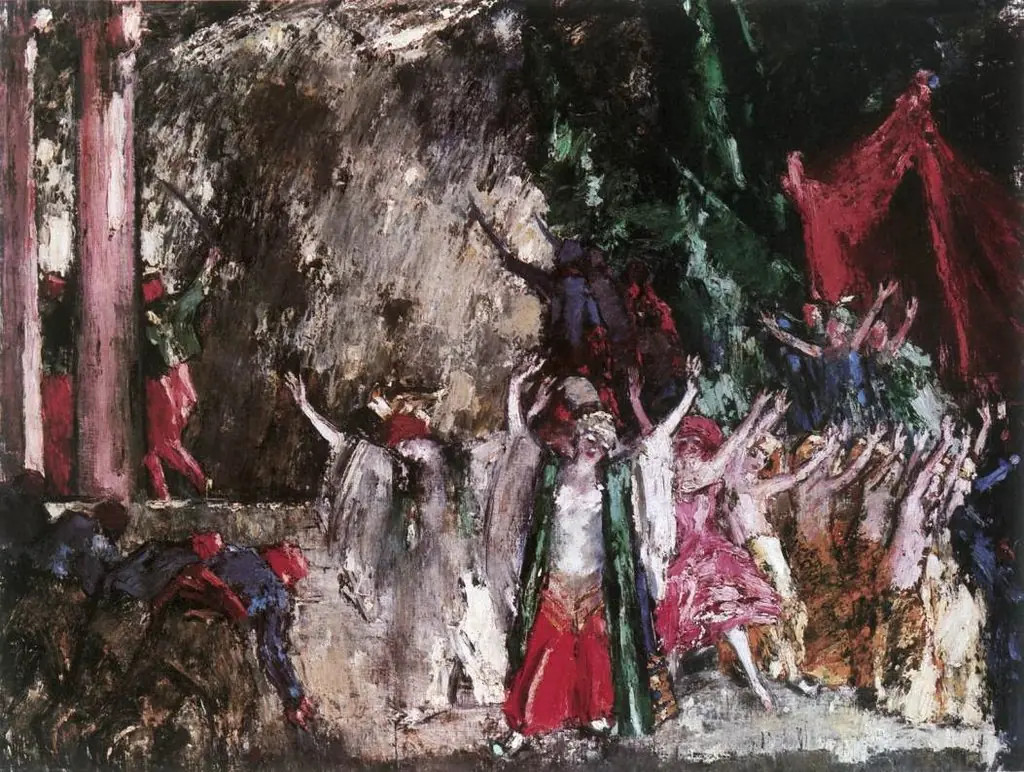
Created in 1956 by Magdalena Rădulescu, Horă is a vibrant oil painting capturing a traditional Romanian folk dance. The composition teems with overlapping figures in dynamic poses, rendered with energetic brushwork and a limited palette dominated by red, yellow, and white. The painting conveys movement through its chaotic arrangement and textured surface, evoking the rhythm and communal spirit of the horă dance.
Subject & Meaning
The painting depicts a group of dancers engaged in the horă, a circular folk dance common in Romanian rural communities. The figures, stripped of individual detail, merge into a collective rhythm, emphasizing unity and shared tradition. Their raised arms and compressed forms suggest a ritualistic, almost ecstatic gathering, reflecting cultural continuity rather than personal expression.
Technique & Style
Rădulescu employed thick, textured brushstrokes characteristic of impasto, building the surface with layered paint to enhance the sense of motion. Forms are simplified into bold shapes, with exaggerated eyes and minimal facial features. The background dissolves into swirling masses of color, blurring boundaries between dancers and environment, reinforcing the painting’s immersive, kinetic quality.
History & Provenance
Painted during the early years of communist Romania, Horă emerged amid state-promoted folk cultural initiatives. While the regime encouraged depictions of peasant life as ideologically safe, Rădulescu’s expressive style diverged from socialist realism. The work remained in private hands until entering a public collection, its significance recognized later for its emotional intensity over political conformity.
Context
In mid-20th century Romania, folk traditions were both preserved and co-opted by state cultural policy. Rădulescu’s painting draws from regional dance forms but filters them through a modernist lens, aligning with broader Eastern European tendencies to infuse folk motifs with expressive abstraction. The work stands apart from official art by prioritizing visceral energy over idealized representation.
Legacy
Horă is now regarded as a significant example of Romanian modernism that resisted rigid stylistic mandates. Its raw energy and emotional depth influenced later generations of artists seeking to reconcile folk heritage with avant-garde expression. Though not widely exhibited during its time, it has gained scholarly attention for its unique synthesis of tradition and abstraction.
Artist & collection

Artist
Magdalena Rădulescu was a Romanian modernist painter and illustrator. She was known for her symbolist and expressionist paintings, inspired by Romanian traditions and folklore. Rădulescu lived most of her life in…