Artwork
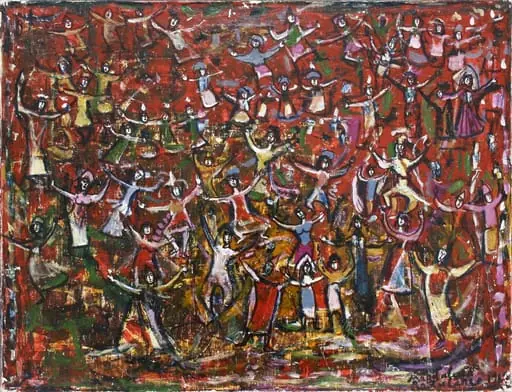
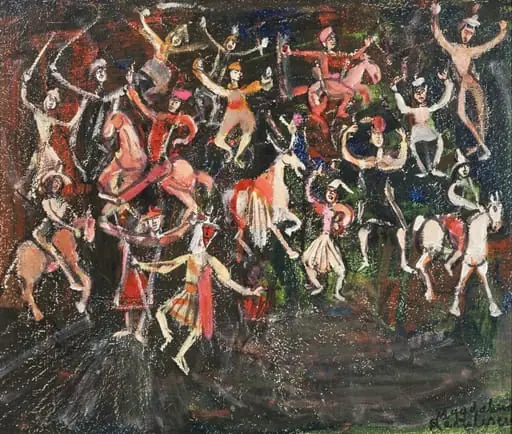
Cavalcadă
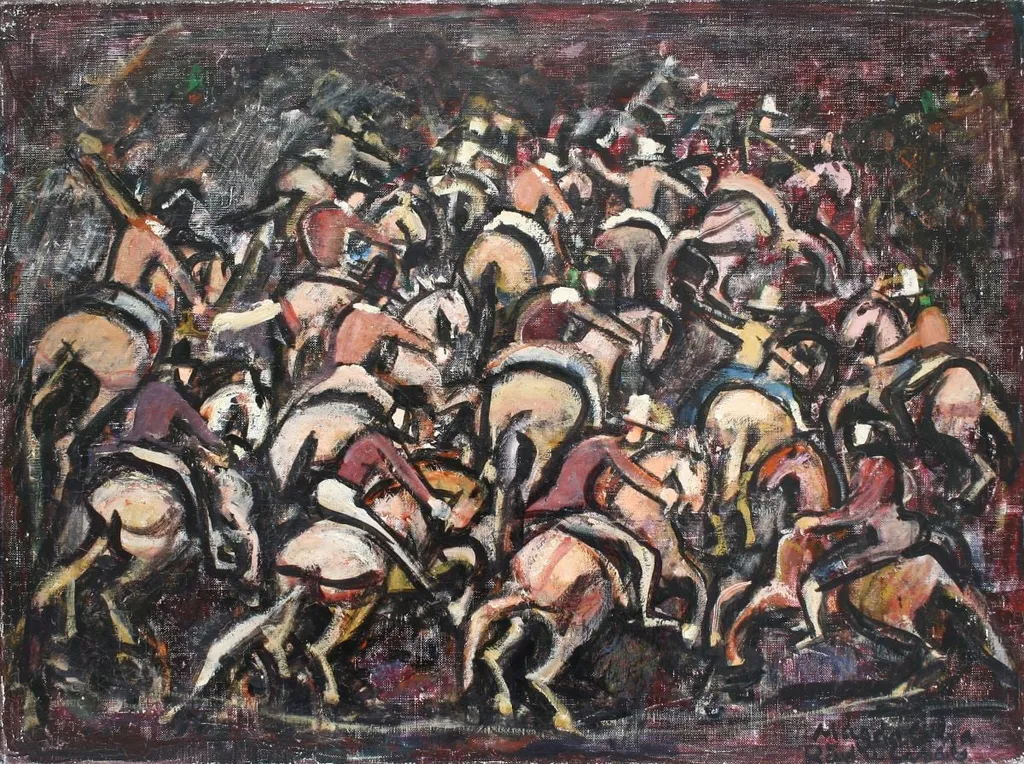
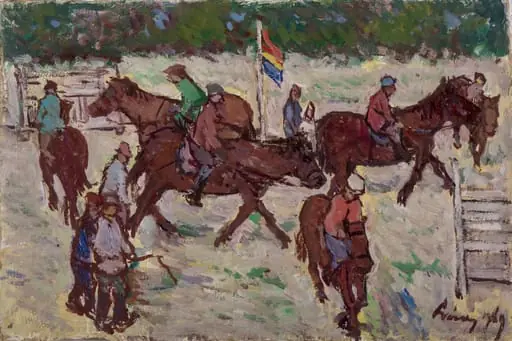
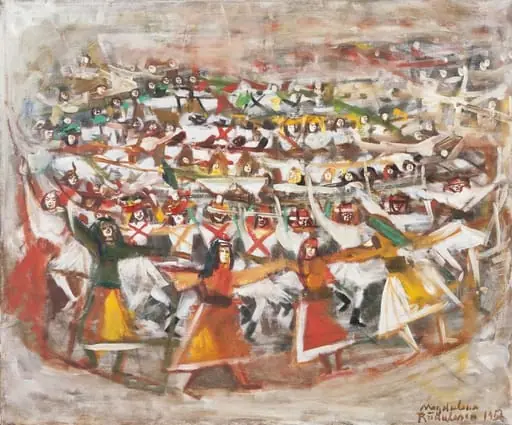
Cavalcadă is an unspecified painting by Magdalena Rădulescu. It dates from 1949 and is held in the collection of the Gavrilă Simion Eco-Museum Research Institute Tulcea - Art Museum.
About this work
Overview
The work is held in the collection of the Museum of Ethnography and reflects the artist’s engagement with rural Romanian life during the mid-20th century.
Magdalena Rădulescu painted Cavalcadă / Compoziție cu călăreți around 1949, capturing a dynamic scene of mounted figures in motion. The work is held in the collection of the Museum of Ethnography and reflects the artist’s engagement with rural Romanian life during the mid-20th century. Its energetic composition and vivid palette distinguish it as a notable example of her expressive approach to subject matter rooted in local tradition.
Subject & Meaning
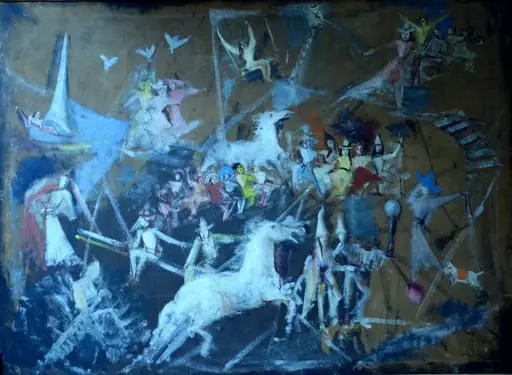
The painting depicts a group of horsemen in varied poses—some rearing, others galloping—suggesting movement and urgency. Figures wear traditional attire, with hats and bare heads indicating regional dress codes or social distinctions. The scene evokes a ceremonial or seasonal gathering, though no specific event is named. The lack of narrative clarity invites interpretation centered on collective rhythm rather than individual story.
Technique & Style
Rădulescu employed loose, gestural brushwork and saturated colors to convey motion and vitality. Forms are simplified, with limbs and horse anatomy suggested rather than meticulously rendered. The composition lacks perspective depth, emphasizing flat planes and overlapping figures to heighten the sense of chaotic energy. This approach aligns with expressive modernism, prioritizing emotional resonance over realism.
History & Provenance
Created in the late 1940s, the painting entered the Museum of Ethnography’s collection shortly after its completion. Its preservation there suggests institutional interest in documenting folk-inspired art during a period of state-driven cultural policy. No documented exhibitions or private owners are recorded prior to its museum acquisition, indicating direct transfer from artist to institution.
Context
Painted during Romania’s early communist era, the work coincides with state promotion of folk themes as symbols of national identity. While many artists adhered to socialist realism, Rădulescu retained a personal, expressive style. Her focus on equestrian processions may reflect enduring rural customs, subtly resisting homogenized narratives by emphasizing spontaneity over idealized order.
Legacy
Rădulescu’s Cavalcadă remains one of the few documented works by her in public collections. It stands as a testament to her unique synthesis of folk subject matter and modernist technique. Though not widely exhibited beyond institutional holdings, it continues to inform scholarly discussions on regional modernism and gendered artistic expression in mid-century Romania.
Artist & collection

Artist
Magdalena Rădulescu was a Romanian modernist painter and illustrator. She was known for her symbolist and expressionist paintings, inspired by Romanian traditions and folklore. Rădulescu lived most of her life in…
Museum
Gavrilă Simion Eco-Museum Research Institute Tulcea - Art Museum
Continue through works from the same source collection.