Artwork
Poem
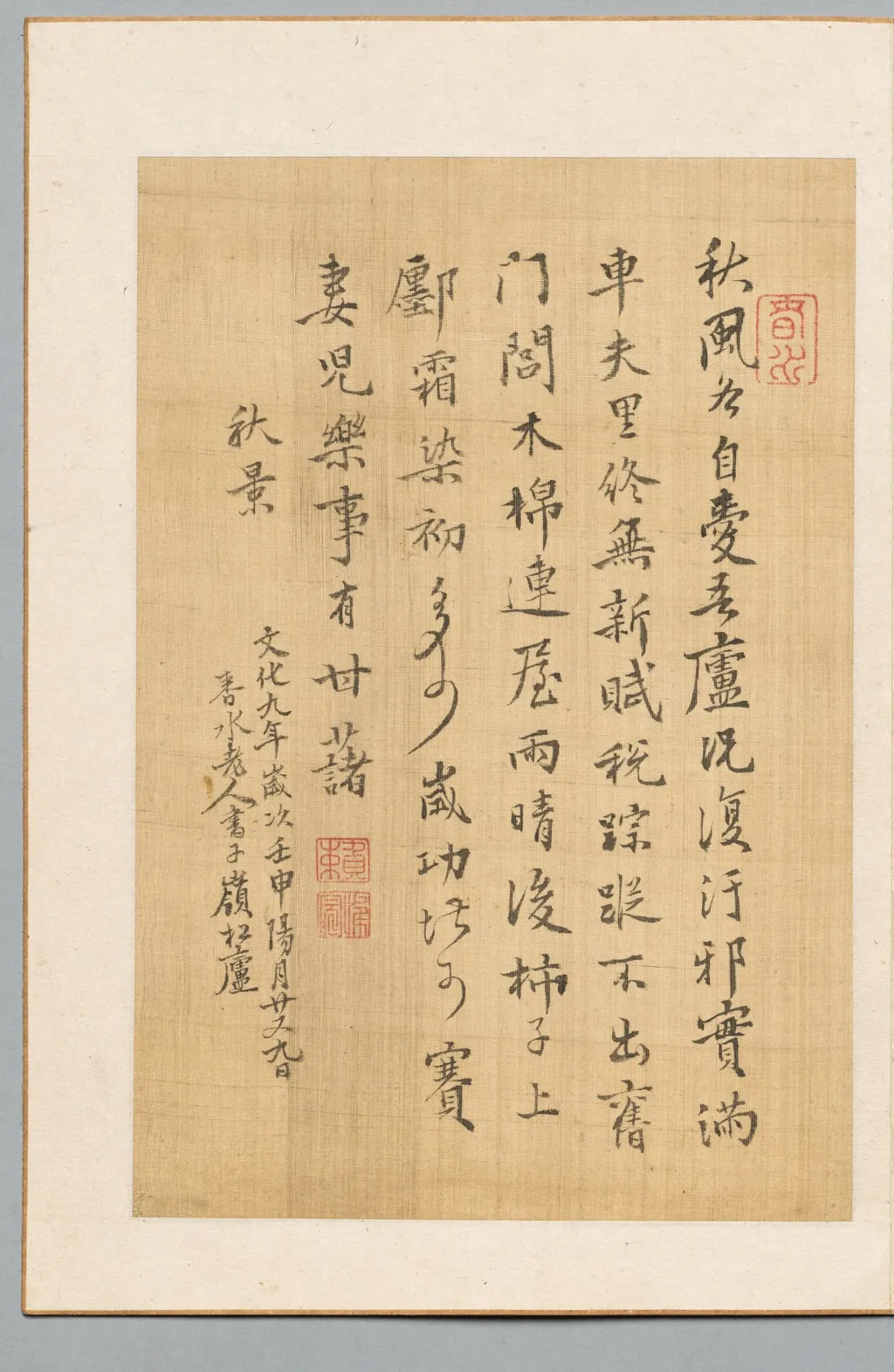
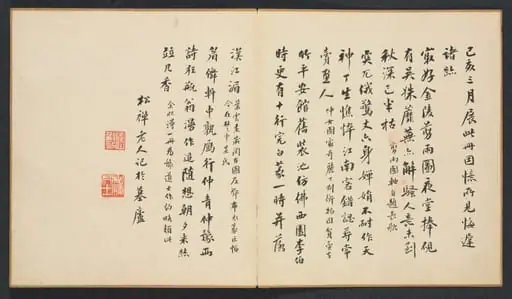
Poem is a work on paper by the Romanticist artist Rai Shunsui. It dates from 1812 and is held in the collection of the Cleveland Museum of Art.
About this work
Rai Shunsui worked during Japan’s Edo period, when artists mixed Chinese styles with local tastes.
This painting shows a scroll with a poem written in Japanese script. Soft gray ink blends into the paper, with just a few dark lines for the characters. It feels quiet and thoughtful.
Rai Shunsui worked during Japan’s Edo period, when artists mixed Chinese styles with local tastes. He often painted small works meant to be shared in albums, not hung on walls.
Look up Rai Shunsui (Japanese, 1746–1816) to see more of his delicate scrolls.
Overview
Rai Shunsui, an Edo-period artist active in the late 18th and early 19th centuries, contributed to the Nanga tradition—a Japanese artistic movement inspired by Chinese literati culture. His small-scale ink works were designed not for public display but for intimate exchange among scholar-artists. These pieces often circulated in compiled albums, serving as personal tokens of friendship and shared aesthetic values.
Subject & Meaning
The work features a poem rendered in Japanese script, its text integrated into a muted ink wash that merges with the paper. The absence of illustrative imagery shifts focus to the written word, emphasizing literary expression as a form of contemplative art. Such poems often conveyed personal reflection, seasonal awareness, or philosophical sentiment, aligning with the literati ideal of art as inner expression.
Technique & Style
Shunsui employed subtle gradations of gray ink, allowing the paper’s texture to become part of the composition. Delicate, sparse brushstrokes define the characters without bold outlines, creating a quiet, restrained effect. This minimalist approach reflects the Nanga preference for understated elegance over decorative flourish, prioritizing spontaneity and scholarly restraint over technical display.
History & Provenance
This sheet was once part of a collaborative album, assembled during a gathering of artist-friends who each contributed a unique piece. These albums functioned as both artistic records and social artifacts, circulating among participants as keepsakes. Shunsui’s contribution, like others in such collections, was likely exchanged as a gesture of intellectual camaraderie rather than for commercial purposes.
Context
During Japan’s Edo period, elite artists engaged with Chinese literary and painting traditions through imported texts and prints, adapting them to local sensibilities. Nanga painters like Shunsui rejected official court styles in favor of personal, scholarly expression. Their work flourished in urban centers where literati networks thrived, blending Chinese aesthetics with Japanese poetic forms and materials.
Legacy
Shunsui’s small ink poems exemplify the Nanga tradition’s enduring emphasis on intimacy and literary resonance over grandeur. Though less visible in public museums, his works remain significant in private collections and scholarly studies of Edo-period intellectual culture. They illustrate how art functioned as a medium of personal connection within a tightly knit community of scholar-artists.
Artist & collection

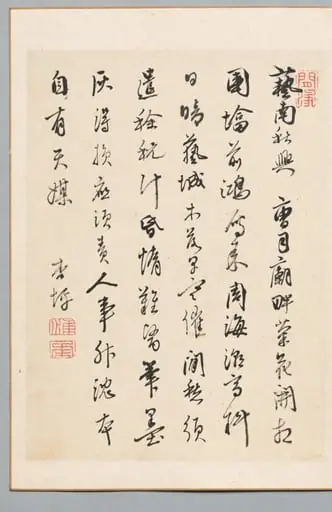 Poem
Poem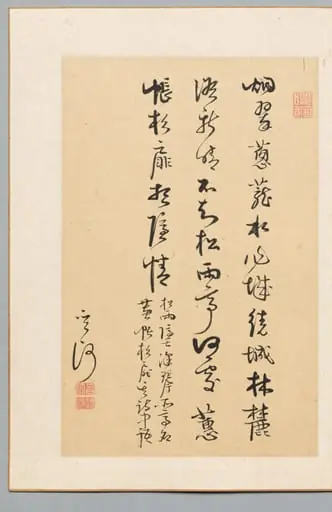 Calligraphy
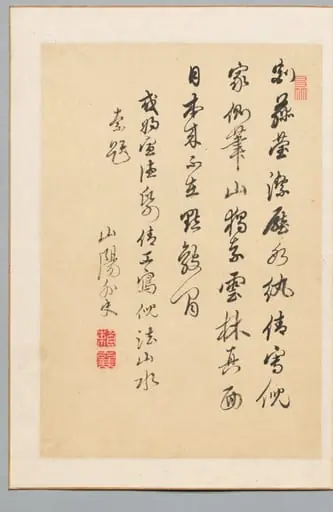 Poem
Poem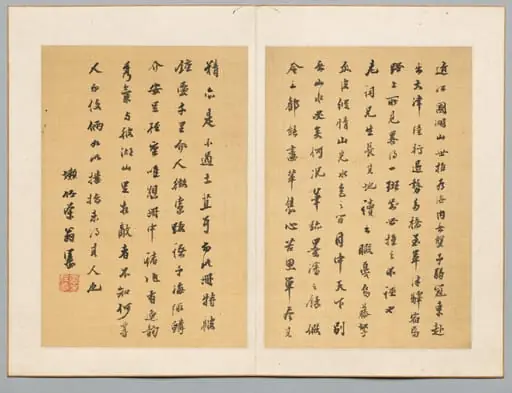 Calligraphy
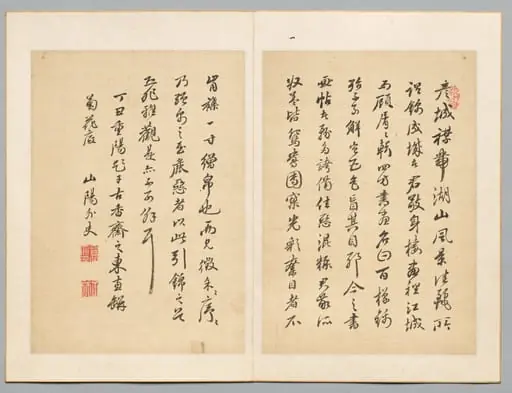 Preface
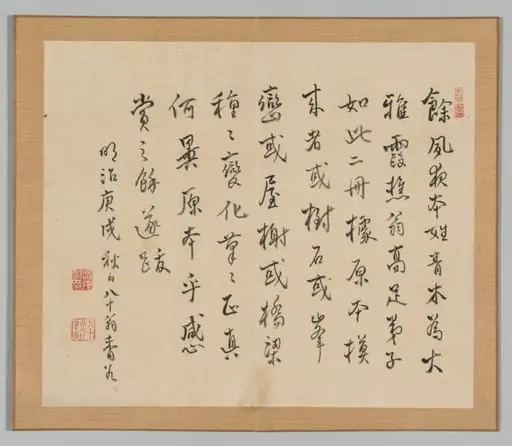 Postscript from “Reverberations of Taiga”
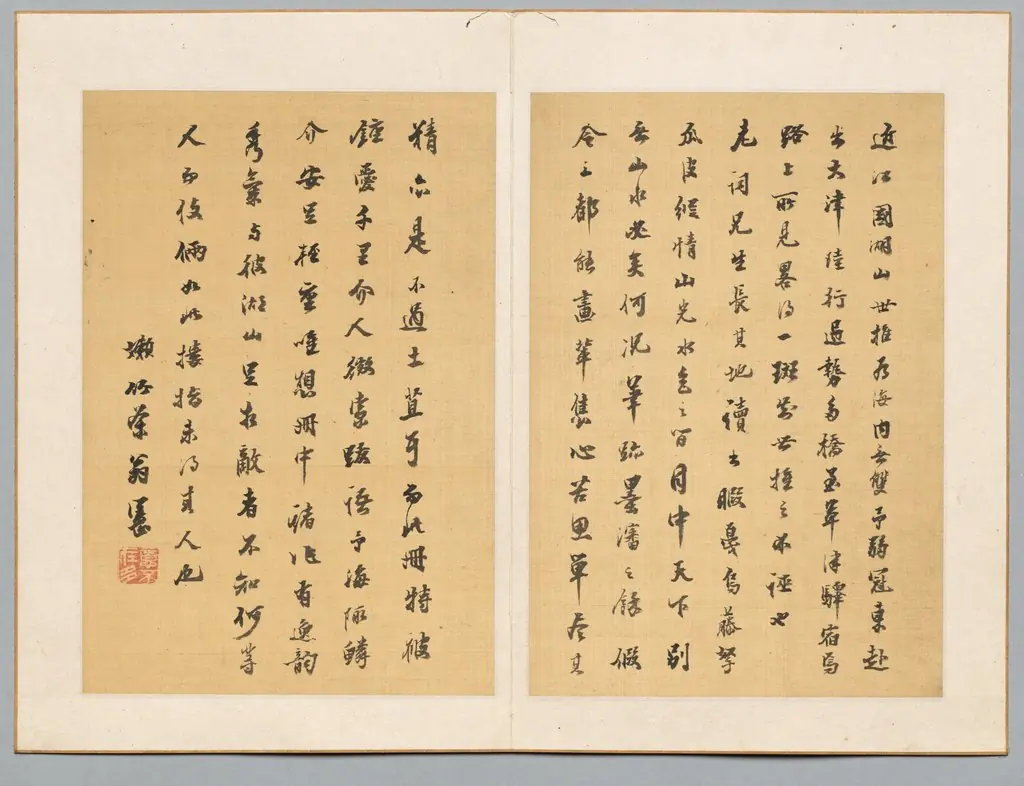 Calligraphy
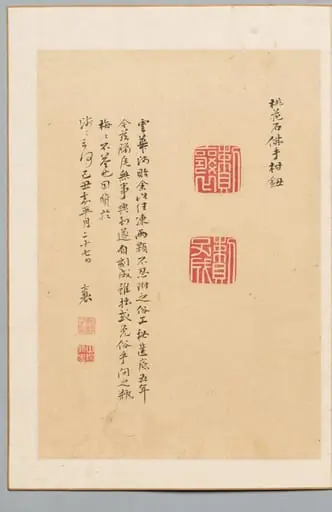 Inscription and Two Seals
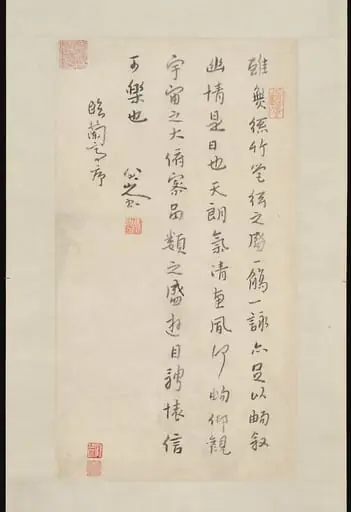 清 朱耷 (八大山人) 行書節錄王羲之蘭亭序 軸|After Wang Xizhi's "Preface to the Orchid Pavilion Gathering Collection"
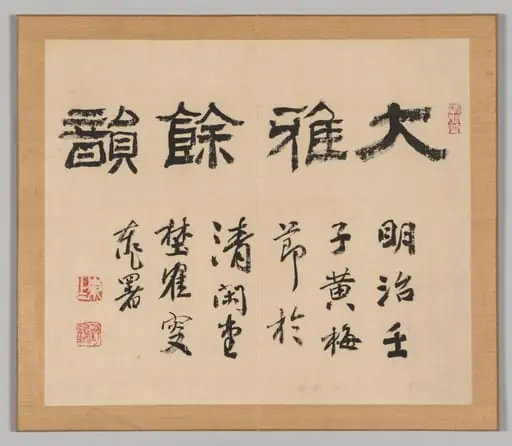 Title from "Reverberations of Taiga"
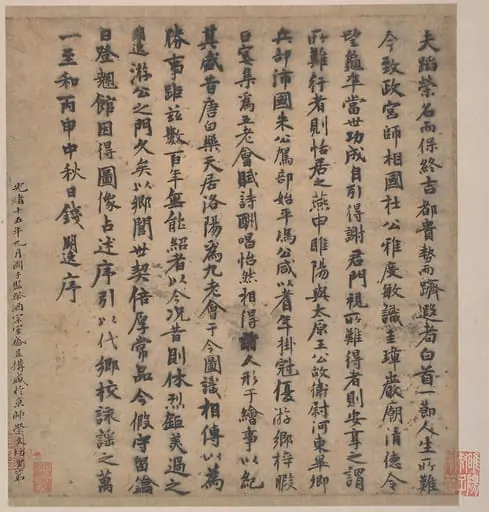 北宋–清 睢陽五老圖引首題跋 冊|Frontispiece and Colophons to the Album "Five Old Men of Suiyang"
 Paintings after Ancient Masters: Calligraphy