Artwork
Emperor Jahangir
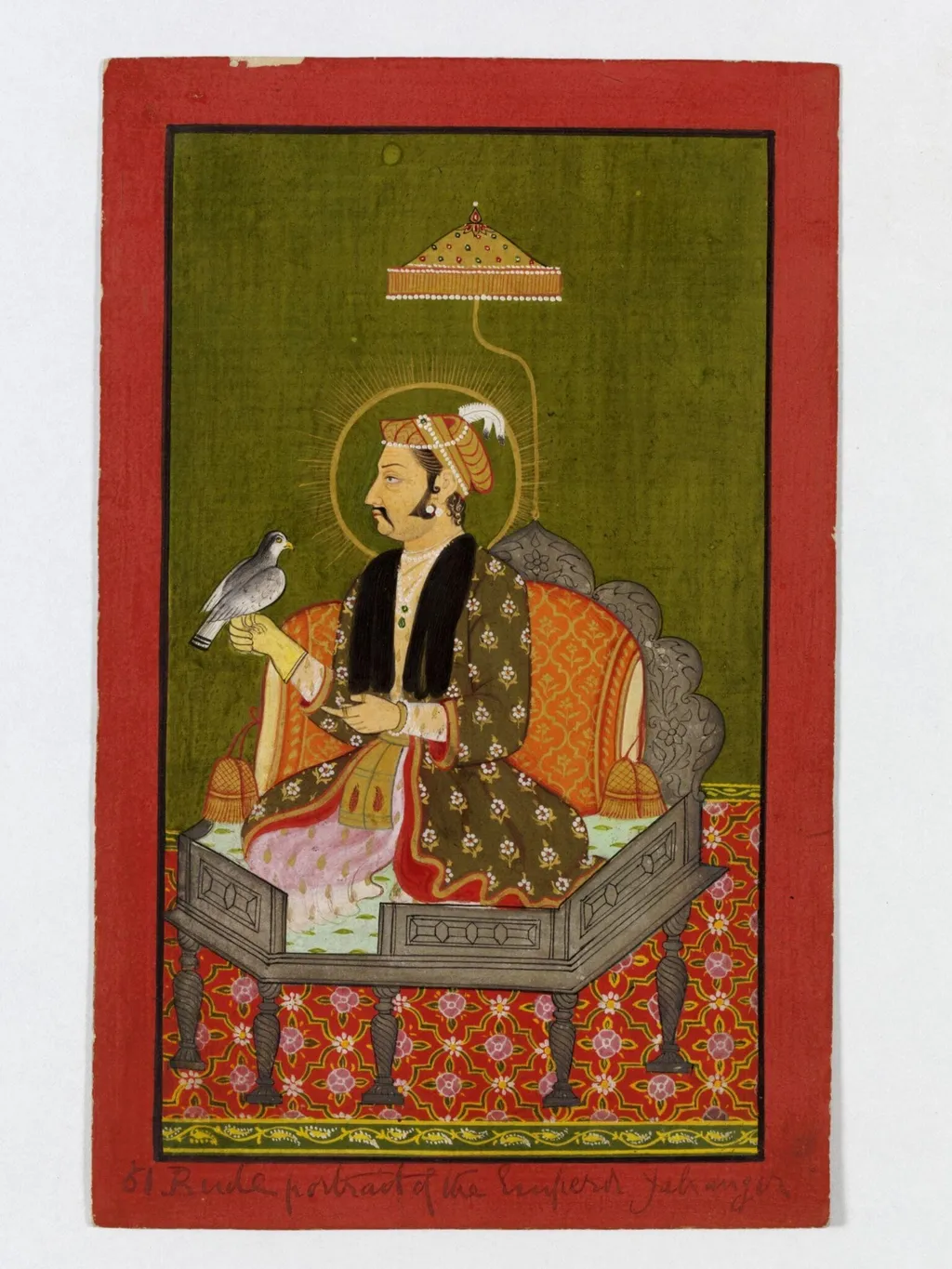
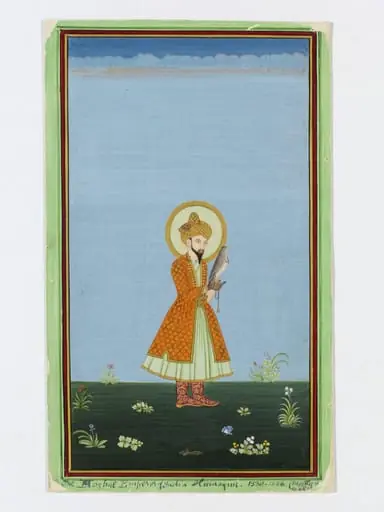
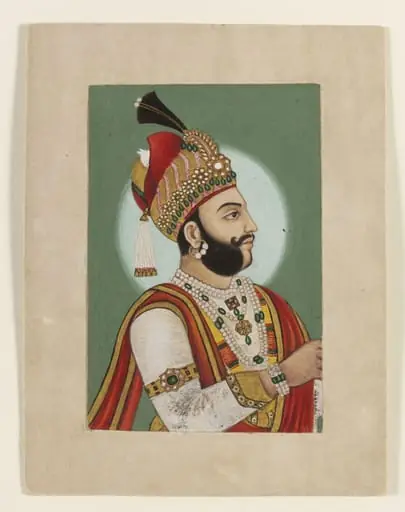
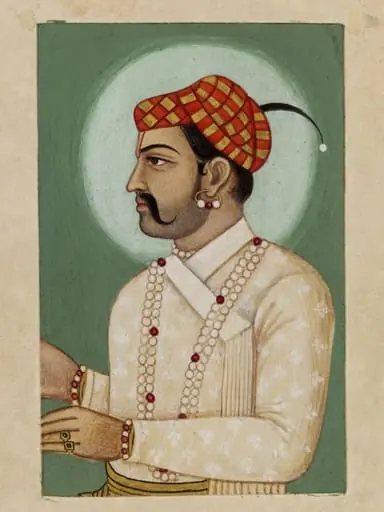
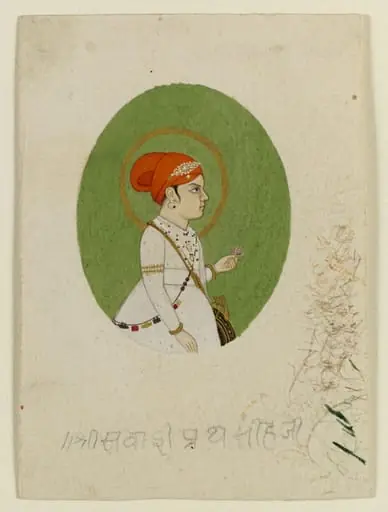
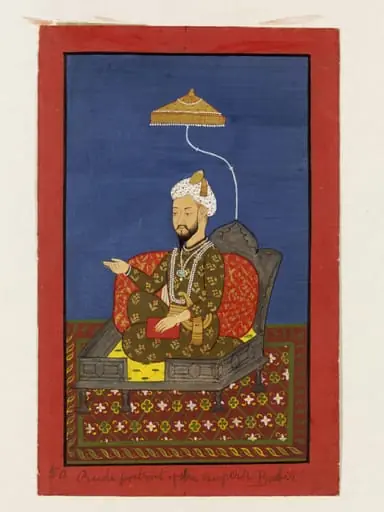
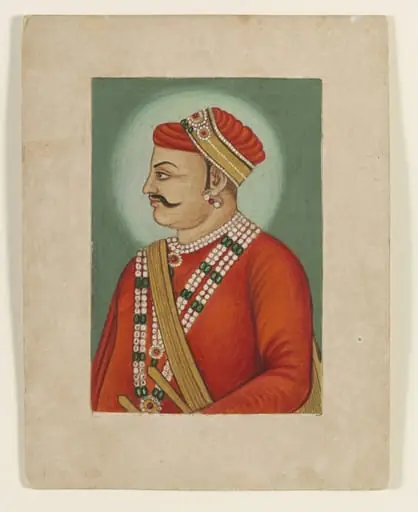
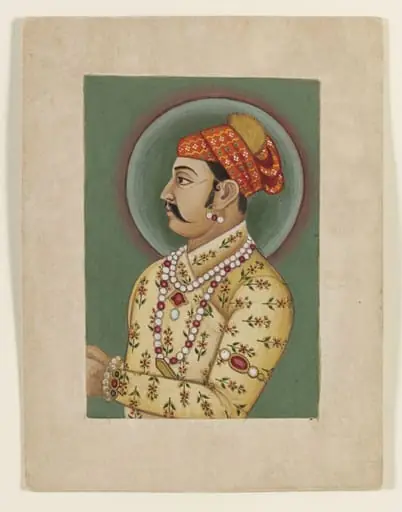
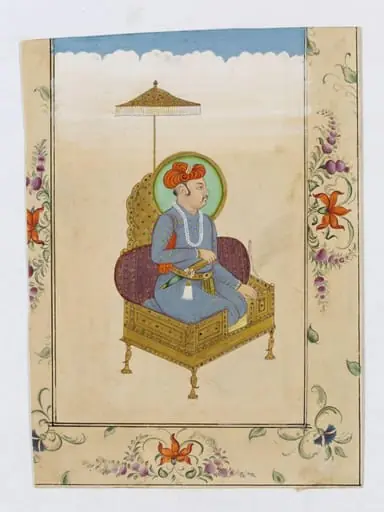
Emperor Jahangir is a paint painting by the Patna School of Painting artist Ram Gopal. It dates from 1890 and is held in the collection of the Victoria and Albert Museum.
About this work
Overview
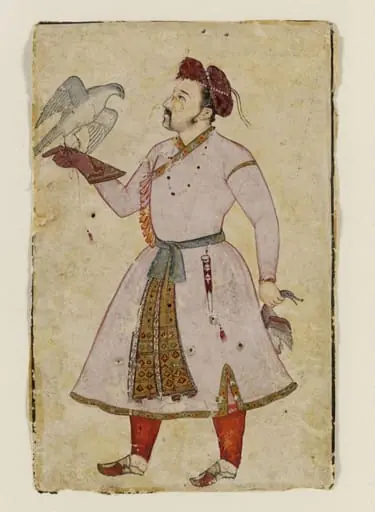
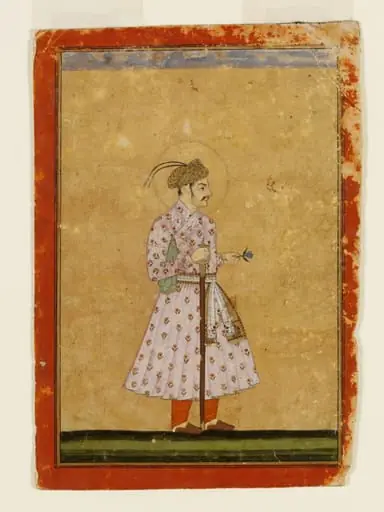
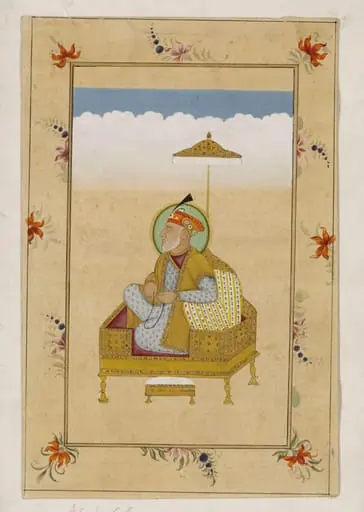
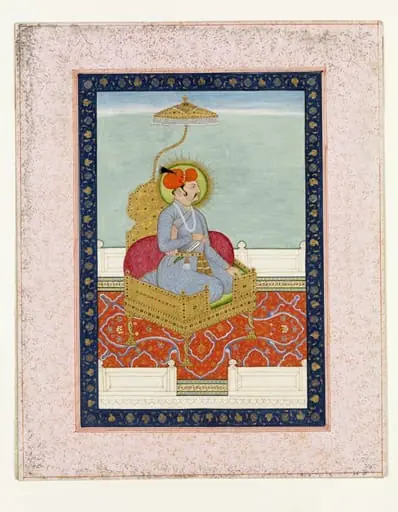
The work is a portrait of Emperor Jahangir seated on an octagonal chair, holding a hawk in his right hand. Rendered in opaque watercolour and gold on paper, the composition includes a green wall, a yellow parasol overhead, and a red carpet beneath the figure.
Subject & Meaning
Jahangir is shown in regal attire—a long robe with floral motifs and a turban—emphasizing his imperial status. The hawk, a traditional symbol of royal authority and hunting prowess, reinforces the emperor’s power and refined taste.
Technique & Style
The painting employs opaque watercolour combined with gold leaf, creating a luminous surface that highlights decorative details. Fine brushwork renders the intricate patterns on the chair and textiles, while the overall realism reflects the courtly portrait tradition of the Mughal period.
History & Provenance
The piece is a Mughal court portrait, typical of the early 17th‑century practice of documenting imperial figures. Its specific provenance is not recorded in the supplied data, but such works were commonly produced by court painters for royal archives.
Context
Portraits of Mughal emperors served both as political propaganda and as records of dynastic continuity. The inclusion of luxurious furnishings and a hunting bird aligns with contemporary visual conventions that linked rulership with wealth, cultural refinement, and martial skill.
Artist & collection
Artist
Ram Gopal spent his life painting the rulers who ruled him, a quiet rebellion wrapped in regal colors and gold-leaf flourishes.