Artwork
Emperor Jahangir
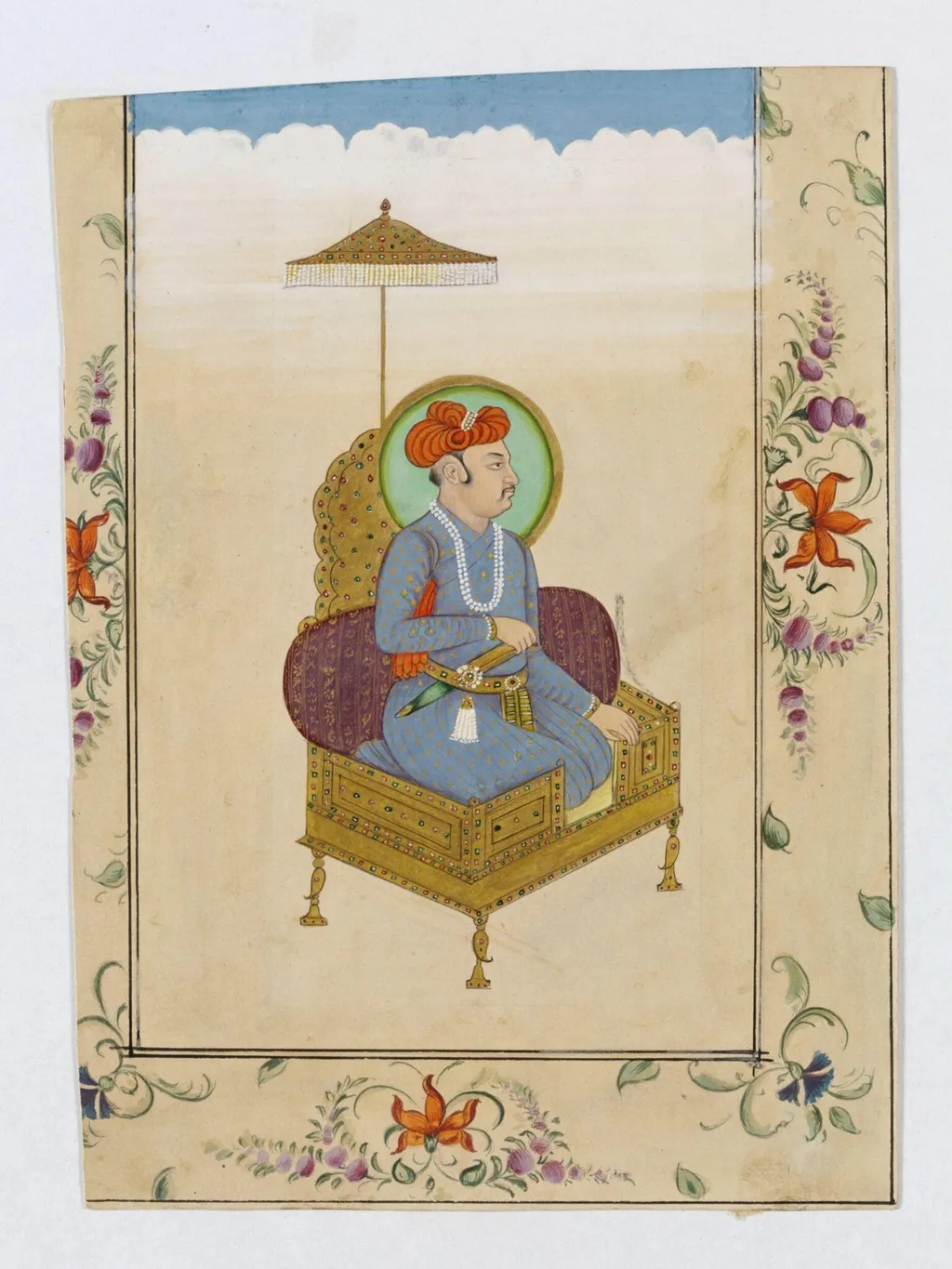
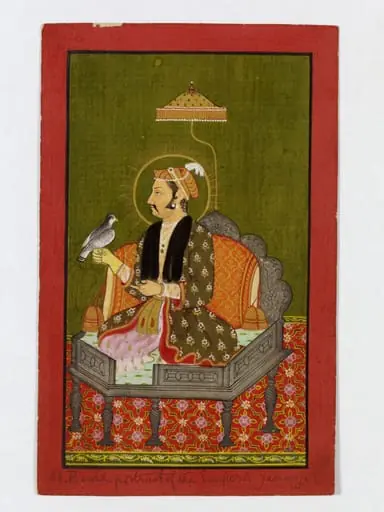
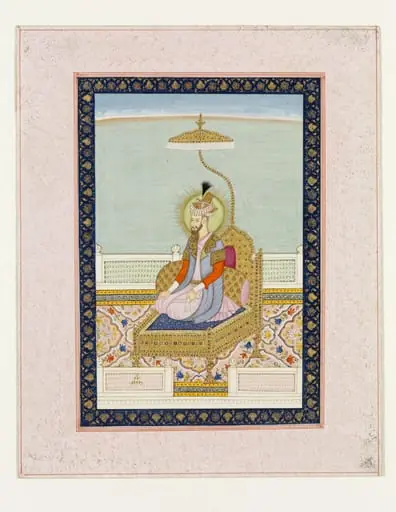
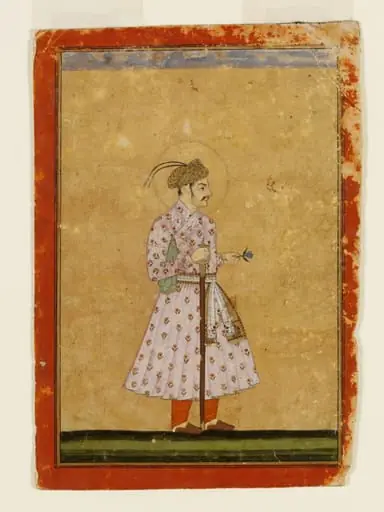
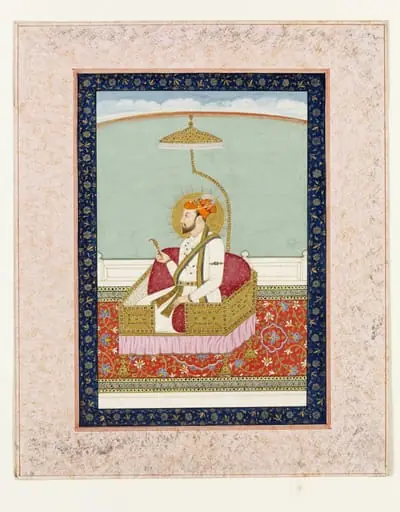
Emperor Jahangir is a paint painting by the Patna School of Painting artist Chhajju Lal. It dates from 1850 and is held in the collection of the Victoria and Albert Museum.
About this work
Overview
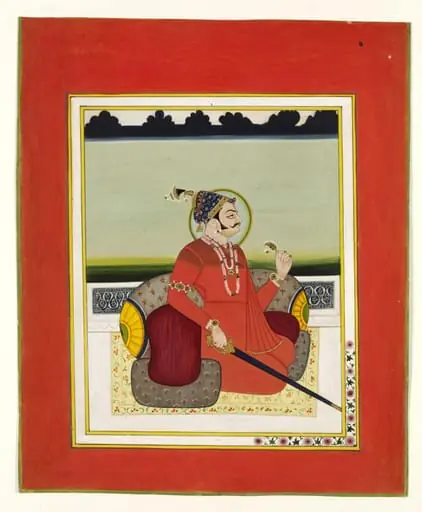
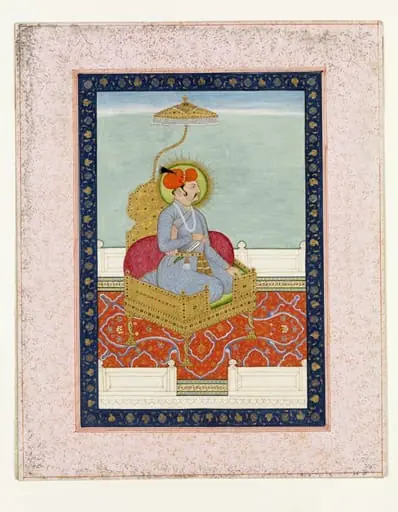
This 17th-century Indian painting portrays Emperor Jahangir in a regal setting, executed in opaque watercolour and gold on paper, characterized by intricate details and symbolic elements.
Subject & Meaning
The subject, Emperor Jahangir, is depicted in attire signifying his imperial status: light blue robes with an all-over gold pattern, a red turban, and a white necklace. The green glow around his head, a common motif in older Indian art, denotes his importance.
Technique & Style
The painting showcases precise, jewel-like details on the emperor's attire and the golden throne, with red cushions. The borders feature floral and swirling patterns in red, green, and purple, adding to the overall opulence.
Context
The inclusion of a small umbrella behind the emperor, a symbol of royalty, and the ornate throne, underscores the portrayal of imperial authority within the Mughal artistic tradition.
Legacy
While specific provenance details are not provided, the painting's style and attention to detail invite comparison with known works of Mughal court artists, though the exact artist remains unspecified in the given context.
Artist & collection
Artist
Chhajju Lal was the go-to painter for royal portraits in late-1800s India, always dressed in a spotless white kurta even when mixing paints.