Artwork
Ruins of the Palace
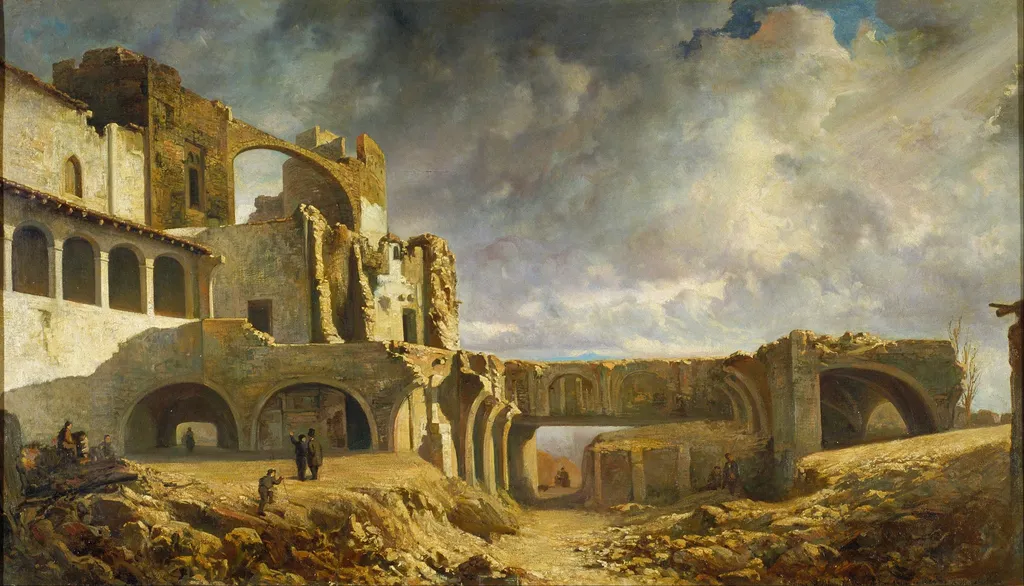
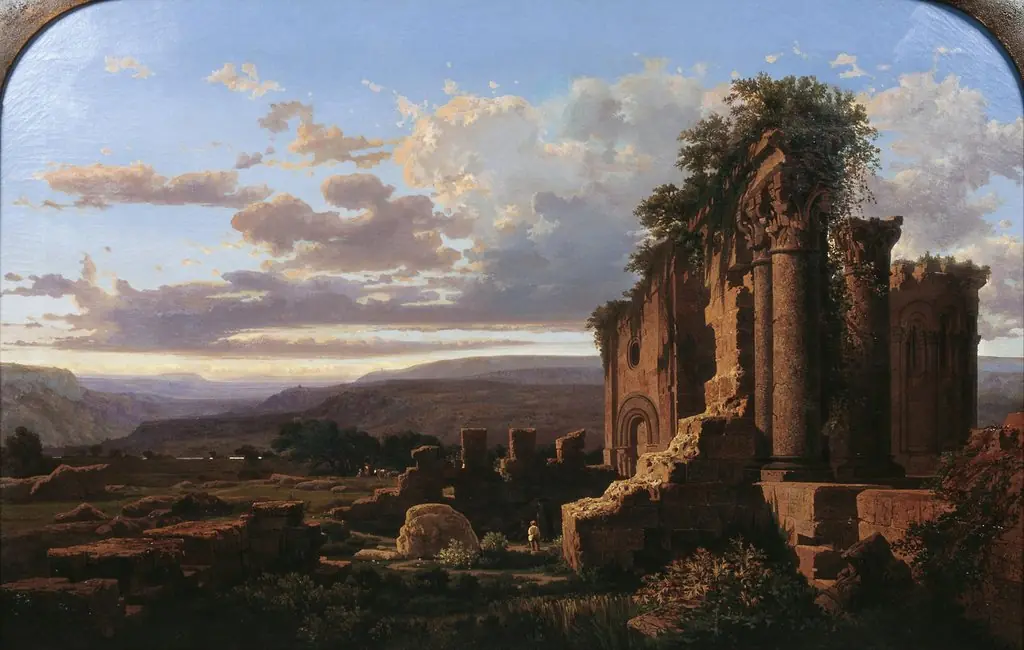
Ruins of the Palace is an oil painting by Ramon Martí Alsina. It dates from 1859 and is held in the collection of the Museu Nacional d'Art de Catalunya.
About this work
Overview
A Catalan artist deeply engaged with the Realist tradition, Alsina focused on observed reality rather than idealized forms.
Ramon Martí Alsina completed this oil painting in 1859, capturing the decayed remains of a once-grand palace. A Catalan artist deeply engaged with the Realist tradition, Alsina focused on observed reality rather than idealized forms. The work is part of the permanent collection at the Museu Nacional d'Art de Catalunya, reflecting its significance in regional art history and its alignment with 19th-century trends in documentary-style painting.
Subject & Meaning
The painting presents the skeletal remains of a monumental structure, its arches and columns half-buried in rubble. No human figures are present, emphasizing abandonment and the passage of time. The absence of narrative or symbolic figures invites contemplation of impermanence and the quiet erosion of power, aligning with broader 19th-century interests in historical memory and the physical traces of lost civilizations.
Technique & Style
Alsina employed oil paint with meticulous attention to texture and light, rendering weathered stone, scattered debris, and shifting clouds with careful observation. The composition balances foreground ruins with a muted, overcast sky, creating a somber atmosphere. While not overtly dramatic, the work uses subtle tonal contrasts to suggest depth and material decay, reflecting Realist principles over Romantic exaggeration.
History & Provenance
Painted during Alsina’s mature period, the work entered the collection of the Museu Nacional d'Art de Catalunya in the early 20th century, following the museum’s consolidation of Catalan artistic heritage. Its preservation reflects institutional recognition of regional Realism as a vital strand in Spain’s artistic development. No record suggests the palace depicted was a specific, identifiable site, reinforcing its role as a generalized meditation on ruin.
Context
In mid-19th century Catalonia, artists increasingly turned to local landscapes and historical remnants as subjects, moving away from academic mythologies. Alsina’s focus on architectural decay mirrored broader cultural inquiries into identity and memory after political upheavals. This painting aligns with contemporaneous European Realism, where everyday and ruined scenes gained legitimacy as worthy subjects for serious art.
Legacy
Though not widely exhibited beyond Catalan collections, the painting remains a key example of regional Realism’s quiet intensity. It influenced later Catalan painters who sought to document historical decay with factual precision. Its endurance in the museum’s holdings underscores its role as a touchstone for understanding how 19th-century artists engaged with time, loss, and the material residue of history.
Artist & collection
Artist
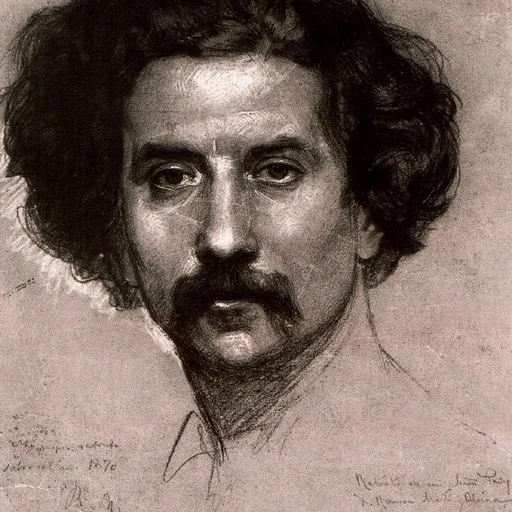
Ramón Martí i Alsina (10 August 1826, Barcelona - 21 December 1894, Barcelona) was a Spanish painter in the Realistic style.

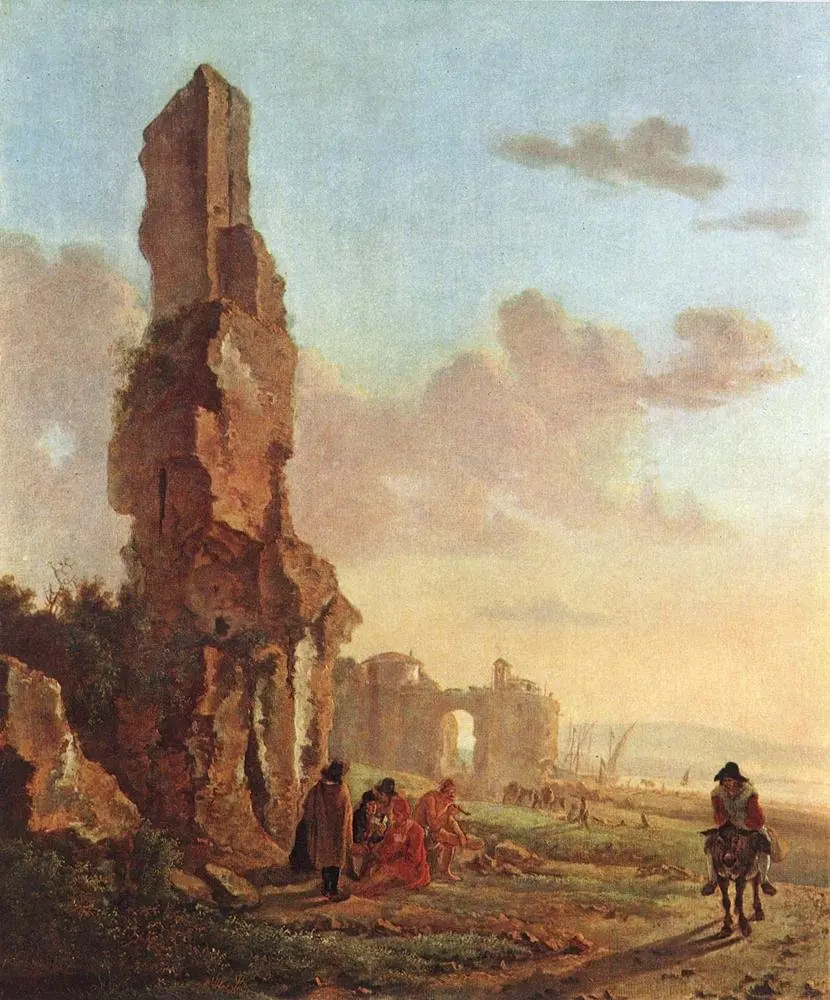 Ruins at the Sea
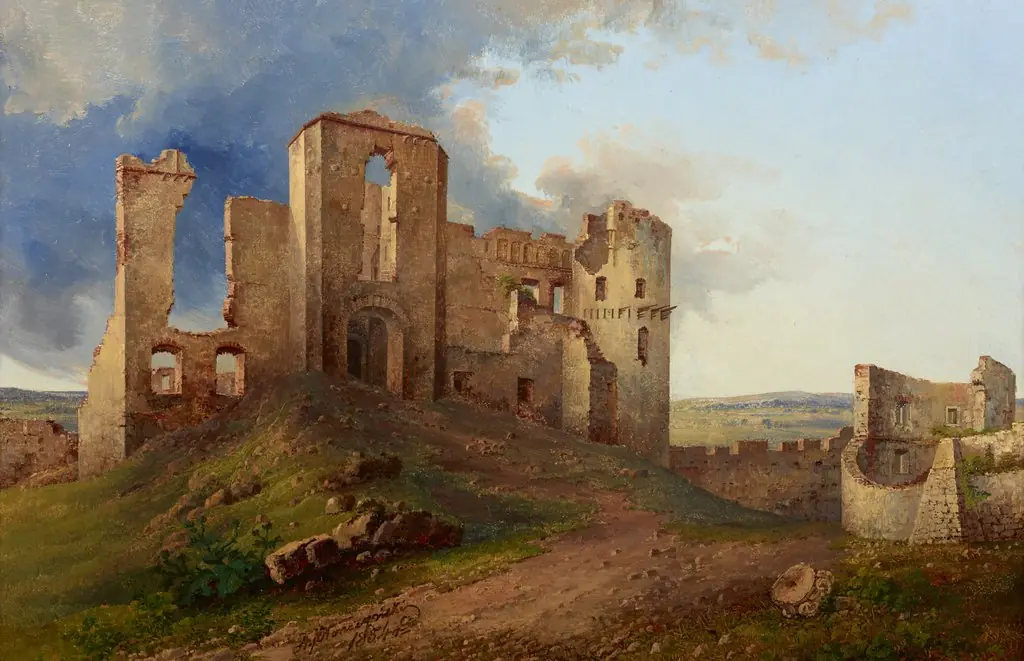 Ruins of the Tenczyn Castle
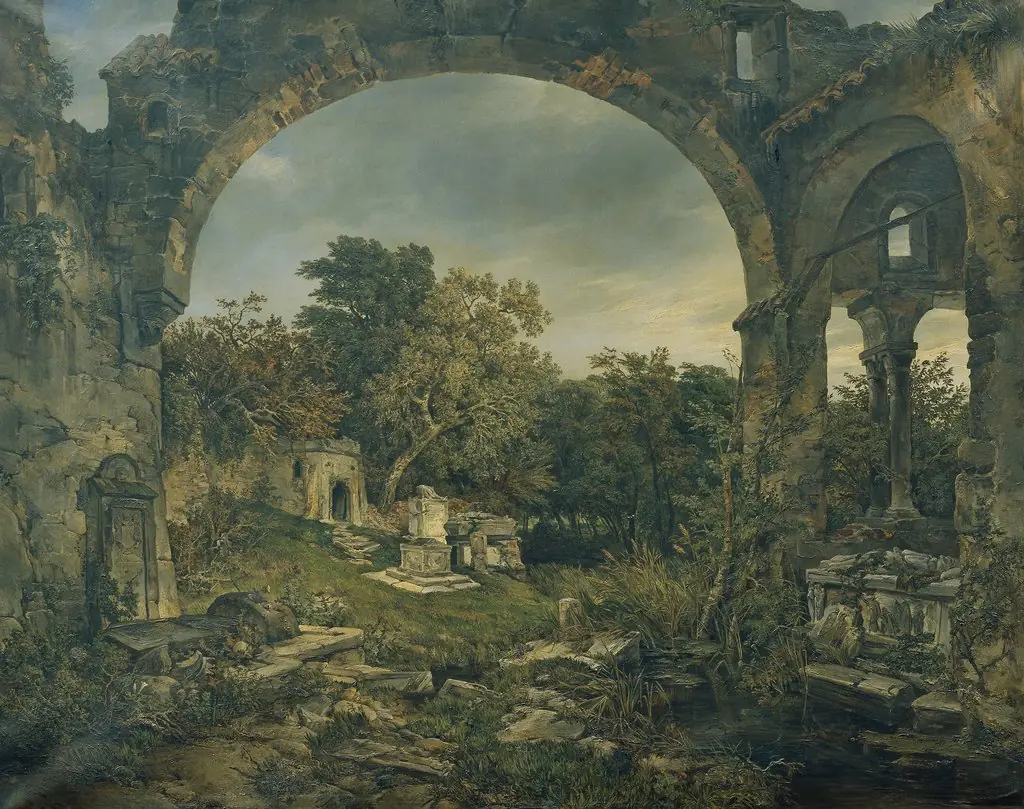 Verödeter Friedhof
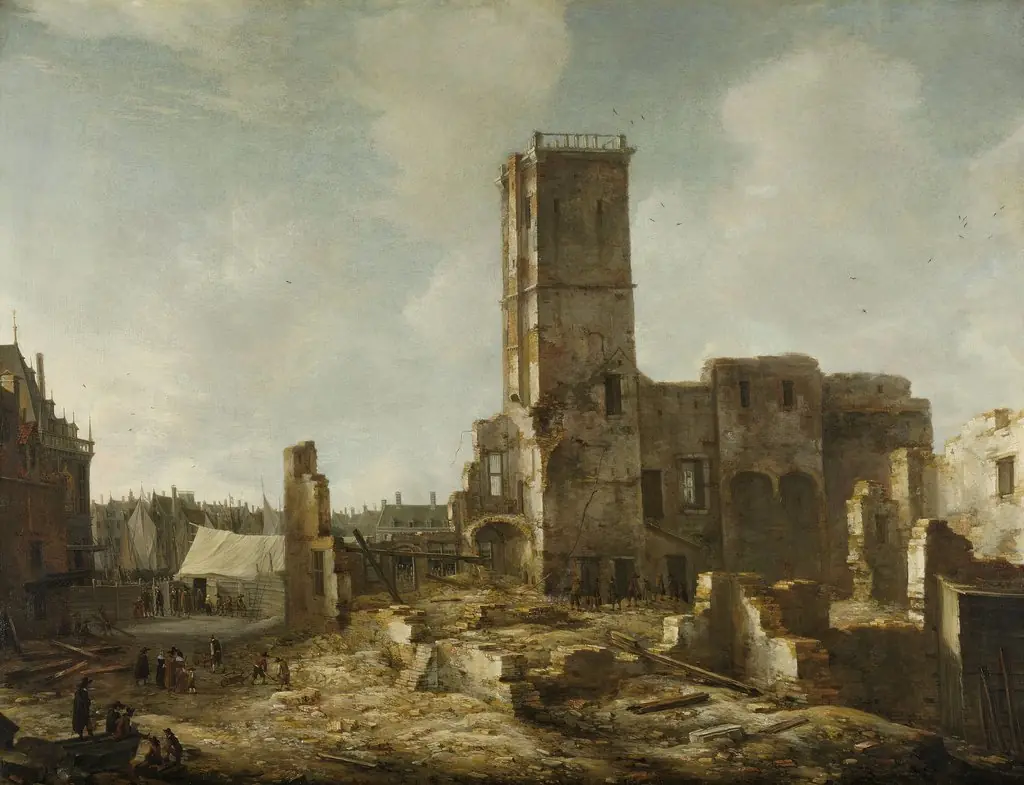 The ruins of the old town hall of Amsterdam after the fire of 7 July 1652
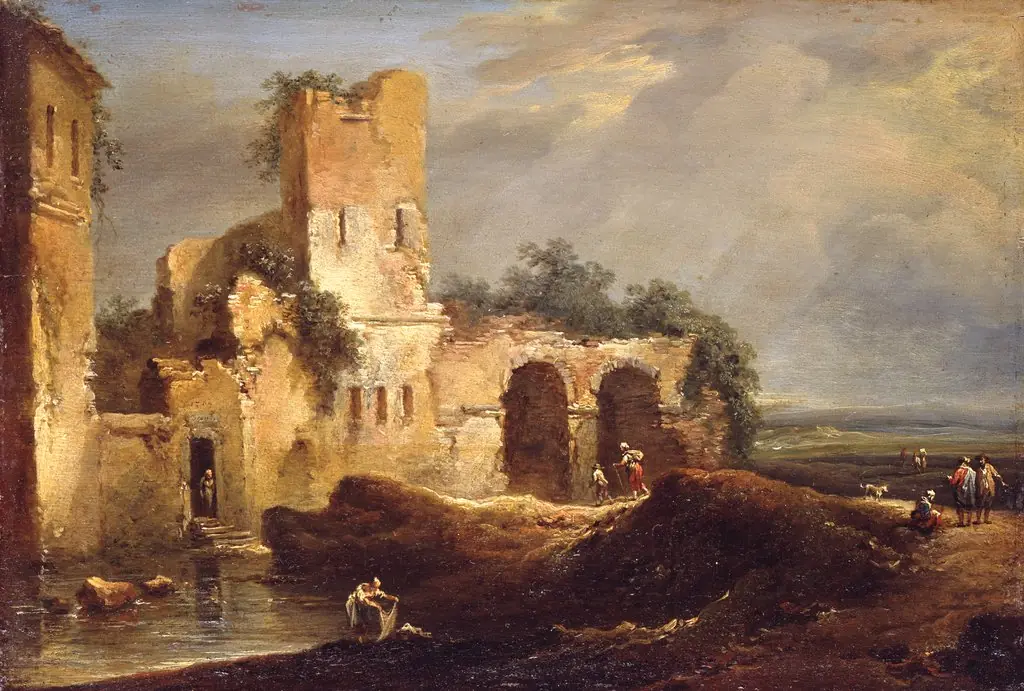 Landscape with a ruin at a stretch of water
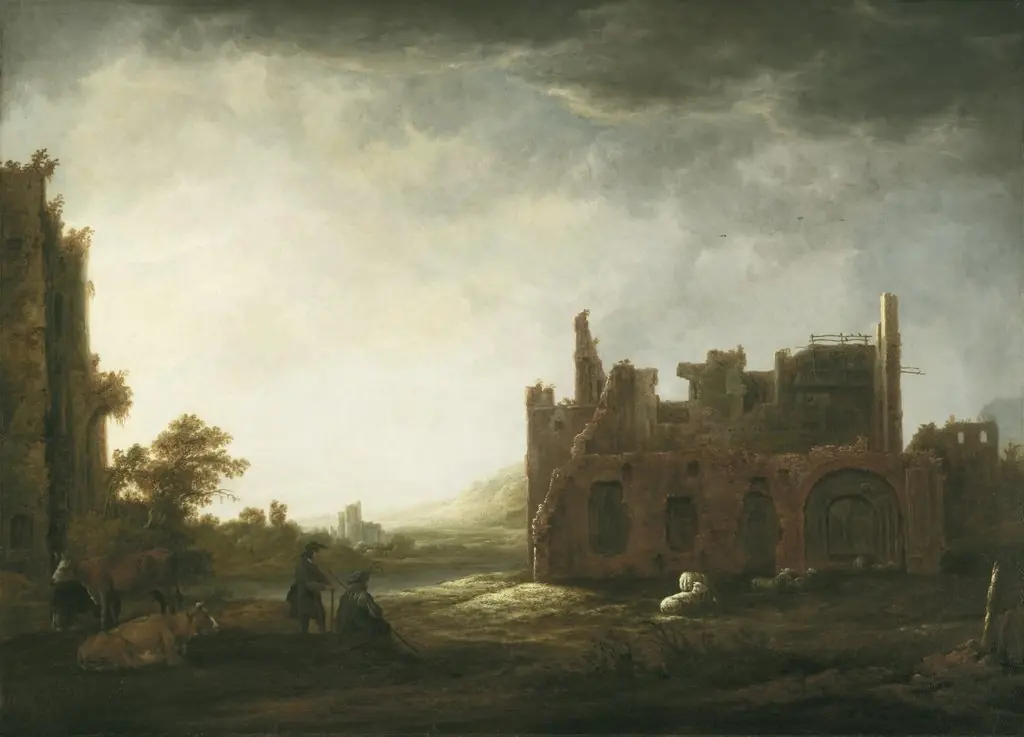 Landscape with the Ruins of Rijnsburg Abbey
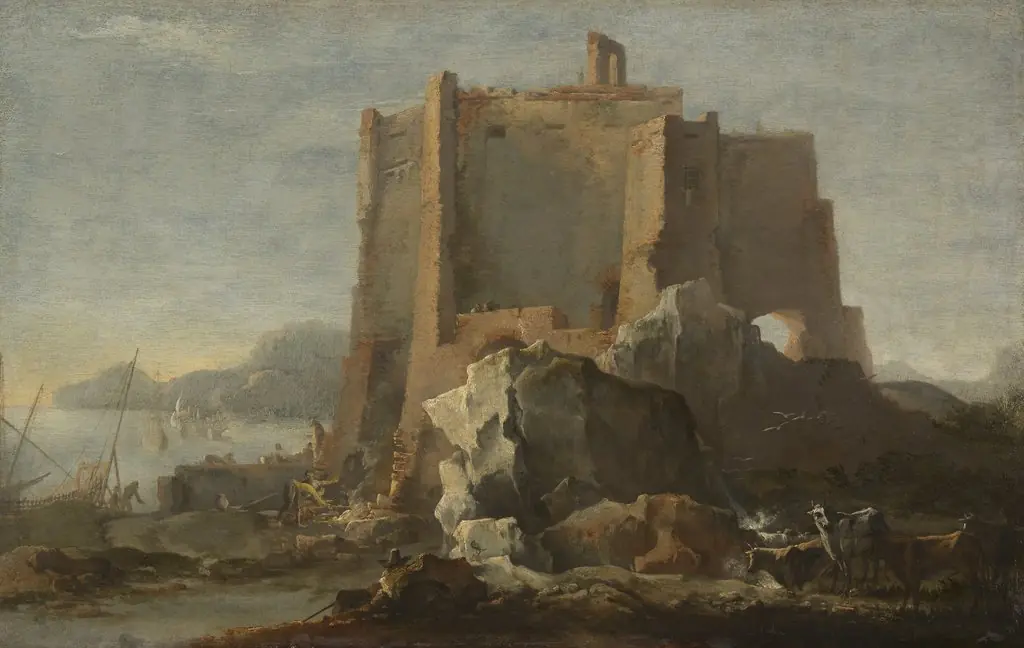 Landscape with Rock and Fortress
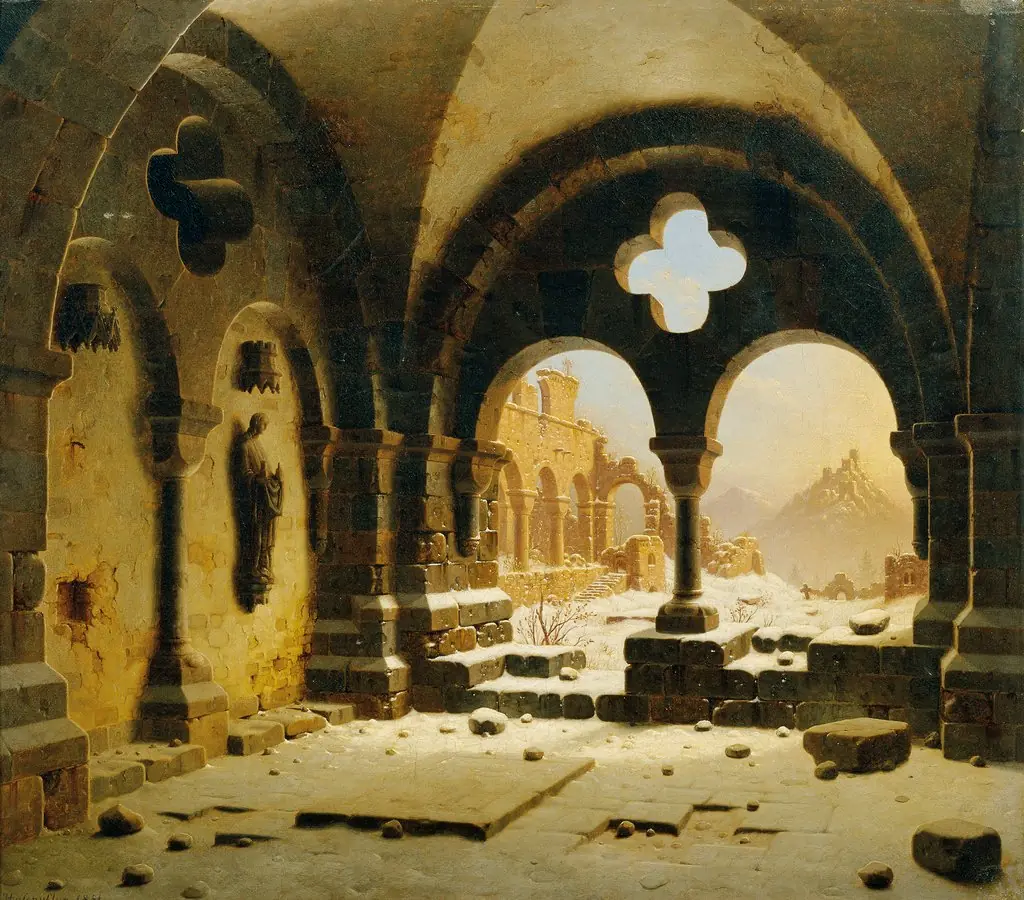 Klosterruine im Winter
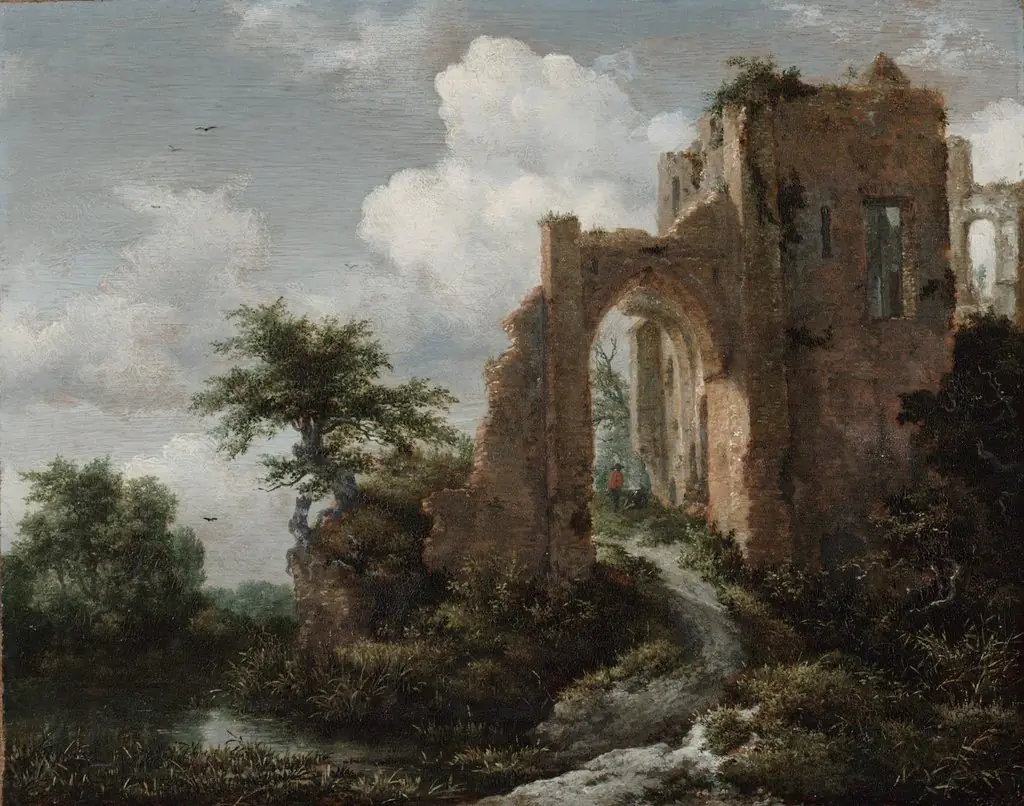 Ruins of Brederode
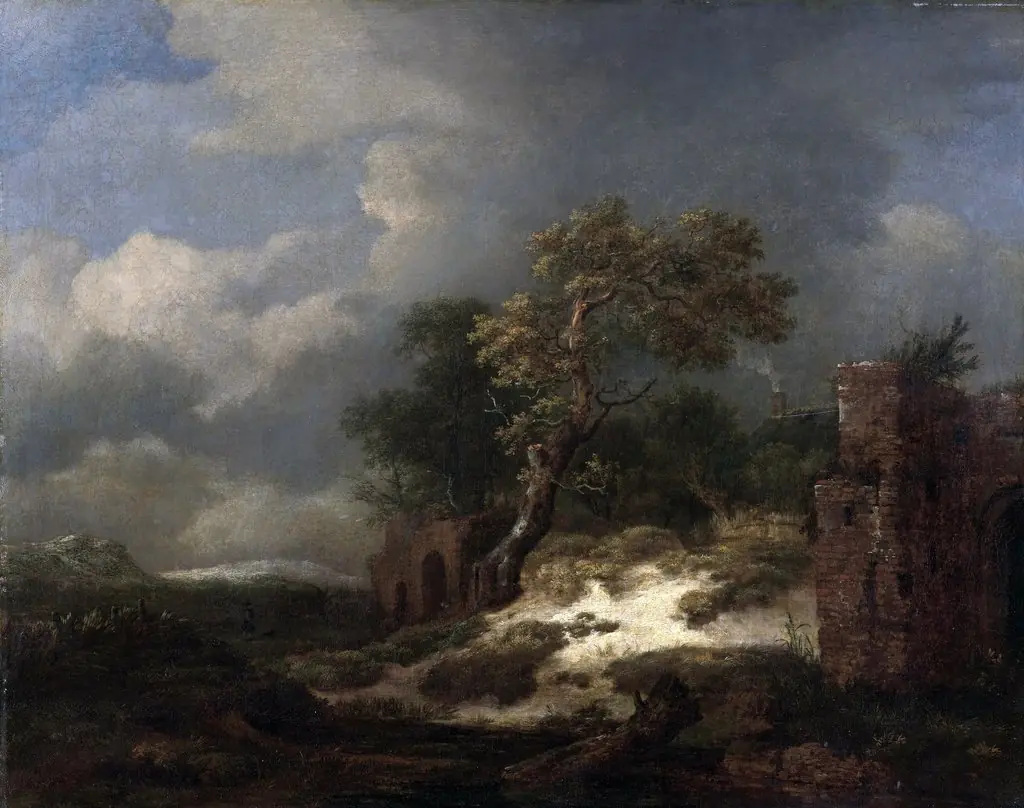 Landscape with ruins
 Ruins
Ruins