Artwork
Klosterruine im Winter
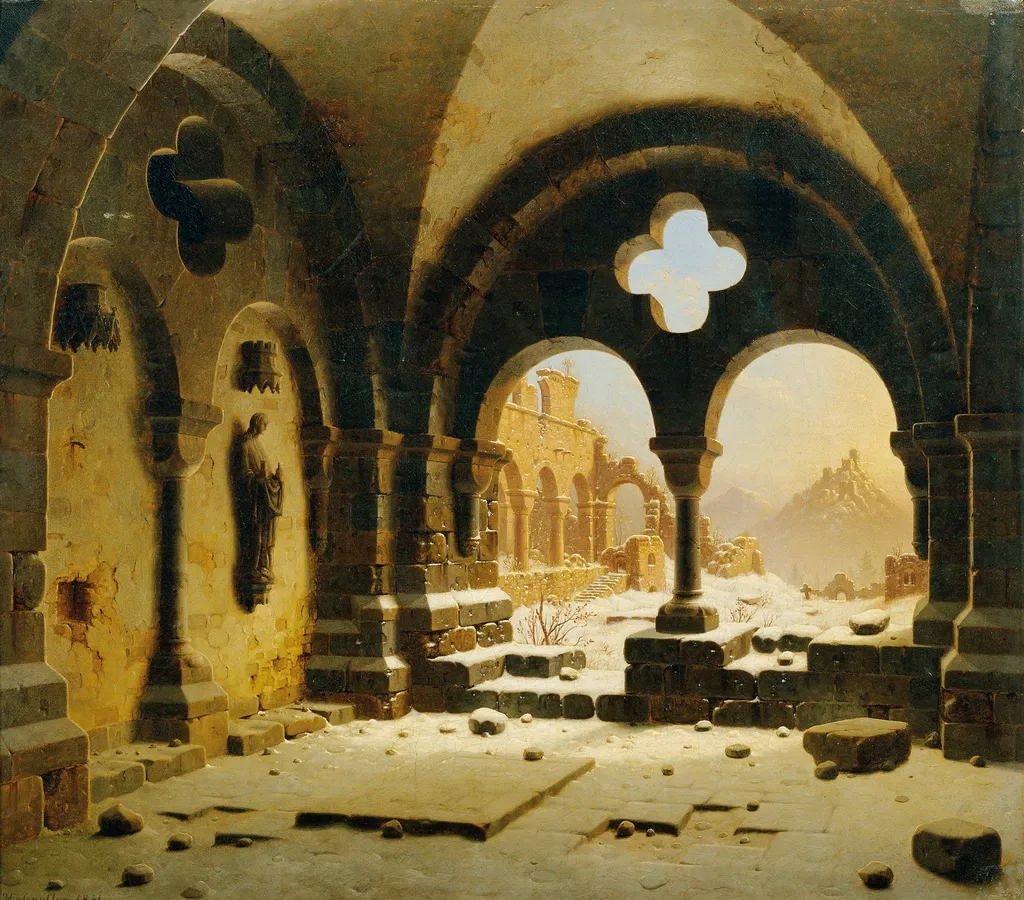
Klosterruine im Winter is an oil painting by the Biedermeier artist Carl Hasenpflug. It dates from 1851 and is held in the collection of the Kunsthistorisches Museum.
About this work
Overview
The canvas now belongs to the Kunsthistorisches Museum, where it serves as a representative example of mid‑nineteenth‑century German landscape painting.
Carl Hasenpflug’s 1851 oil painting *Klosterruine im Winter* presents a desolate monastic ruin set against a wintry backdrop. Executed within the Biedermeier aesthetic, the work balances a quiet domestic sensibility with a broader contemplation of decay. The canvas now belongs to the Kunsthistorisches Museum, where it serves as a representative example of mid‑nineteenth‑century German landscape painting.
Subject & Meaning
The composition centers on a spacious, vaulted stone chamber whose cracked arches frame a distant, crumbling castle. Scattered rubble and weathered walls convey centuries of abandonment, while the muted winter light underscores the passage of time. The scene invites reflection on the transience of human constructs against the enduring rhythms of nature.
Technique & Style
Hasenpflug employs a pronounced chiaroscuro, juxtaposing deep shadows in the interior arches with the soft, diffused illumination of the snowy exterior. Fine detailing of stone carvings and sculptural fragments demonstrates his precise draftsmanship, while the restrained palette of grays, browns, and pale blues aligns with Biedermeier’s preference for modest, realistic representation.
History & Provenance
Created in 1851, the painting entered the collection of the Kunsthistorisches Museum shortly after its completion, becoming part of the institution’s holdings of 19th‑century German art. Its provenance has remained stable, with no recorded changes of ownership beyond its acquisition by the museum.
Context
During the Biedermeier period, German artists often turned to architectural subjects to explore themes of nostalgia and national identity. Hasenpflug, noted for his meticulous renderings of historic structures, used the ruined monastery as a visual metaphor for cultural memory, aligning his work with contemporary interests in heritage and the romanticization of decay.
Own this work as a print
Artist & collection
Artist
Carl Hasenpflug (1802–1858) was a German artist who specialized in landscape painting, primarily the rendering of architecture.

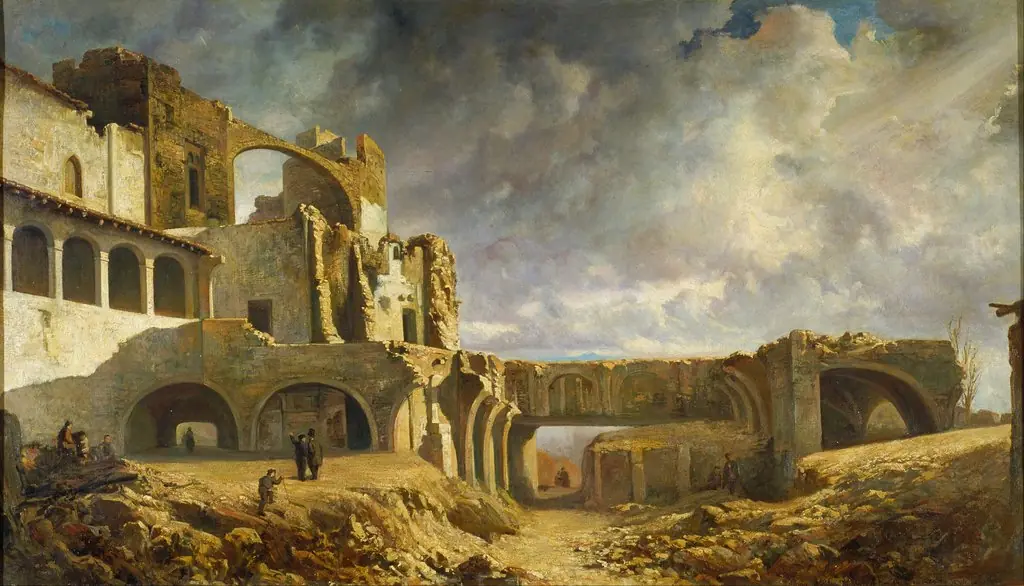 Ruins of the Palace
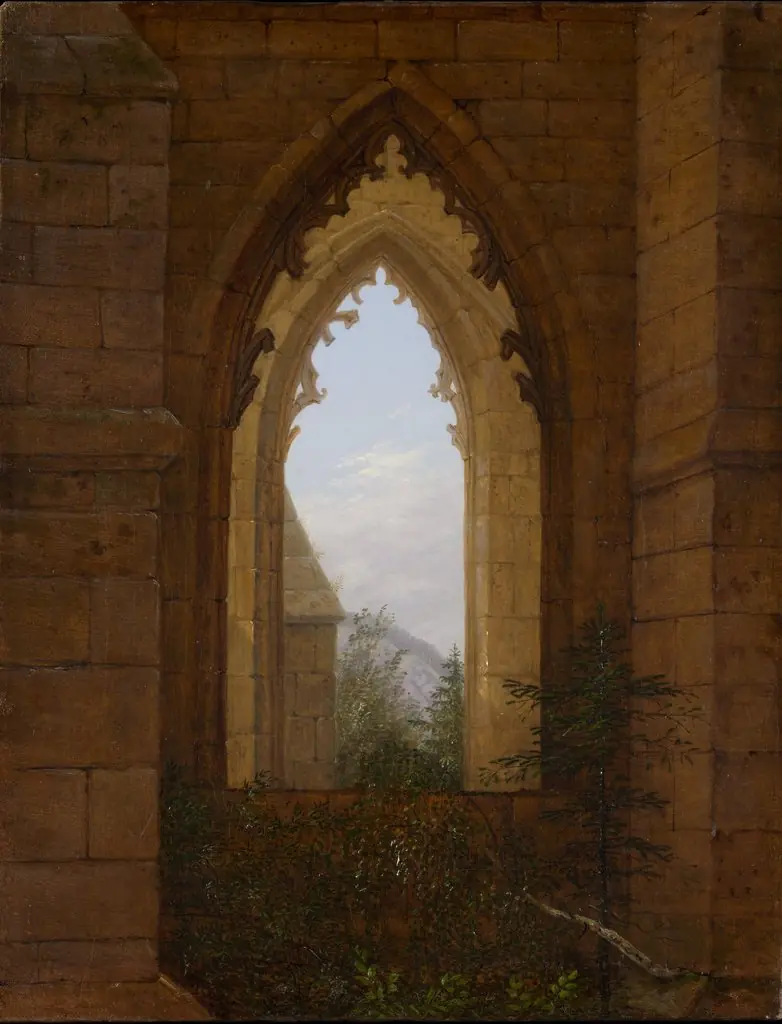 Gothic Windows in the Ruins of the Monastery at Oybin
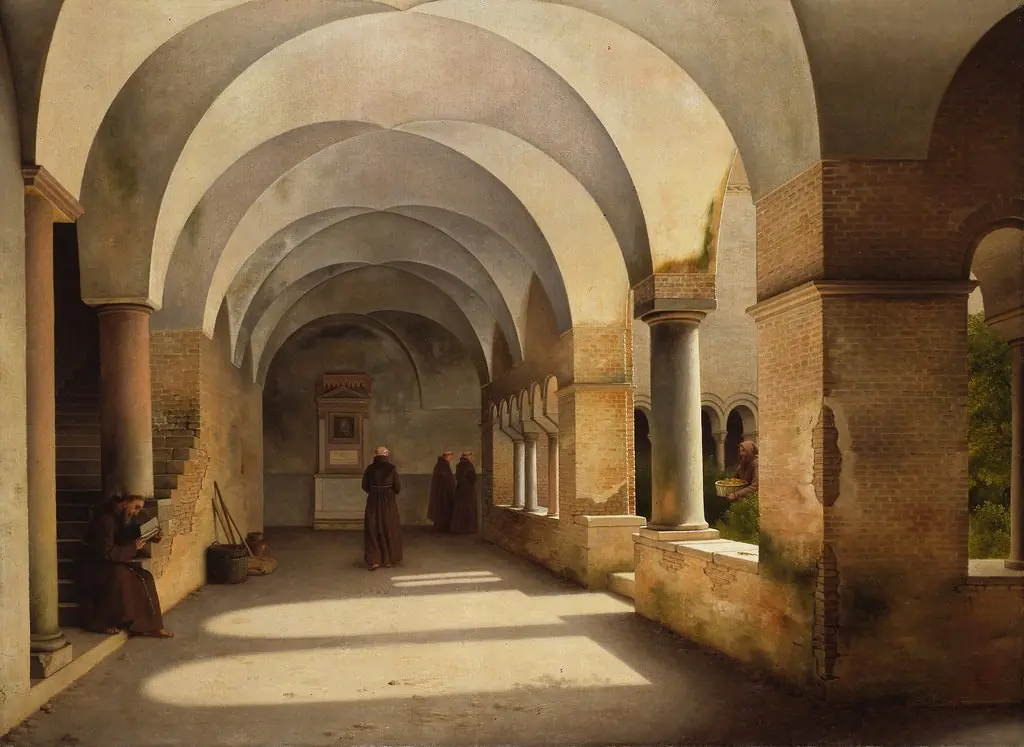 The Cloisters, San Lorenzo fuori le mura
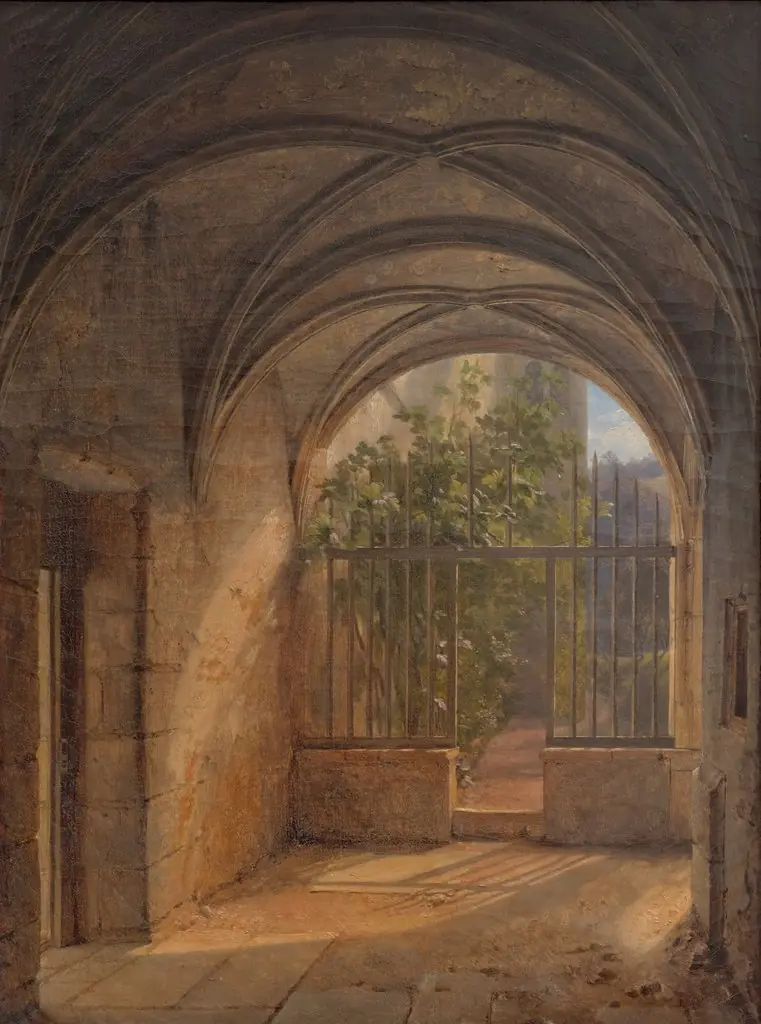 Monastery Interior
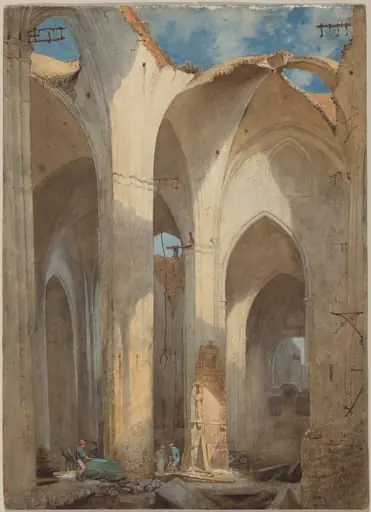 The Ruins of Saint Nicolai Church in Hamburg
 The Cloisters, San Lorenzo fuori le mura
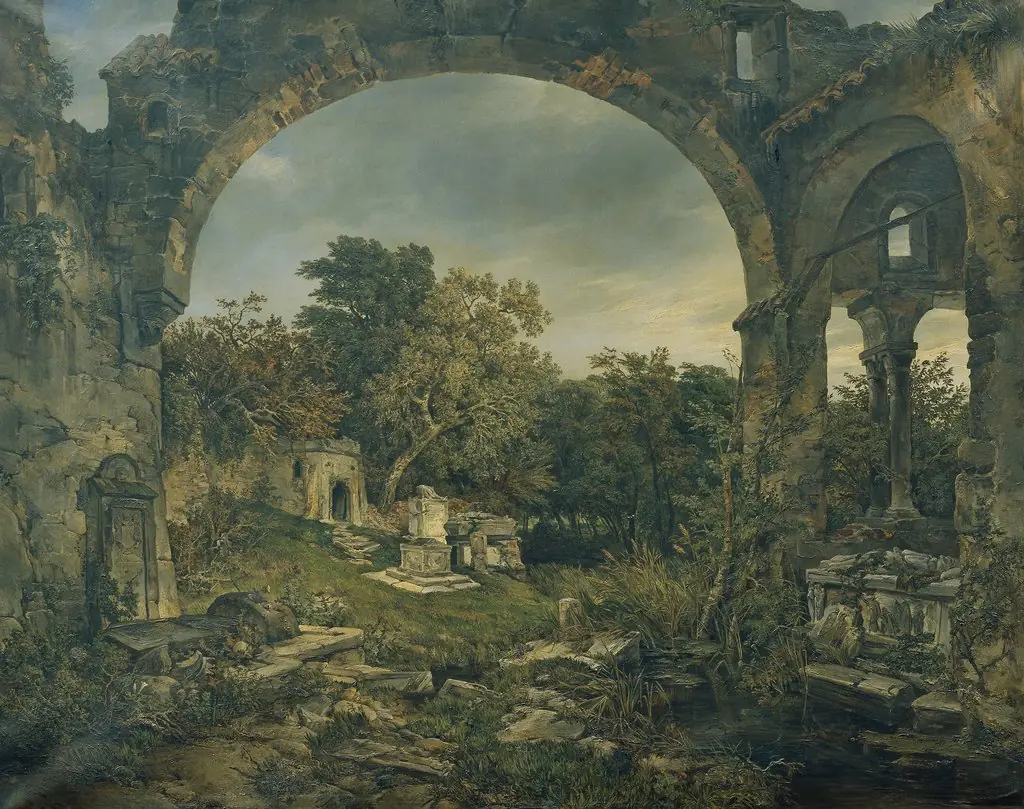 Verödeter Friedhof
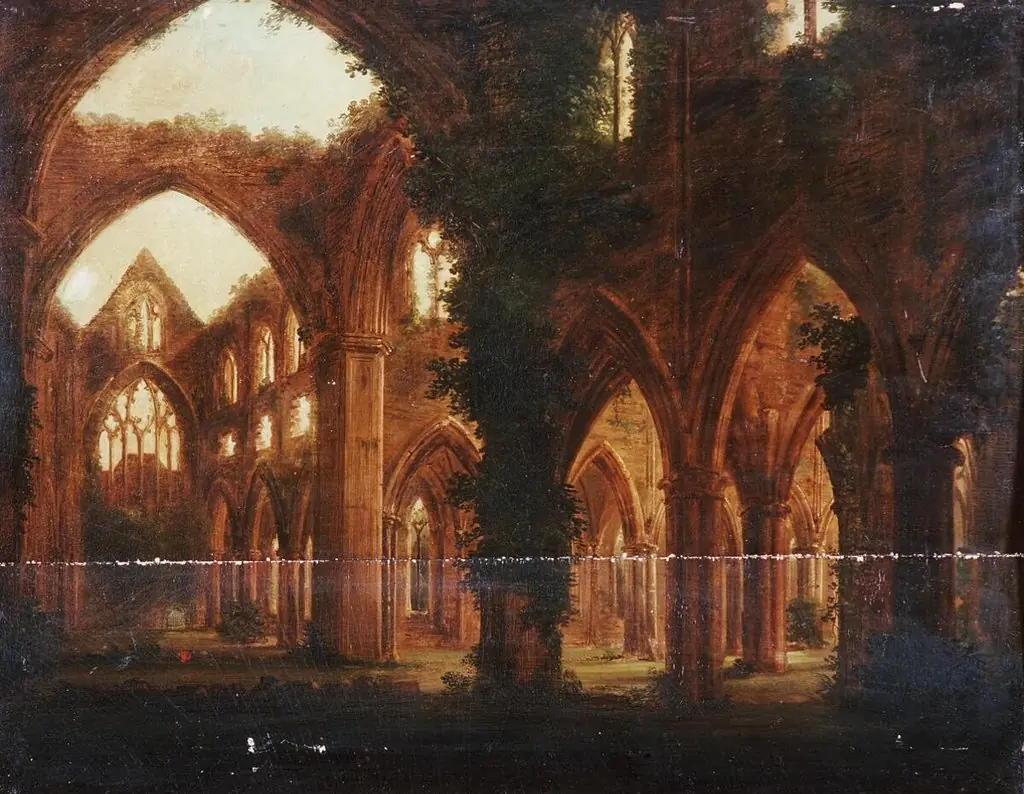 Tintern Abbey
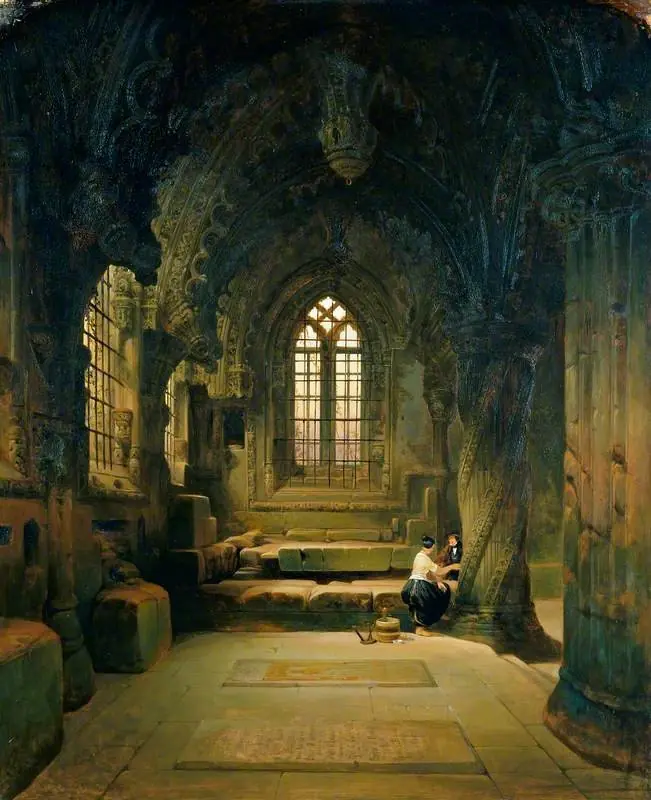 Entrance to the Crypt, Roslin Chapel
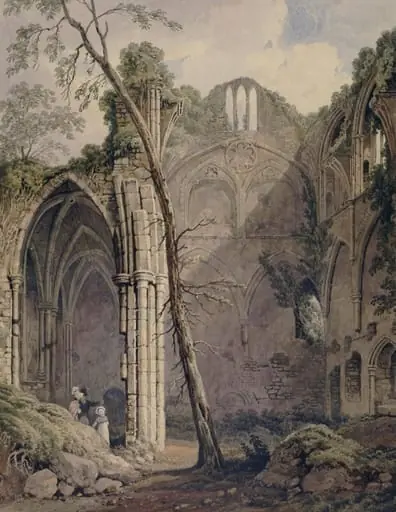 Netley Abbey, near Southampton
 Panteón de los reyes de León
 Gotisches Gruftgewölbe