Artwork
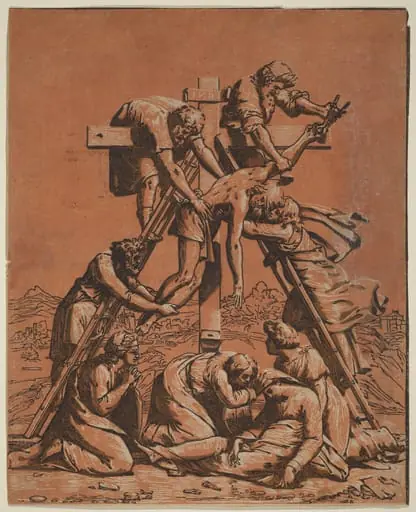
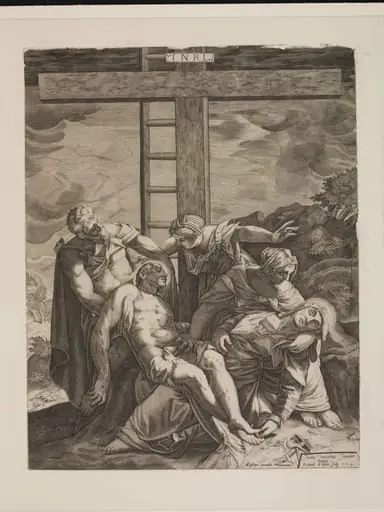
Christ taken down from the Cross
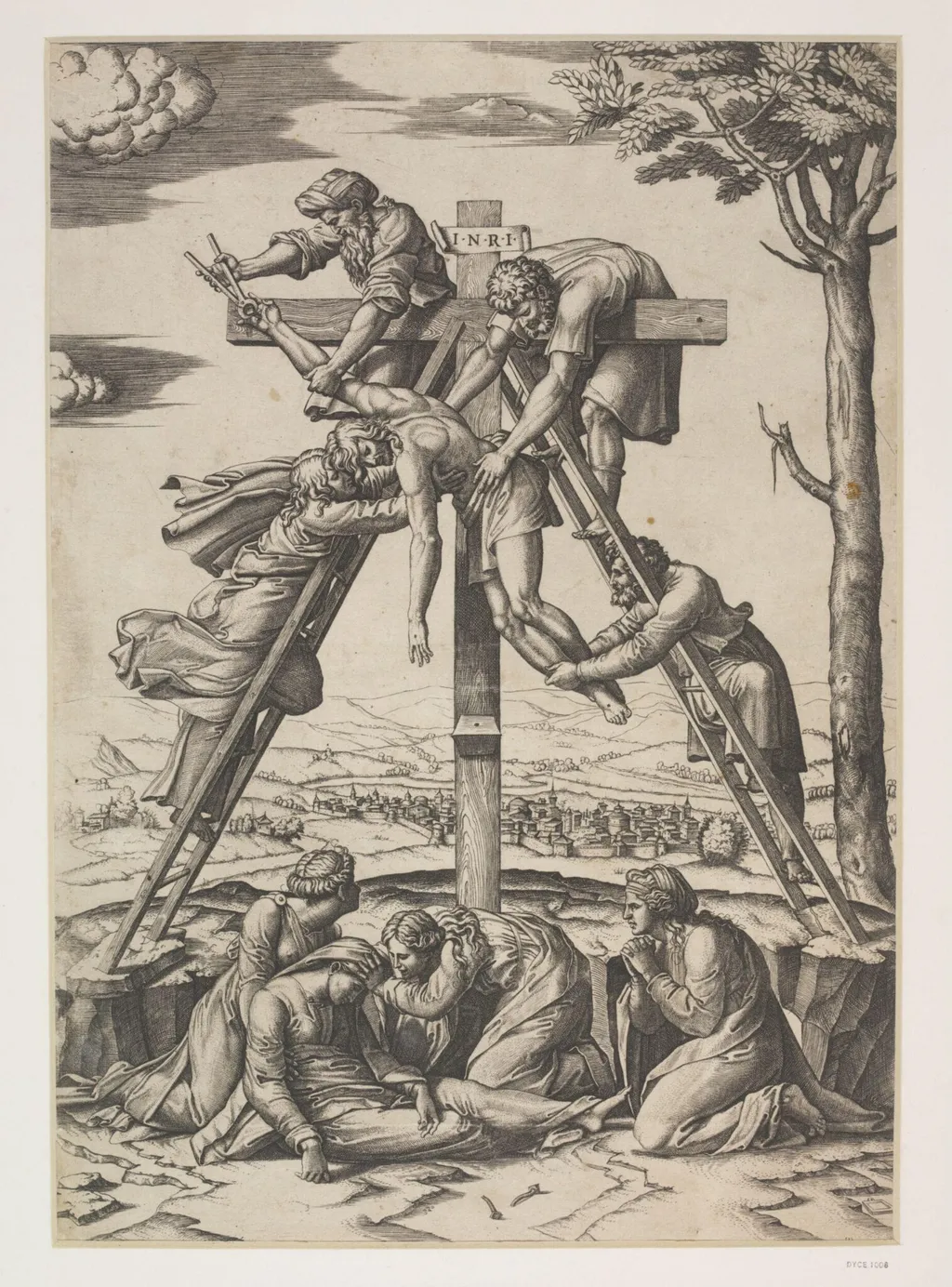
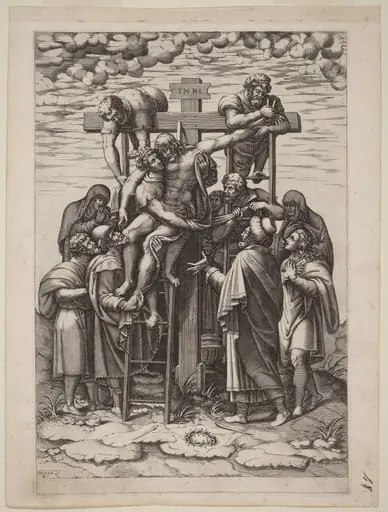
Christ taken down from the Cross is a print by the High Renaissance artist Raphael. It dates from 1490 and is held in the collection of the Victoria and Albert Museum.
About this work
Overview
Christ taken down from the Cross is a 16th-century print on paper, based on a design by Raphael, dating to 1490. The work depicts the immediate aftermath of the Crucifixion.
Subject & Meaning
The print illustrates the somber scene of Christ being removed from the cross, surrounded by a mix of figures struggling with his body and others expressing grief. The inclusion of 'INRI' on the cross underscores the narrative's religious significance, reflecting Renaissance art's emphasis on portraying Christian faith and suffering.
Technique & Style
While specific printing techniques are not detailed here, the busy composition, dramatic poses, and contrast between the dark sky and the central figures align with broader Renaissance printmaking styles, which often emphasized emotional intensity and detailed scenes.
History & Provenance
Created after Raphael's design in 1490, the print's direct provenance is not provided, though its creation aligns with the early Renaissance period's prolific production of religious artworks.
Context
This work fits within the Renaissance tradition of depicting scenes from Christian narratives to inspire devotion and reflect the era's artistic and religious values. The background detail of a small town adds a sense of everyday life intersecting with sacred events, a common Renaissance motif.
Legacy
As a print based on Raphael's design, it contributed to the widespread dissemination of his compositions throughout Europe, influencing subsequent depictions of the same subject in various art forms.
Artist & collection
Artist
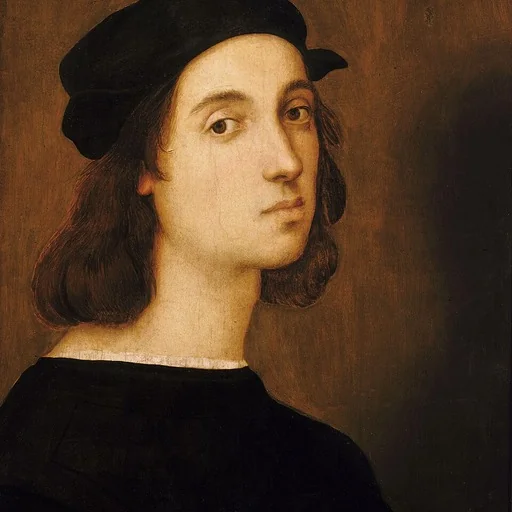
Raphael was born Raffaello Sanzio in Urbino on April 6, 1483, the son of Giovanni Santi, a painter and poet attached to the ducal court.

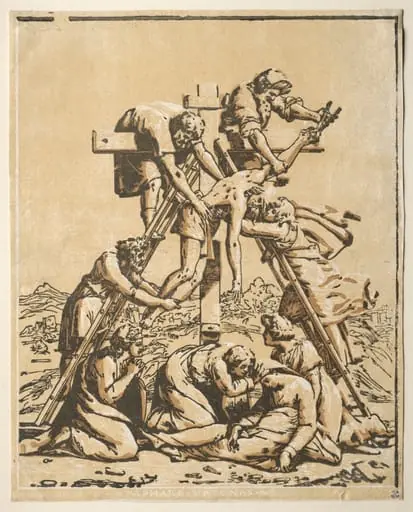 Descent from the Cross
 The Descent from the Cross
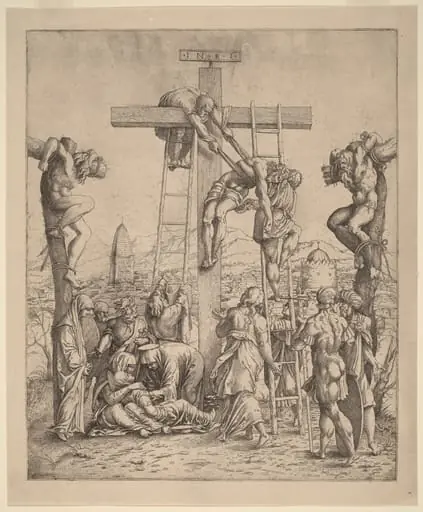 The Descent from the Cross
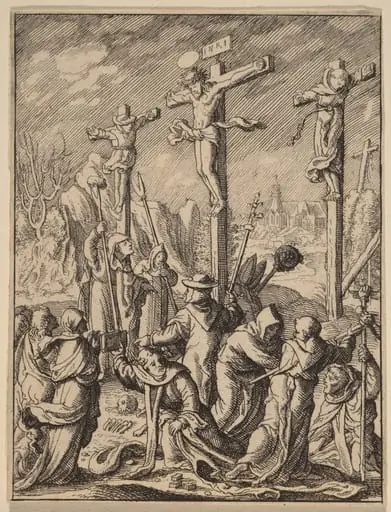 The Crucifixion
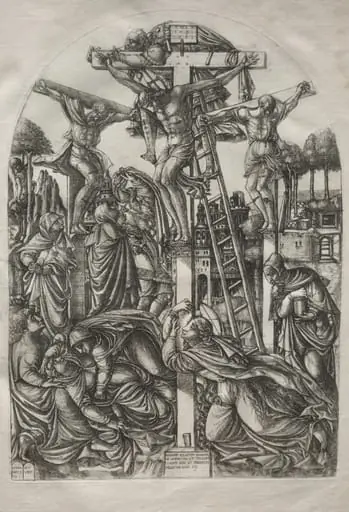 Christ on the Cross between the Two Thieves
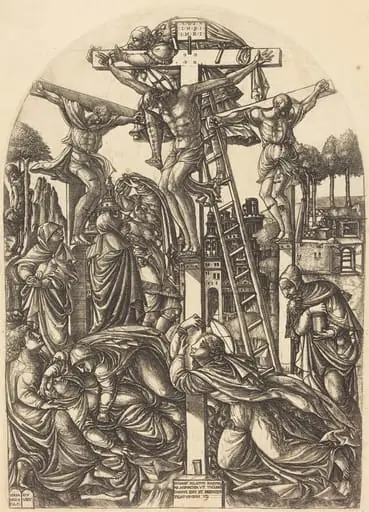 The Deposition
 The Descent from the Cross
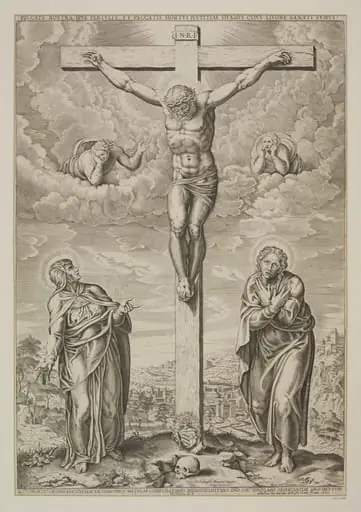 The Crucifixion and the Two Maries
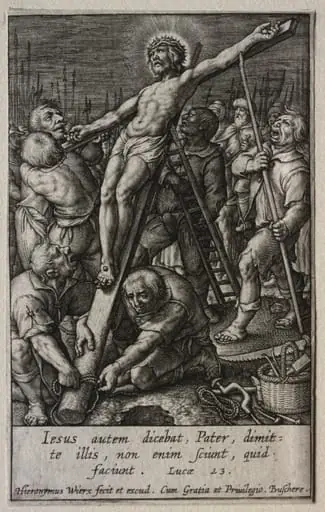 The Passion: The Raising of the Cross
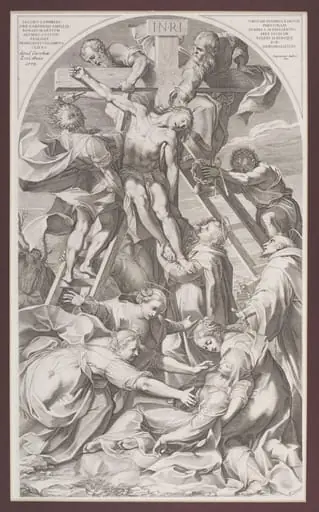 The Taking Down from the Cross
 The Descent from the Cross
 Descent from the Cross