Artwork
The Descent from the Cross
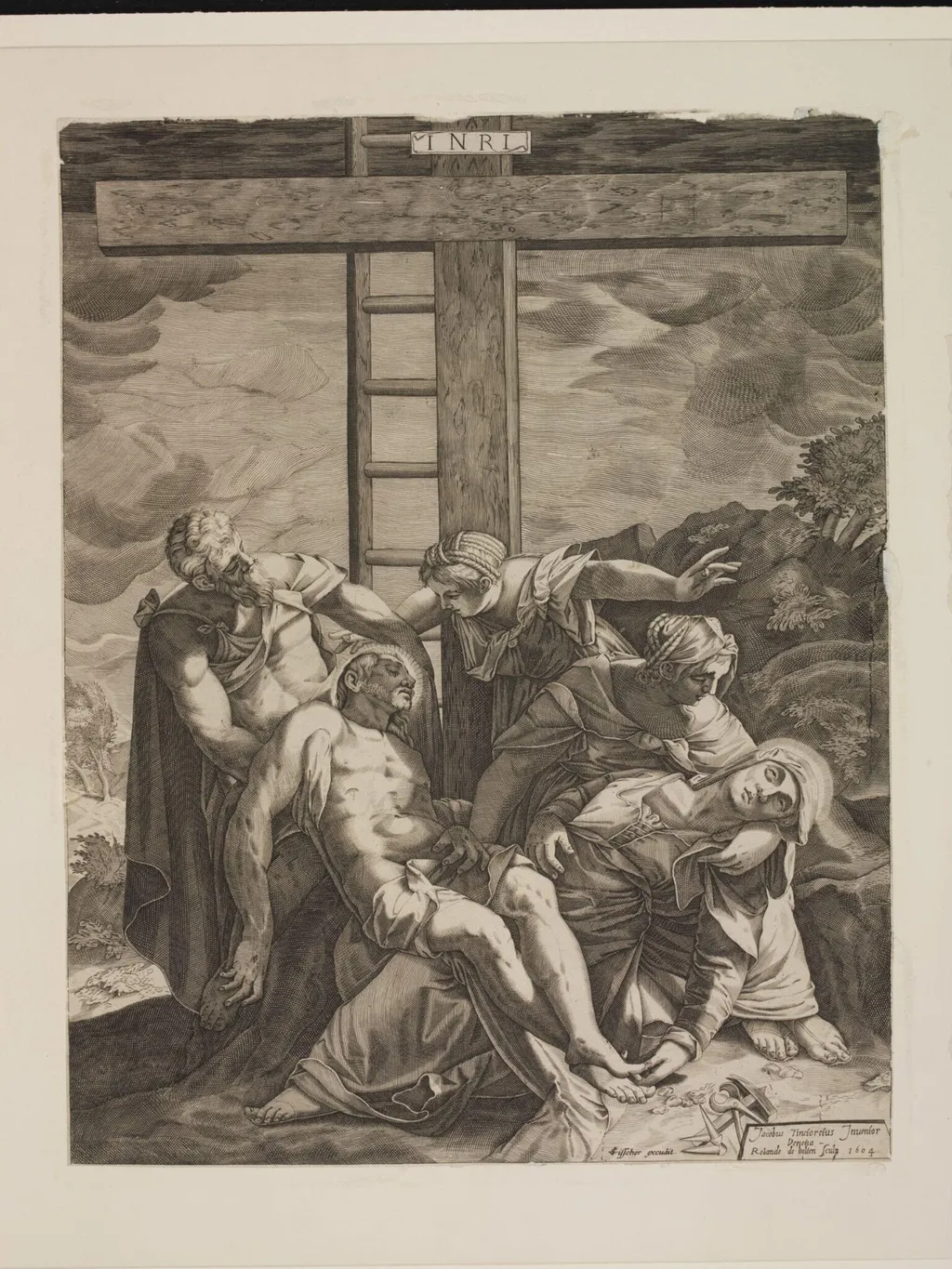
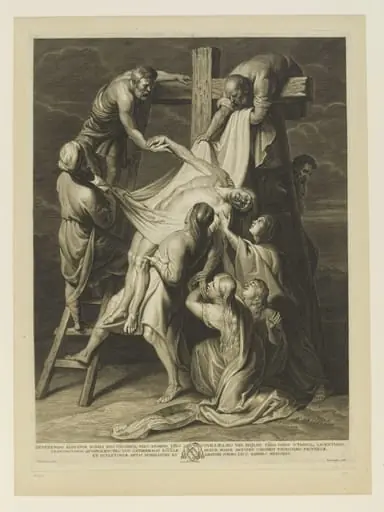
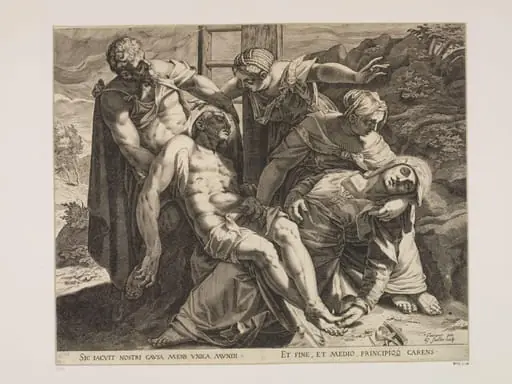
The Descent from the Cross is a print by Rinaldus van Bolten. It dates from 1650 and is held in the collection of the Victoria and Albert Museum.
About this work
Overview
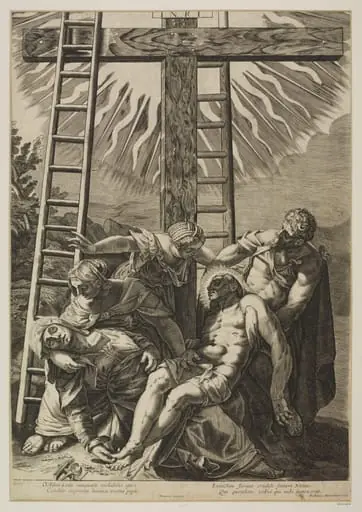
This 1650 paper print portrays the biblical episode of the Descent from the Cross. Executed by Rinaldus van Bolten, the image is a reproduction of a composition originally painted by Tintoretto. The central figure is the lifeless Christ, surrounded by mourners, with a darkened sky and a cross bearing the inscription INRI in the background.
Subject & Meaning
The scene gathers five figures around the fallen body: a man supporting Christ, a grieving woman leaning forward, and another weeping woman seated at his feet. Their gestures convey sorrow and reverence, emphasizing the human response to the crucifixion’s aftermath. The composition underscores themes of loss, devotion, and the solemn transition from death to burial.
Technique & Style
Van Bolten employs chiaroscuro, contrasting deep shadows with illuminated forms to heighten the drama. The print’s line work delineates the muscular tension of the figures and the starkness of Christ’s posture, while cross‑hatching creates texture in the drapery and background. The overall effect is a somber, weighty atmosphere characteristic of 17th‑century religious prints.
History & Provenance
It derives directly from Tintoretto’s earlier depiction of the same subject, allowing van Bolten to disseminate the composition beyond the original canvas.
Created in 1650, the print reflects the widespread practice of reproducing celebrated paintings for broader circulation. It derives directly from Tintoretto’s earlier depiction of the same subject, allowing van Bolten to disseminate the composition beyond the original canvas. The work remains a documented example of mid‑century printmaking that bridges Italian painting and Northern European engraving traditions.
Artist & collection
Artist
This Netherlandish printmaker carved biblical scenes into copper during the late 16th and early 17th centuries.