Artwork
The Descent from the Cross
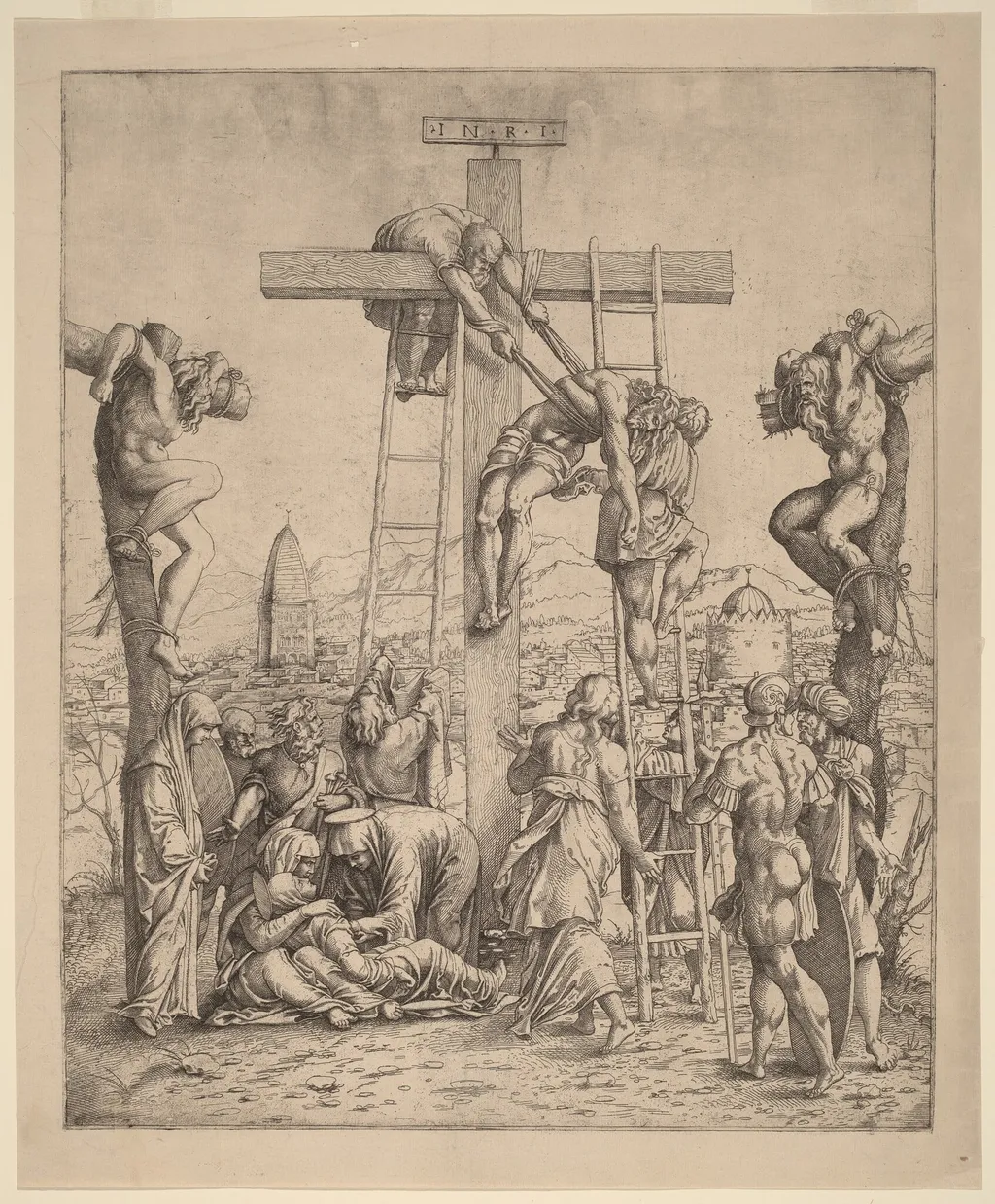
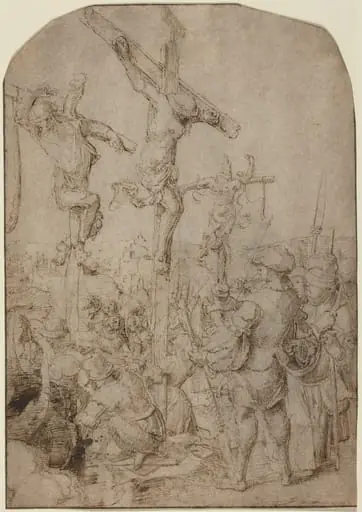
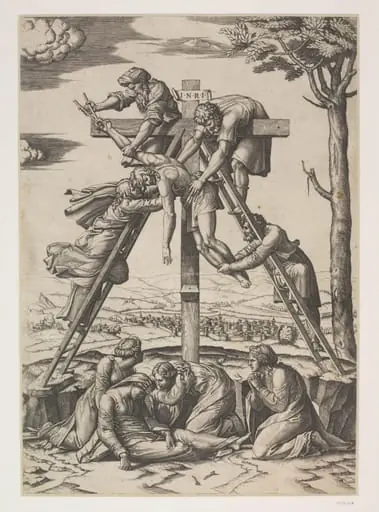
The Descent from the Cross is an ink print by the Renaissance artist Netherlandish 16th Century. It dates from 1501 and is held in the collection of the National Gallery of Art.
About this work
Overview
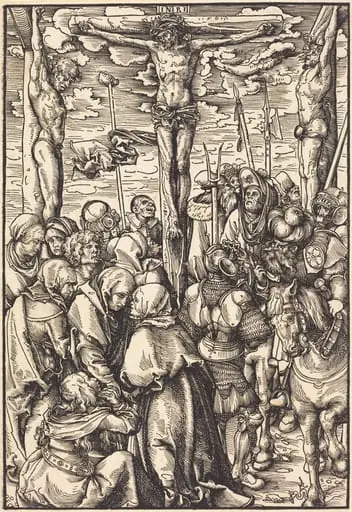
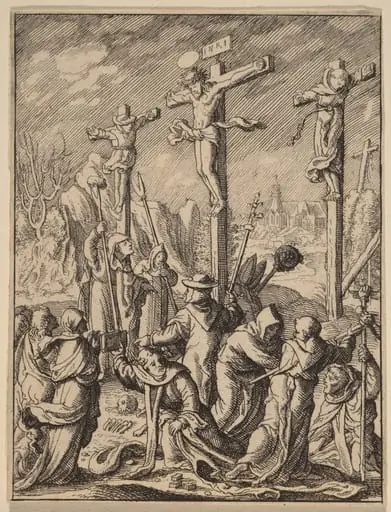
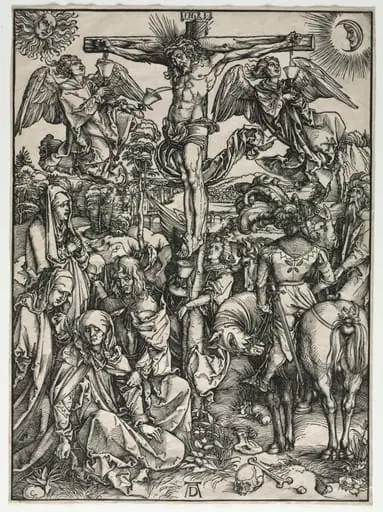
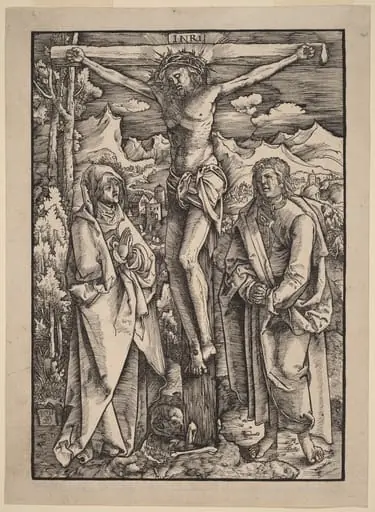
This etching presents the biblical episode of the Descent from the Cross, arranging a mournful assembly of figures around the wooden cross. The composition centers on the body of Christ being lowered by two attendants, while surrounding onlookers express grief. A distant landscape forms a muted backdrop, reinforcing the solemn atmosphere.
Subject & Meaning
The work visualizes the moment after crucifixion when Jesus is removed from the instrument of his death. The gestures of the participants—kneeling, outstretched arms, and subdued postures—convey collective sorrow and reverence, inviting contemplation of sacrifice and redemption within the Christian narrative.
Technique & Style
Executed as an intaglio print, the piece relies on fine line work and tonal shading to model forms and convey depth. The handling of light and shadow reflects Renaissance sensibilities, emphasizing naturalistic anatomy and balanced composition while retaining the crispness characteristic of printmaking.
History & Provenance
Created during the Renaissance period, the etching aligns with the era’s revival of classical motifs and disciplined draftsmanship. Its provenance traces back to early collections of religious prints, though specific ownership records remain limited.
Context
The subject was a frequent theme in Renaissance art, allowing artists to explore complex emotional states and theological concepts. By choosing the print medium, the artist could disseminate this devotional image more widely than a singular painted panel.
Artist & collection

Artist
This artist carved scenes with fine lines, mostly religious and mythological ones.