Artwork
Monsoon in Bombay
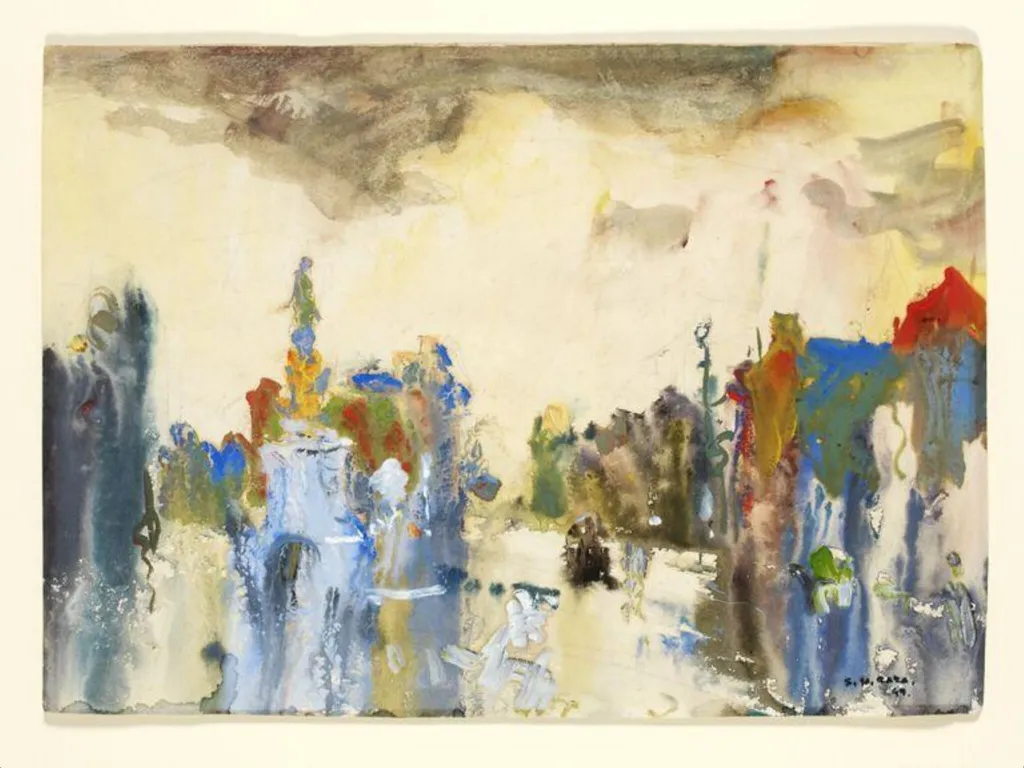
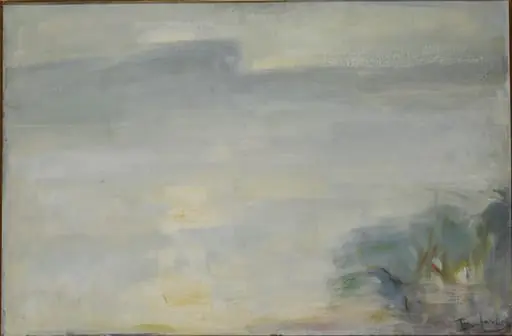
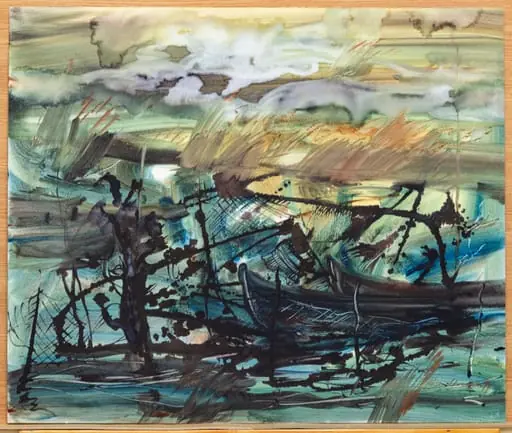
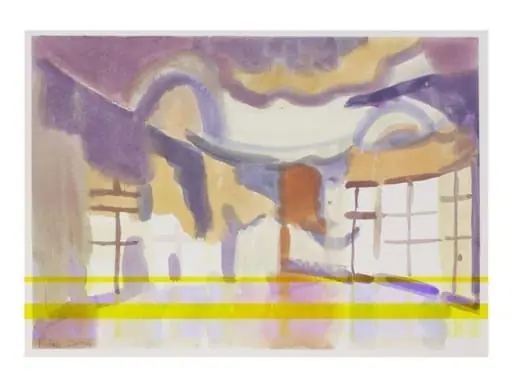
Monsoon in Bombay is a paint painting by Sayed Haider Raza. It dates from 1947 and is held in the collection of the Victoria and Albert Museum.
About this work
This was a time when Raza was part of the Progressive Artists' Group, which included other artists like Francis Newton Souza and Krishnaji Howlaji Ara.
Monsoon in Bombay is a painting by Sayed Haider Raza. It's from around 1947 to 1949.
The painting depicts Flora Fountain in the rain, a famous landmark in southern Bombay. This was a time when Raza was part of the Progressive Artists' Group, which included other artists like Francis Newton Souza and Krishnaji Howlaji Ara.
To learn more about the artist's style and influences, look up the artist: Raza, Sayed Haider.
Overview
Monsoon in Bombay, painted between 1947 and 1949, captures Flora Fountain during a heavy rainstorm. Created by Syed Haider Raza during his early years in Bombay, the work reflects his engagement with urban life and shifting artistic priorities. At this time, Raza was an active member of the Progressive Artists' Group, which sought to redefine Indian art beyond traditional nationalist frameworks. The painting stands as an early example of his transition from figurative representation toward abstraction.
Subject & Meaning
The painting centers on Flora Fountain, a colonial-era monument in southern Bombay, rendered under the influence of monsoon rain. Rather than a documentary view, Raza interprets the scene through atmospheric distortion—wet surfaces, blurred outlines, and cascading lines suggest movement and emotional intensity. The fountain, a symbol of imperial legacy, becomes a vessel for personal and cultural transformation, echoing the broader societal shifts in post-independence India.
Technique & Style
Raza employs loose brushwork and a muted, rain-saturated palette to evoke the dampness and chaos of a monsoon downpour. Forms are simplified yet dynamically composed, showing traces of Expressionist energy and early Cubist fragmentation. While still rooted in observable reality, the painting reveals Raza’s movement away from literal depiction toward emotional resonance. The handling of light and texture anticipates his later abstract explorations, where structure gives way to inner experience.
History & Provenance
Created shortly after Raza co-founded the Progressive Artists' Group in 1947, the work emerged from a period of intense artistic experimentation in Bombay. It predates his 1950 move to Paris, where he would fully embrace abstraction. Monsoon in Bombay remains one of the few surviving early works from this transitional phase, offering insight into his development before his international career took shape. Its provenance is tied to private collections in India until its later institutional recognition.
Context
Raza’s work in the late 1940s unfolded amid a broader cultural reorientation in India. The Progressive Artists' Group rejected the romantic nationalism of the Bengal School, instead drawing from European modernism—Surrealism, Expressionism, and Cubism—to forge a new visual language. This context shaped Raza’s approach: he sought to reconcile Indian subject matter with avant-garde techniques, positioning his art within global modernist dialogues while remaining grounded in local experience.
Legacy
Monsoon in Bombay marks a critical juncture in Raza’s evolution, bridging his early figurative phase with the abstract symbolism he would later develop. Though less known than his mature works, this painting illustrates how personal observation and collective artistic ambition intersected in postcolonial India. It remains a significant reference point for understanding the early trajectory of modern Indian art and the role of urban landscapes in shaping new aesthetic directions.
Artist & collection
Artist
Sayed Haider Raza painted India in the late 1940s—lush scenes of cities and monsoon skies.