Artwork
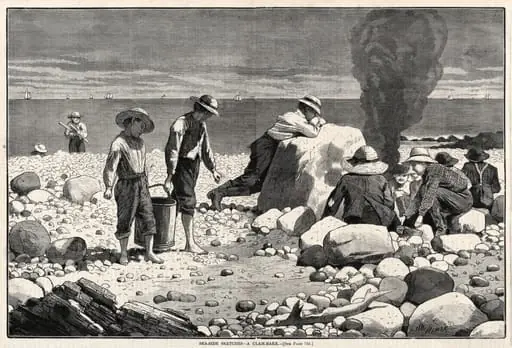
Sea-Side Sketches - A Clam-Bake
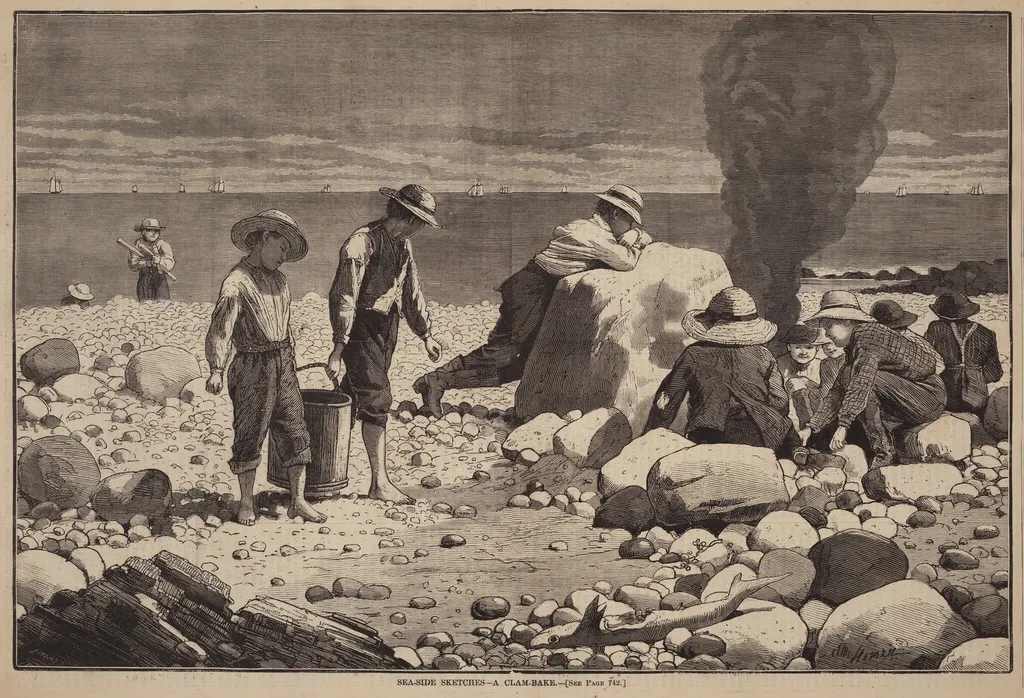
Sea-Side Sketches - A Clam-Bake is an ink print by the Impressionist artist William H. Redding. It dates from 1873 and is held in the collection of the National Gallery of Art. Created in 1873 by William H.
About this work
Overview
Created in 1873 by William H. Redding, this wood engraving captures a coastal scene of labor and communal activity. Rendered in monochrome, the image depicts individuals gathering clams on a rocky shore, with tools and buckets scattered around. The ocean forms a quiet backdrop, dotted with distant vessels, grounding the scene in a specific time and place along the New England coast.
Subject & Meaning
The scene portrays a traditional clam-bake, a local practice of harvesting shellfish for cooking. Figures are shown in various stages of labor—digging, sorting, and resting—emphasizing the physical effort involved. The title and composition suggest not leisure, but a practical, seasonal ritual tied to the rhythms of the sea and coastal livelihoods.
Technique & Style
Executed as a wood engraving, the work uses fine, precise lines to render texture in sand, rock, and fabric. The black-and-white contrast enhances the clarity of forms, while the dense detailing in clothing and tools reflects the engraver’s attention to everyday realism. The composition avoids dramatic flair, favoring quiet observation over theatricality.
History & Provenance
The print was produced during a period when illustrated periodicals popularized scenes of American rural and coastal life. Redding, known for his work in publications like Harper’s Weekly, likely created this piece for mass reproduction. Its survival in institutional collections suggests it was valued as a document of vernacular culture rather than fine art.
Context
In the post-Civil War era, images of everyday labor gained traction as the nation sought to define its identity through ordinary experiences. Coastal communities, especially in New England, were frequently depicted as symbols of resilience and self-reliance. This engraving aligns with broader efforts to record and preserve regional customs amid industrialization.
Legacy
Though not widely known today, the engraving remains a quiet record of pre-tourism coastal life. It contributes to a visual archive of working-class practices that were often overlooked in mainstream art. Its preservation in archives and museum collections ensures its continued role as a historical witness to seasonal labor and community ritual.
Artist & collection


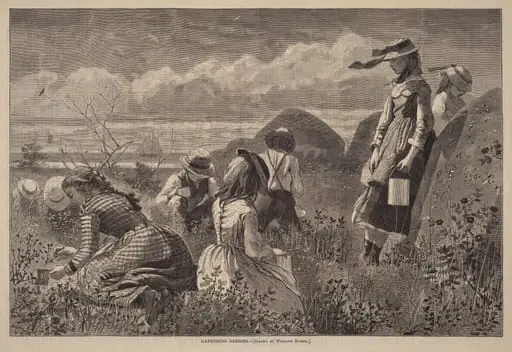 Gathering Berries
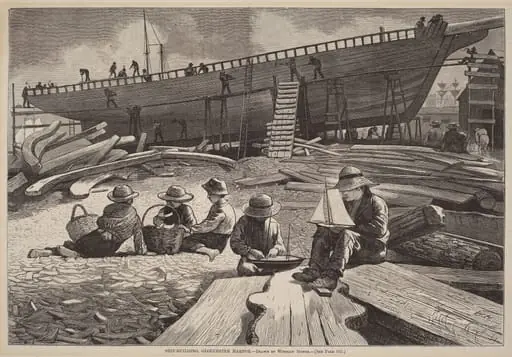 Ship-Building, Gloucester Harbor
 Ship-Building, Gloucester Harbor
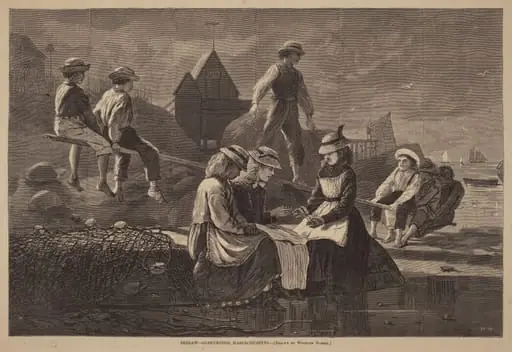 Seesaw - Gloucester, Massachusetts
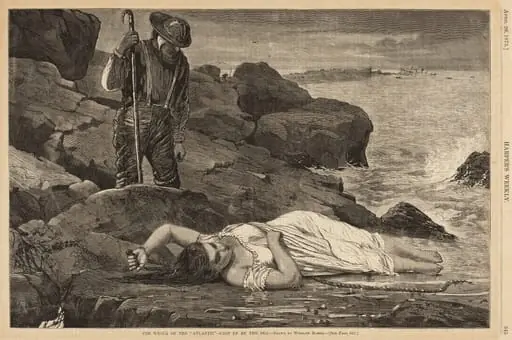 The Wreck of the "Atlantic" - Cast Up by the Sea
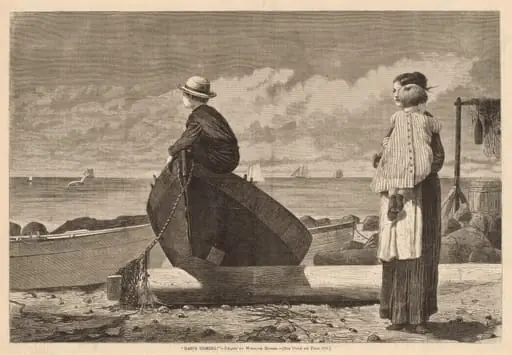 "Dad's Coming!"
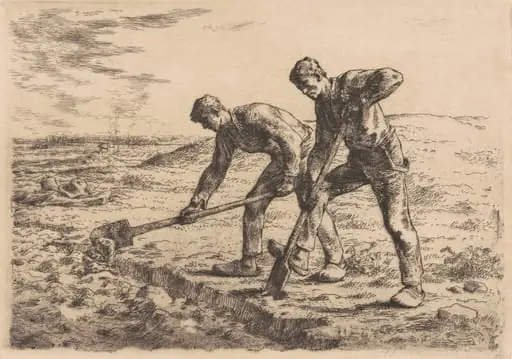 The Diggers (Les Becheurs)
 Near Mattakeesett
 Making Hay
 Gathering Berries
 Seaside Sketches - A Clam-Bake
 On the Beach - Two are Company, Three are None