Artwork
Making Hay
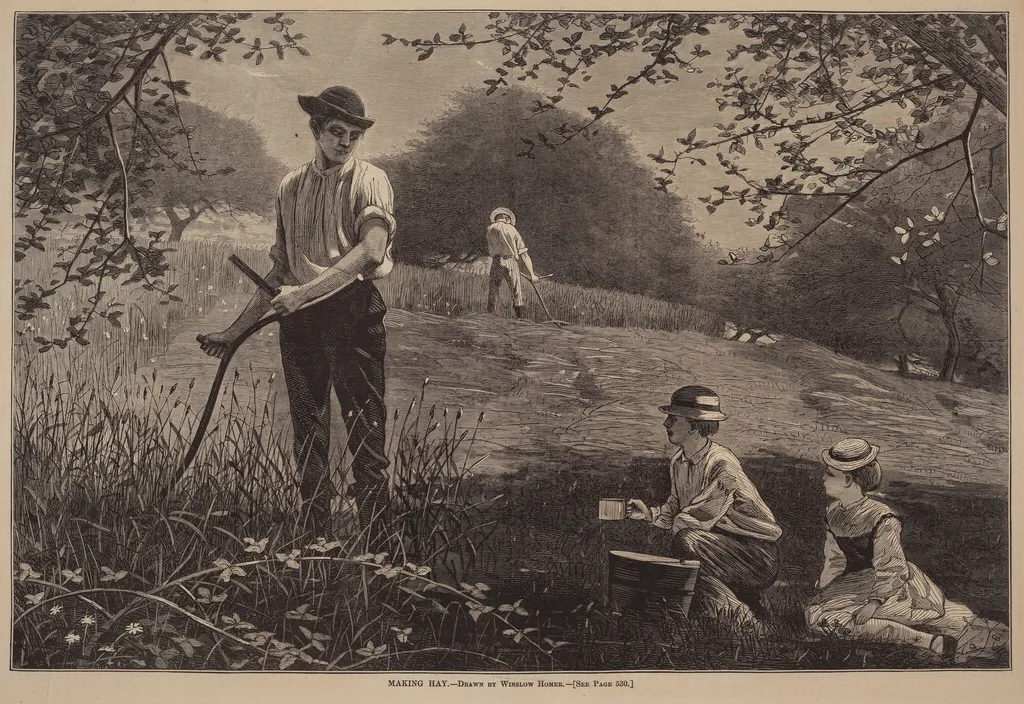
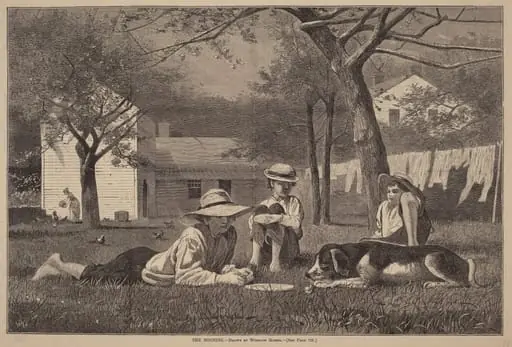
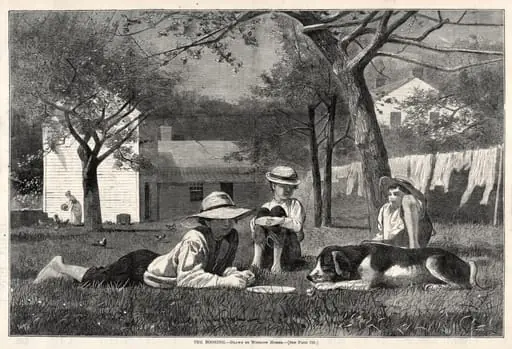
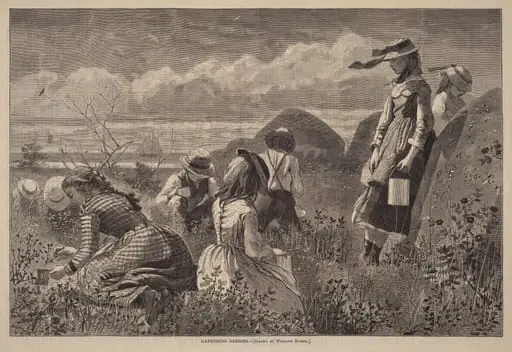
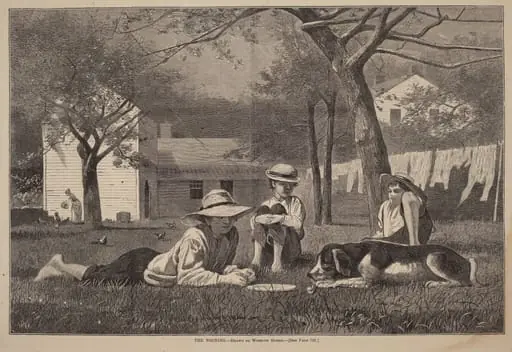
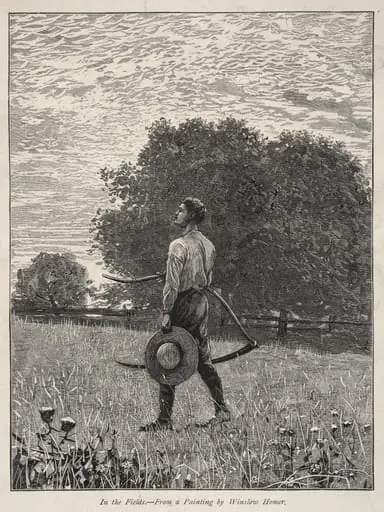
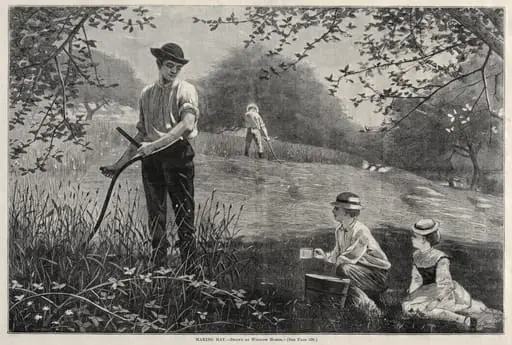
Making Hay is an ink print by the Impressionist artist American 19th Century. It dates from 1872 and is held in the collection of the National Gallery of Art. This wood engraving depicts rural labor in a quiet, sunlit field.
About this work
Overview
Three figures engage in different activities—working, resting, and observing—while a fourth figure appears faintly in the distance.
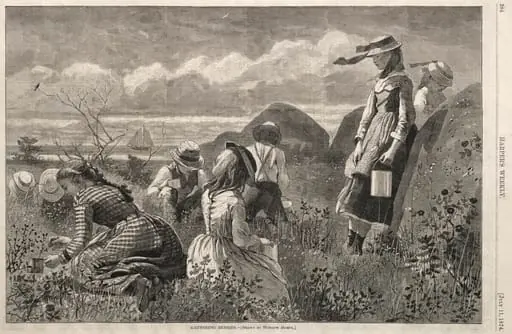
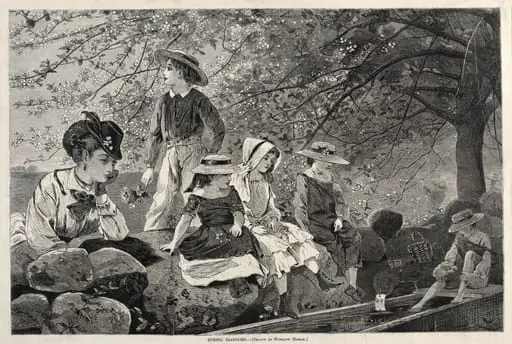
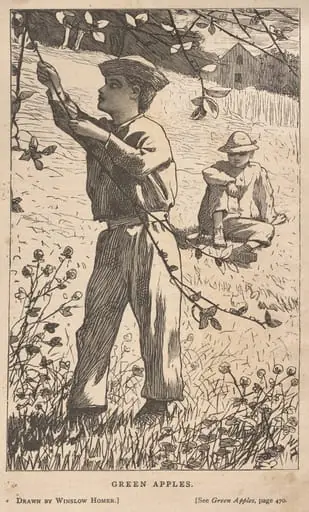
This wood engraving depicts rural labor in a quiet, sunlit field. Three figures engage in different activities—working, resting, and observing—while a fourth figure appears faintly in the distance. The composition emphasizes stillness over action, with soft atmospheric tones and delicate line work defining the landscape. The medium, wood engraving, was widely used in 19th-century illustrated publications for its capacity to reproduce fine detail.
Subject & Meaning
The scene captures a moment of pause within agricultural labor. One figure holds a tool, another reads, and a woman watches, suggesting a break in the day’s work. The distant figure bending over implies ongoing toil, reinforcing the rhythm of rural life. The image conveys neither idealization nor hardship, but a quiet, unembellished observation of daily routine in the countryside.
Technique & Style
Fine, precise lines carve texture into the woodblock, rendering grass, skin, and shadow with subtle gradations. The hazy sky and blurred tree line suggest atmospheric perspective, achieved through controlled ink density and line spacing. The style reflects the conventions of 19th-century printmaking, where clarity and reproducibility were prioritized over expressive brushwork, favoring quiet realism over dramatic effect.
History & Provenance
The work originates from the 19th century, a period when wood engravings were commonly used in books, newspapers, and periodicals to illustrate everyday life. Though the artist’s identity is not specified, the technique and subject align with commercial printmakers who documented rural scenes for a broad, literate audience. Its survival suggests it was part of a published series or illustrated volume.
Context
During the 1800s, industrialization reshaped European and American societies, prompting increased interest in rural life as both nostalgia and social record. Wood engravings like this one served as accessible visual documents, offering urban readers a glimpse into agricultural routines. They were often created without overt commentary, presenting scenes as neutral observations of the working world.
Legacy
This engraving exemplifies a widespread but often overlooked tradition of documentary printmaking. While not attributed to a major artist, it reflects the broader cultural effort to visually archive labor and landscape during a time of rapid change. Its quiet detail and restraint continue to offer insight into how ordinary life was recorded before photography became widespread.
Artist & collection

Artist
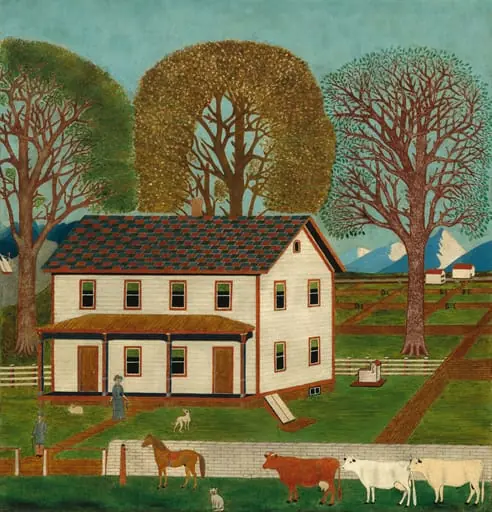
This artist painted everyday American life in the 1800s. Look at *Farmhouse in Mahantango Valley*—a quiet, sunlit scene of rural Pennsylvania. *Boy and Girl* shows two children standing close, their faces turned toward…