Artwork
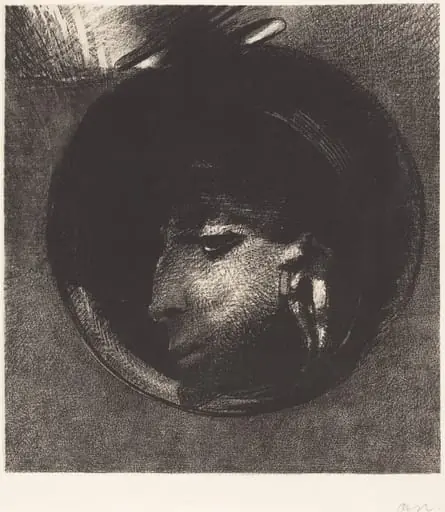
Cellule Auriculaire (Auricular Cell)
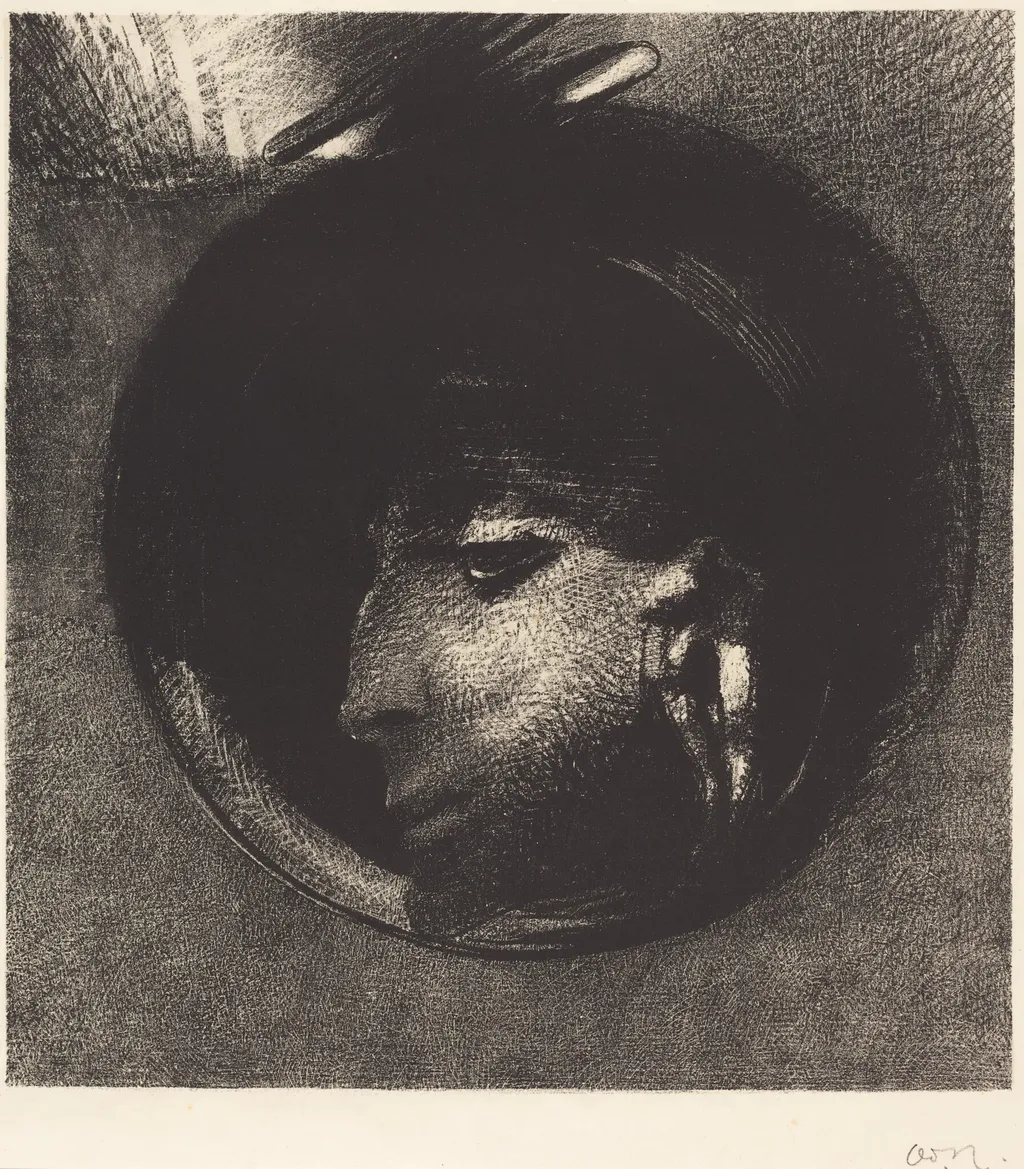
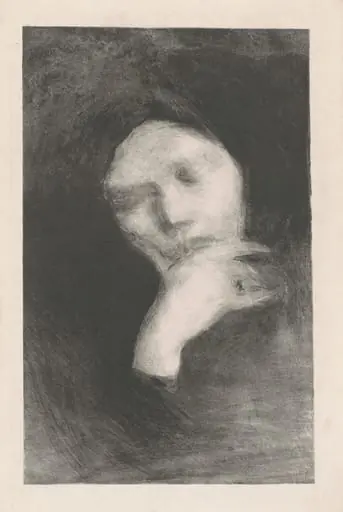
Cellule Auriculaire (Auricular Cell) is an ink print by the Impressionist artist Odilon Redon. It dates from 1894 and is held in the collection of the National Gallery of Art.
About this work
Overview
It presents a formless, dark mass with a faint, luminous oval at its center, suggesting a face or eye without defining either clearly.
Cellule Auriculaire is a lithograph by Odilon Redon, produced in 1894. It presents a formless, dark mass with a faint, luminous oval at its center, suggesting a face or eye without defining either clearly. The image resists literal interpretation, instead evoking a sense of inner vision or psychological ambiguity. Redon’s use of lithographic technique allows for subtle tonal gradations and a hazy, atmospheric quality.
Subject & Meaning
The central oval suggests a disembodied gaze, neither fully human nor entirely abstract, inviting contemplation of the unseen or subconscious. Redon often explored themes of inner life, dreams, and the liminal space between perception and imagination. Here, the blurred form may represent a mental state or spiritual presence, resisting fixed meaning and encouraging personal resonance over narrative clarity.
Technique & Style
Redon employed lithography to achieve soft transitions and delicate contrasts, using a scratchy, irregular line to suggest texture without definition. The edges of the form dissolve into the paper’s grain, mimicking the instability of dreams or memories. The lithographic process allowed him to manipulate tone with a pencil-like tool, creating a sense of emergence from darkness rather than a sharply rendered image.
History & Provenance
Created during Redon’s mature period, this work belongs to a series of lithographs from the 1890s that mark his shift from dark, fantastical imagery toward more ethereal, introspective compositions. It was likely produced for private circulation or inclusion in an artist’s portfolio, reflecting his growing reputation among Symbolist circles and collectors who valued his poetic approach to printmaking.
Context
In the 1890s, Redon was part of a broader Symbolist movement that rejected realism in favor of emotional and spiritual expression. His work aligned with contemporaries like Gustave Moreau and Pierre Puvis de Chavannes, who sought to evoke inner worlds through ambiguity and suggestion. Lithography, then gaining favor among artists, offered a medium suited to his interest in the intangible and the subconscious.
Legacy
Cellule Auriculaire exemplifies Redon’s influence on later movements such as Surrealism, where the exploration of dreams and psychological depth became central. His ability to render the invisible through subtle tonal shifts and indeterminate forms paved the way for artists seeking to express inner experience beyond literal representation. The work remains a quiet but persistent reference in discussions of modern printmaking and symbolic imagery.
Artist & collection
Artist
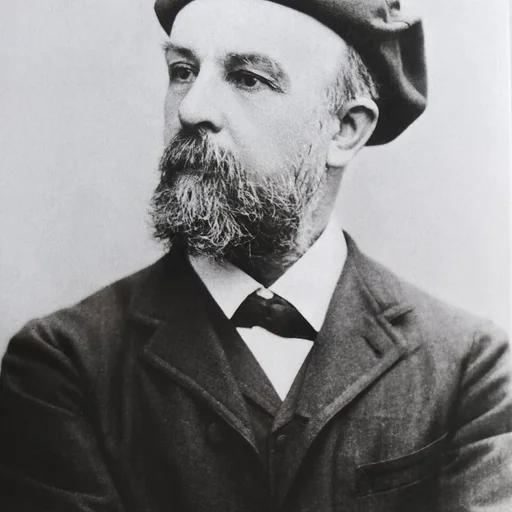
Born Bertrand-Jean Redon on 20 April 1840 in Bordeaux, the artist adopted the name Odilon from his mother, Marie-Odile.

 Meditation
 Perversité
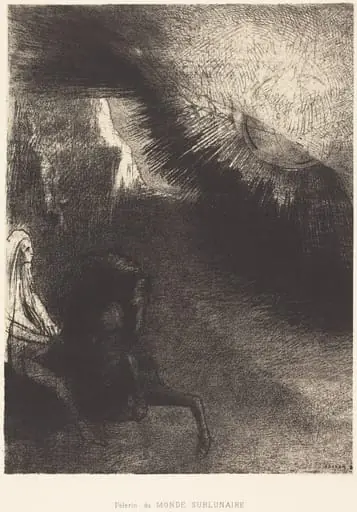 Pélerin du monde sublunaire (Pilgrim of the sublunary world)
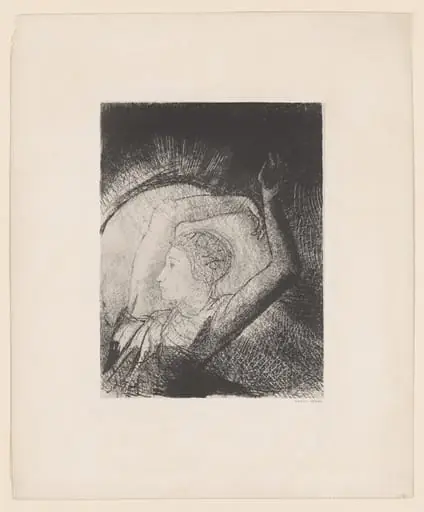 Untitled
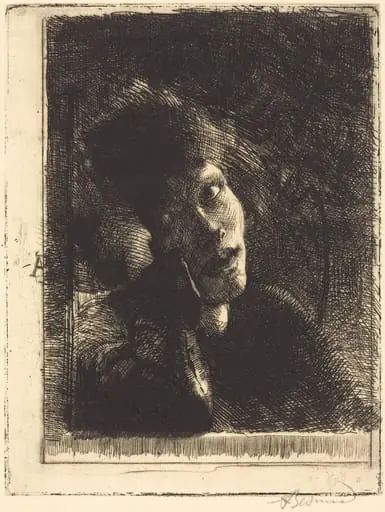 La Muse Accoudée
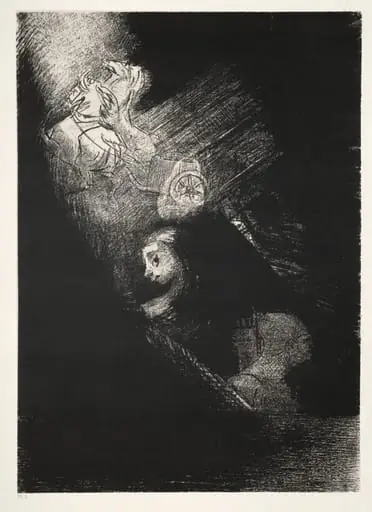 First a Pool of Water, Then a Prostitute, the Corner of a Temple, a Soldier's Face, a Chariot with Two White, Rearing Horses
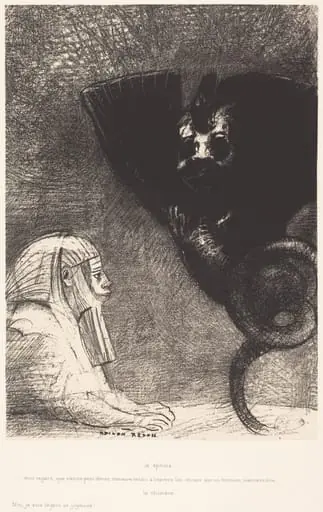 Le Sphynx...mon regard que rien ne peut devier, demeure tendu a travers les choses sur un horizon inaccessible. La Chimere: Moi,Je suis legere et joyeuse (The Sphinx: "My gaze, which nothing can deflect, passes through the things and remains fixed on an inaccessible horizon." The Chimera: "I am weightless and joyful")
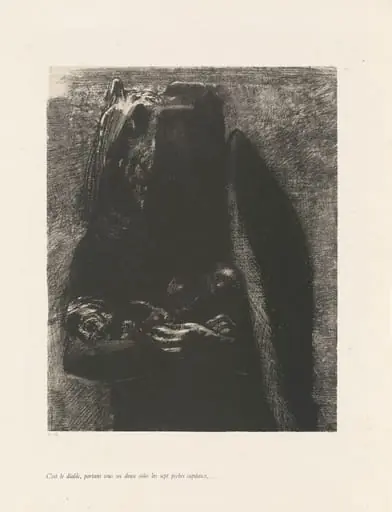 C'est le Diable
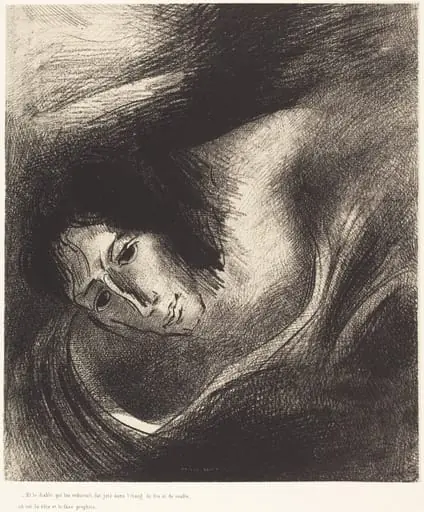 Et le diable qui les seduisait, fut jete dans l'etang de feu et de soufre, ou es la b ete et le faux prophete (And the devil thatdeceived them was cast into the lake of fire and brimstone, where the beast and the false prophet are)
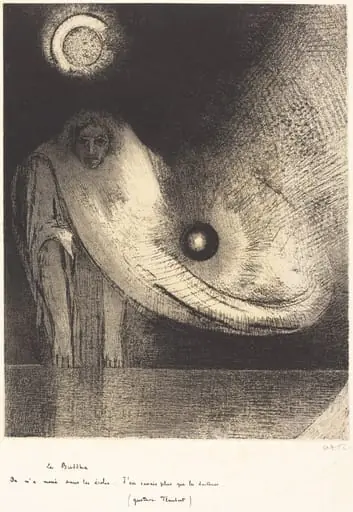 Le Buddha
 Cellule Auriculaire
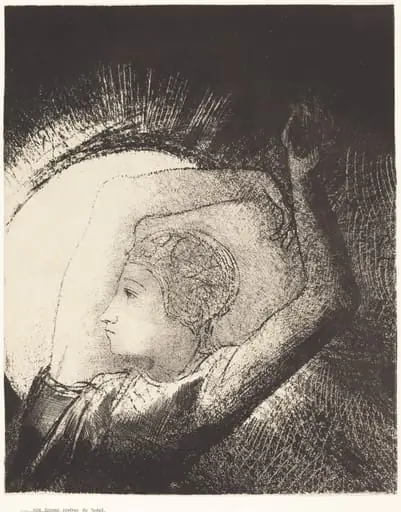 Une femme revêtue du Soleil (A woman clothed with the sun)