Artwork
Puis je vis, dans la main droite de celui quietait assis sur le trone, un livre ecritdedans et dehors, scelle de sept sceaux (And I saw in the right hand of him that sat on the throne a book written within and on the backside, sealed with seven seals )
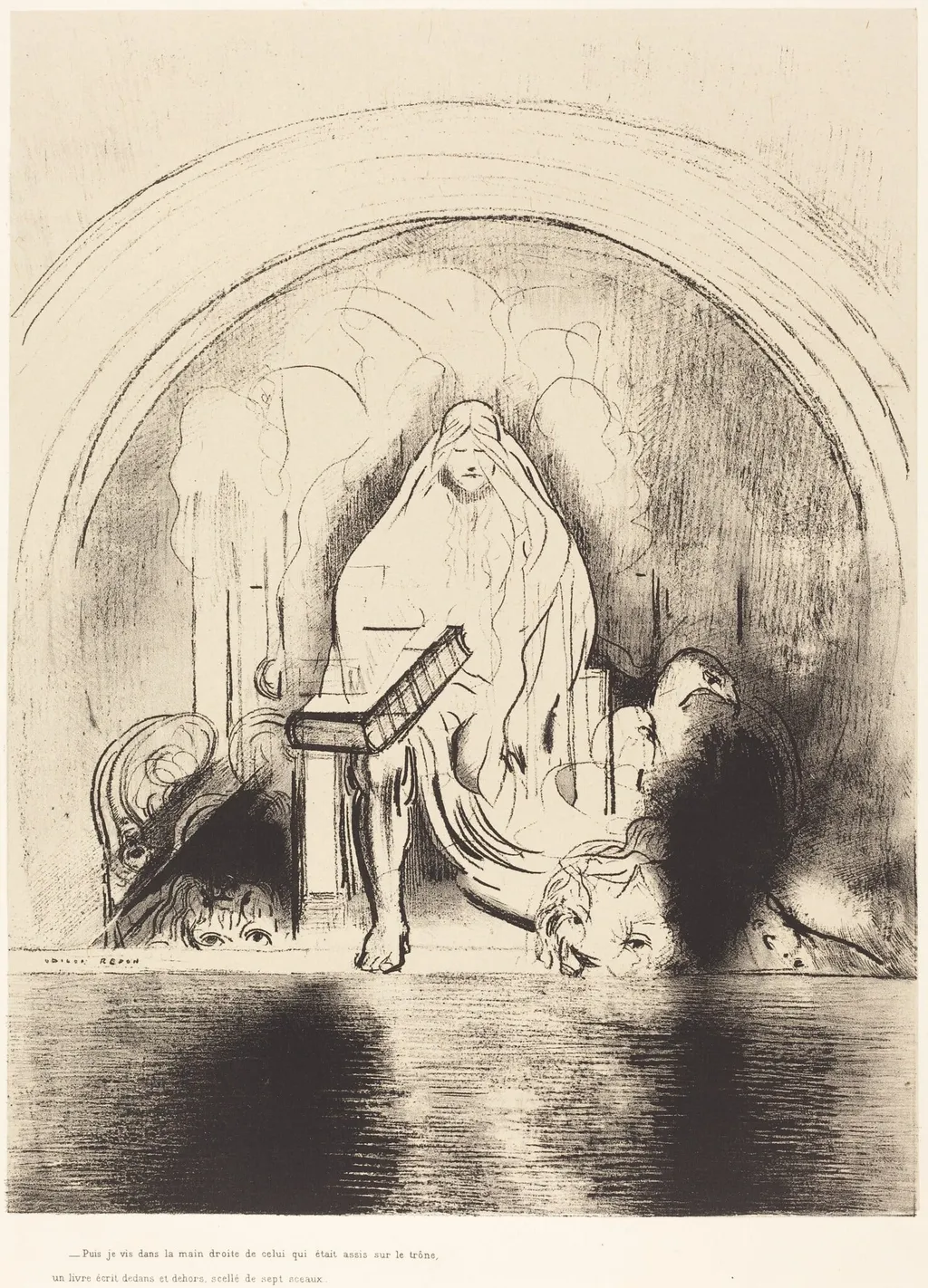
Puis je vis, dans la main droite de celui quietait assis sur le trone, un livre ecritdedans et dehors, scelle de sept sceaux (And I saw in the right hand of him that sat on the throne a book written within and on the backside, sealed with seven seals ) is an ink print by the Impressionist artist Odilon Redon. It dates from 1899 and is held in the collection of the National Gallery of Art.
About this work
Overview
The composition is rendered in loose, expressive lines, evoking a dreamlike atmosphere rather than a literal narrative.
Created in 1899, this lithograph by Odilon Redon illustrates a passage from the Book of Revelation. The image captures a solemn, robed figure seated on a throne, holding a sealed book. The composition is rendered in loose, expressive lines, evoking a dreamlike atmosphere rather than a literal narrative. The work belongs to the collection of the National Gallery of Art in Washington, D.C., and reflects Redon’s interest in mystical and symbolic themes during his later career.
Subject & Meaning
The scene draws from Revelation 5:1, depicting a divine figure holding a book sealed with seven seals—a symbol of hidden knowledge or divine judgment. Two small, animal-like forms gaze upward from below, possibly representing lions or other biblical creatures. Redon avoids clear iconography, instead emphasizing mystery and awe. The focus is less on doctrinal accuracy and more on the emotional weight of the unseen and the sacred.
Technique & Style
Redon employed lithography to achieve a soft, atmospheric effect, using fluid, sketchy lines that dissolve form into shadow. The background is rendered with swirling, indistinct marks, suggesting a void or cosmic space. The throne and book are defined minimally, allowing the viewer’s imagination to fill the gaps. This approach aligns with Symbolist aesthetics, prioritizing mood and suggestion over precise representation.
History & Provenance
The lithograph was produced in 1899 as part of Redon’s series of biblical and mythological prints. It entered the National Gallery of Art’s collection through the A.W. Mellon Educational and Charitable Trust in 1937. Its preservation reflects early 20th-century interest in Symbolist printmaking, and it remains one of the few works by Redon in American public collections that engage directly with religious themes.
Context
In the late 19th century, Redon shifted from dark, fantastical imagery to more contemplative, spiritual subjects. This work emerged alongside broader cultural interest in mysticism, esotericism, and biblical symbolism among artists and intellectuals. Unlike contemporaries who sought realism, Redon used ambiguity to evoke inner experience, aligning his prints with literary Symbolism and the search for transcendence beyond the material world.
Legacy
Redon’s lithograph influenced later artists exploring inner states through abstracted forms and symbolic content. Its restrained use of line and emphasis on emotional resonance prefigured aspects of Expressionism and Surrealism. While not widely reproduced, it remains a key example of how Symbolist printmaking transformed religious imagery into a vehicle for psychological and metaphysical inquiry.
Artist & collection
Artist
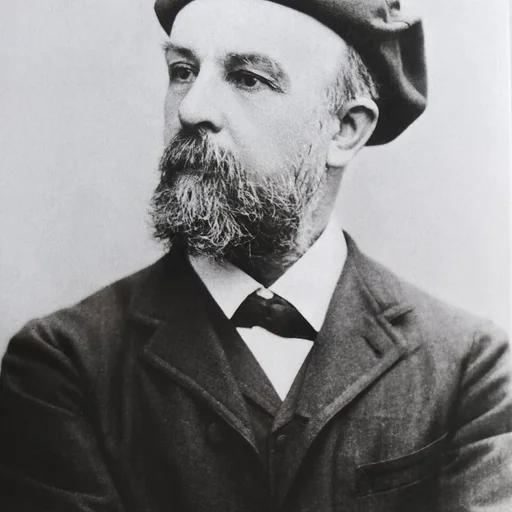
Born Bertrand-Jean Redon on 20 April 1840 in Bordeaux, the artist adopted the name Odilon from his mother, Marie-Odile.

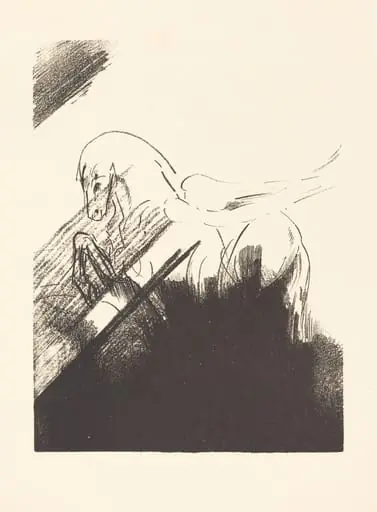 Cheval aile (Winged Horse)
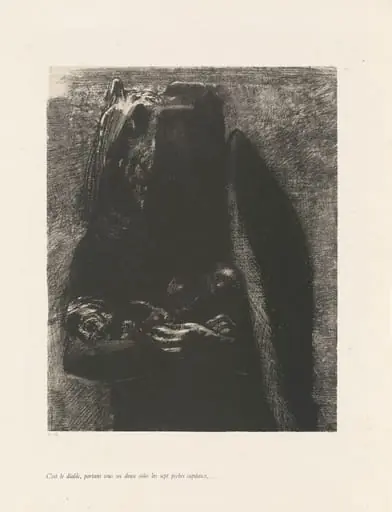 C'est le Diable
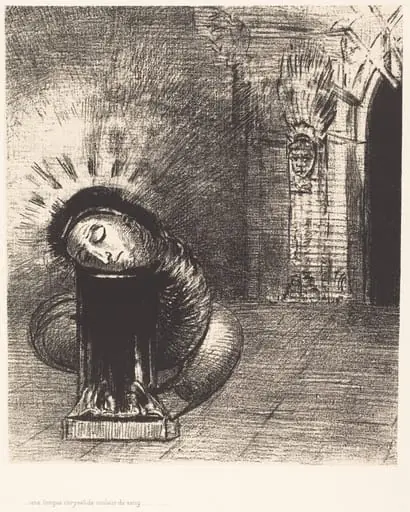 Une longue chrysalide couleur de sang (A longchrysalis, the color of blood)
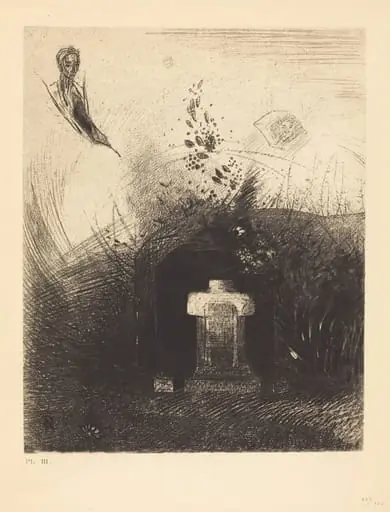 Si par une nuit lourde et sombre, un bon chretien, par charite, derriere quelque vieux decombre, enterre votre corps voute (If on a close dark night a good Christian, out of charity, behind some old ruin, buries your arched body)
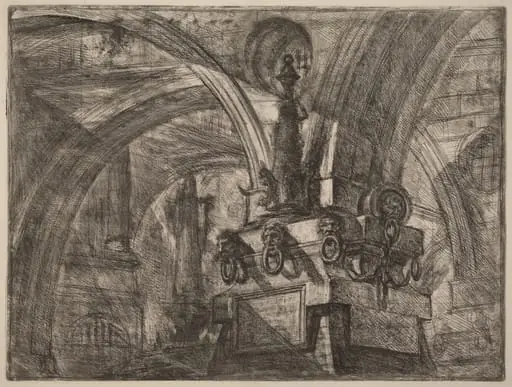 The Pier with a Lamp
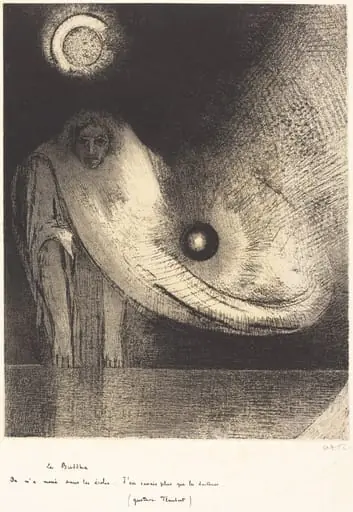 Le Buddha
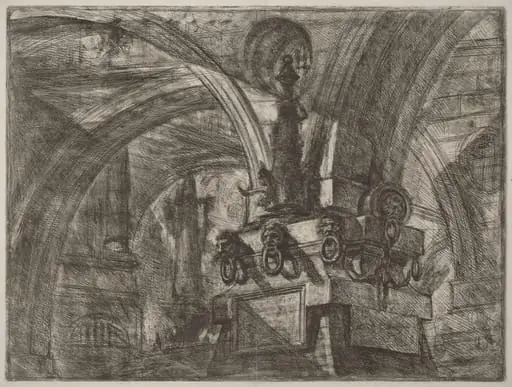 The Pier with a Lamp
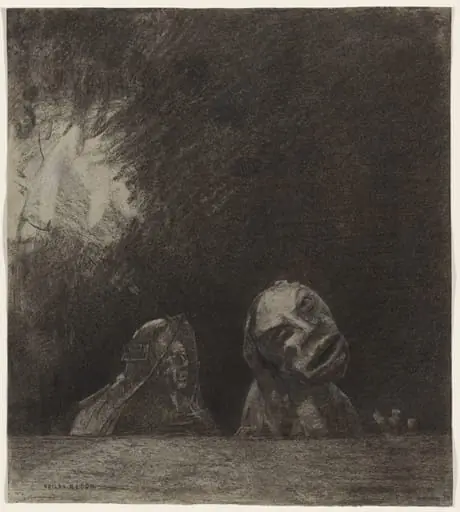 Quasimodo
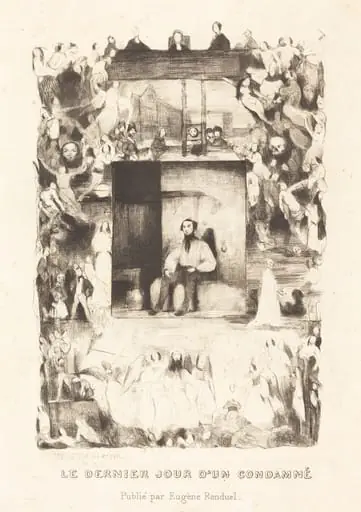 Le dernier jour d'un condamne
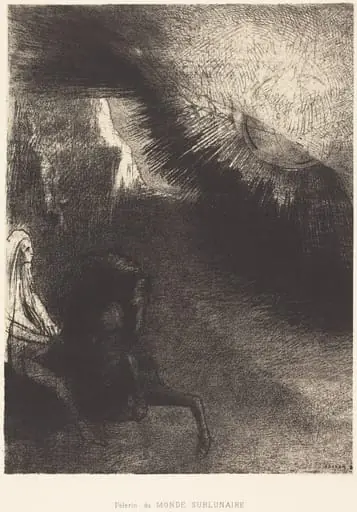 Pélerin du monde sublunaire (Pilgrim of the sublunary world)