Artwork
Le dernier jour d'un condamne
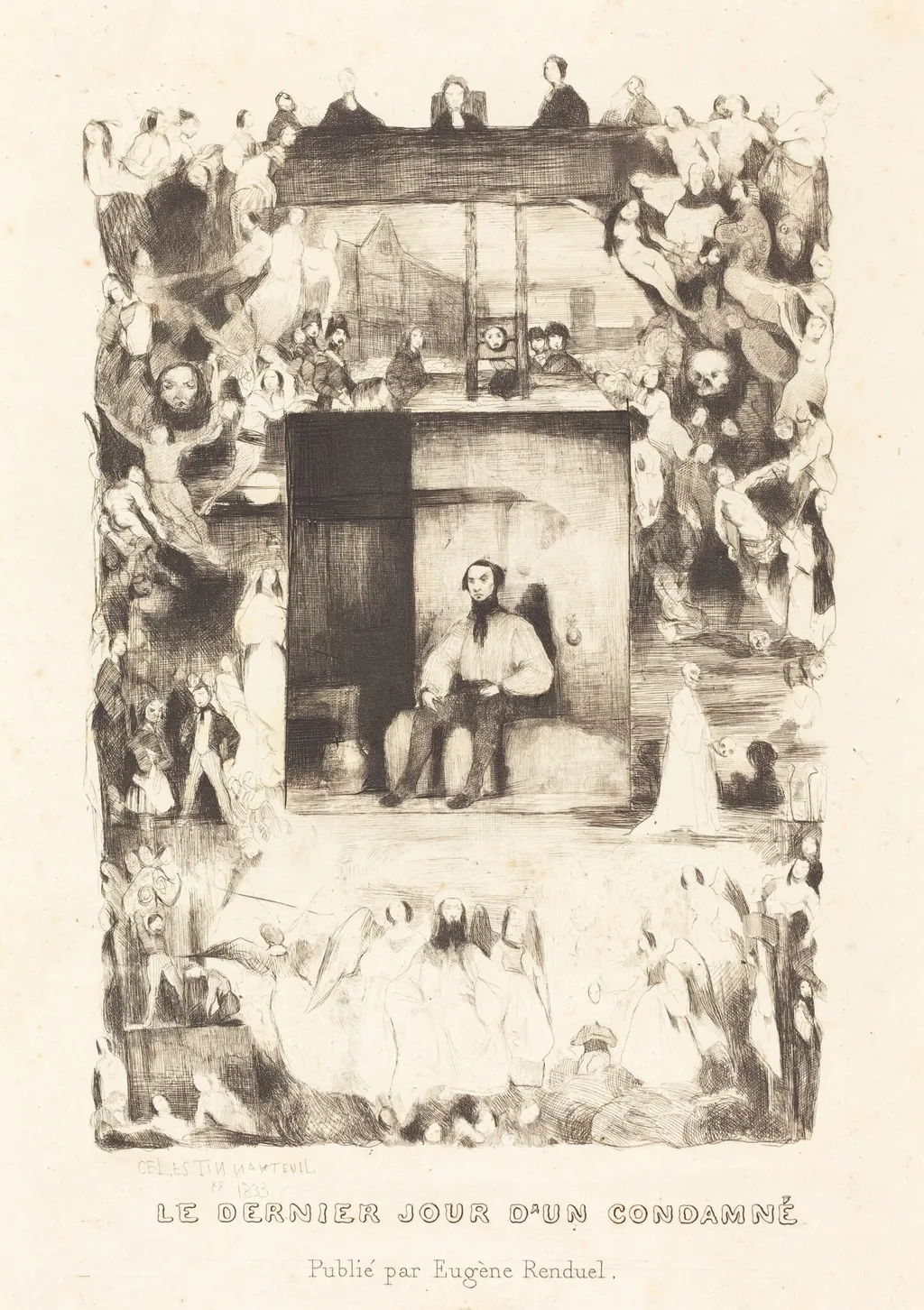
Le dernier jour d'un condamne is an ink print by the Romanticist artist Célestin Nanteuil. It dates from 1833 and is held in the collection of the National Gallery of Art.
About this work
Overview
Created in 1833 by French artist Célestin Nanteuil, *Le dernier jour d'un condamné* is an etching that captures a condemned prisoner in his final hours.
Created in 1833 by French artist Célestin Nanteuil, *Le dernier jour d'un condamné* is an etching that captures a condemned prisoner in his final hours. Nanteuil, trained at the École des Beaux-Arts and influenced by Romantic sensibilities, used the medium to explore psychological tension. The work is part of a broader 19th-century interest in human suffering and institutional power, rendered through intimate, claustrophobic composition rather than grand spectacle.
Subject & Meaning
The scene depicts a solitary man seated on a low bed, head buried in his hands, surrounded by silent observers. Figures peer through windows and doorways, their gestures suggesting curiosity, judgment, or pity. Outside, a blurred crowd presses against the walls, their forms indistinct yet insistent. The image conveys isolation and inevitability, emphasizing the psychological weight of awaiting death rather than the physical act of execution.
Technique & Style
Nanteuil employed etching to achieve a sense of urgency and rawness, using incised lines that vary in density to suggest shadow and movement. The contrast between the sharply defined prisoner and the ghostly, fragmented figures around him enhances the emotional dissonance. The rough, uneven texture of the lines mirrors the instability of the moment, aligning with Romantic ideals that favored emotional intensity over polished finish.
History & Provenance
Nanteuil, born in Rome to a family linked to Joseph Bonaparte’s circle, received formal training under Eustache-Hyacinthe Langlois and later worked in Dominique Ingres’s studio. While his association with Ingres suggests classical influence, this work reflects his engagement with Romantic themes. The etching was produced during a period of growing public scrutiny of capital punishment in France, though no specific commission or early ownership is documented.
Context
In the 1830s, France witnessed increasing debate over the death penalty, with writers like Victor Hugo drawing attention to the humanity of condemned individuals. Nanteuil’s image aligns with this cultural shift, focusing not on crime or justice, but on the solitary experience of impending death. The work resonates with contemporary literary depictions of confinement and moral ambiguity, reflecting a broader artistic turn toward interiority.
Legacy
Though Nanteuil is less widely known today, this etching remains a significant example of Romantic printmaking’s capacity for psychological depth. It influenced later artists interested in the emotional dimensions of punishment and isolation. The work endures as a quiet but potent meditation on human vulnerability, preserved in institutional collections as a testament to the power of print to convey intimate tragedy.
Artist & collection
Artist
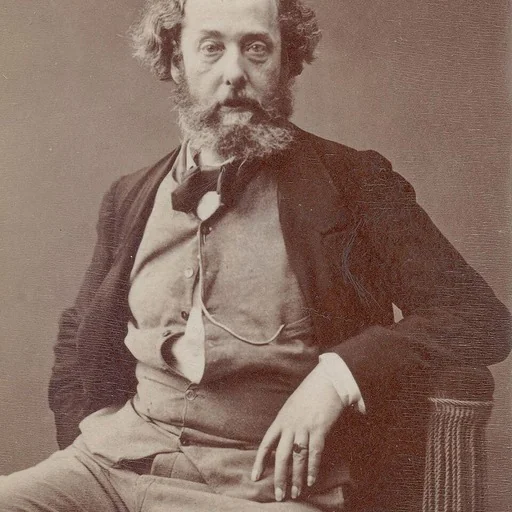
Célestin-François Nanteuil-Lebœuf, known as Célestin Nanteuil (French pronunciation: ; 11 July 1813 – 6 September 1873), was a French painter, engraver and illustrator closely tied to the Romantic movement in France.

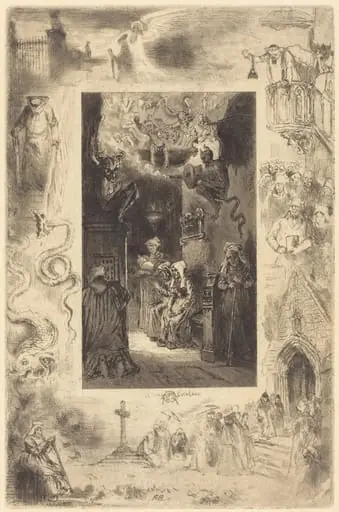 Le Curé de Cucugnan (The Vicar of Cucugnan)
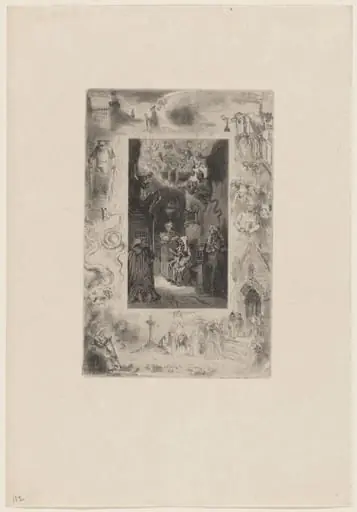 La Cure de Cucagnan
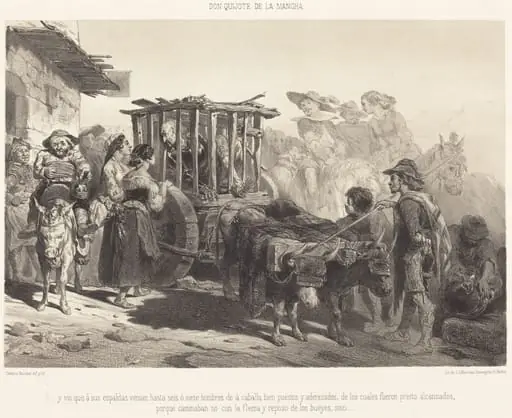
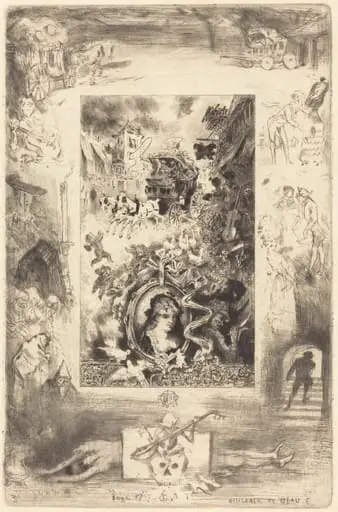 La Diligence de Beaucaire (The Diligence of Beaucaire)
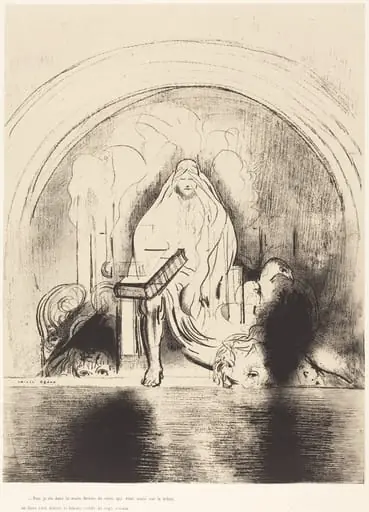 Puis je vis, dans la main droite de celui quietait assis sur le trone, un livre ecritdedans et dehors, scelle de sept sceaux (And I saw in the right hand of him that sat on the throne a book written within and on the backside, sealed with seven seals )
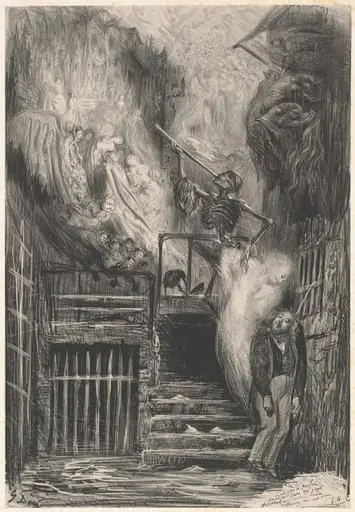 Rue de la Vieille lanterne (The Suicide of Gérard de Nerval)
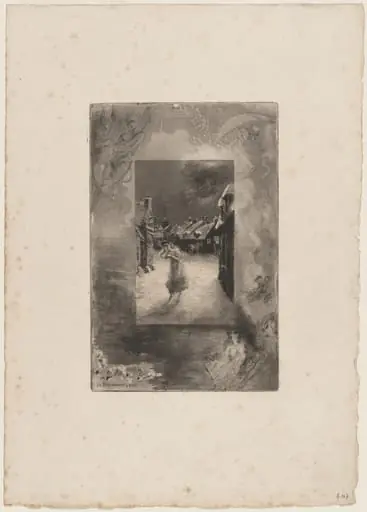 Le Bas-hamet
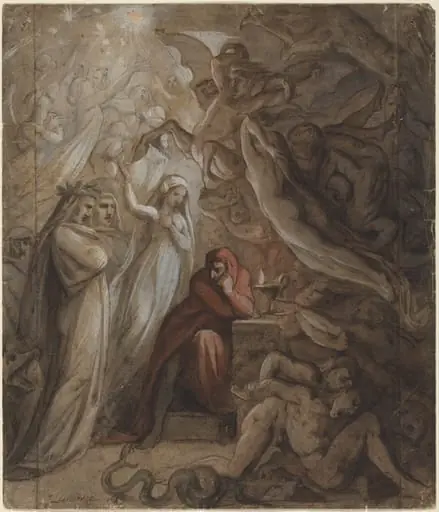 Dante Meditating on the "Divine Comedy"
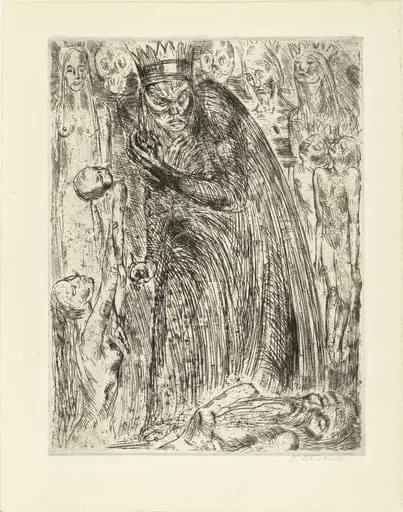 Untitled
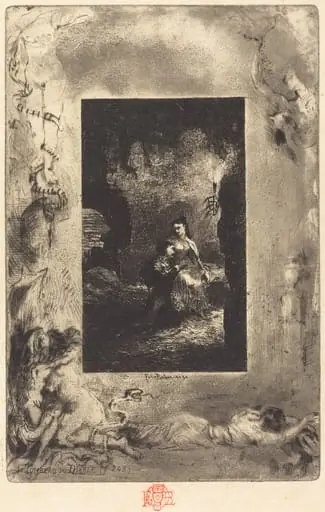 Le Tombeau du Diable (The Devil's Tomb)
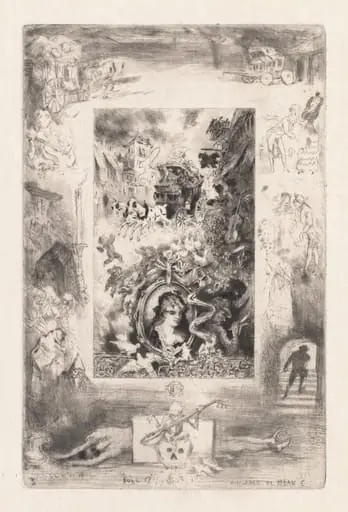 Letters from My Windmill:The Diligence of Beaucaire
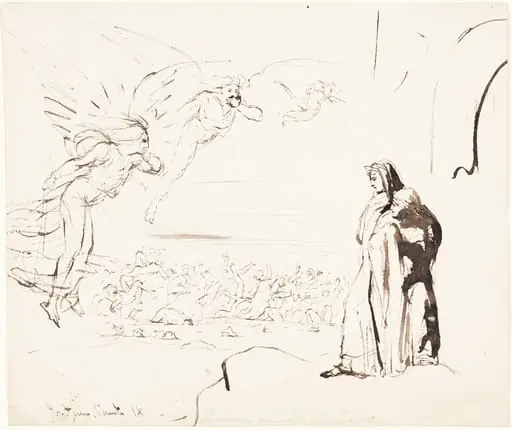 Scene from the Inferno (canto IX)
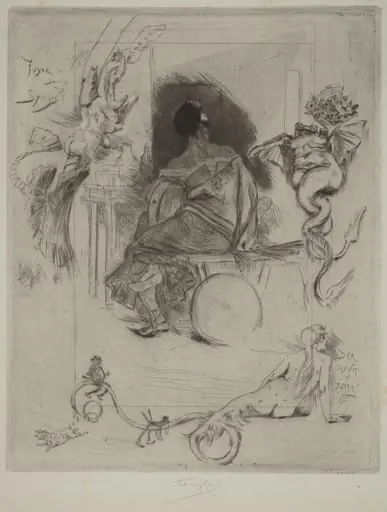 La Dernière Maja