Artwork
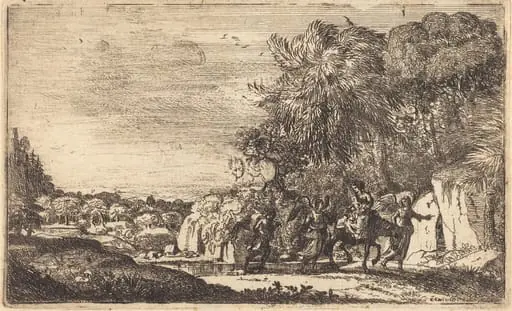
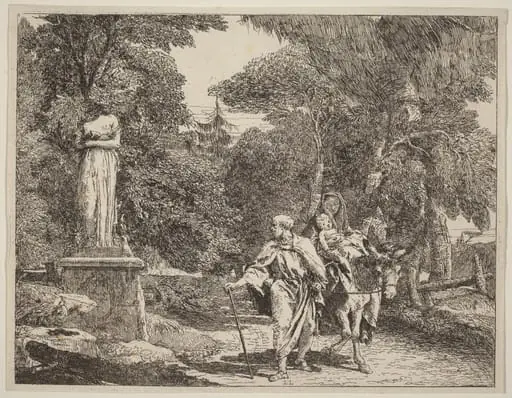
A Peasant Family Hurrying Past a Wayside Shrine in a Storm
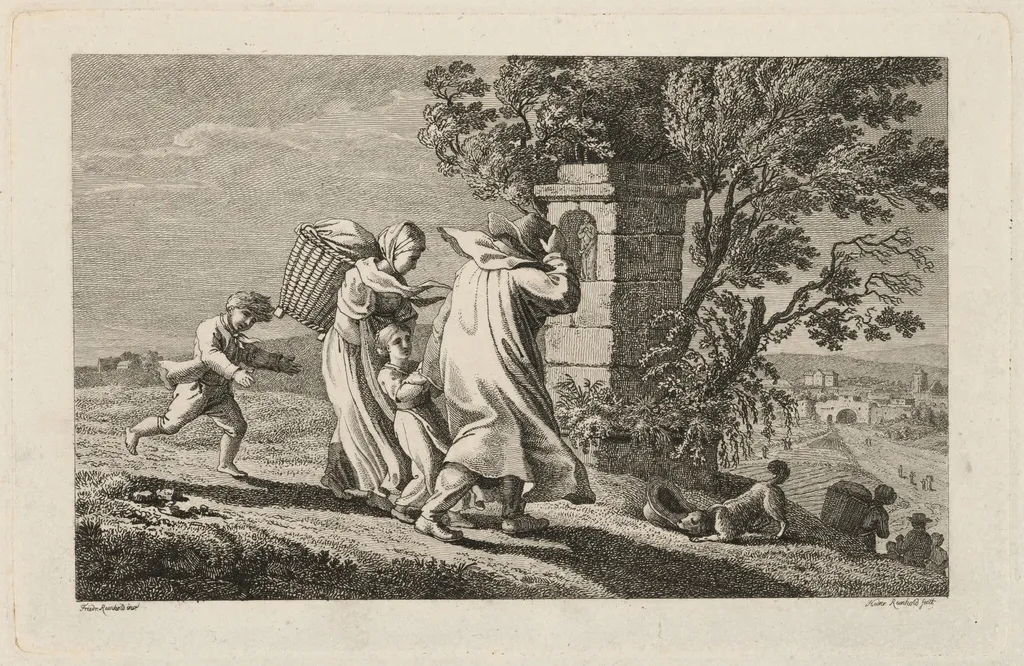
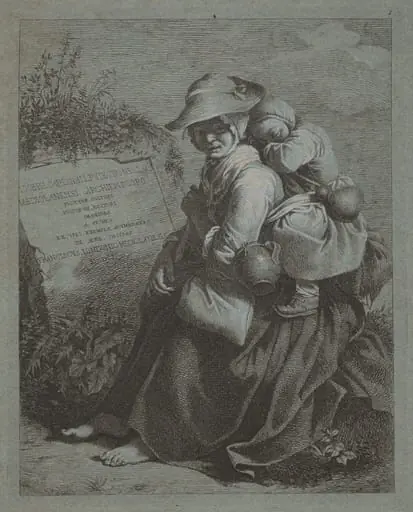
A Peasant Family Hurrying Past a Wayside Shrine in a Storm is an ink print by the Romanticist artist Heinrich Carl Reinhold. It dates from 1816 and is held in the collection of the National Gallery of Art.
About this work
Overview
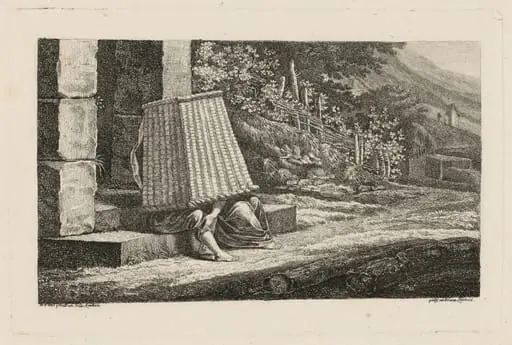
Heinrich Carl Reinhold’s etching *A Peasant Family Hurrying Past a Wayside Shrine in a Storm*, executed around 1816, is a monochrome print on wove paper. The work is part of the National Gallery of Art’s collection in Washington, D.C. It depicts a rural family moving quickly through inclement weather, their path intersecting a modest stone shrine.
Subject & Meaning
The scene captures a mother bearing a bundle on her back, clutching one child’s hand while another clings to her skirt. A cow trails close behind, and a dog pauses in the foreground, glancing back toward the family. The shrine, a simple statue on a pedestal, offers a quiet focal point amid the urgency of the storm, suggesting a moment of fleeting devotion or protection.
Technique & Style
Reinhold employed traditional intaglio methods, incising lines with a needle to create a range of tonal values. Careful hatching and cross‑hatching generate deep shadows that convey the oppressive, rain‑laden sky and the damp atmosphere. The contrast between the dark, storm‑filled background and the lighter, more defined figures emphasizes movement and the immediacy of the family’s flight.
History & Provenance
Created in the early nineteenth century, the print reflects Reinhold’s interest in genre scenes of everyday life. It entered the National Gallery of Art’s holdings through acquisition (date of acquisition not specified) and remains a representative example of German etching from the post‑Napoleonic period, illustrating both the technical skill and social concerns of its era.
Artist & collection