Artwork
A Young Couple under a Large Wicker Basket
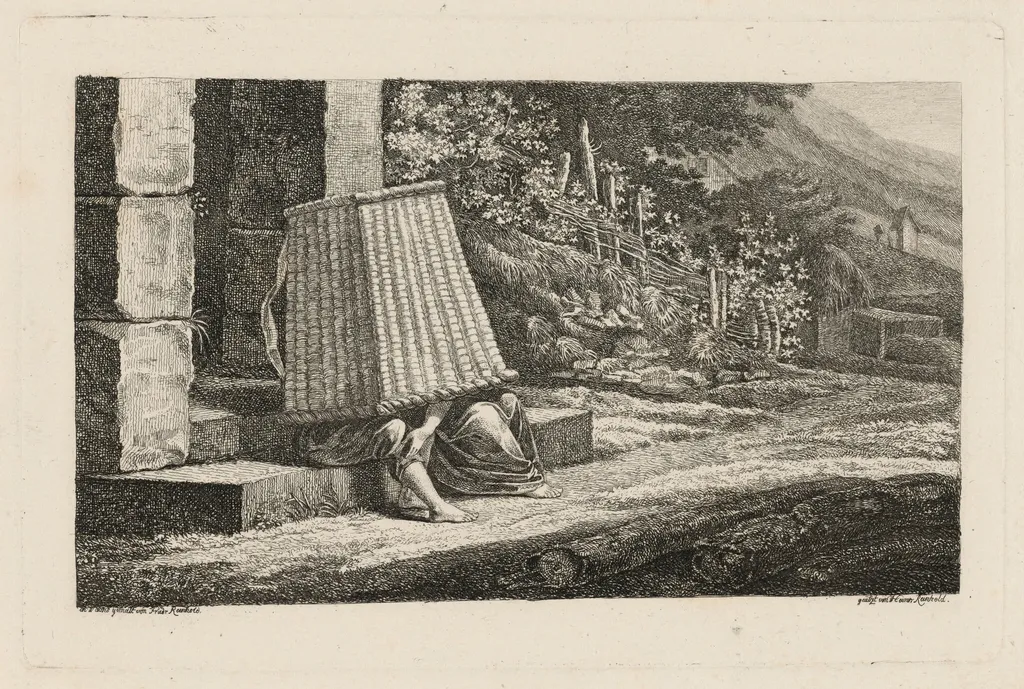
A Young Couple under a Large Wicker Basket is an ink print by the Romanticist artist Heinrich Carl Reinhold. It dates from 1816 and is held in the collection of the National Gallery of Art.
About this work
Overview
Created around 1816, this etching by Heinrich Carl Reinhold depicts a pair of figures reclining beneath an oversized wicker basket.
Created around 1816, this etching by Heinrich Carl Reinhold depicts a pair of figures reclining beneath an oversized wicker basket. Rendered on wove paper, the work belongs to the print collection of the National Gallery of Art in Washington, D.C. The composition captures a quiet, intimate moment in an outdoor setting, framed by subtle landscape elements and rendered with delicate linear precision characteristic of early 19th-century etching techniques.
Subject & Meaning
The figures, a man and woman, appear to rest or conceal themselves beneath the basket, suggesting a moment of privacy or respite. The scale of the basket, dwarfing the couple, introduces a sense of shelter or enclosure, possibly evoking themes of intimacy, concealment, or the fragility of personal space. The absence of narrative detail invites contemplation rather than storytelling, emphasizing mood over event.
Technique & Style
Reinhold employed fine, controlled lines typical of etching to model form and depth. The basket’s woven texture, the solidity of the stone wall, and the distant trees are rendered with graduated shading and delicate cross-hatching. The wove paper’s smooth surface enhances the clarity of the lines, allowing subtle tonal variations to suggest light and shadow without the use of wash or color.
History & Provenance
The print entered the National Gallery of Art’s collection as part of its broader acquisition of European graphic works from the 18th and 19th centuries. While little is documented about its early ownership, its preservation in a major institutional collection reflects its recognition as a representative example of German Romantic-era printmaking, valued for its quiet composition and technical refinement.
Context
Reinhold worked during a period when etching experienced a revival among artists seeking intimate, personal subjects over grand historical themes. His focus on domestic tranquility aligns with broader Romantic tendencies in Northern Europe, where everyday moments and natural settings were elevated as worthy subjects. This print reflects a shift toward quiet observation rather than dramatic narrative in print culture.
Legacy
Though not widely reproduced or celebrated in popular discourse, the work remains a quiet example of early 19th-century German printmaking. It contributes to the understanding of how artists used etching to explore subtlety and atmosphere, influencing later generations interested in the expressive potential of line and tone over boldness or spectacle.
Artist & collection

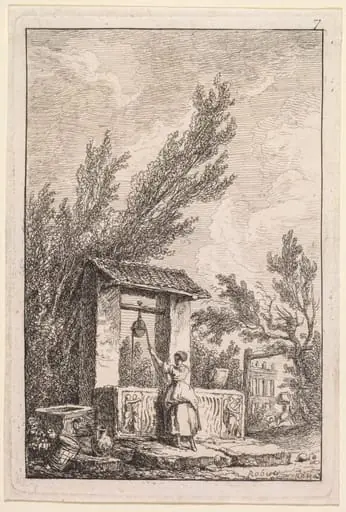
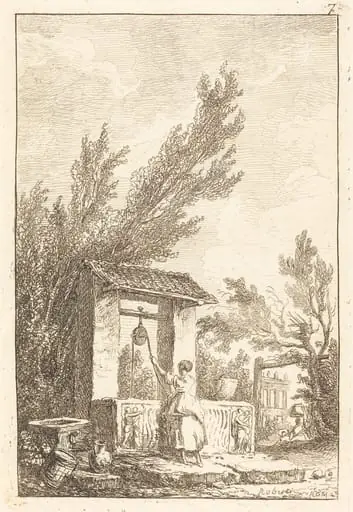 The Well
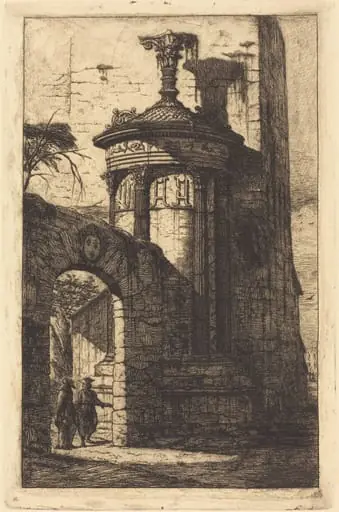 Entrée du Couvent des Capucins français à Athenes (Entrance to the French Capuchin Convent at Athens)
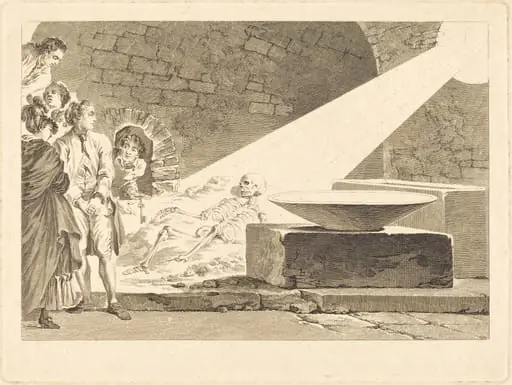 Fragonard and Bergeret with Their Wives Visiting a Tomb in Pompeii
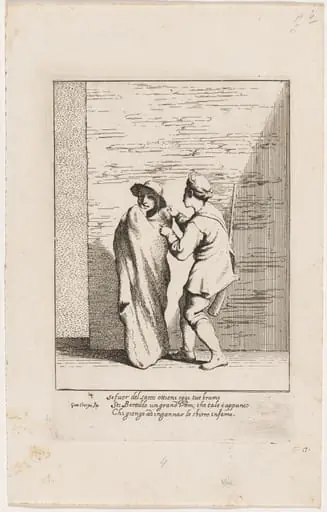 Bertoldo Stuffed in a Sack
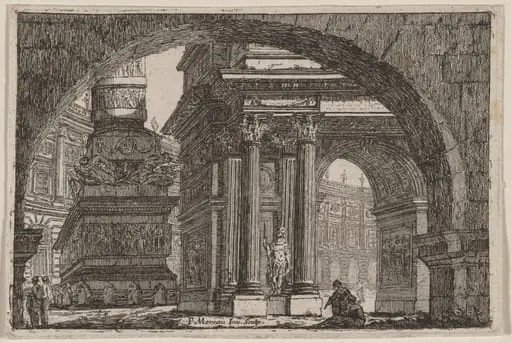 Ancient Forum Seen Beneath an Arch
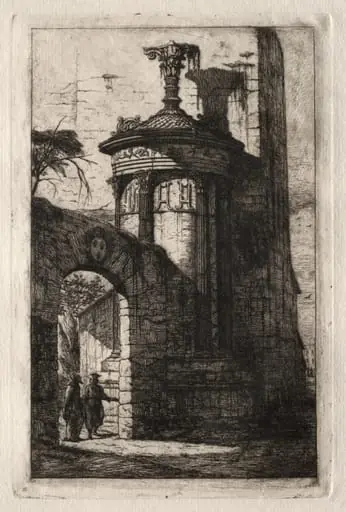 Entrance to the French Capuchin Convent at Athens
 Le Puits
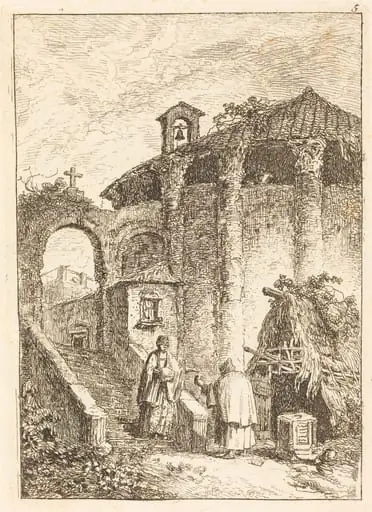 The Ancient Temple
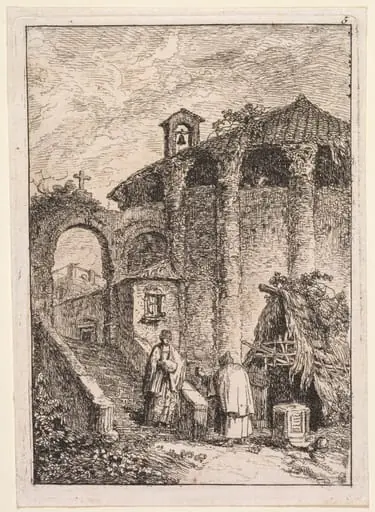 Le Temple Antique
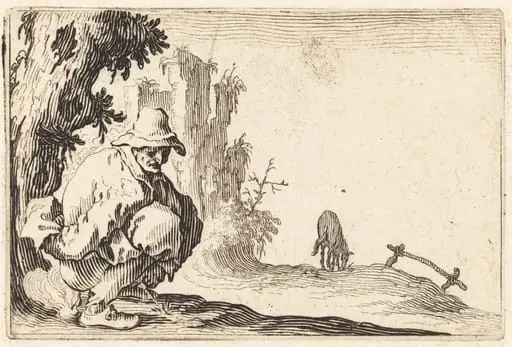 Peasant Defecating
 Views: Fragments of Sculpture