Artwork
Bust of a Man in Oriental Costume
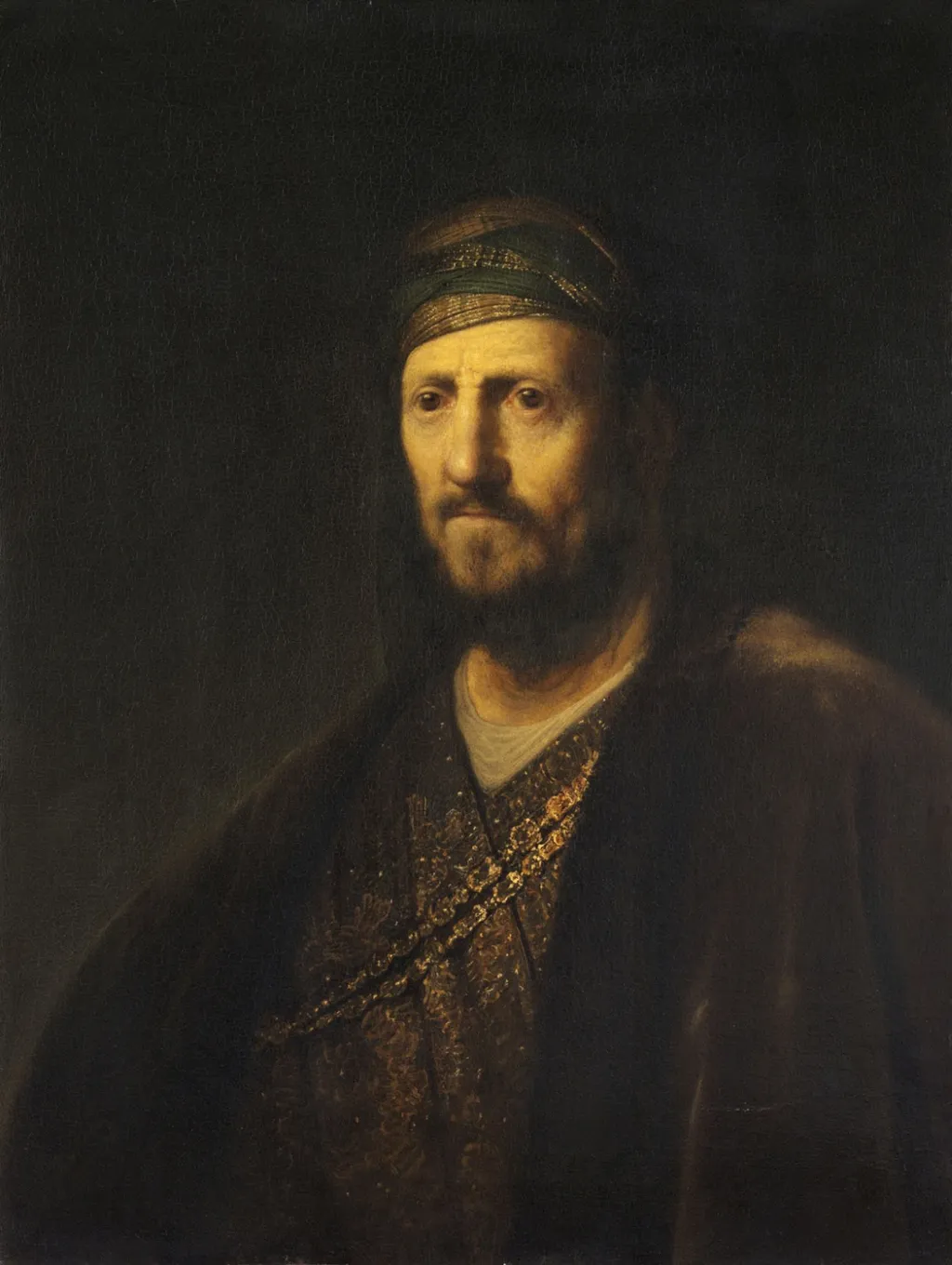
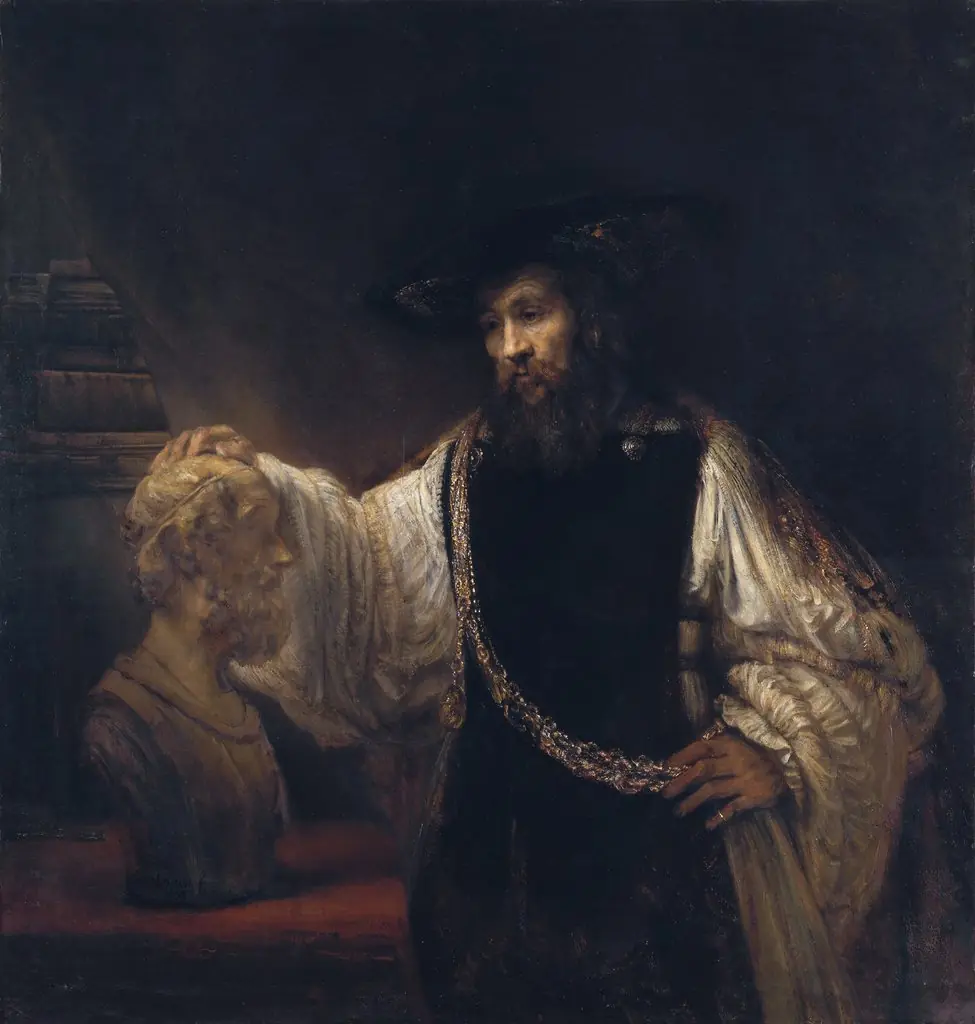
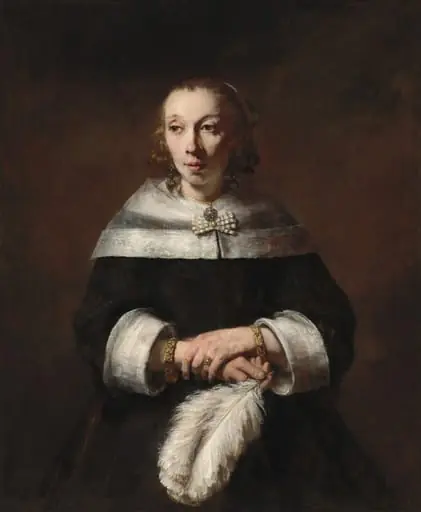
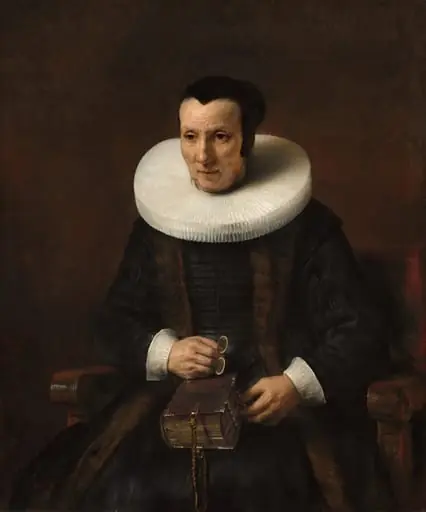
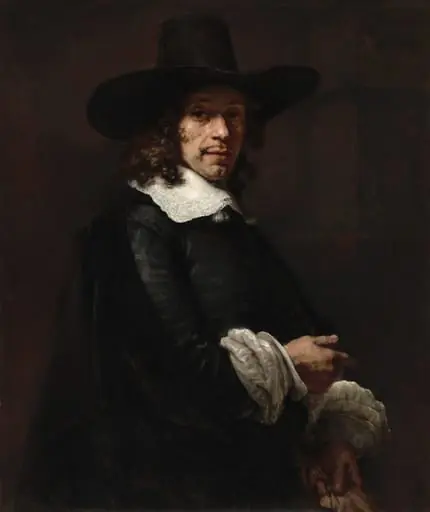
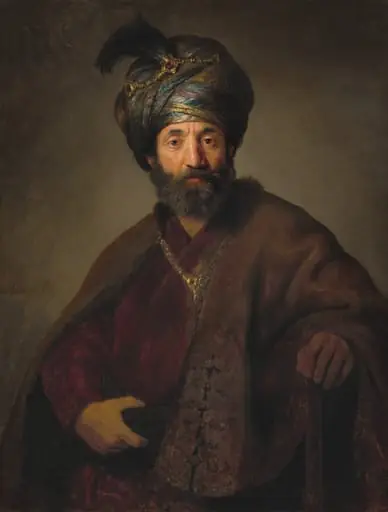
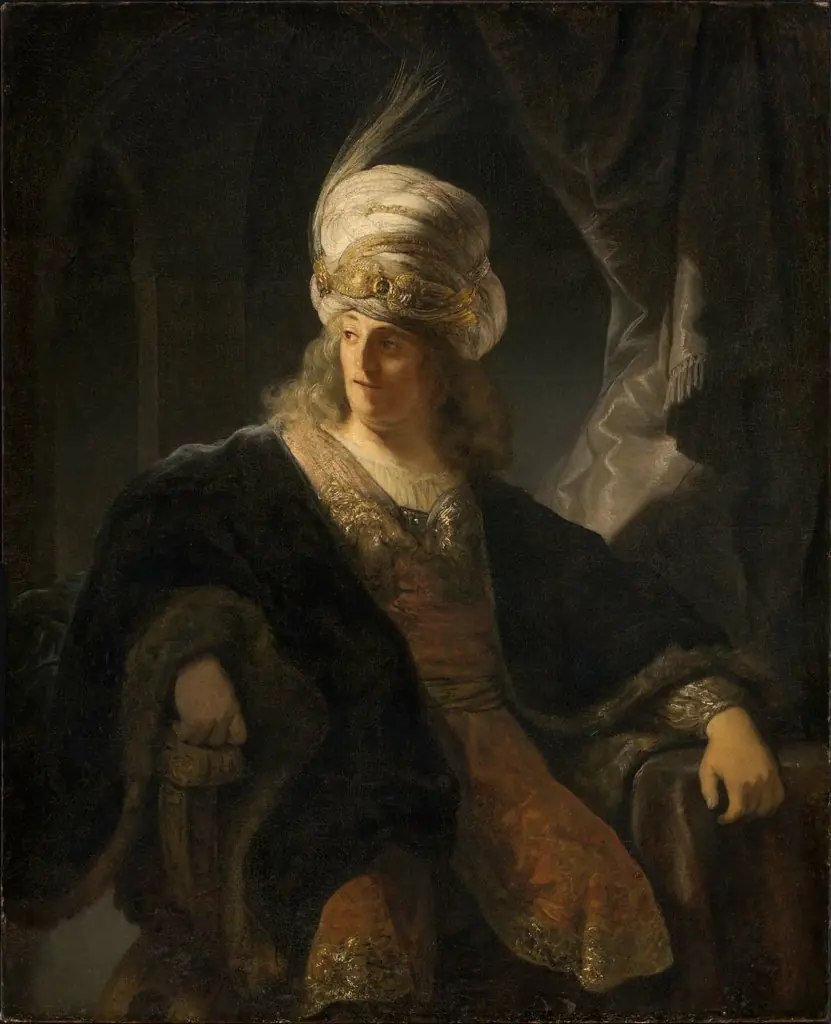
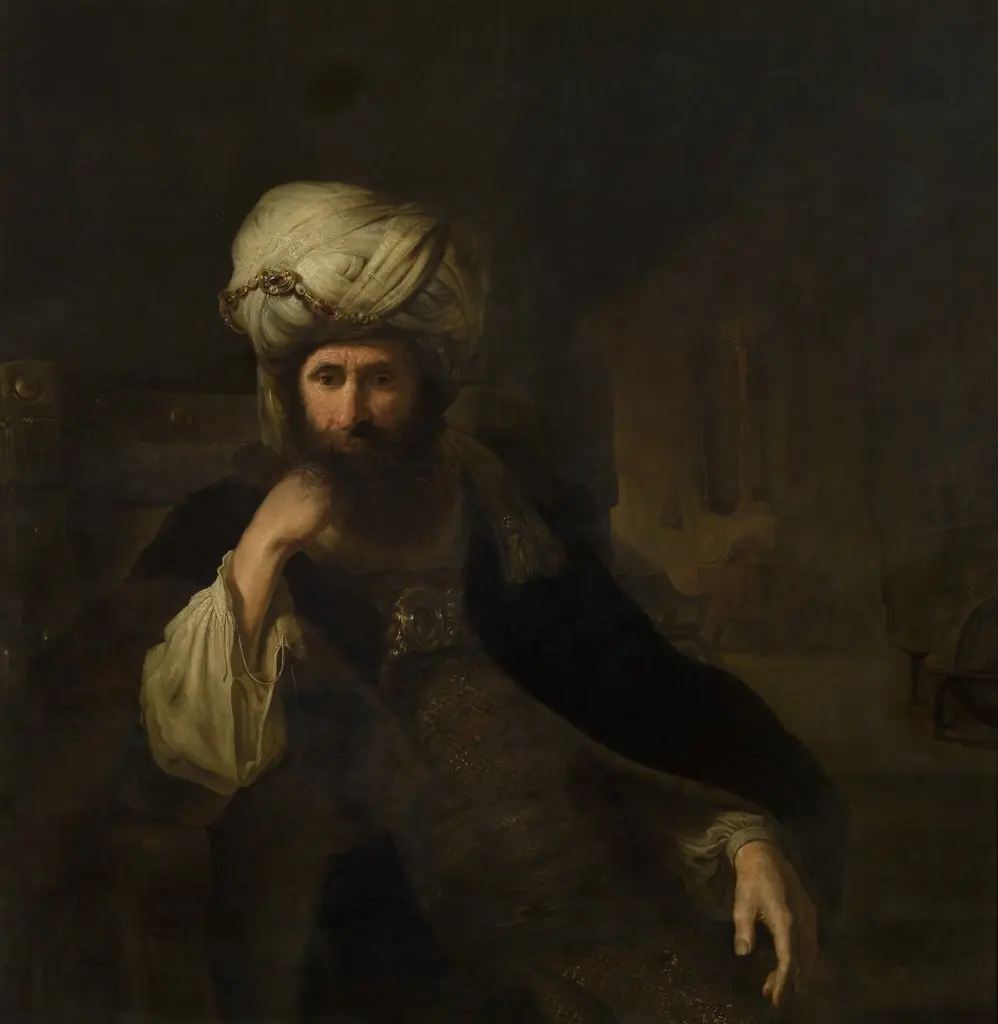
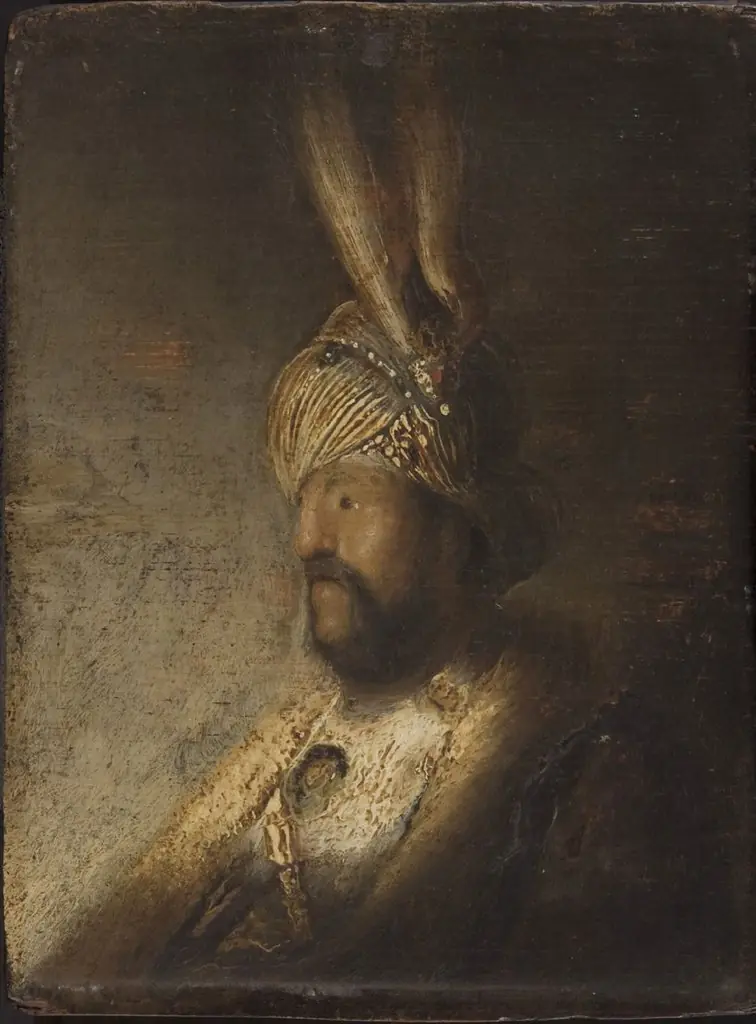
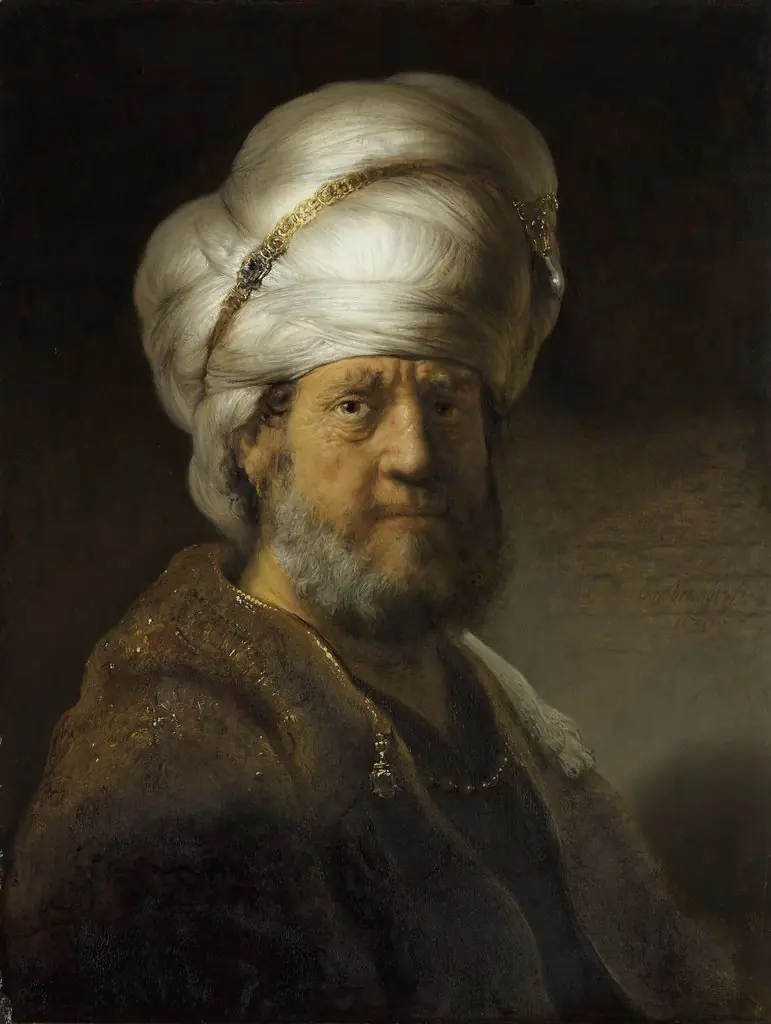
Bust of a Man in Oriental Costume is an oil painting by the Dutch Golden Age artist Rembrandt. It dates from 1630 and is held in the collection of the Philadelphia Museum of Art.
About this work
Overview
Painted in 1630 by Rembrandt van Rijn, this oil portrait presents a man dressed in an elaborate, imagined Oriental costume.
Painted in 1630 by Rembrandt van Rijn, this oil portrait presents a man dressed in an elaborate, imagined Oriental costume. The work reflects the Dutch Golden Age’s fascination with exoticism and material detail. Though not a documented likeness of a specific individual, the painting demonstrates Rembrandt’s mastery in rendering texture, light, and psychological presence through controlled brushwork and atmospheric depth.
Subject & Meaning
The figure wears a richly patterned robe and headband, evoking Eastern attire popular in European imagination during the 17th century. His downcast gaze and solemn expression suggest introspection rather than theatrical display. Rather than depicting a real person, the portrait likely explores themes of identity, otherness, and the human condition through costume and mood, aligning with Rembrandt’s interest in inner life over external status.
Technique & Style
Rembrandt employs chiaroscuro to model the figure against a deep, shadowed background, with light subtly falling from the left to highlight the texture of fabric and the contours of the face. The gold embroidery on the robe is rendered with thin, luminous strokes, while the white undershirt contrasts softly against darker tones. His brushwork varies from precise detail in the costume to looser, expressive strokes in the shadows, creating a tactile and emotionally resonant surface.
History & Provenance
The painting entered the Philadelphia Museum of Art’s collection in the 20th century, though its earlier ownership remains partially undocumented. It was likely acquired by a private collector in the Netherlands or elsewhere in Europe before being transferred to American hands. Its attribution to Rembrandt has been consistently supported by stylistic analysis and technical examination, though its exact commission or original context is unknown.
Context
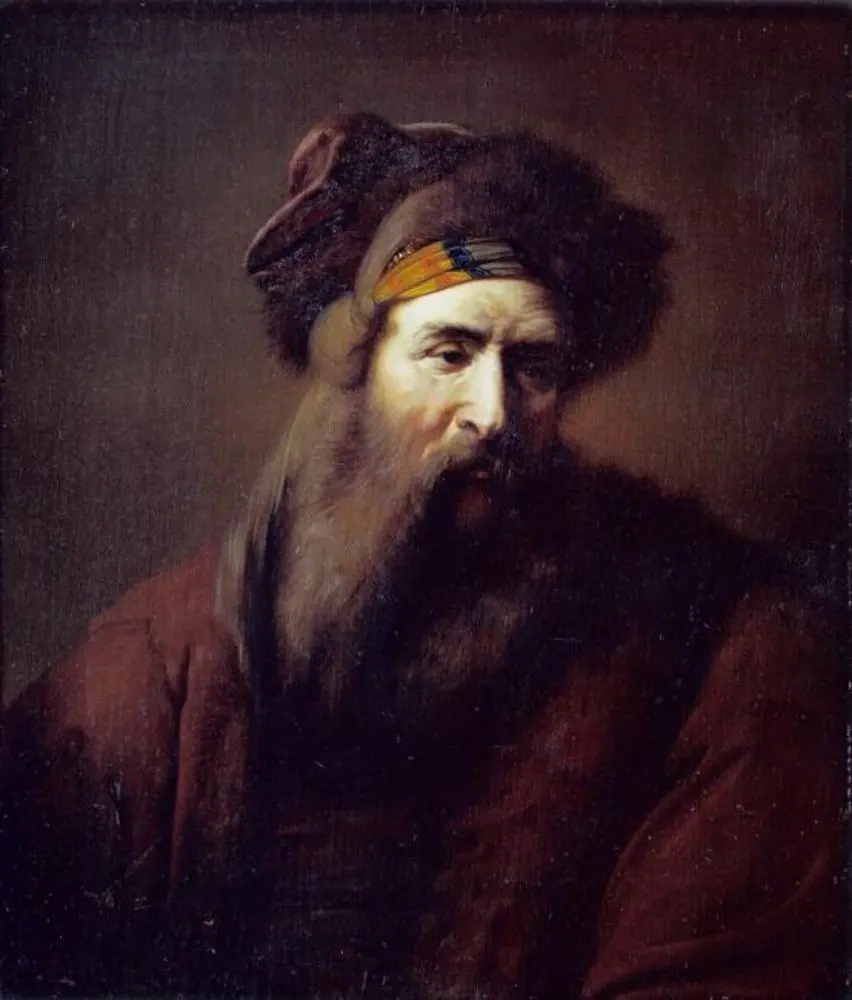
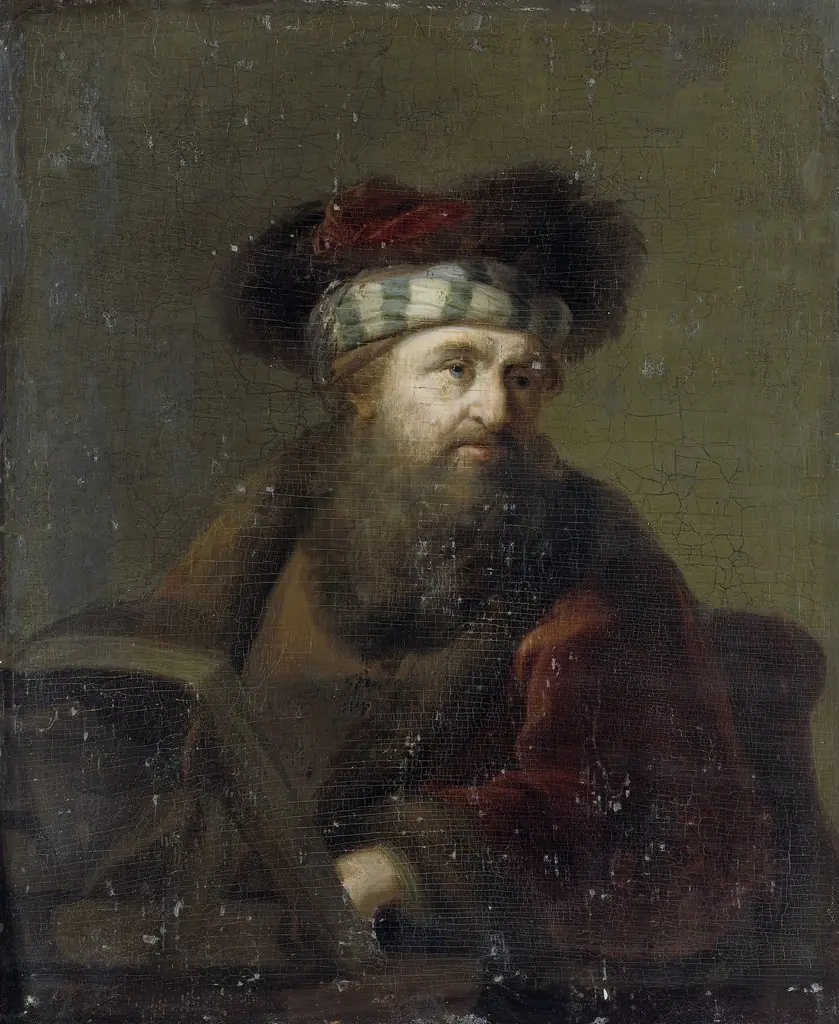
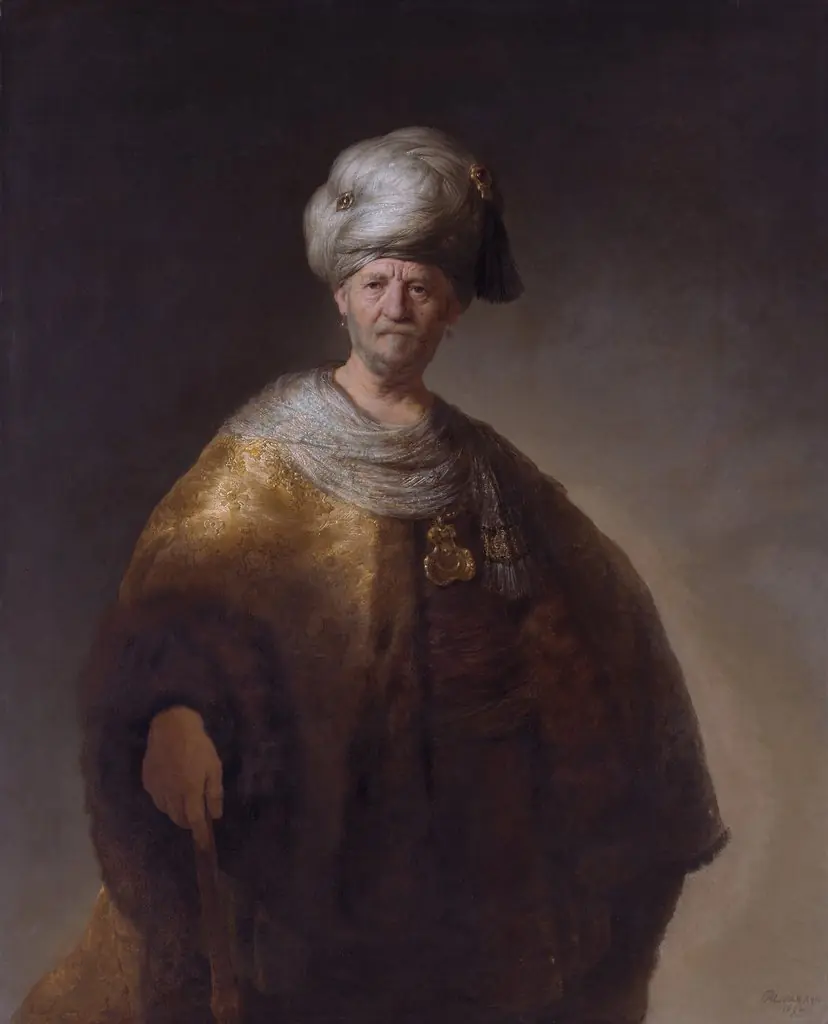
In early 17th-century Amsterdam, exotic costumes were often worn in portraits as symbols of wealth, curiosity, or intellectual engagement with distant cultures. Rembrandt painted several such figures, not as ethnographic records but as studies in human presence. These works responded to a broader European trend of collecting and imagining the Orient, filtered through artistic interpretation rather than direct observation.
Legacy
This portrait exemplifies Rembrandt’s ability to transform costume into psychological depth, influencing later generations of portraitists who sought emotional authenticity over idealized representation. Though once viewed as a curiosity, it is now recognized as a nuanced exploration of identity and perception, reflecting the artist’s enduring interest in the interplay between appearance and inner life.
Artist & collection
Artist
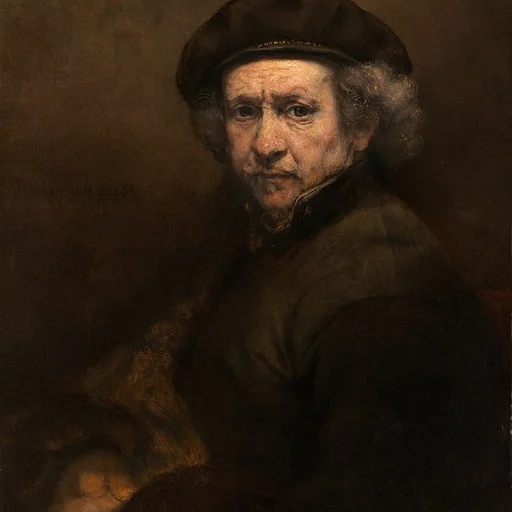
Rembrandt Harmenszoon van Rijn (15 July 1606 – 4 October 1669), known mononymously as Rembrandt, was a Dutch Golden Age painter, printmaker, and draughtsman.