Artwork
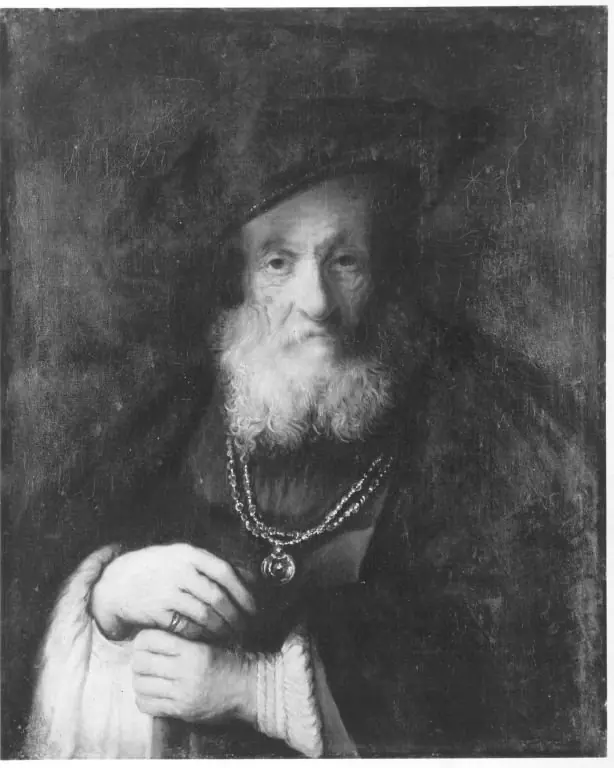
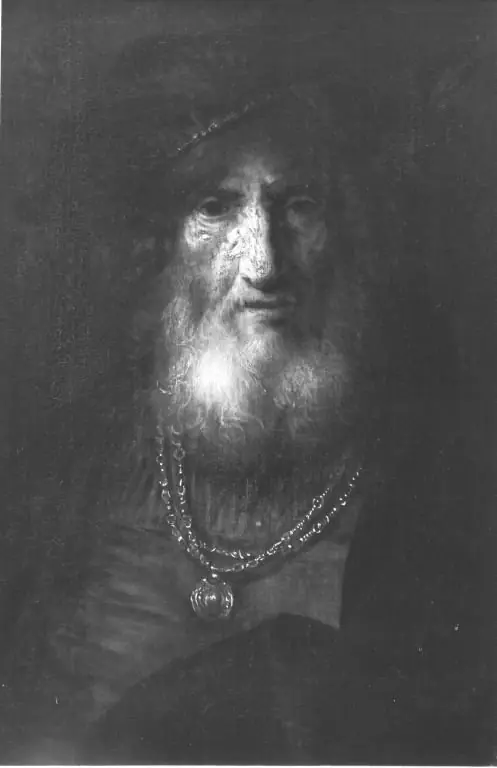
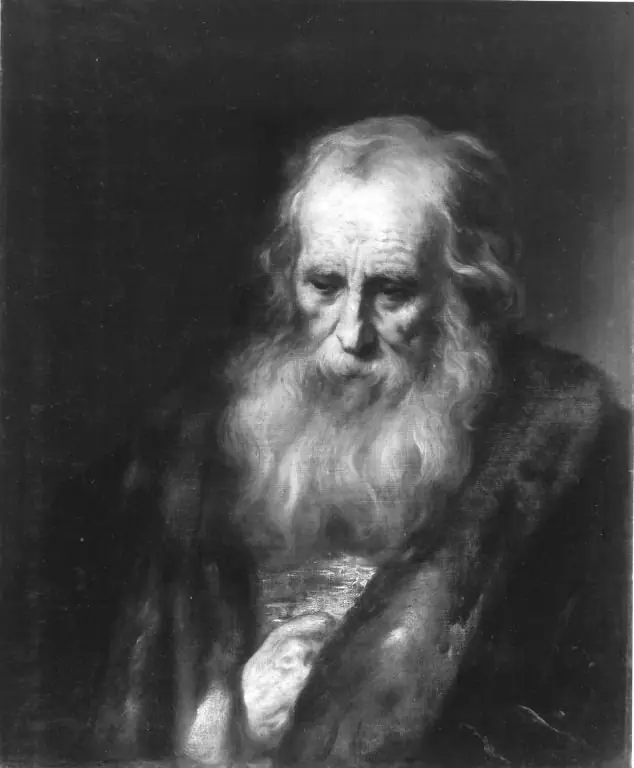
Head of a Bearded Man, Study for King Saul?
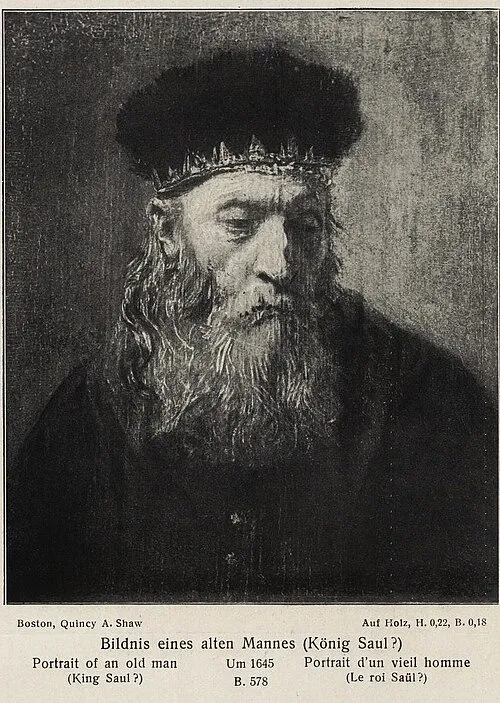
Head of a Bearded Man, Study for King Saul? is an oil painting by the Dutch Golden Age artist Rembrandt. It dates from 1645 and is held in the collection of the Kelvingrove Art Gallery and Museum.
About this work
Overview
Painted in 1645 by Rembrandt van Rijn, this oil-on-canvas work presents a half-length portrait of a bearded man, likely conceived as a preparatory study.
Painted in 1645 by Rembrandt van Rijn, this oil-on-canvas work presents a half-length portrait of a bearded man, likely conceived as a preparatory study. Its intimate scale and focused composition reflect Rembrandt’s habit of exploring character through isolated heads. Though not a finished historical painting, it demonstrates his method of refining expressions and forms before incorporating them into larger narratives.
Subject & Meaning
The figure’s aged features and solemn gaze have led some to associate him with King Saul, the biblical monarch tormented by inner strife. However, no definitive link exists; the man could equally represent a generic elder, a model, or a symbolic type. Rembrandt often used recurring facial types to evoke universal human states, making the identity deliberately ambiguous and emotionally resonant.
Technique & Style
Rembrandt employs chiaroscuro to model the face and beard with thick, tactile brushwork, allowing light to catch the texture of hair and fur while sinking the background into shadow. The palette is restrained—ochres, browns, and blacks—emphasizing volume over color. His loose, expressive strokes suggest immediacy, capturing the subject’s presence without idealization, a hallmark of his mature style.
History & Provenance
The painting entered the collection of the Kelvingrove Art Gallery and Museum in Glasgow through the bequest of Sir William Burrell in 1944. Prior to that, its ownership history is undocumented, as is common with many of Rembrandt’s smaller studies. Its survival as a standalone work, rather than a sketch in a notebook, suggests it was valued even in its preparatory form.
Context
In mid-1640s Amsterdam, Rembrandt was deepening his engagement with biblical themes, often testing expressions and costumes through individual studies. While commissioned portraits dominated his output, these introspective heads allowed him to explore psychological depth independently. This work aligns with a broader trend among Dutch artists to elevate ordinary subjects through emotional intensity.
Legacy
Though not widely exhibited as a major work, this study exemplifies Rembrandt’s enduring influence on portrait painting through its psychological honesty. Later artists admired his ability to convey inner life with minimal means. Its presence in Kelvingrove ensures continued access for scholars and viewers interested in the artist’s process beyond his grander compositions.
Artist & collection
Artist
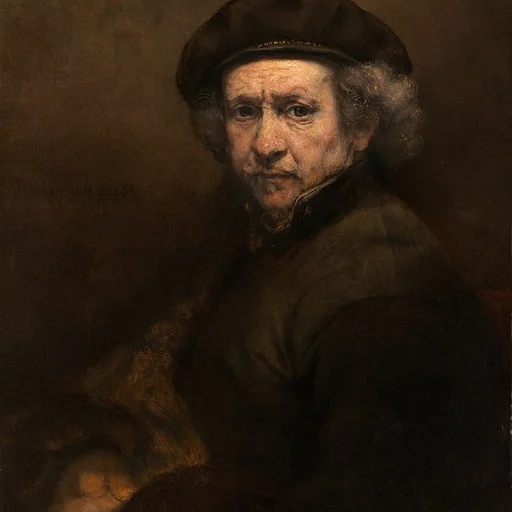
Rembrandt Harmenszoon van Rijn (15 July 1606 – 4 October 1669), known mononymously as Rembrandt, was a Dutch Golden Age painter, printmaker, and draughtsman.

 Bildnis eines alten Mannes (Kopie nach)
 Portrait of an Old Man
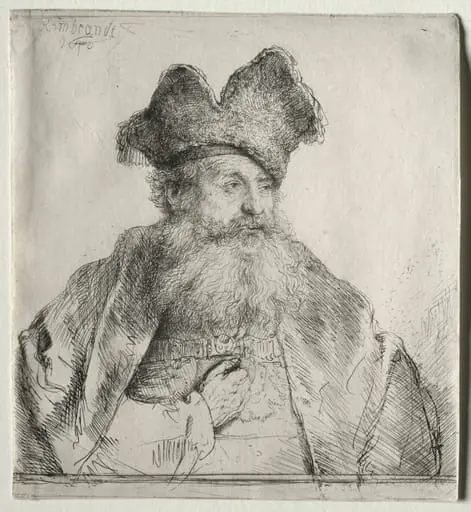 Old Man with a Divided Fur Cap
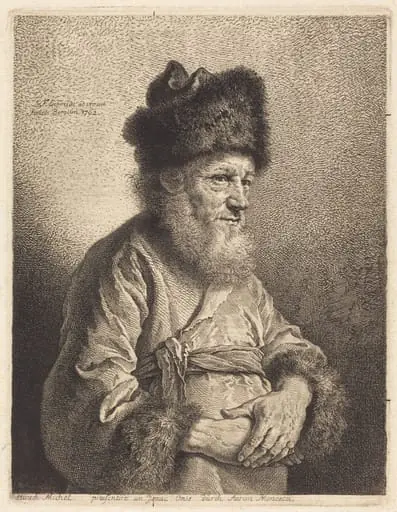 Hirsch Michel
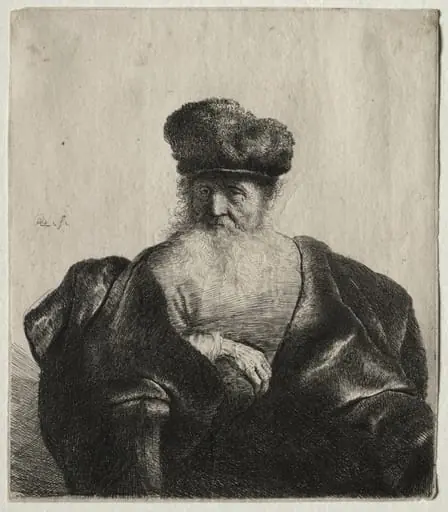 Old Man with Beard, Fur Cap, and Velvet Cloak
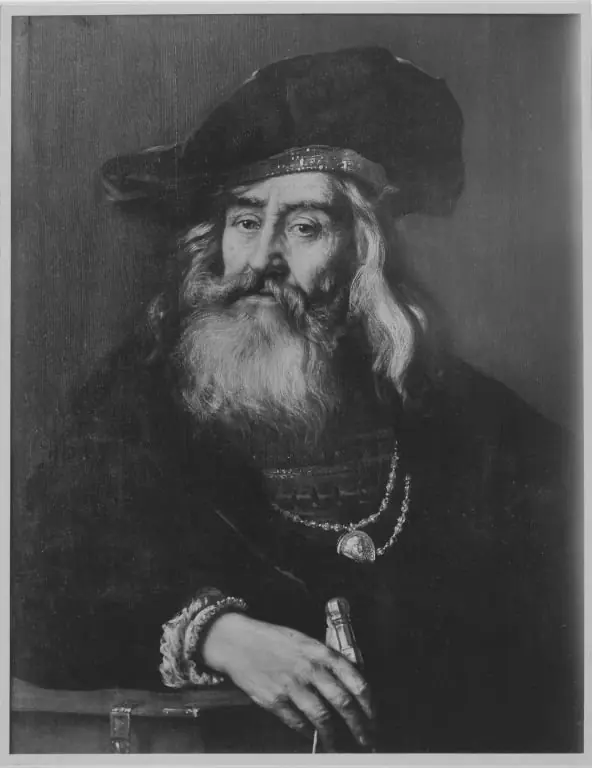 Gelehrter
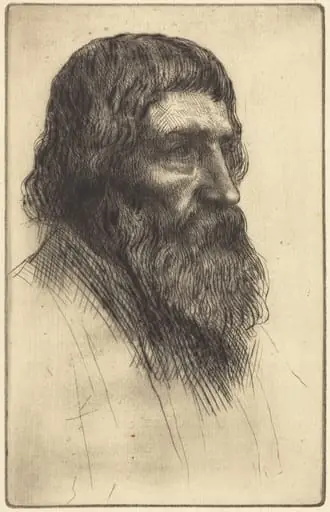 English Peasant (Paysan anglais)
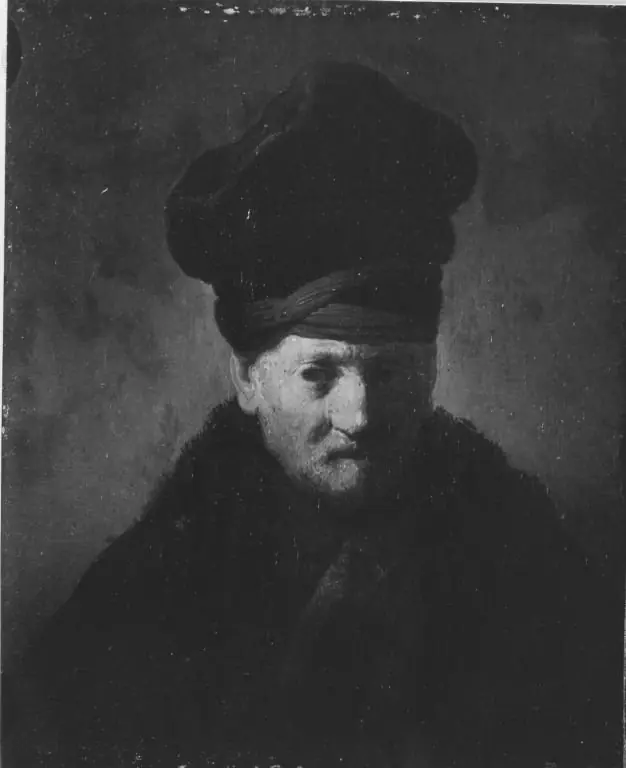 Bildnis eines alten Mannes (Kopie nach Rembrandt)
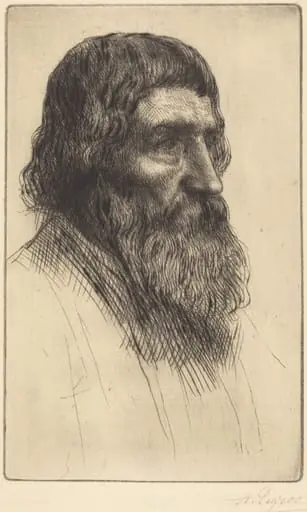 English Peasant (Paysan anglais)
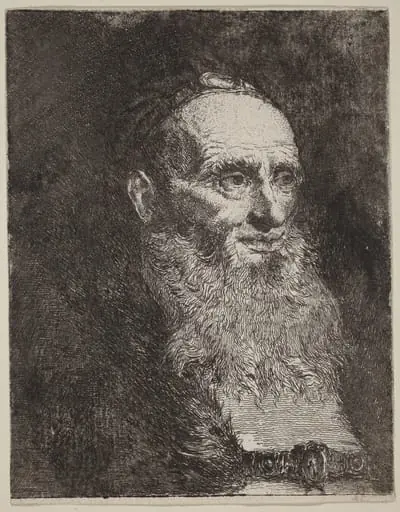 Old Man with a Beard
 Portrait of an Old Man
 Head of a Man with a Long Beard