Artwork
Self-portrait
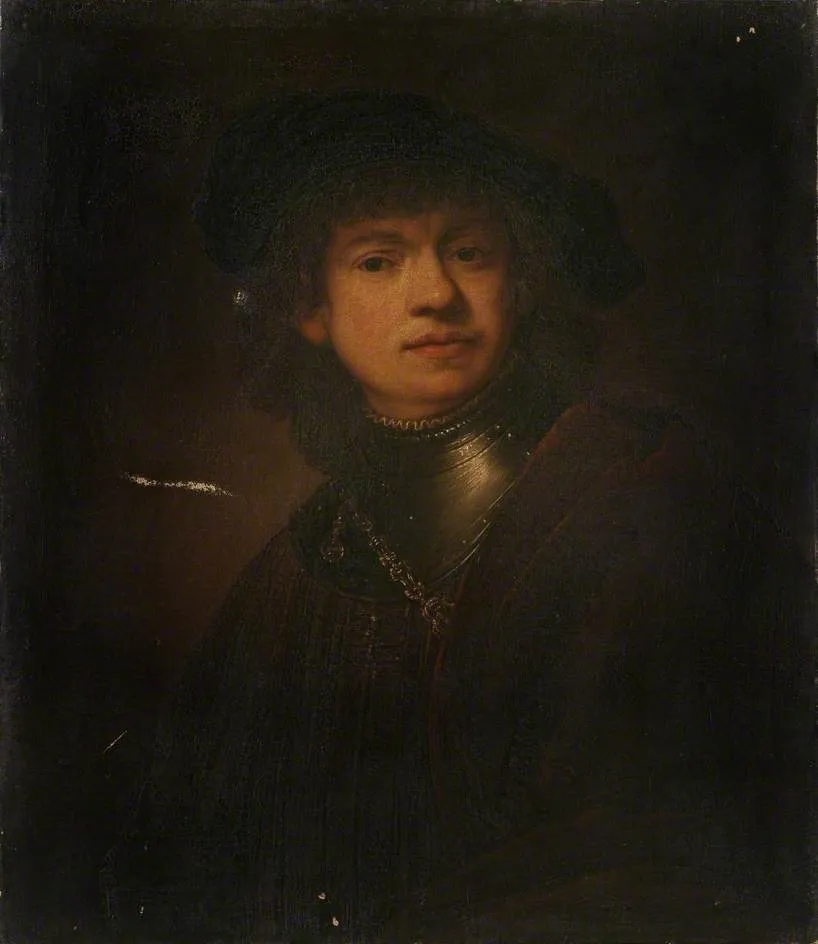
Self-portrait is an oil painting by the Dutch Golden Age artist Rembrandt. It dates from 1647 and is held in the collection of the Ashmolean Museum.
About this work
Overview
This oil painting, created circa 1647, is a self-portrait by Rembrandt van Rijn, a prominent artist of the Dutch Golden Age. The work is characterized by its somber color palette and prominent use of chiaroscuro, with the artist's face as the central, illuminated element.
Subject & Meaning
The subject of the painting is Rembrandt himself, depicted wearing a dark hat and shiny, dark collar against a dark background. His direct, serious gaze and small, solemn mouth convey a sense of introspection and gravity.
Technique & Style
The painting showcases Rembrandt's mastery of chiaroscuro, with light entering from the left, sharply contrasting the bright, thickly painted facial features against the dark, shadowy surroundings and attire.
History & Provenance
Part of the Dutch Golden Age movement, this self-portrait is now held in the collection of the Ashmolean Museum, reflecting its significance within Rembrandt's oeuvre and the broader artistic period.
Context
Created during a prolific period in Rembrandt's career, this work is one of approximately 300 paintings and 300 etchings he produced, highlighting his versatility across mediums.
Artist & collection
Artist
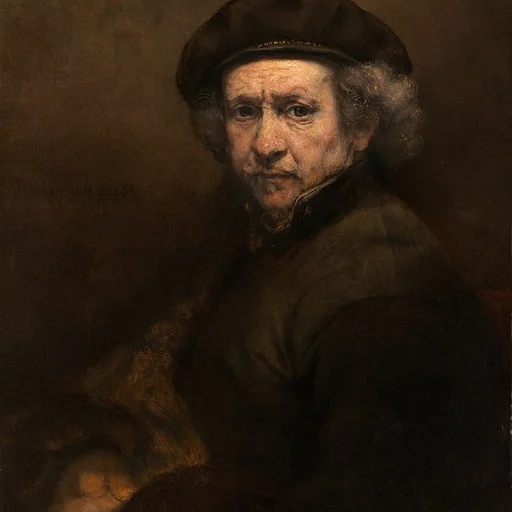
Rembrandt Harmenszoon van Rijn (15 July 1606 – 4 October 1669), known mononymously as Rembrandt, was a Dutch Golden Age painter, printmaker, and draughtsman.

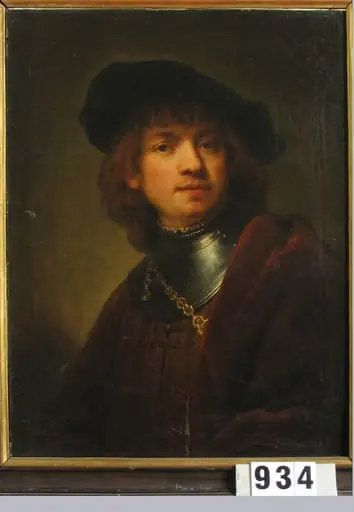 Autoportret cu guler de fier (în Reg. Inv.: Autoportret)
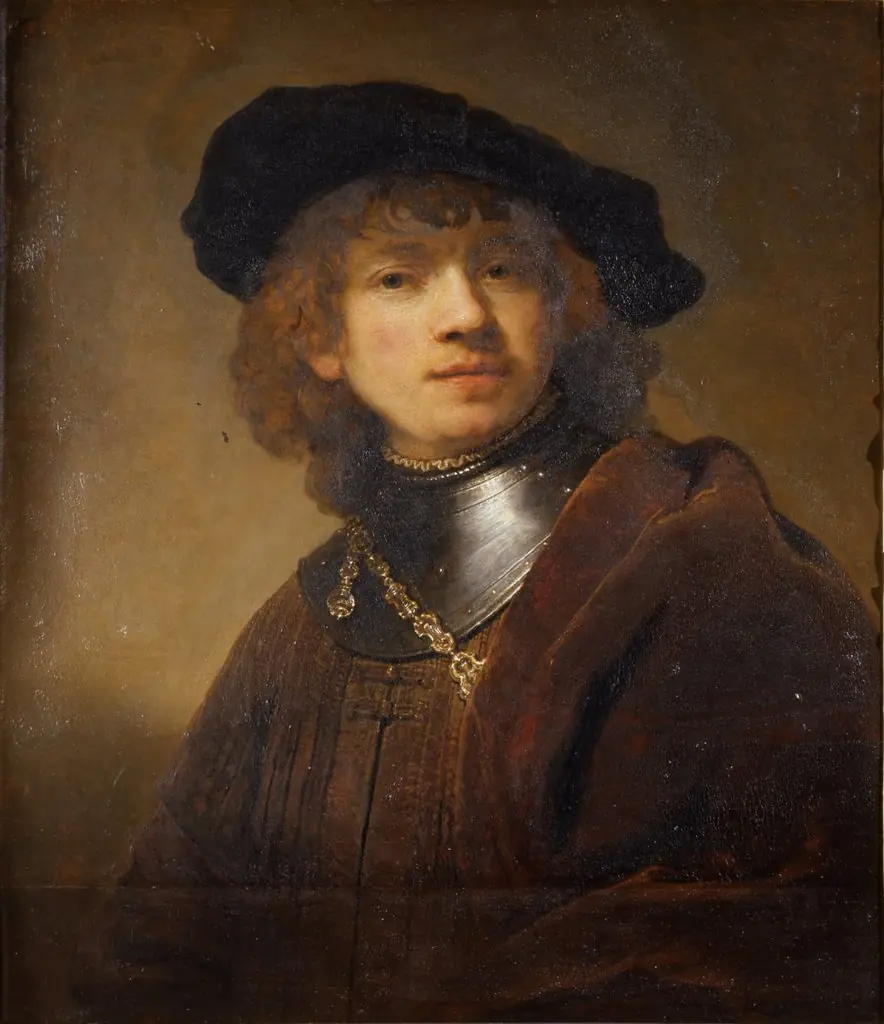 Tronie of a Young Man with Gorget and Beret
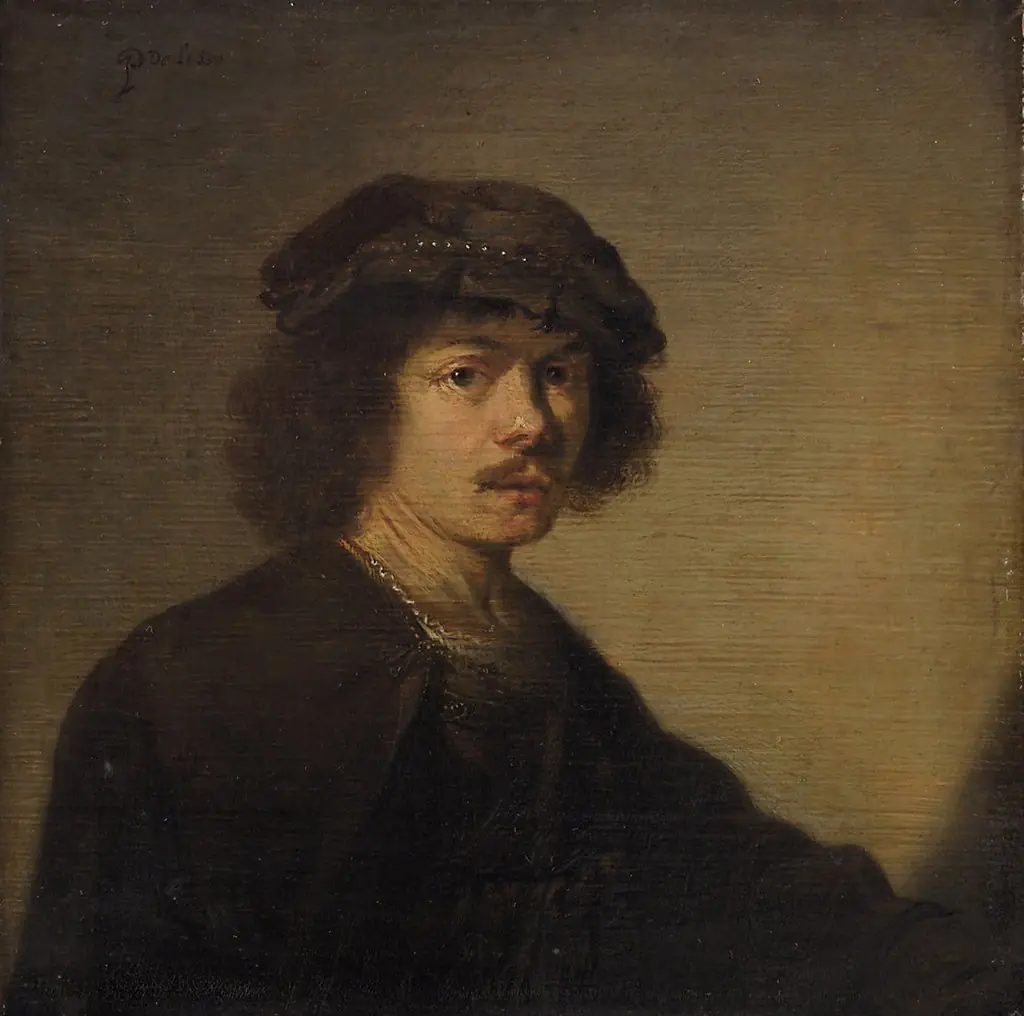 Selbstbildnis in Phantasietracht
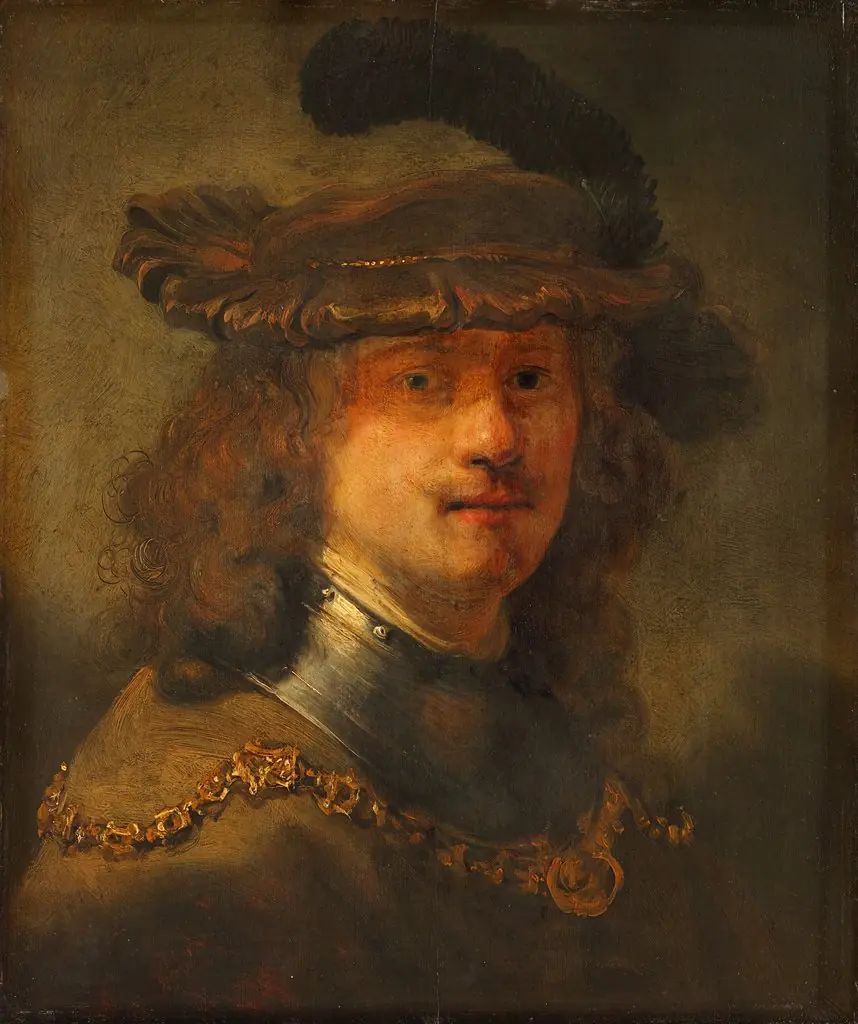 Self portrait with a velvet beret and gold chain
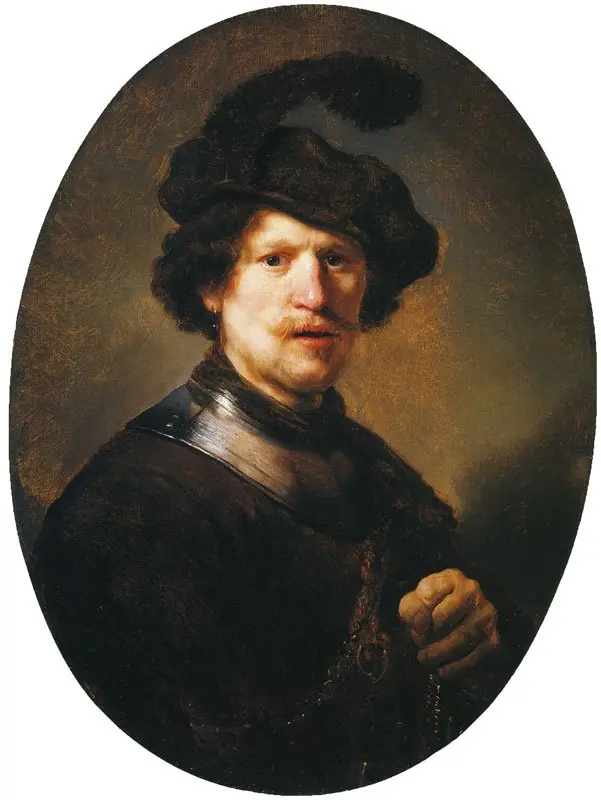 Man Wearing a Plumed Beret and Gorget
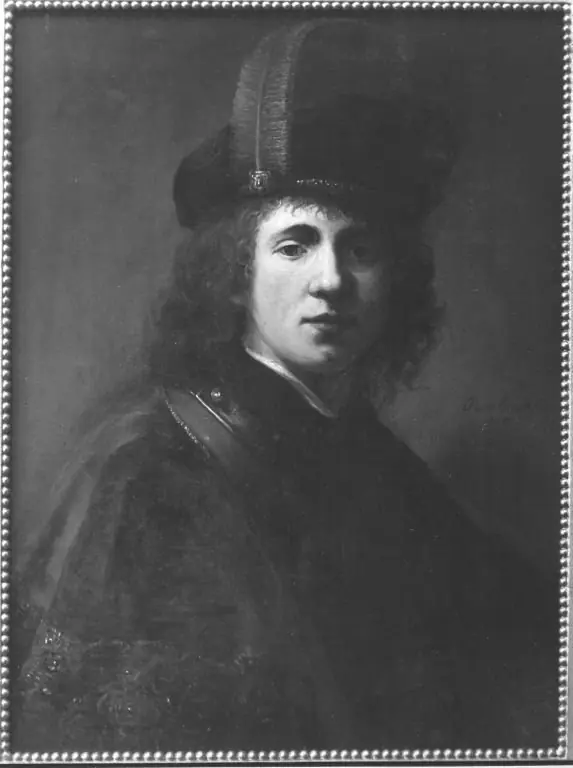 Ein junger Mann (Werkstatt)
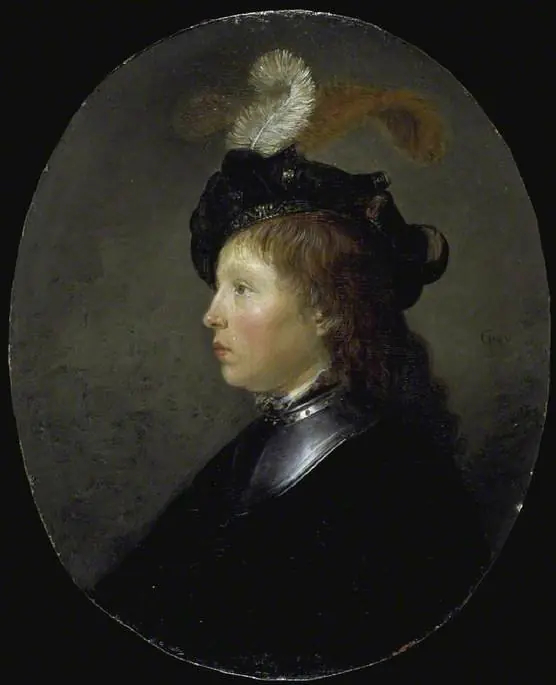 Portrait of a Boy
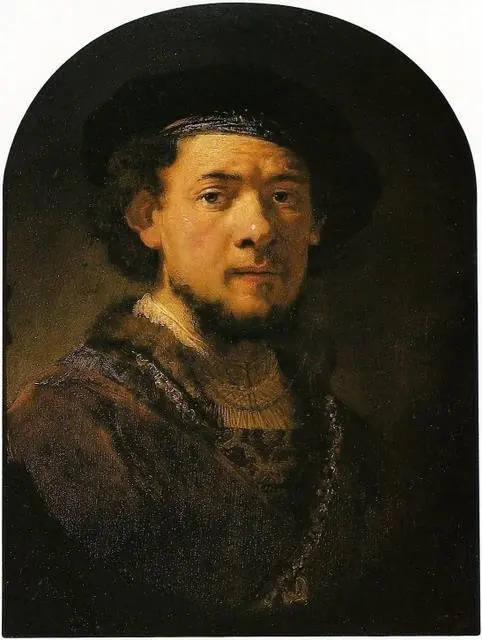 Portrait of a Young Man with a Golden Chain
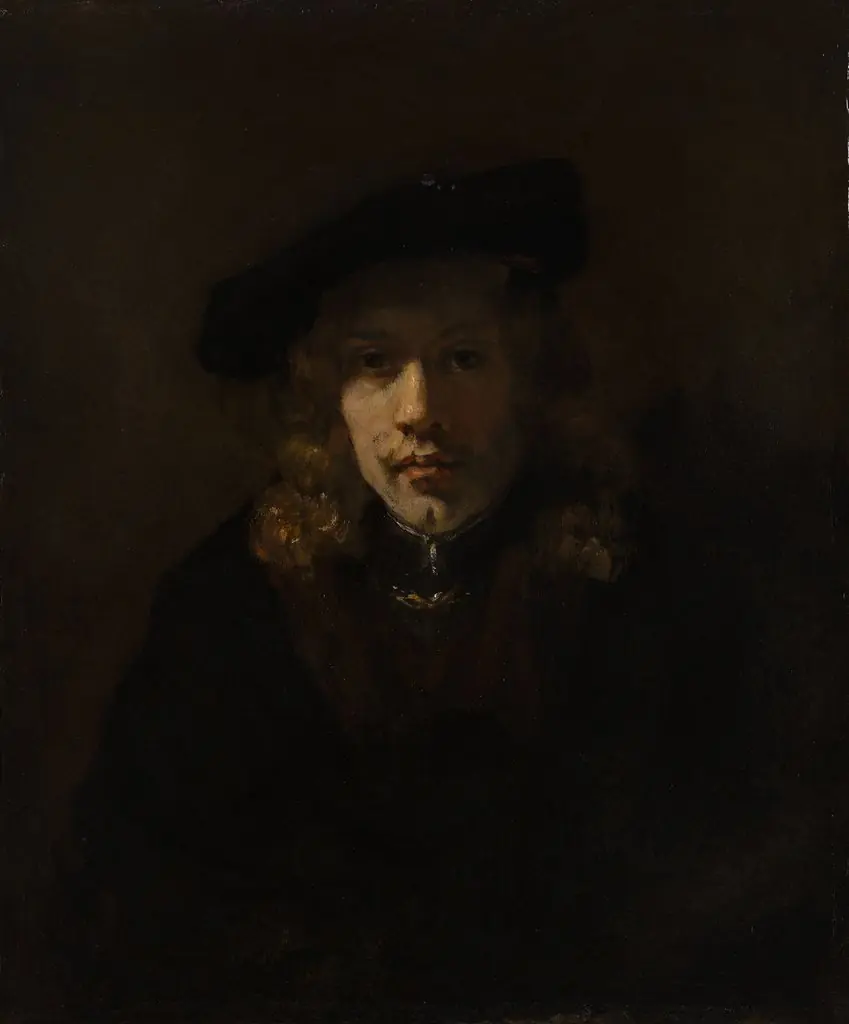 Man in a Beret
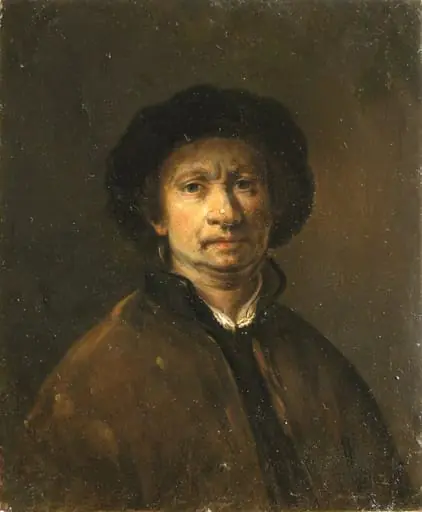 Autoportret
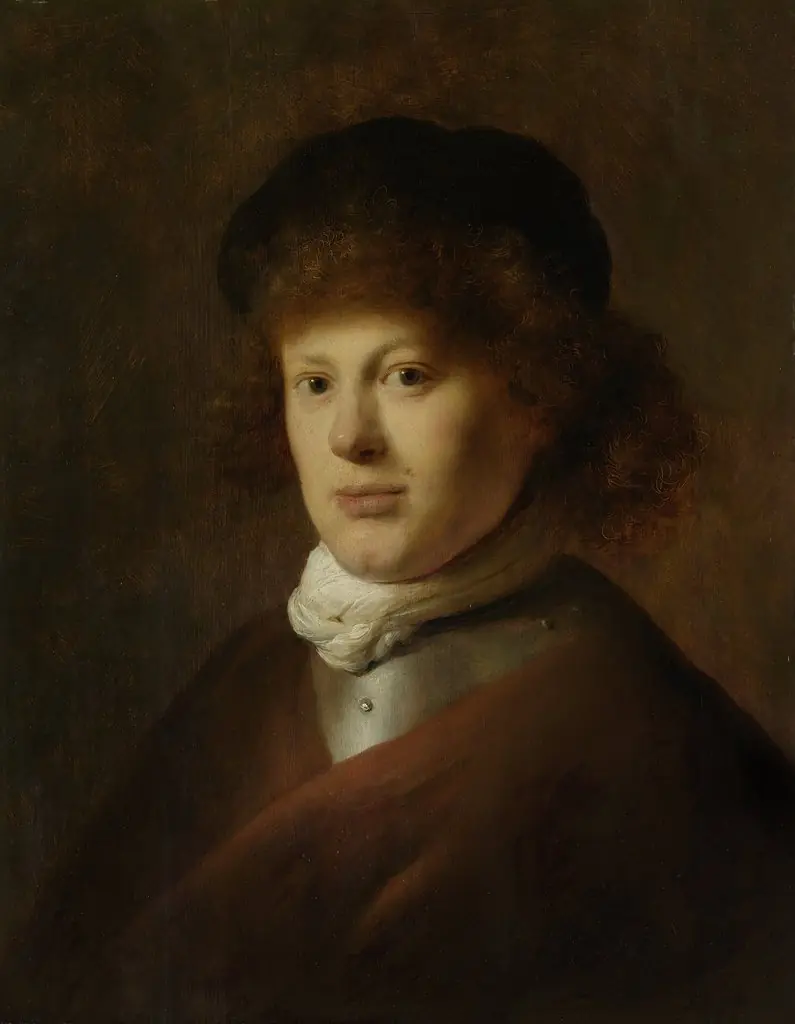 Portrait of Rembrandt Harmensz van Rijn
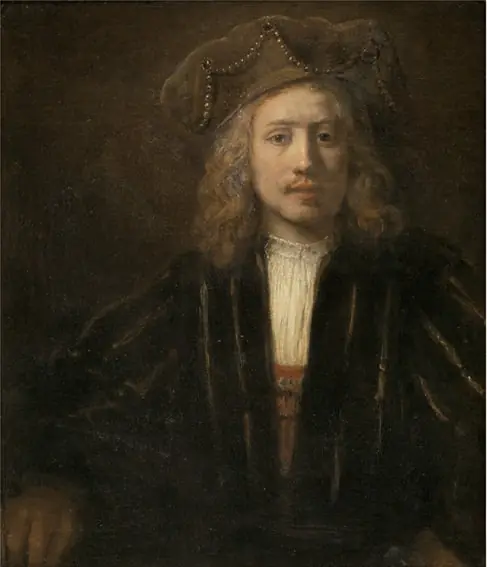 Young Man in a Pearl-trimmed Cap