Artwork
The Descent from the Cross
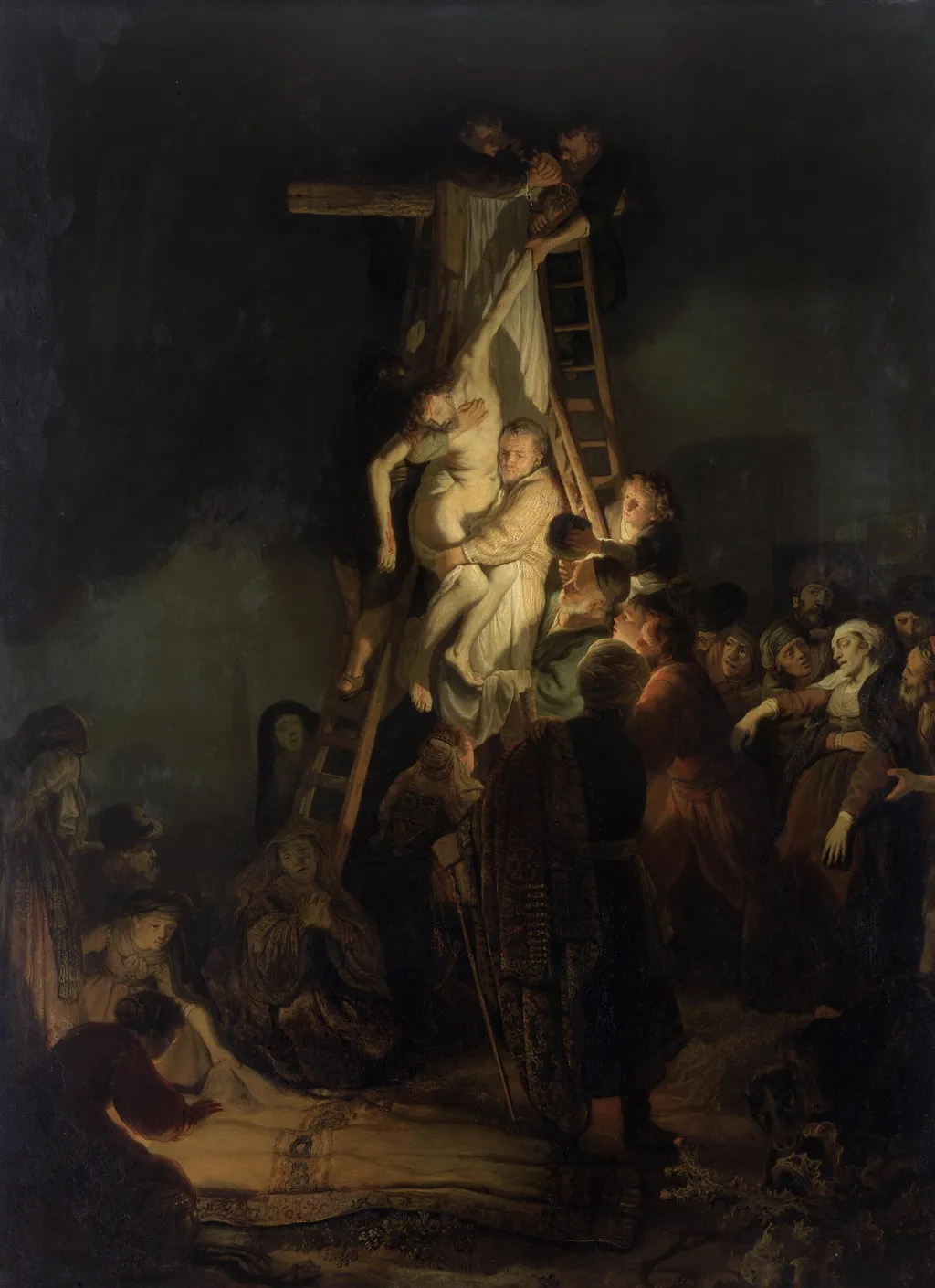
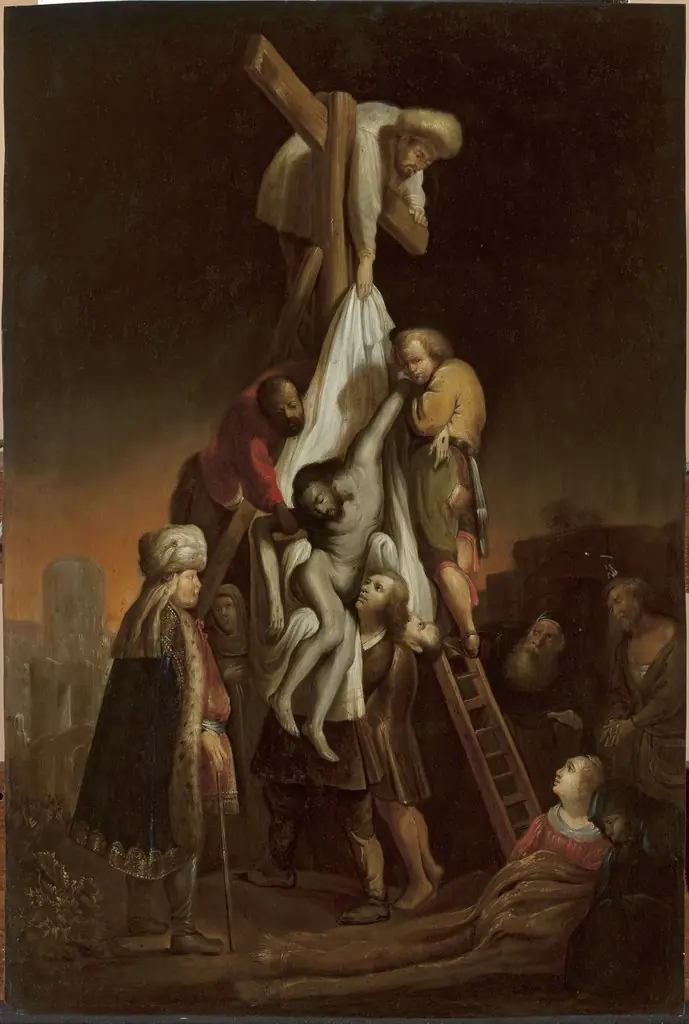
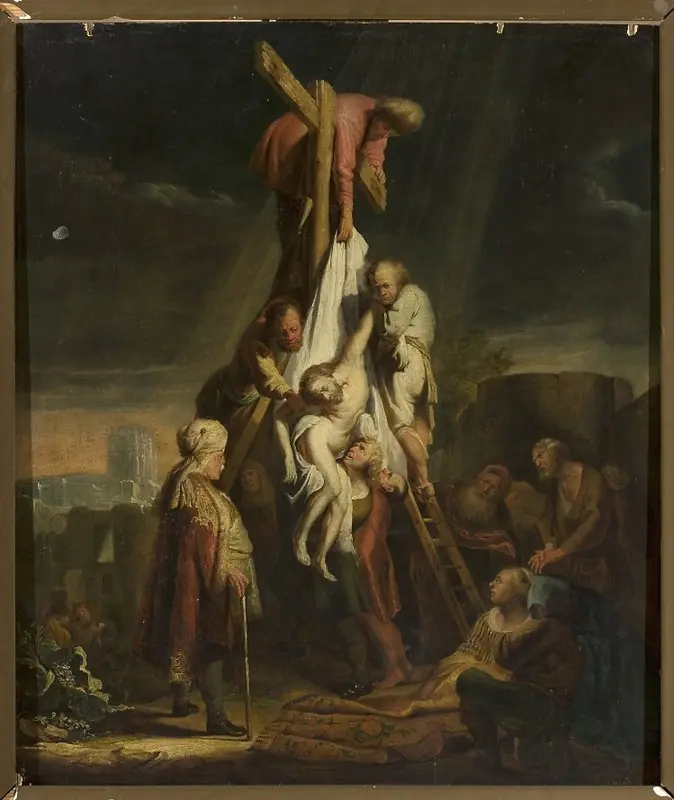
The Descent from the Cross is an oil painting by the Dutch Golden Age artist Rembrandt. It dates from 1634 and is held in the collection of the Hermitage Museum.
About this work
Overview
Created in 1634, Rembrandt’s oil on canvas titled *Descent from the Cross* resides in the Hermitage Museum, St. Petersburg. The work portrays a somber gathering of figures around a wooden cross as a body is lowered, bathed in a subdued, left‑hand light. Muted browns and grays dominate, while the composition directs attention to the central, descending figure.
Subject & Meaning
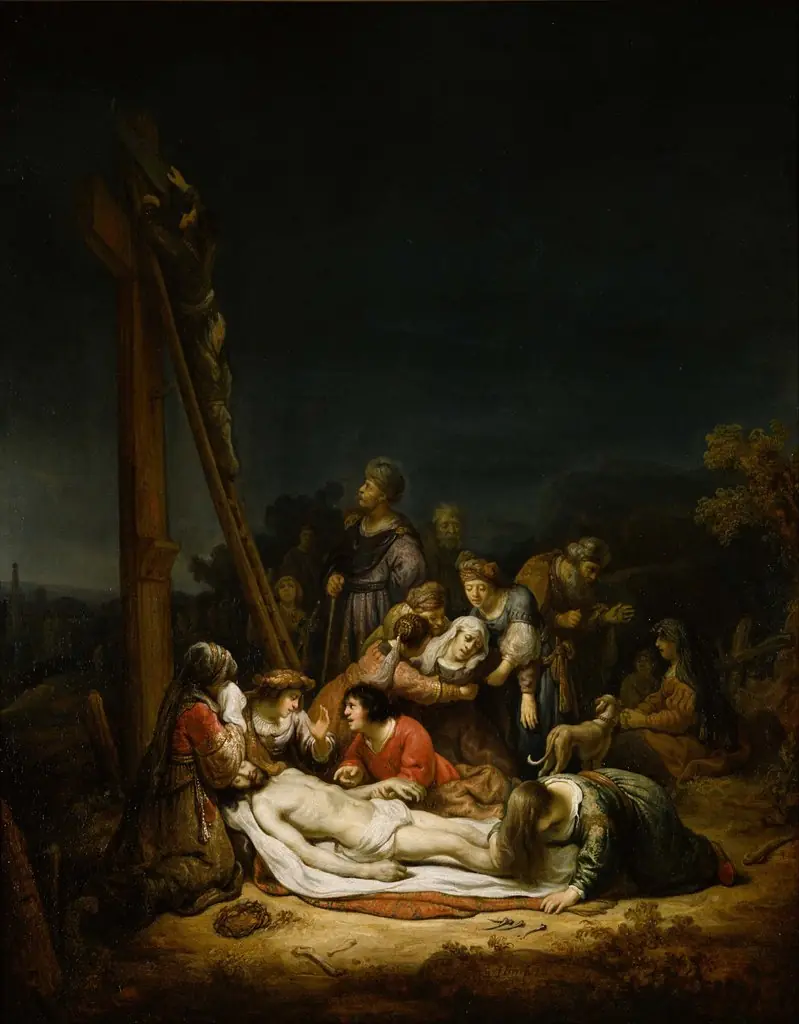
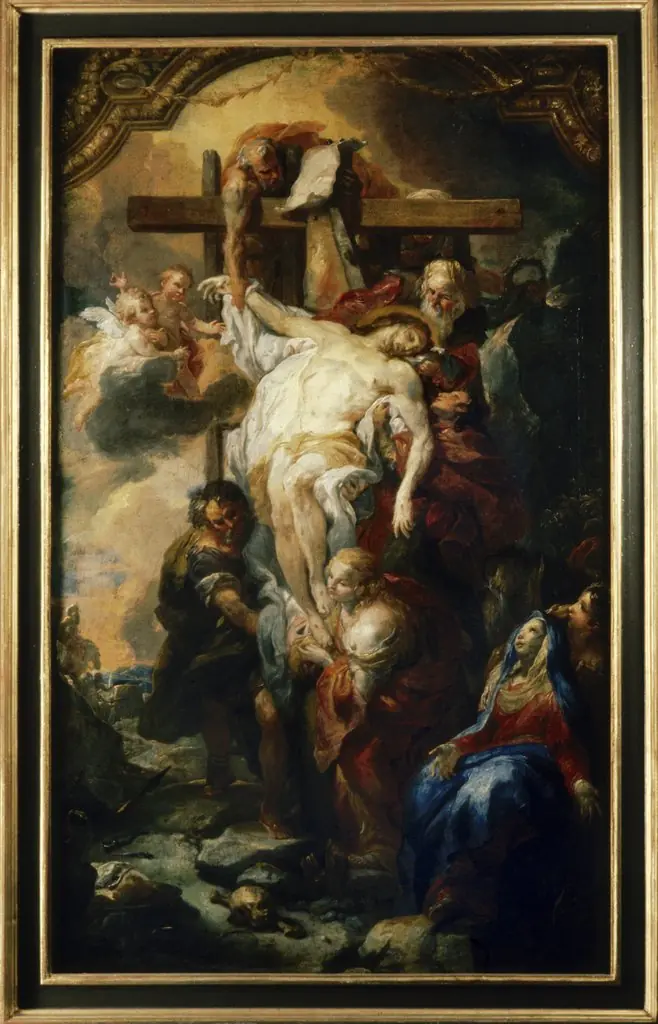
The painting illustrates the biblical moment when Christ’s body is removed from the crucifixion site, a theme frequently explored by the Dutch master. The arrangement of mourners—some gazing upward, others turning away—conveys a spectrum of grief and contemplation, reflecting the emotional weight of the event within a tightly knit group.
Technique & Style
Rembrandt employs chiaroscuro to carve out depth, allowing the limited illumination to model the figures and accentuate the central descent. The palette is restrained, relying on earth tones that enhance the scene’s solemnity. The figure composition is unusually compact, creating an intimate space that heightens the drama without resorting to overt theatricality.
History & Provenance
The canvas entered the Hermitage collection in the 18th century and survived the tumult of World War II, when many artworks faced displacement or loss. Its survival is linked to the museum’s protective measures during the conflict. Scholars have also noted a personal resonance for Rembrandt, whose own family experienced loss around the time of the painting’s creation.
Own this work as a print
Artist & collection

Artist
Rembrandt Harmenszoon van Rijn (15 July 1606 – 4 October 1669), known mononymously as Rembrandt, was a Dutch Golden Age painter, printmaker, and draughtsman.