Artwork
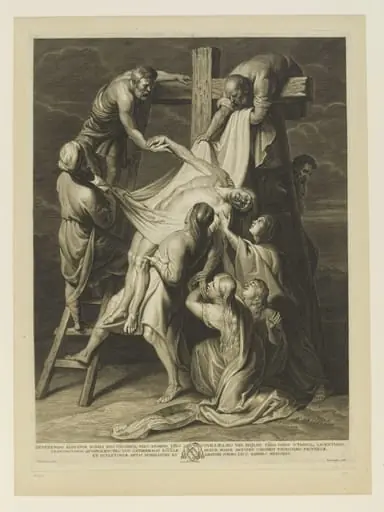
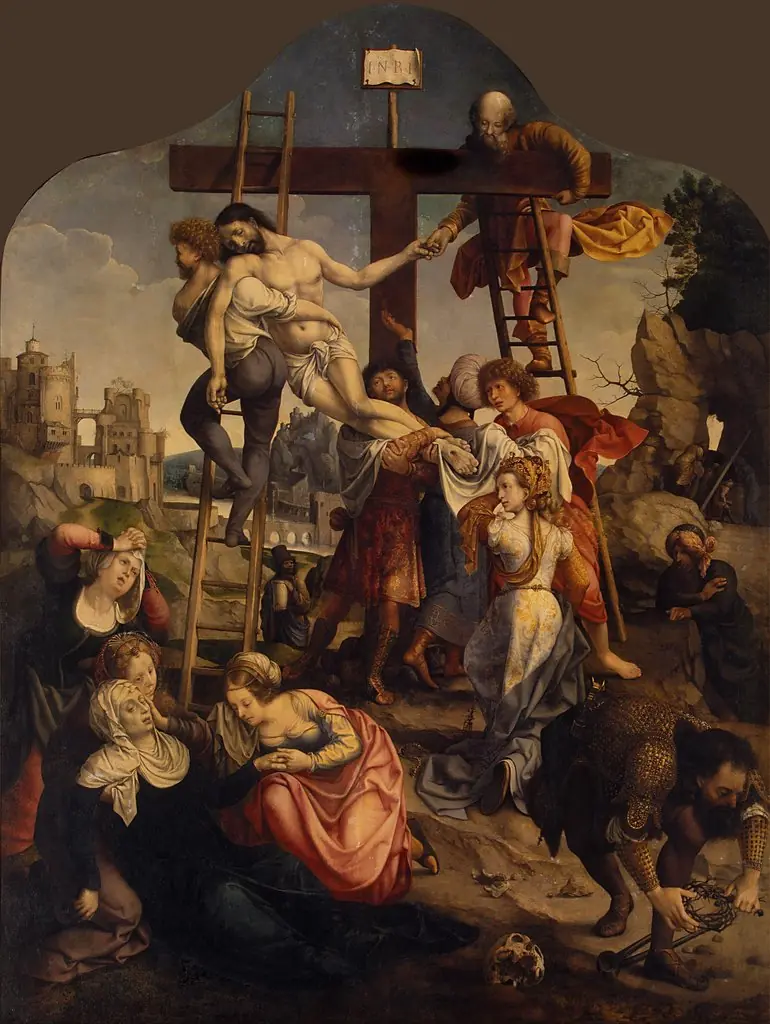
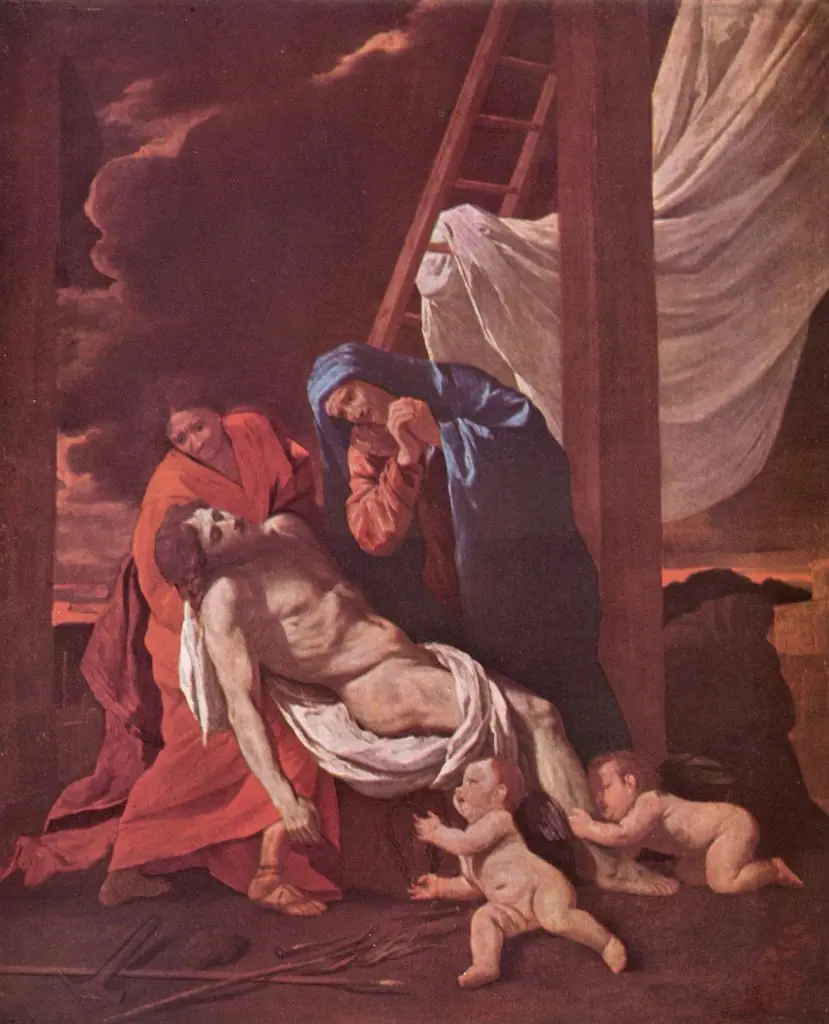
Descent from the Cross (Matthew 27:58–59; Mark 15: 45–46; Luke 23:52–53; John 19:38)
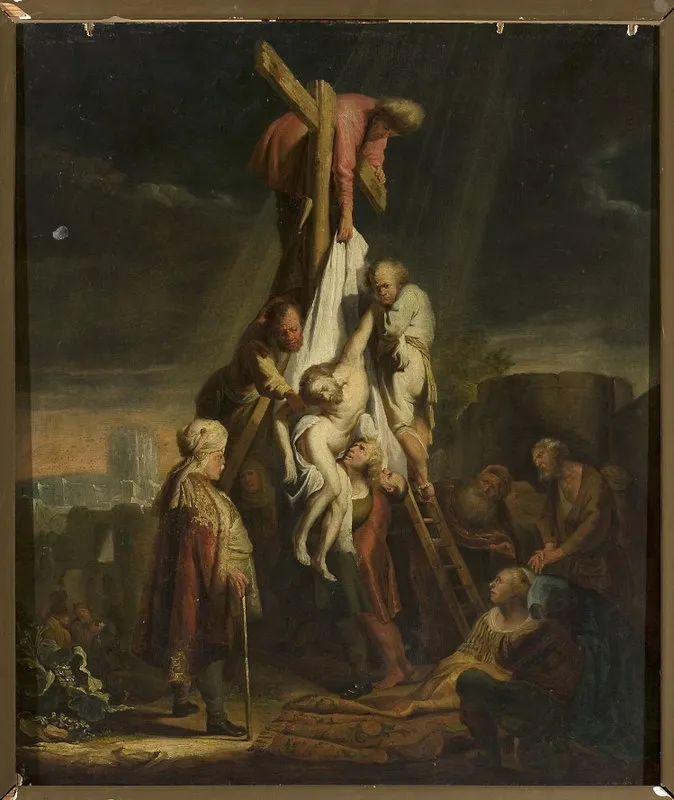
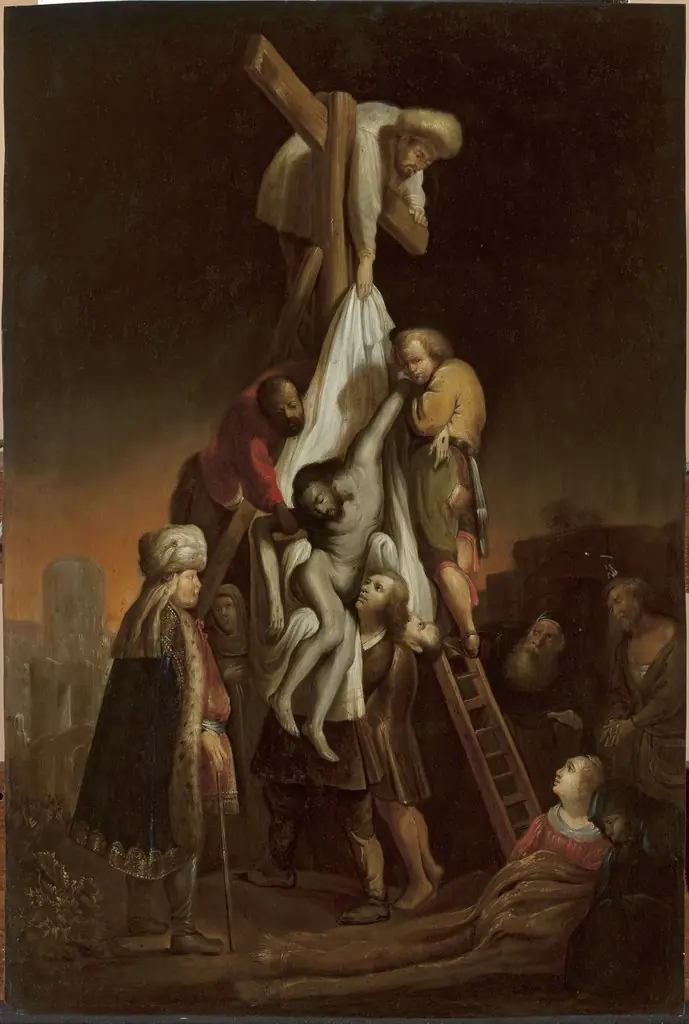
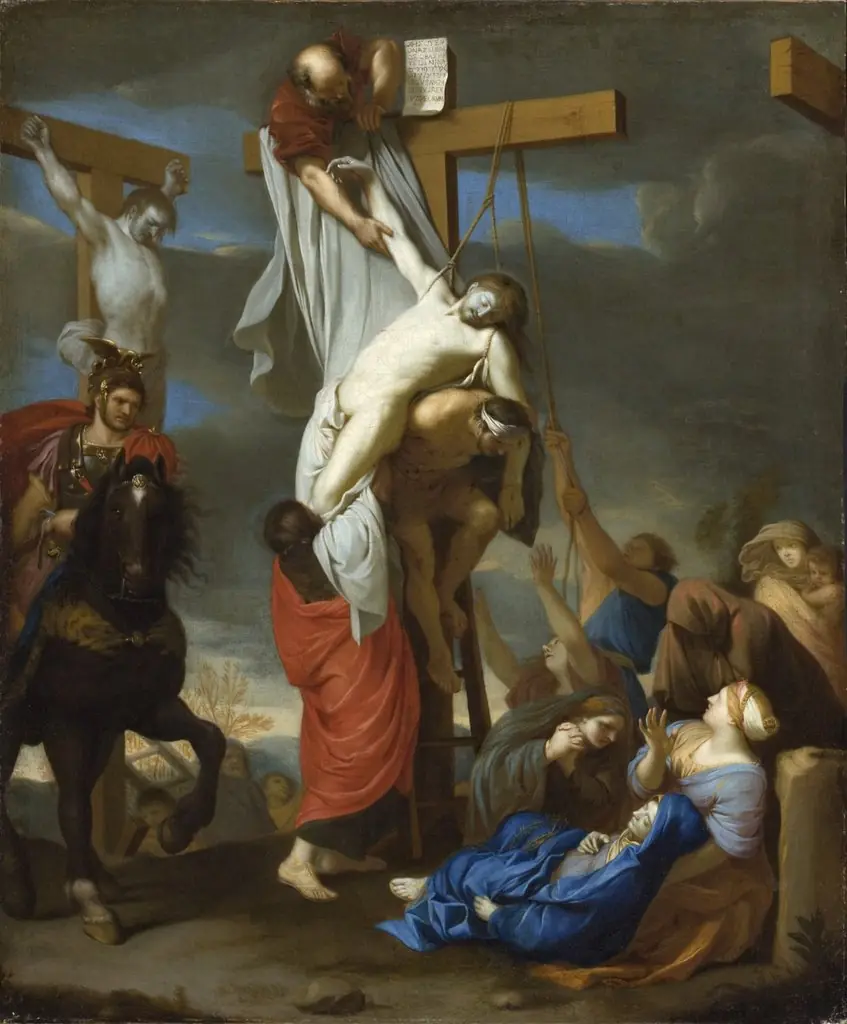
Descent from the Cross (Matthew 27:58–59; Mark 15: 45–46; Luke 23:52–53; John 19:38) is an oil painting by the Dutch Golden Age artist Rembrandt. It dates from 1647 and is held in the collection of the National Museum in Warsaw.
About this work
Overview
Created around 1647, this oil painting by Rembrandt van Rijn portrays the biblical moment when Christ’s body is lowered from the cross. The composition gathers several figures around the central figure, set against a storm‑laden sky, and is part of the National Museum’s collection in Warsaw.
Subject & Meaning
The work visualises the Gospel accounts of the removal of Jesus from the crucifixion site. A group of men support the limp body, a woman kneels nearby, and a well‑dressed observer watches, emphasizing the collective grief and solemnity of the event.
Technique & Style
Rembrandt employs his characteristic chiaroscuro, contrasting deep blues, browns and grays with a striking white cloth that highlights the corpse. The faces are rendered with realistic modeling, the interplay of light and shadow giving each figure a three‑dimensional presence and emotional intensity.
History & Provenance
The painting belongs to the oeuvre of the Dutch Golden Age master, who left roughly three hundred surviving paintings and a prolific output of etchings and drawings. It entered the National Museum in Warsaw, where it remains on public display.
Artist & collection

Artist
Rembrandt Harmenszoon van Rijn (15 July 1606 – 4 October 1669), known mononymously as Rembrandt, was a Dutch Golden Age painter, printmaker, and draughtsman.