Artwork
The Rape of Ganymede
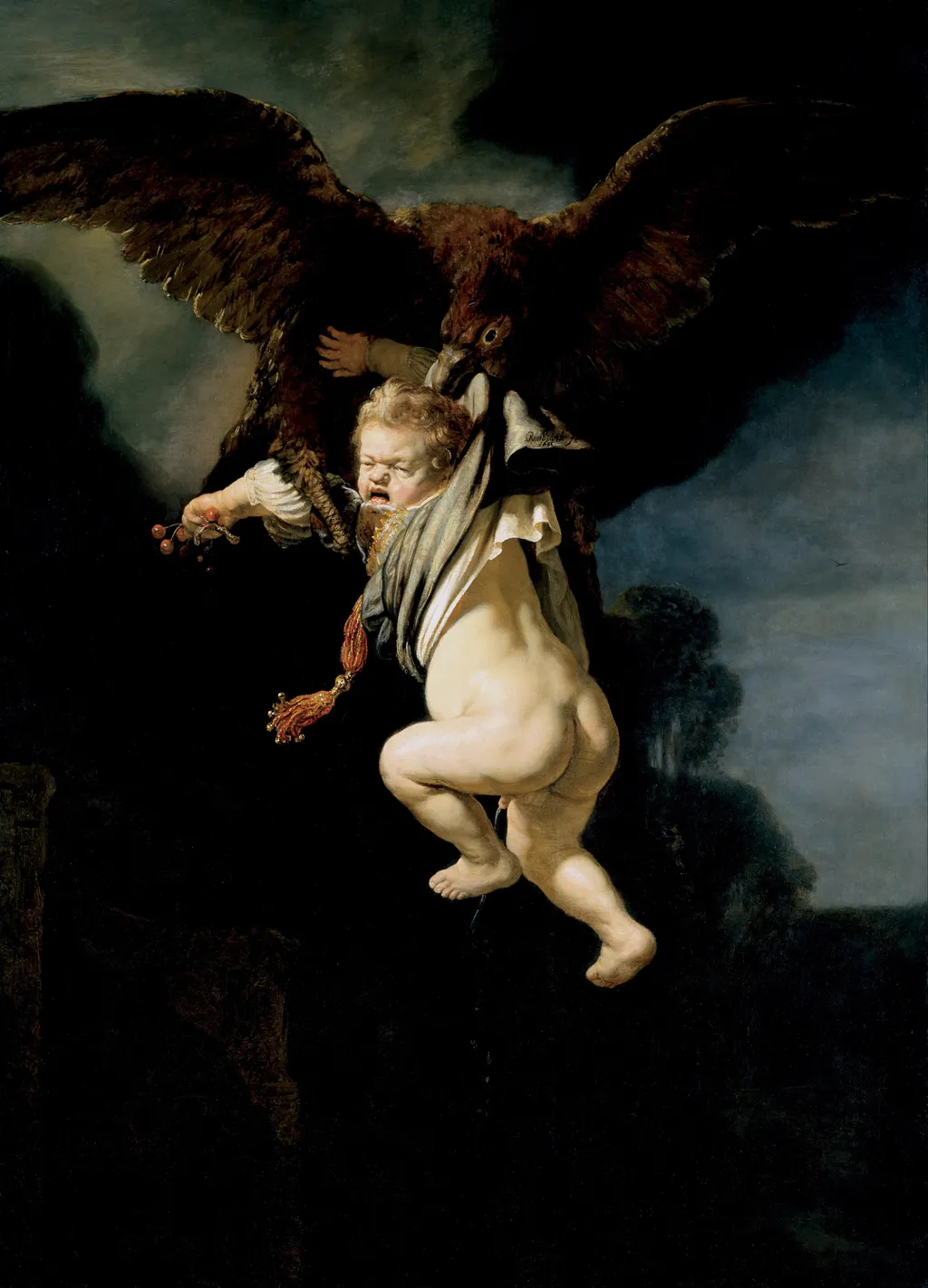
The Rape of Ganymede is an oil painting by the Dutch Golden Age artist Rembrandt. It dates from 1635 and is held in the collection of the Staatliche Kunstsammlungen Dresden.
About this work
Overview
The Rape of Ganymede is a 1635 oil painting by Rembrandt, depicting a scene from classical mythology. The work is part of the Gemäldegalerie Alte Meister collection in Dresden.
Subject & Meaning
The painting illustrates the mythological abduction of Ganymede, a youth, by an eagle (often associated with Zeus). The composition conveys drama and tension, suggesting Ganymede's reluctant capture.
Technique & Style
Rembrandt employed chiaroscuro, with a dark, shadowy background set against the central figures. The eagle's outstretched wings and Ganymede's extended limbs create dynamic movement, characteristic of the Baroque style.
History & Provenance
Created in 1635, the painting is attributed to Rembrandt based on stylistic similarities. It is housed at the Gemäldegalerie Alte Meister in Dresden, Germany.
Context
The work reflects 17th-century Dutch interest in classical mythology. Rembrandt's interpretation contrasts with more serene depictions of the myth, emphasizing instead the turbulent nature of the abduction.
Own this work as a print
Artist & collection
Artist
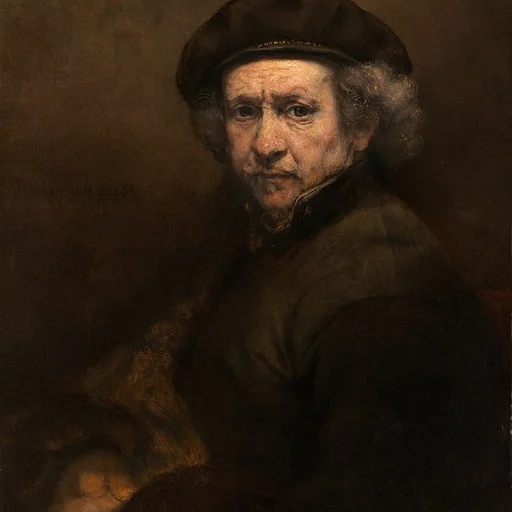
Rembrandt Harmenszoon van Rijn (15 July 1606 – 4 October 1669), known mononymously as Rembrandt, was a Dutch Golden Age painter, printmaker, and draughtsman.