Artwork
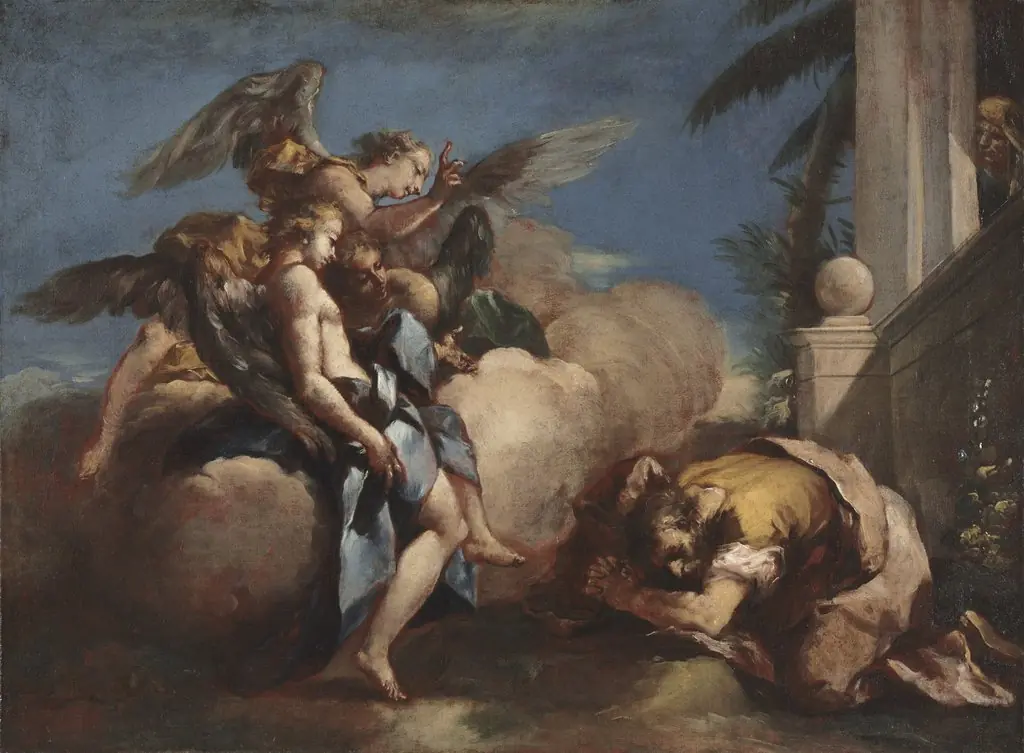
An Angel Awakens the Prophet Elijah
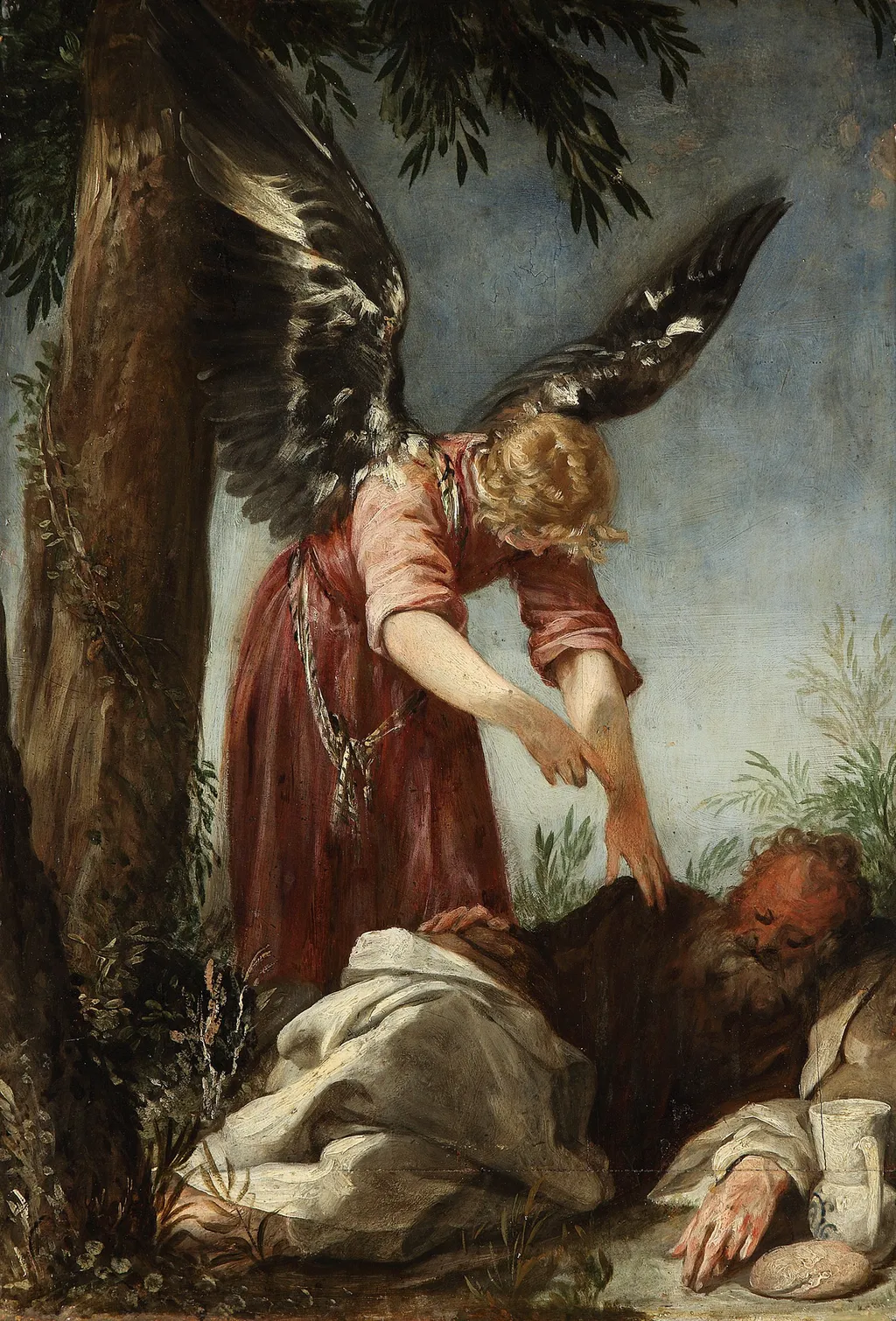
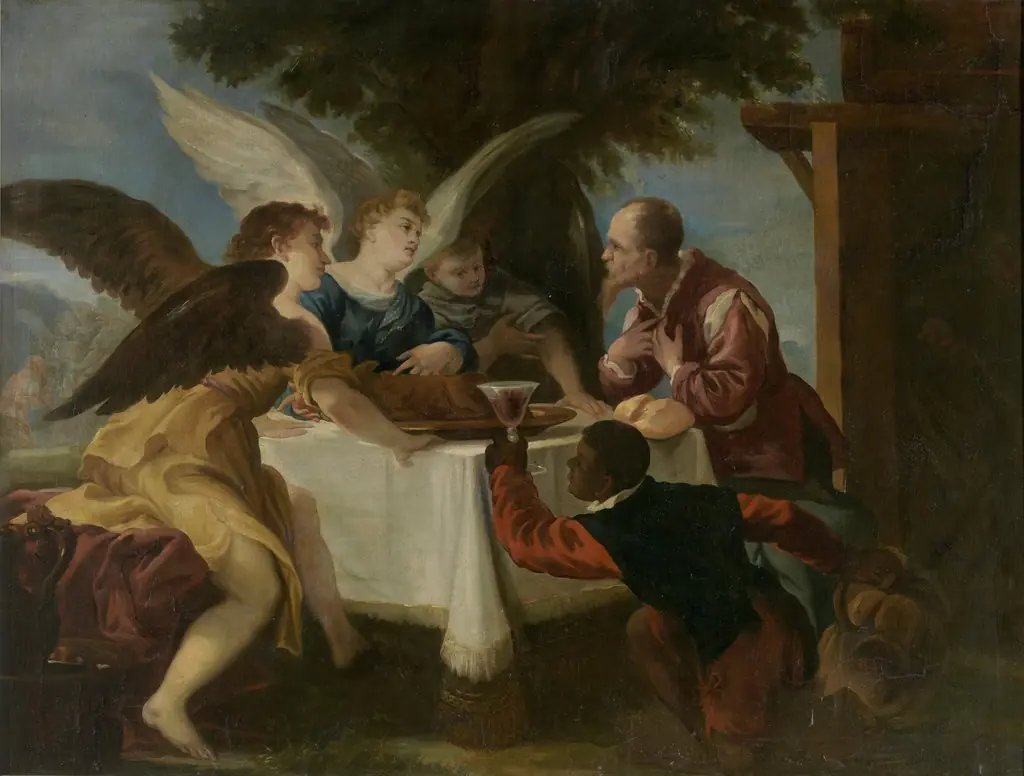
An Angel Awakens the Prophet Elijah is an unspecified painting by the Early Baroque Italian artist Juan Antonio de Frías y Escalante. It dates from 1667 and is held in the collection of the Gemäldegalerie Berlin.
About this work
Overview
A Spanish artist active during the mid-17th century, Frías y Escalante produced religious subjects under the influence of both Spanish and Italian traditions.
Painted in 1667 by Juan Antonio de Frías y Escalante, this work illustrates a moment from the biblical narrative of Elijah’s rest in the wilderness. A Spanish artist active during the mid-17th century, Frías y Escalante produced religious subjects under the influence of both Spanish and Italian traditions. The painting resides today in the Gemäldegalerie, Berlin, as part of its Baroque collection, reflecting the era’s devotional priorities and artistic exchange across Europe.
Subject & Meaning
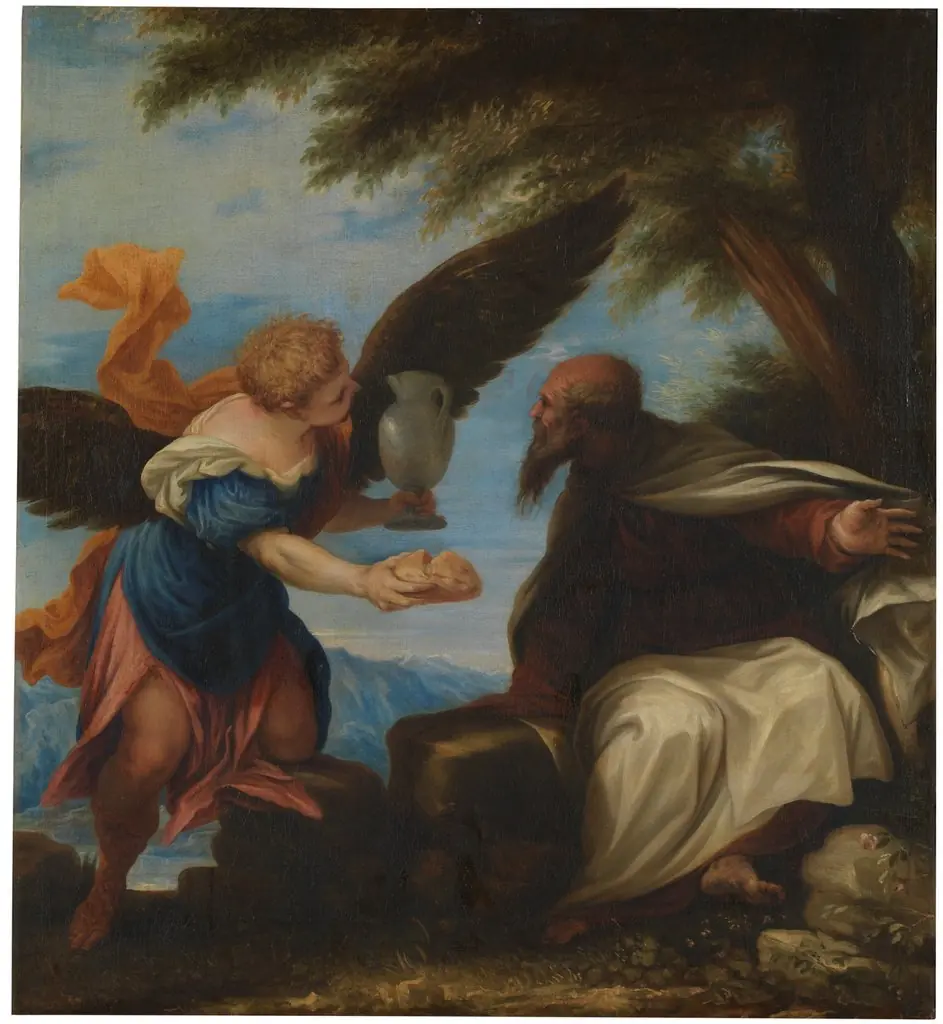
The scene captures the divine intervention described in 1 Kings 19, where an angel awakens the exhausted prophet Elijah to continue his journey. The angel’s tender gesture and the prophet’s vulnerable posture convey spiritual reassurance amid physical depletion. The quiet intimacy of the moment underscores a theme of divine care, central to Counter-Reformation piety, which emphasized personal connection with sacred narratives over grand spectacle.
Technique & Style
Frías y Escalante employs soft modeling and muted contrasts to evoke stillness rather than drama. The angel’s crimson robe contrasts subtly with the earth-toned landscape, drawing attention without disruption. Light falls gently across the figures, suggesting a dawn atmosphere. While not overtly theatrical, the composition shows awareness of Italian chiaroscuro, adapted here into a restrained, contemplative mode characteristic of late Spanish Baroque.
History & Provenance
Created near the end of the artist’s life, the painting dates from his final years in Madrid, where he served in royal circles before his death in 1669. It entered the Gemäldegalerie Berlin’s collection in the 19th century, likely through acquisitions of Spanish religious art. Its survival and preservation reflect its continued recognition within European institutional collections, despite the artist’s relatively limited output and obscurity compared to contemporaries.
Context
Painted during a period when Spanish religious art favored emotional clarity and doctrinal fidelity, this work aligns with Counter-Reformation ideals promoted by the Church. While Italian Baroque dynamism influenced Spanish painters, Frías y Escalante’s approach remains subdued, reflecting local tastes for quiet devotion. His training under Francisco Ricci and exposure to courtly aesthetics shaped his synthesis of Italian composition with Spanish restraint.
Legacy
Though Frías y Escalante’s career was brief and his oeuvre small, this painting exemplifies a transitional phase in Spanish religious painting—between the intensity of earlier Baroque and the softer sensibilities that would precede Rococo. His work, preserved in major collections, offers insight into the quieter, more introspective side of 17th-century Spanish art, often overshadowed by more flamboyant contemporaries.
Own this work as a print
Artist & collection
Artist
Juan Antonio de Frías y Escalante
Juan Antonio de Frías y Escalante (1633 in Cordoba–1669 in Madrid) was a Spanish Baroque Golden Age painter.