Artwork
Abraham Casting Out Hagar and Ishmael
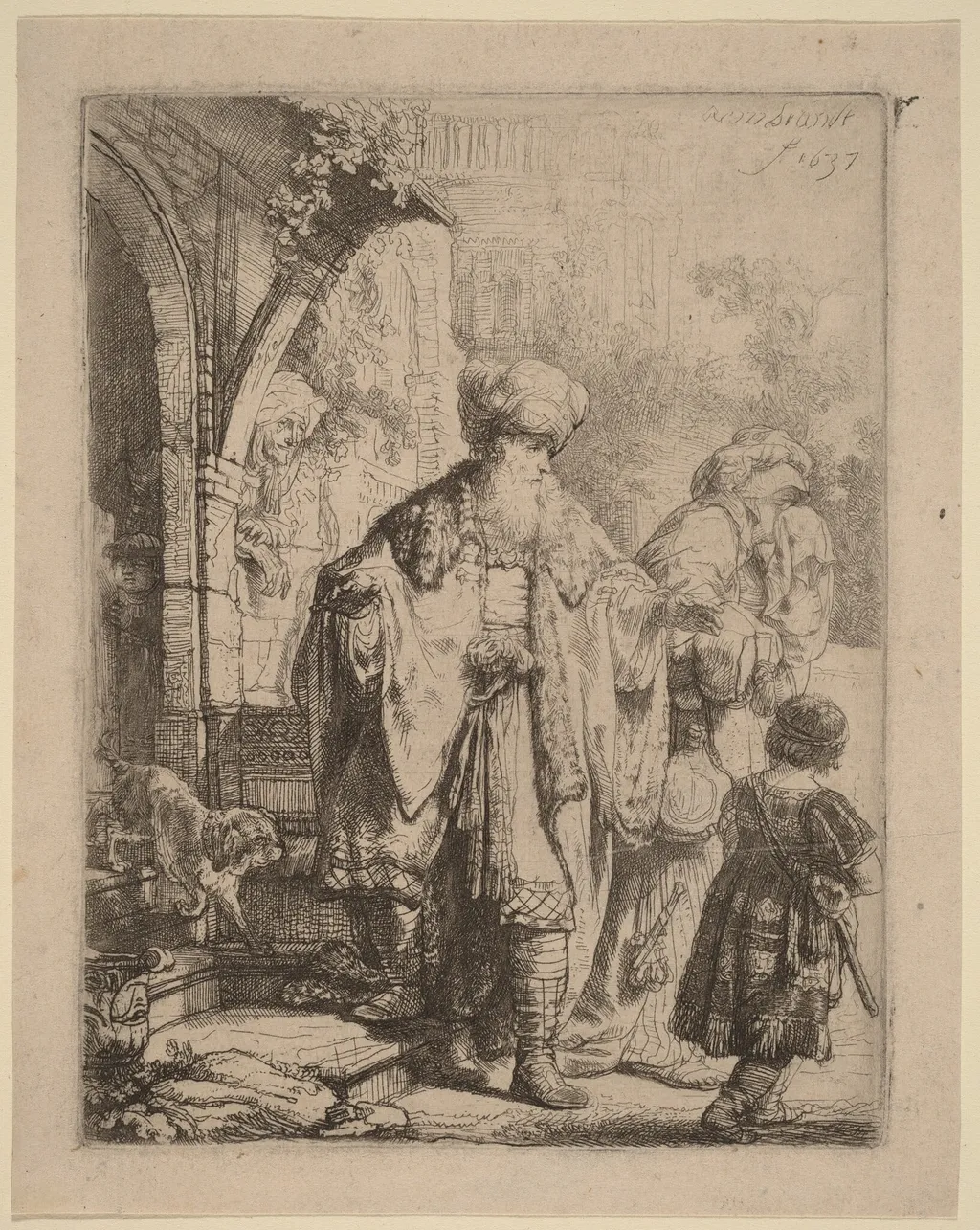
Abraham Casting Out Hagar and Ishmael is an ink print by the Baroque artist Rembrandt. It dates from 1637 and is held in the collection of the National Gallery of Art.
About this work
Overview
Created in 1637, this print by Rembrandt van Rijn depicts the biblical episode in which Abraham dismisses Hagar and her son Ishmael. Executed as an etching with added dry‑point work, the composition centers on three figures rendered in stark chiaroscuro, emphasizing the emotional weight of the moment.
Subject & Meaning
The central figure, a bearded man in a robe and turban, represents Abraham. He gestures toward a departing woman, identified as Hagar, who carries a bundle on her back, and a child, Ishmael, who glances back at his father. The scene captures the tension of exile and the complex dynamics of faith and duty within the Genesis narrative.
Technique & Style
Rembrandt combines traditional etching with dry‑point accents, allowing for deep, expressive lines and rich, velvety shadows. The use of a dark, arched doorway in the background and the careful modulation of light intensify the drama, while the varied line work showcases the artist’s mastery of printmaking textures.
Context
The work belongs to Rembrandt’s early period, when he explored biblical themes through print media. By focusing on a moment of personal conflict rather than a grand tableau, the piece reflects the artist’s interest in intimate human emotion and his skill in conveying narrative depth within the limited scale of an etching.
Artist & collection
Artist
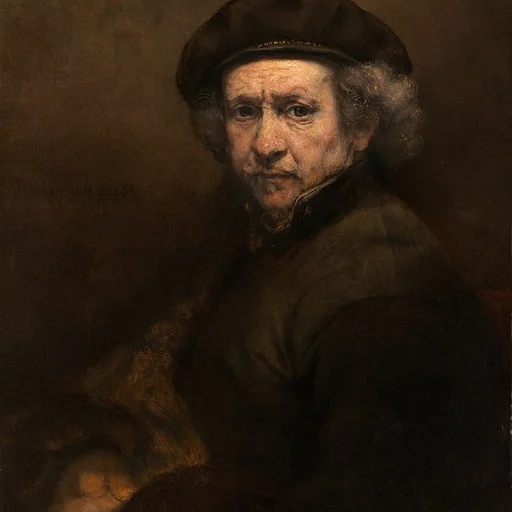
Rembrandt Harmenszoon van Rijn (15 July 1606 – 4 October 1669), known mononymously as Rembrandt, was a Dutch Golden Age painter, printmaker, and draughtsman.

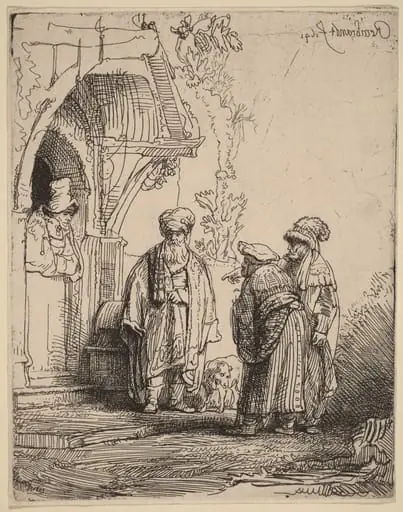 Three Oriental Figures (Jacob and Laban?)
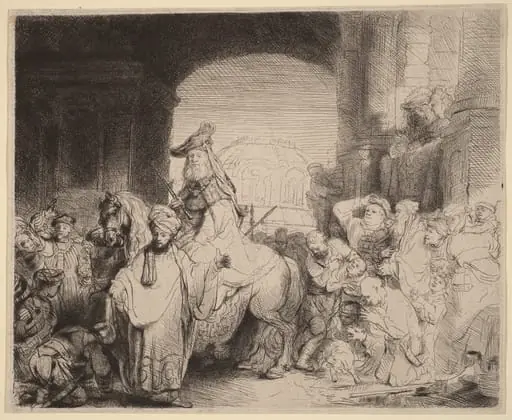 The Triumph of Mordecai
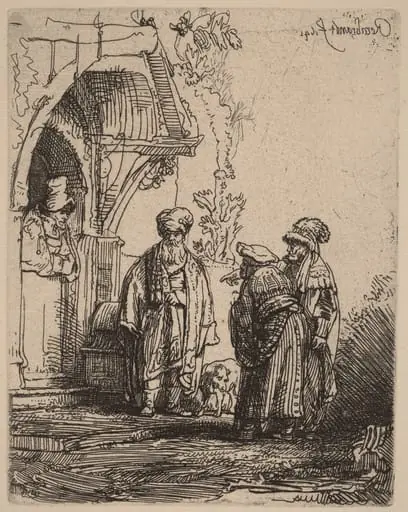 Three Oriental Figures (Jacob and Laban?)
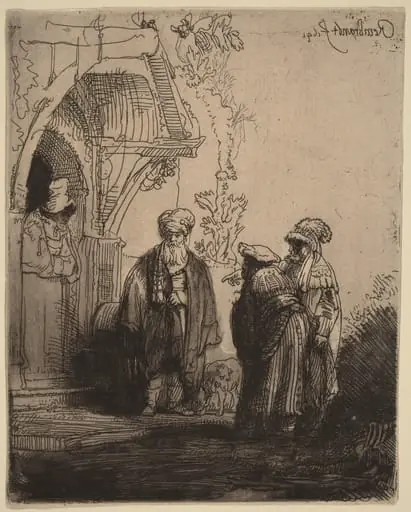 Three Oriental Figures (Jacob and Laban?)
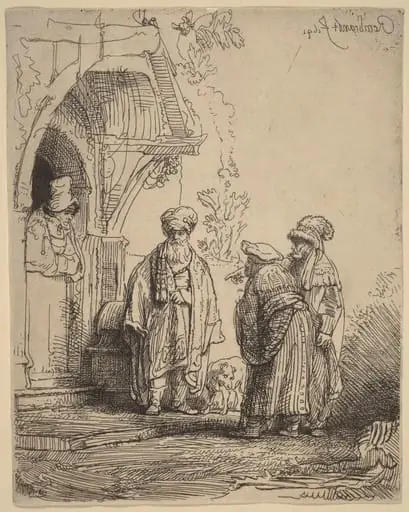 Three Oriental Figures (Jacob and Laban?)
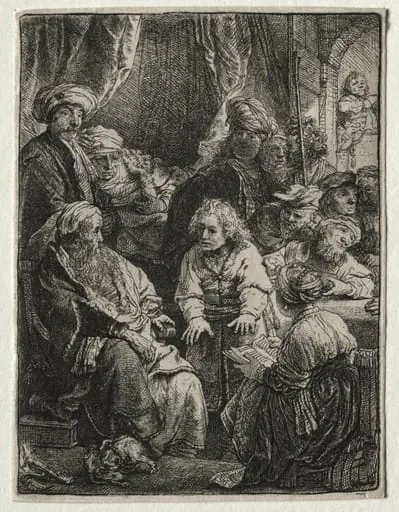 Joseph Telling his Dreams
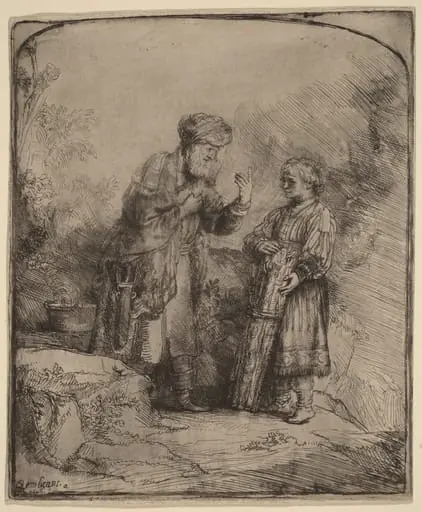 Abraham and Isaac
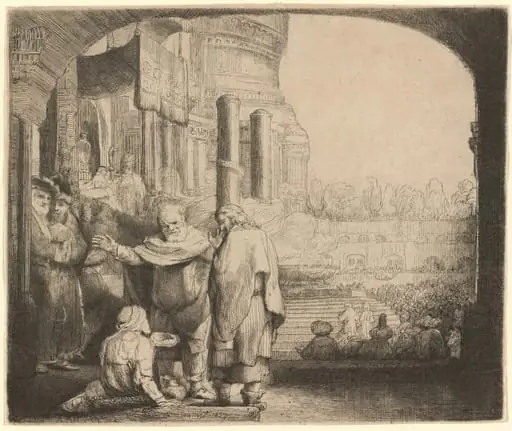 Peter and John Healing the Cripple at the Gate of the Temple
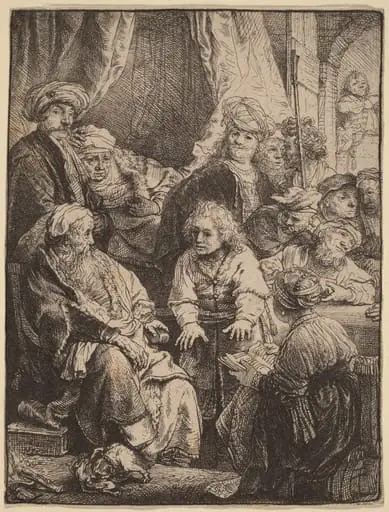 Joseph Telling His Dreams
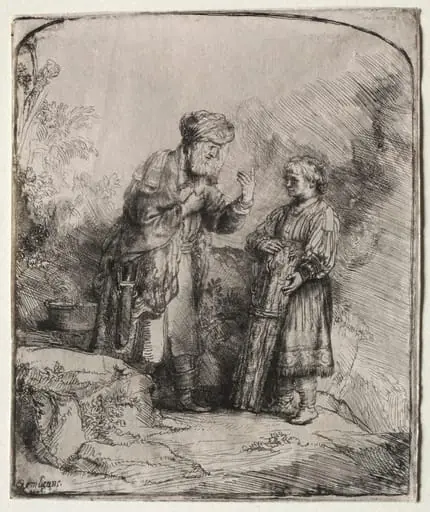 Abraham and Isaac
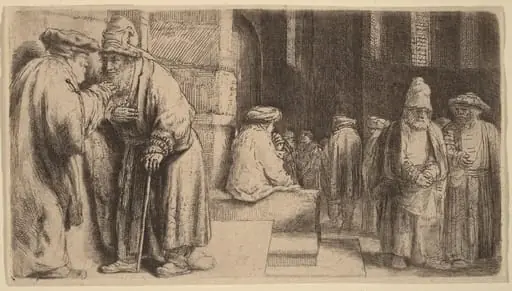 Jews in the Synagogue
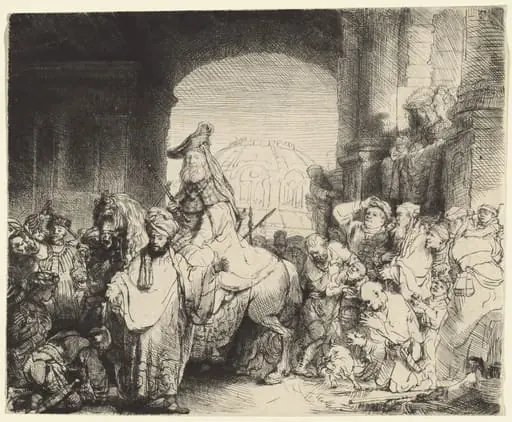 The Triumph of Mordecai