Artwork
Bust of a Man Wearing a High Cap, Three-Quarters Right (The Artist's Father?)
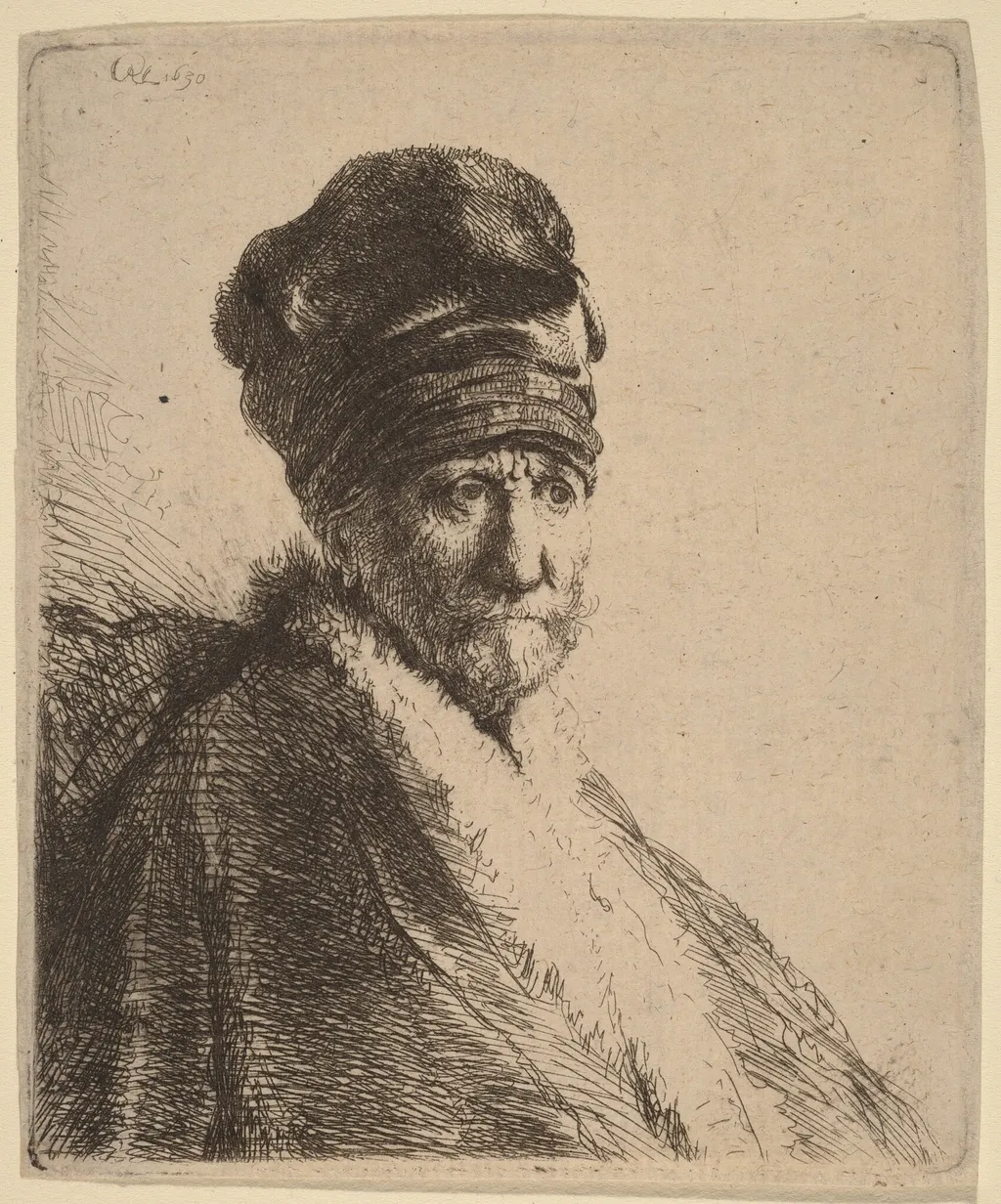
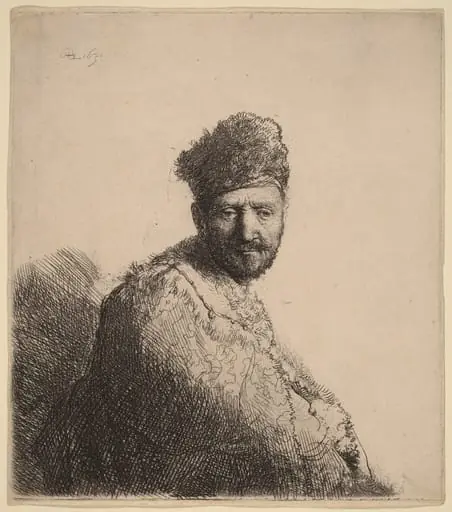
Bust of a Man Wearing a High Cap, Three-Quarters Right (The Artist's Father?) is an ink print by the Baroque artist Rembrandt. It dates from 1630 and is held in the collection of the National Gallery of Art.
About this work
Overview
Rembrandt van Rijn produced this etching in 1630, depicting a male figure turned three‑quarters to the right. The sitter wears a high, fuzzy cap and sports a thick beard, his features rendered with quick, scratchy lines that give the skin a textured appearance. The background consists of a few loose strokes, leaving the focus on the portrait’s surface.
Subject & Meaning
The work portrays a man whose identity remains uncertain, though some scholars suggest he may be Rembrandt’s father. The direct gaze and informal pose convey a sense of personal familiarity, while the exaggerated cap and beard hint at a character study rather than a formal commission.
Technique & Style
Created by etching, Rembrandt incised lines into a copper plate, then applied ink and pressed the plate onto paper. This method allowed him to achieve crisp, deep lines that emphasize the fur of the cap and the texture of the beard, while the sparse background strokes maintain a loose, sketch‑like quality.
History & Provenance
The print first appeared in the early 1630s, shortly after Rembrandt’s move to Amsterdam. It has been held in several European collections and is now part of museum holdings that focus on the artist’s early printmaking experiments, illustrating his development of portraiture through the etching medium.
Artist & collection
Artist
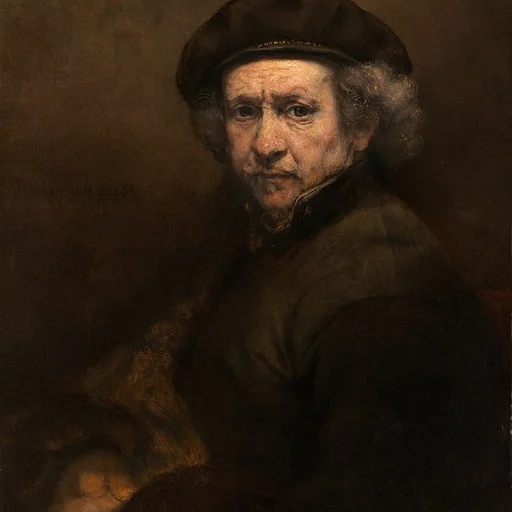
Rembrandt Harmenszoon van Rijn (15 July 1606 – 4 October 1669), known mononymously as Rembrandt, was a Dutch Golden Age painter, printmaker, and draughtsman.

 Bearded Man, in a Furred Oriental Cap and Robe: the Artist's Father
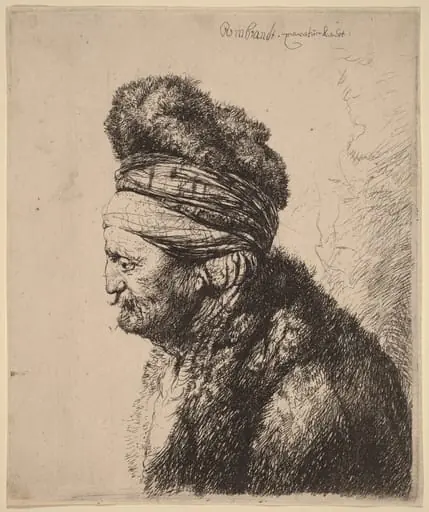 The Second Oriental Head
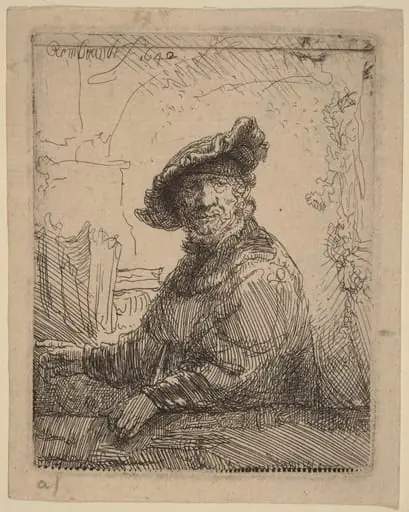 Man in an Arbor
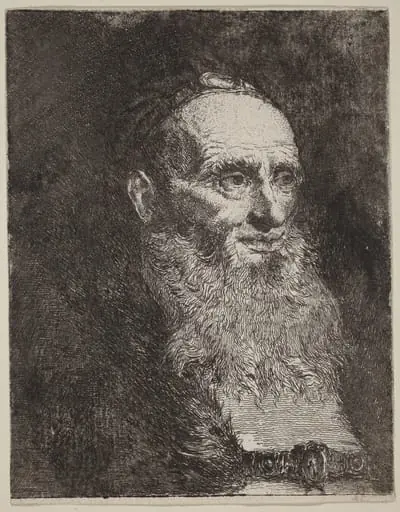 Old Man with a Beard
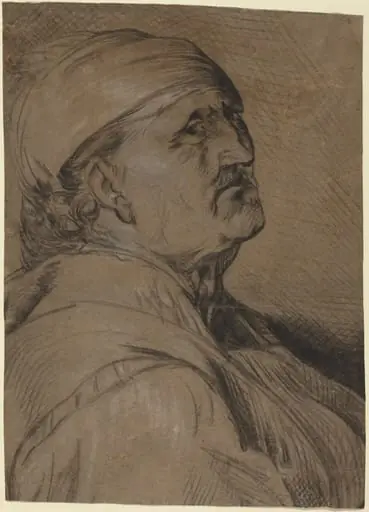 Head of an Old Man
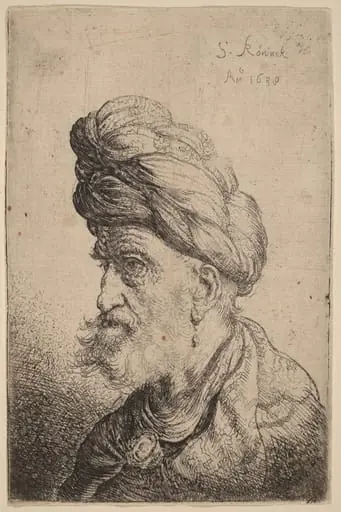 Bust of a Man with a Turban Facing Left
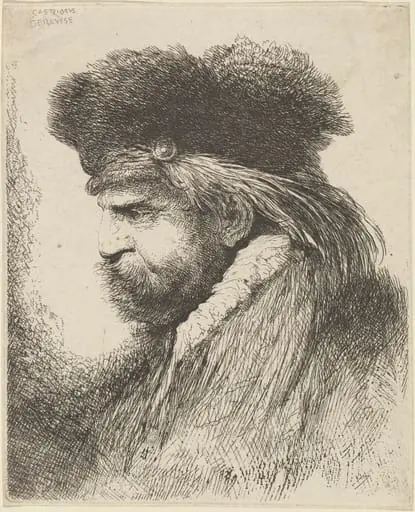 Bearded Man in a Fur Cap, Facing Left
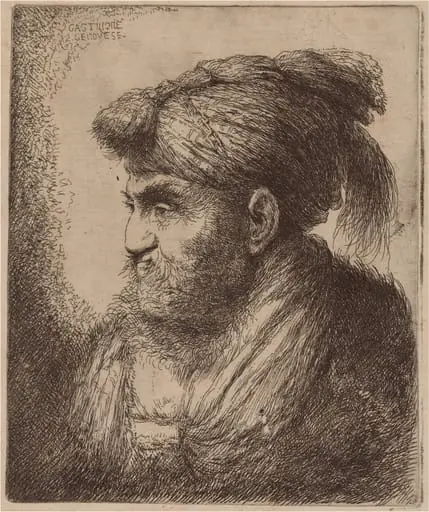 Man with a Beard and a Tassled Headdress, Facing Left
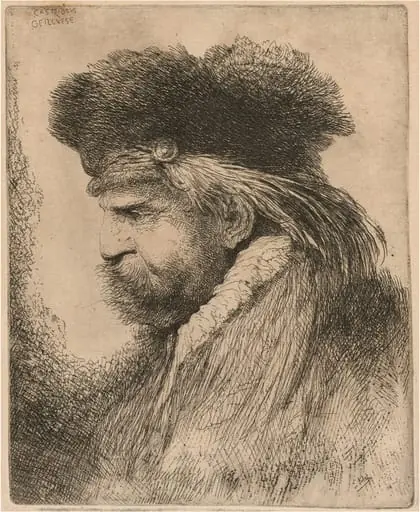 Bearded Man in a Fur Cap, Facing Left
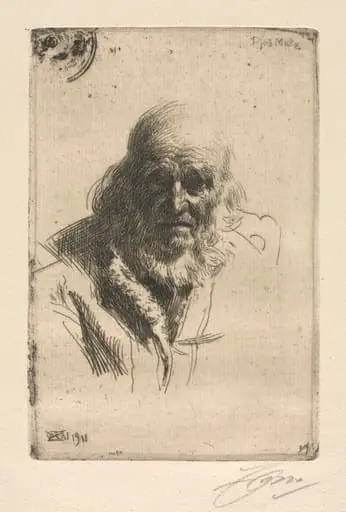 Djos Mats