Artwork
Christ at Emmaus: the Larger Plate
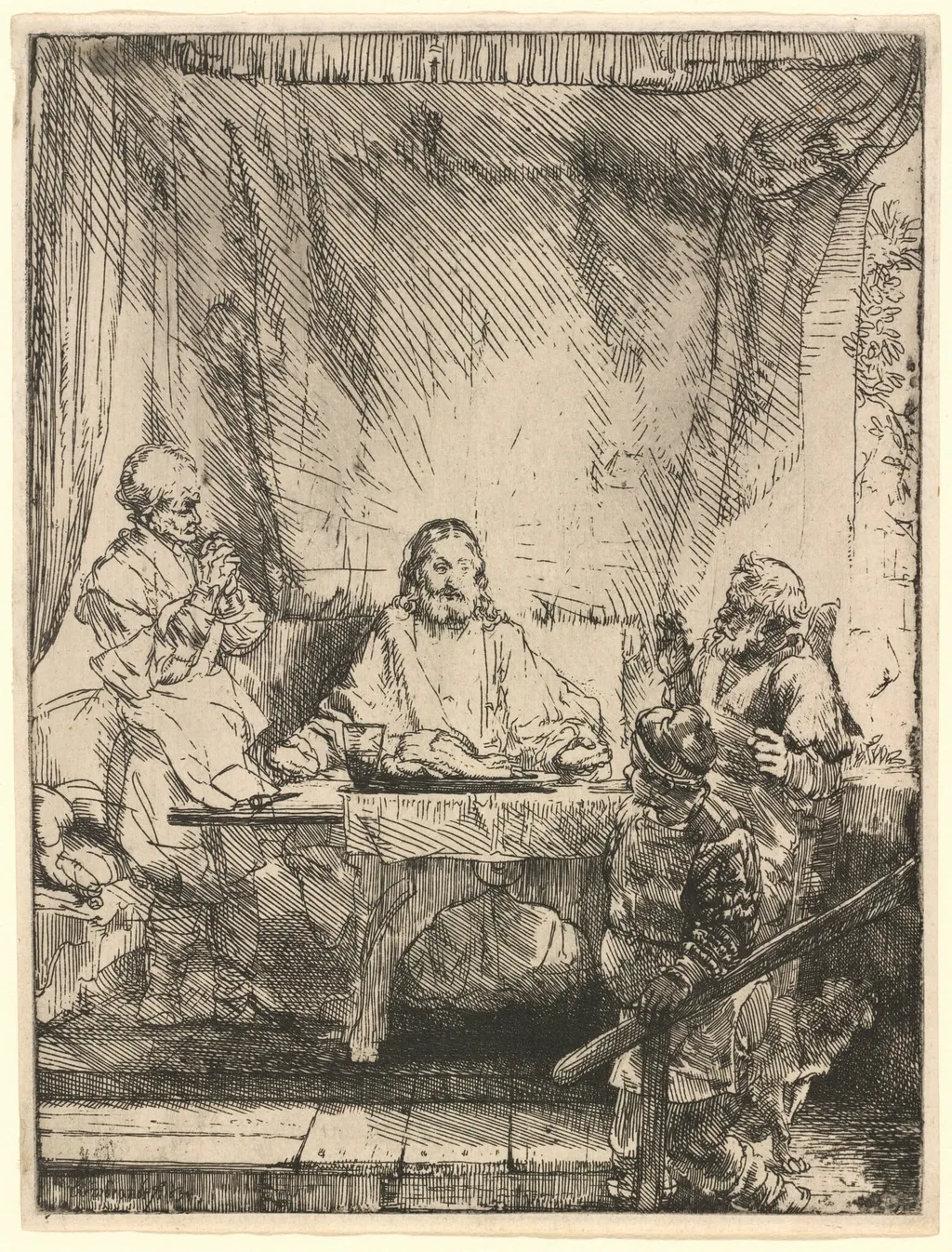
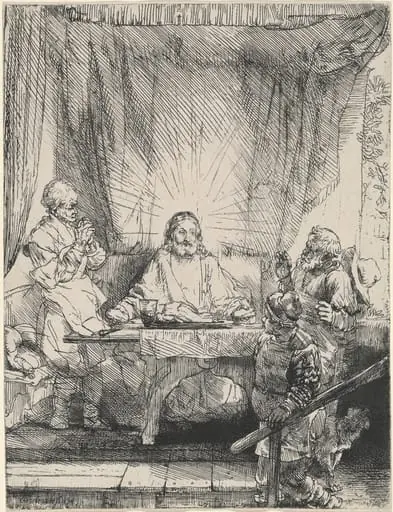
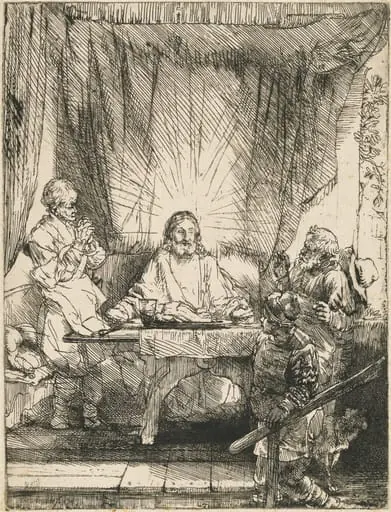
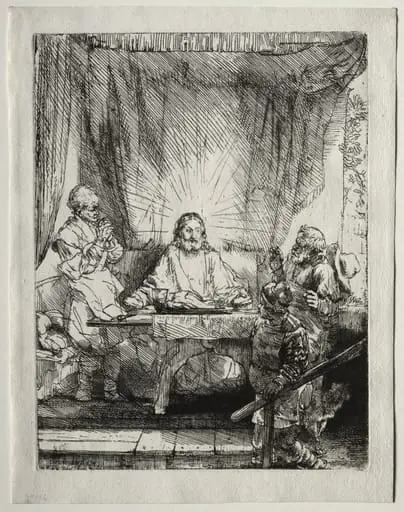
Christ at Emmaus: the Larger Plate is an ink print by the Baroque artist Rembrandt. It dates from 1654 and is held in the collection of the National Gallery of Art.
About this work
Overview
The composition centers on a quiet, intimate encounter rather than dramatic spectacle.
Created in 1654, this print by Rembrandt van Rijn captures the biblical moment when the resurrected Christ reveals himself to two disciples in the village of Emmaus. Executed in etching, burin, and drypoint, the work belongs to a series of religious prints in which Rembrandt explored emotional intensity through nuanced line work and chiaroscuro. The composition centers on a quiet, intimate encounter rather than dramatic spectacle.
Subject & Meaning
The scene illustrates Luke 24:30–31, where Christ, unrecognized at first, blesses bread and is then revealed to his companions. The standing figure, likely the innkeeper, observes silently, reinforcing the theme of revelation through ordinary acts. Rembrandt emphasizes recognition over spectacle: the disciples’ expressions and gestures convey dawning awareness, while Christ’s calm presence anchors the moment in spiritual stillness.
Technique & Style
Rembrandt combined etching with burin and drypoint to achieve rich tonal variation. Fine, incised lines define fabric and facial features, while drypoint’s soft, fuzzy edges deepen shadows and suggest texture. Light pools around Christ’s face and hands, guiding the viewer’s focus without artificial glare. The background recedes into near-obscurity, heightening the psychological intimacy of the scene.
History & Provenance
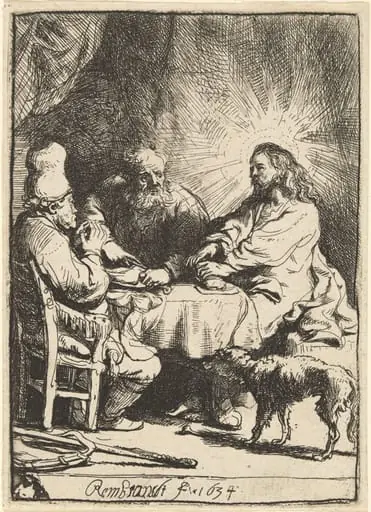
This print was one of two versions Rembrandt made of the Emmaus subject, with this being the larger and more detailed. It circulated widely among collectors and artists in the 17th century, admired for its technical innovation. Surviving impressions are held in major European and American collections, including the Rijksmuseum and the Metropolitan Museum of Art, reflecting its enduring scholarly interest.
Context
In the 1650s, Rembrandt turned increasingly to biblical themes as personal and financial pressures mounted. His prints from this period reflect a shift toward introspection and psychological depth, moving away from public grandeur toward private devotion. The Emmaus scene aligns with his broader interest in moments of quiet revelation, resonating with contemporary Dutch religious culture that valued inner faith.
Legacy
The print influenced generations of artists through its mastery of light and emotional nuance. Unlike earlier depictions that emphasized miracle, Rembrandt’s version prioritized human response to the divine. Its technical complexity and restrained narrative made it a touchstone for printmakers seeking to convey spiritual gravity without theatricality.
Artist & collection
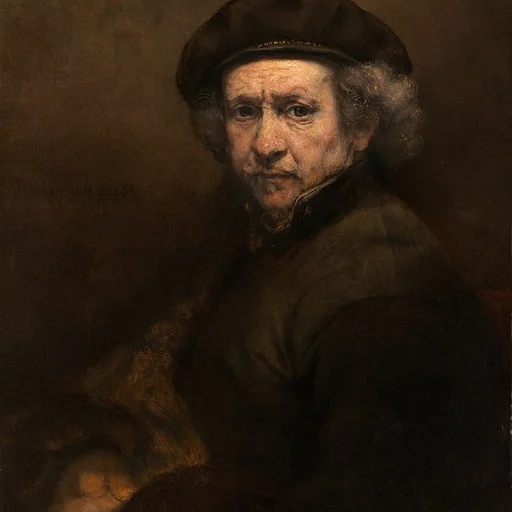
Artist
Rembrandt Harmenszoon van Rijn (15 July 1606 – 4 October 1669), known mononymously as Rembrandt, was a Dutch Golden Age painter, printmaker, and draughtsman.