Artwork
Christ at Emmaus: the Larger Plate
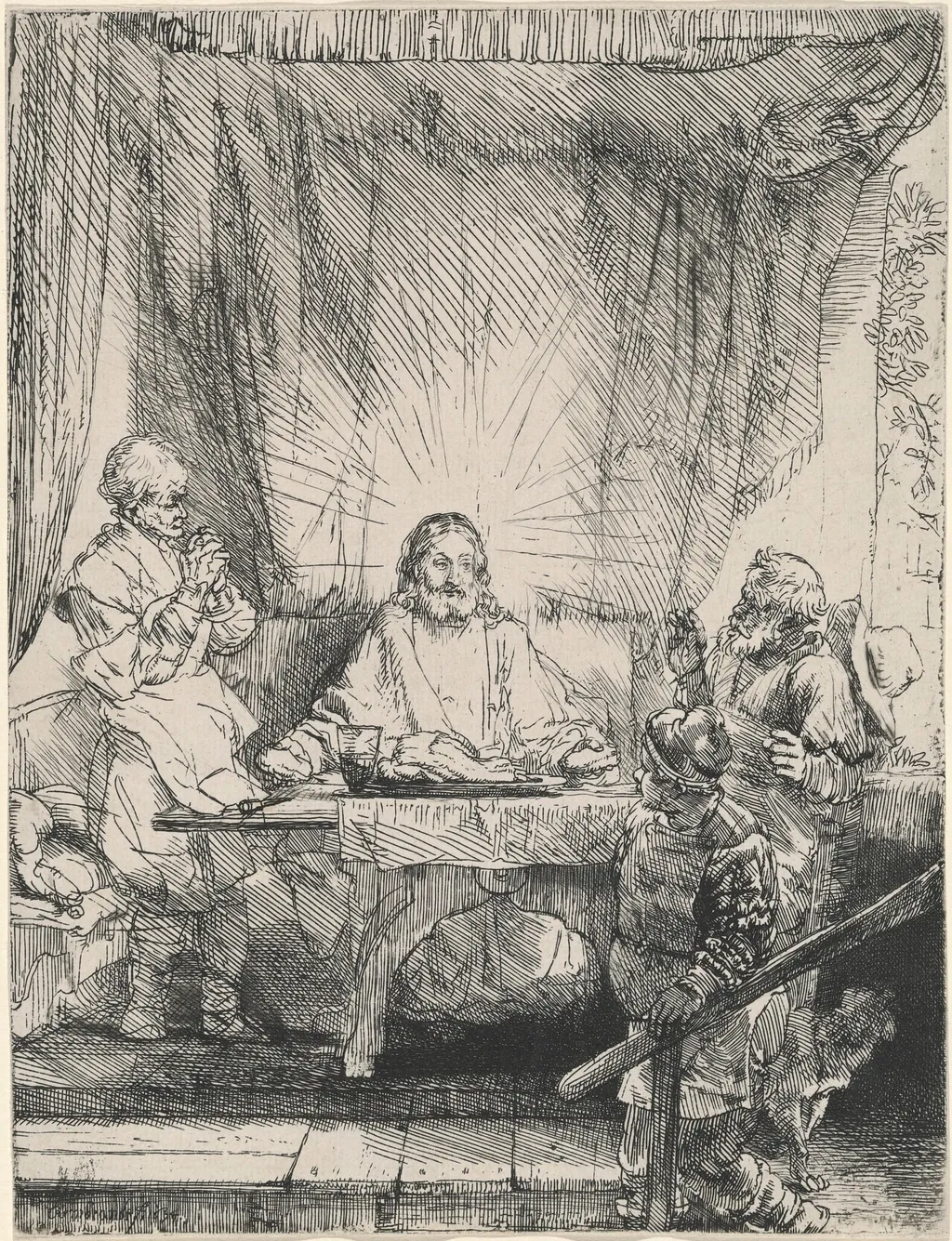
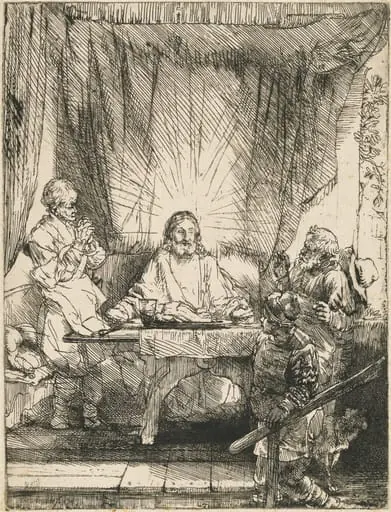
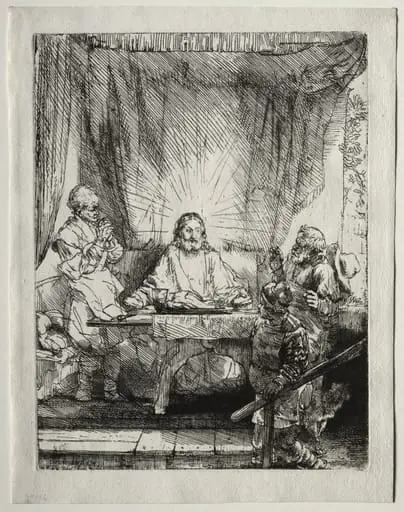
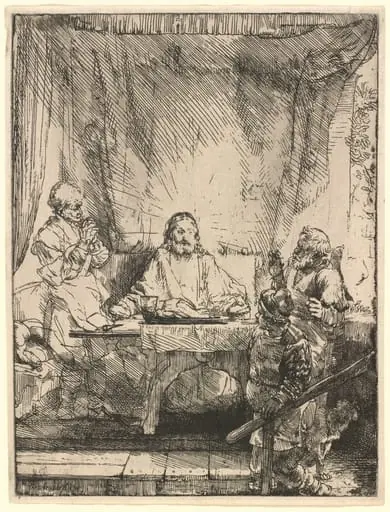
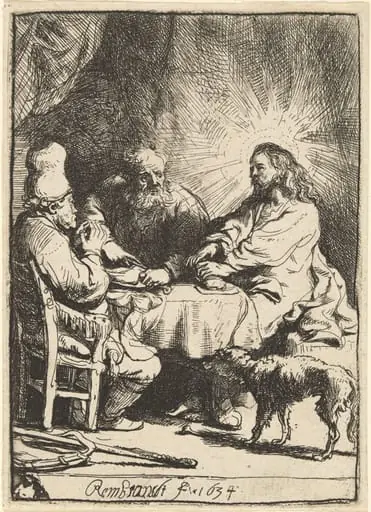
Christ at Emmaus: the Larger Plate is an ink print by the Baroque artist Rembrandt. It dates from 1654 and is held in the collection of the National Gallery of Art.
About this work
Overview
Christ at Emmaus: the Larger Plate is a print created by Rembrandt van Rijn in 1654. Executed as an etching with additional burin and dry‑point work, the image measures the artist’s mature period and reflects his continued interest in biblical narratives rendered through intricate line work.
Subject & Meaning
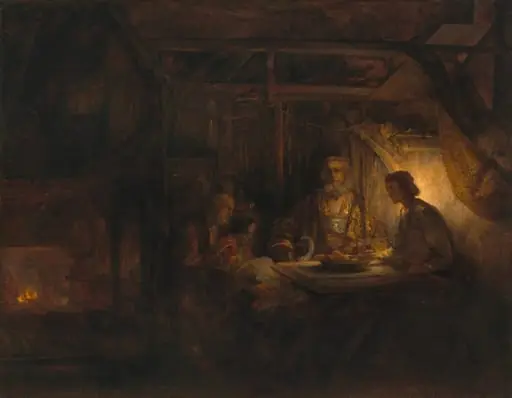
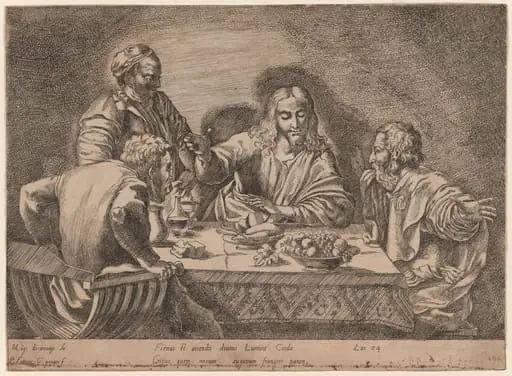
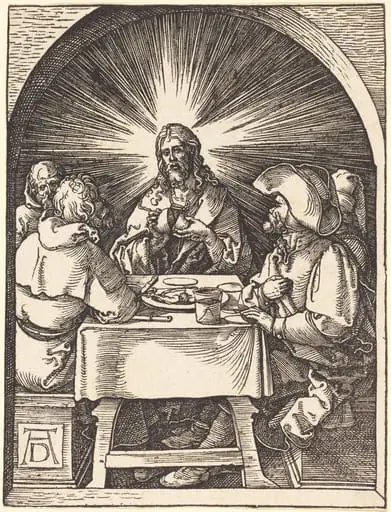
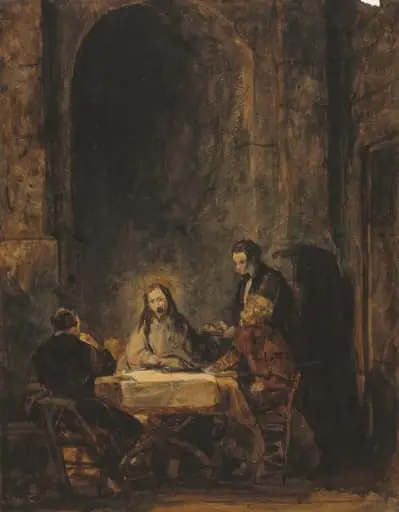
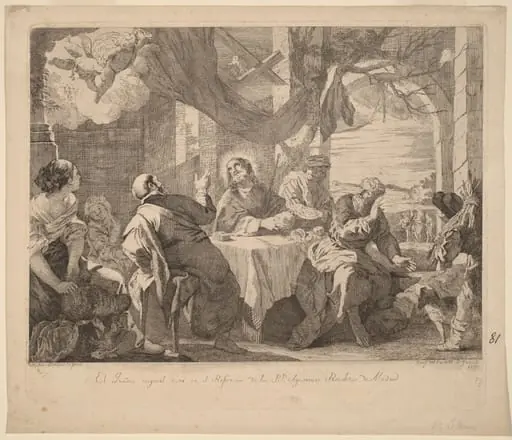
The composition depicts the biblical episode of the road to Emmaus, showing three figures gathered around a table. The central figure, distinguished by a long beard, appears contemplative, while the two companions lean forward, engaged in conversation. A warm light entering from the upper left illuminates the scene, emphasizing the intimate moment of recognition.
Technique & Style
Rembrandt combined etching, drypoint, and burin incisions to produce a varied line quality. Rough, sketchy strokes contrast with sharply defined edges, creating texture and a sense of depth. The interplay of these techniques allows subtle tonal variations, enhancing the atmospheric lighting and the three‑dimensional presence of the figures.
History & Provenance
The larger plate was produced in 1654, during a prolific phase of Rembrandt’s printmaking. While specific ownership records are limited, the work is catalogued among his religious prints and is held in several major museum collections, illustrating the artist’s enduring influence on the print medium.
Artist & collection
Artist
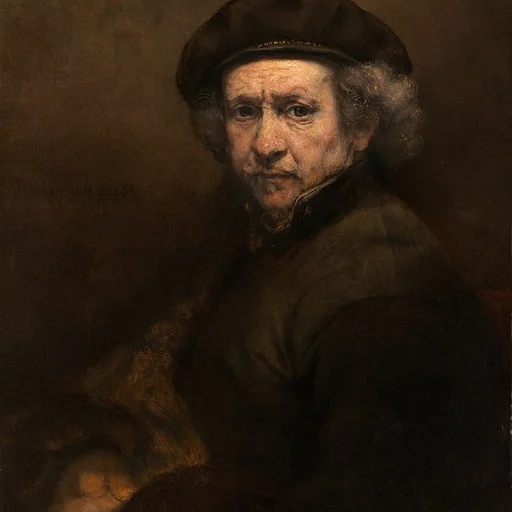
Rembrandt Harmenszoon van Rijn (15 July 1606 – 4 October 1669), known mononymously as Rembrandt, was a Dutch Golden Age painter, printmaker, and draughtsman.