Artwork
Christ Seated Disputing with the Doctors
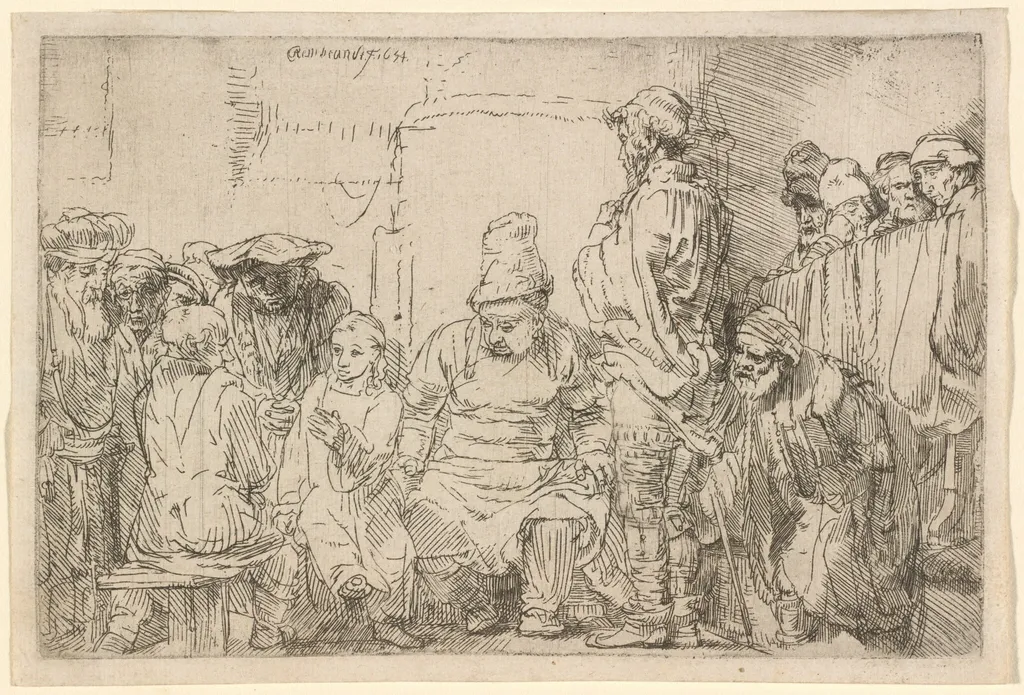
Christ Seated Disputing with the Doctors is an ink print by the Baroque artist Rembrandt. It dates from 1654 and is held in the collection of the National Gallery of Art.
About this work
Overview
Rendered in ink on paper, the work is part of a series of biblical scenes Rembrandt produced in his later years, emphasizing emotional depth over ornate detail.
Created in 1654, this etching by Rembrandt van Rijn captures a moment from the Gospel of Luke, in which the twelve-year-old Jesus engages in theological discussion with Jewish scholars in the Temple. Rendered in ink on paper, the work is part of a series of biblical scenes Rembrandt produced in his later years, emphasizing emotional depth over ornate detail. The composition is tightly focused, with figures clustered around a central figure, suggesting intimacy amid intellectual tension.
Subject & Meaning
The scene portrays Christ, seated and holding a child, surrounded by learned men who lean in with expressions of surprise or debate. The child in his arms may symbolize innocence or divine authority, contrasting with the scholars’ learned postures. The moment reflects Christ’s early wisdom, as described in scripture, and Rembrandt renders it not as a triumphal display but as a quiet, human exchange—emphasizing contemplation over spectacle.
Technique & Style
Rembrandt employed etching with bold, varied line work and layered tonal washes to suggest volume and movement. Rather than precise outlines, he used cross-hatching and drypoint to model faces and drapery, creating a sense of immediacy. The background is deliberately sparse, with minimal architectural cues, directing focus to the figures’ gestures and expressions. The roughness of the lines enhances the sense of a moment caught in motion.
History & Provenance
The etching was produced during Rembrandt’s financially strained later years, when he increasingly turned to intimate biblical subjects for personal and commercial reasons. It was likely printed in small editions and circulated among collectors and fellow artists. Several early impressions survive in major European collections, including the Rijksmuseum and the British Museum, attesting to its early recognition and enduring appeal.
Context
In mid-17th-century Amsterdam, religious imagery remained central to artistic production, even as secular themes gained ground. Rembrandt’s approach diverged from idealized depictions common in Catholic art, favoring psychological realism and emotional nuance. His etchings of biblical scenes were widely studied by students and peers, influencing how religious narratives were visually interpreted in Protestant Northern Europe.
Legacy
This etching exemplifies Rembrandt’s mature style—economical yet deeply expressive. It influenced generations of printmakers who sought to convey narrative and emotion through tonal variation rather than detail. Its emphasis on human presence over grandeur helped redefine religious printmaking, shifting focus from doctrinal illustration to intimate, psychological moments that resonate beyond their scriptural origins.
Artist & collection
Artist
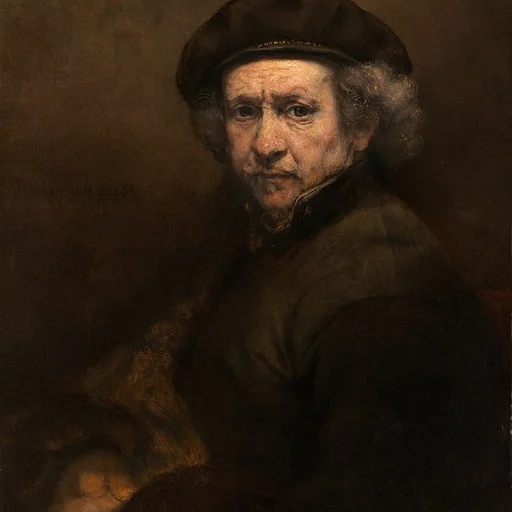
Rembrandt Harmenszoon van Rijn (15 July 1606 – 4 October 1669), known mononymously as Rembrandt, was a Dutch Golden Age painter, printmaker, and draughtsman.

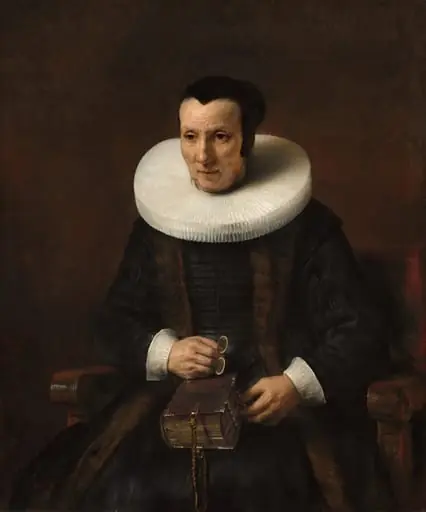
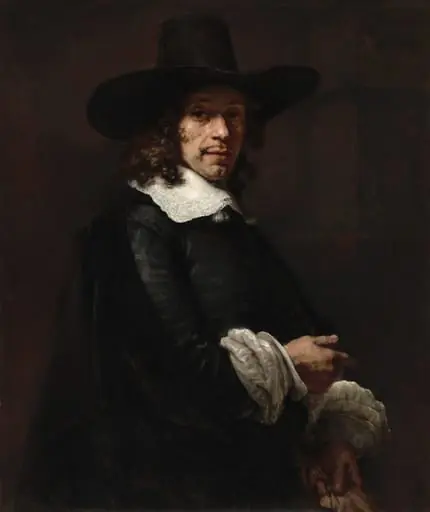
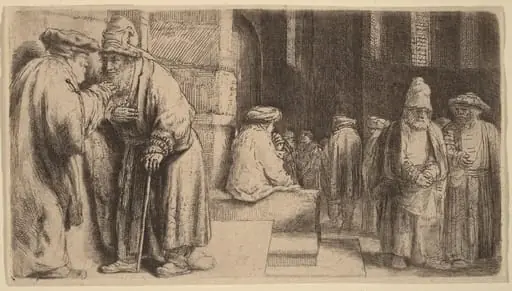 Jews in the Synagogue
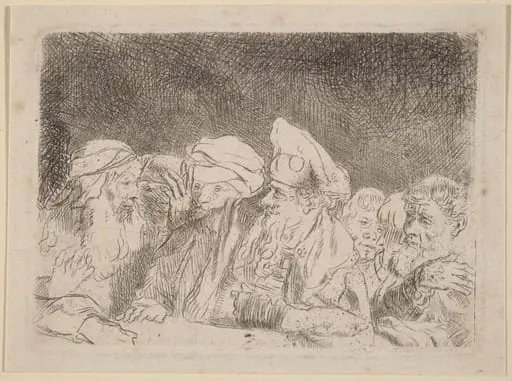 The Pharisees Debating (Fragment from the Hundred Guilder Print)
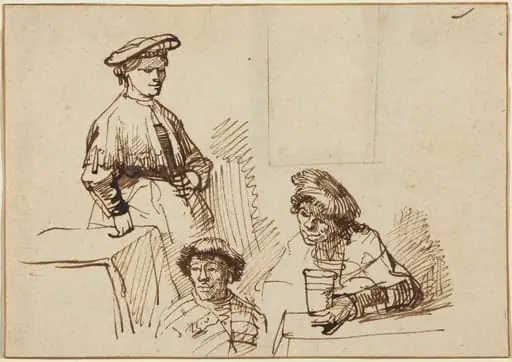 Sketches from a Tavern: Woman Standing and Two Men Seated
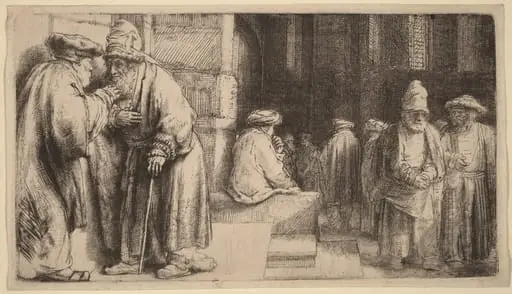 Jews in the Synagogue
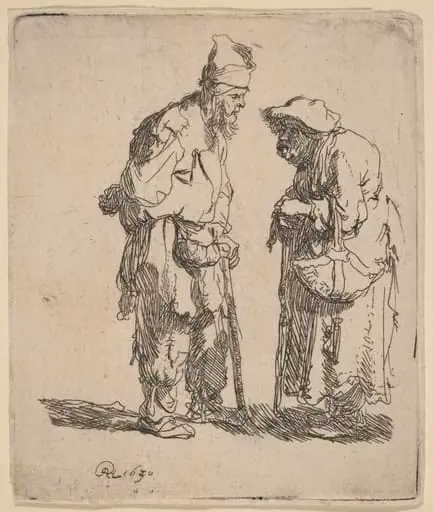 Beggar Man and Beggar Woman Conversing
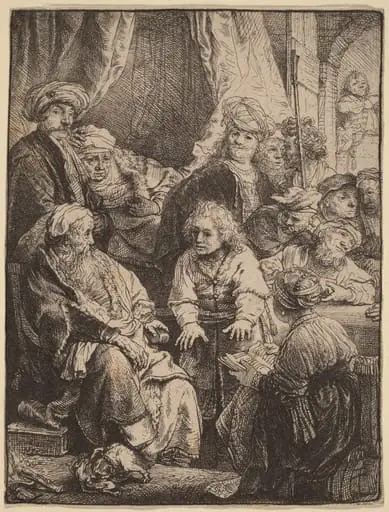 Joseph Telling His Dreams
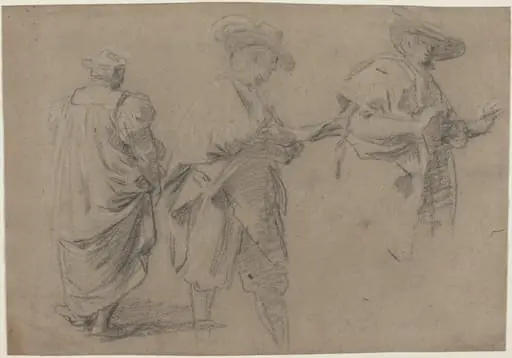 A Judge and Two Gentlemen Lawyers
![An Artist Seated at His Easel [recto], by Andries Both](https://artifactworldgallery.com/img/andries-both--an-artist-seated-at-his-easel-recto--df4909554b40b442-w320.webp) An Artist Seated at His Easel [recto]
An Artist Seated at His Easel [recto]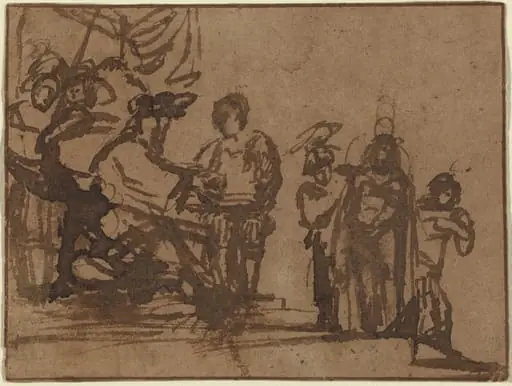 Christ before Pilate