Artwork
The Pharisees Debating (Fragment from the Hundred Guilder Print)
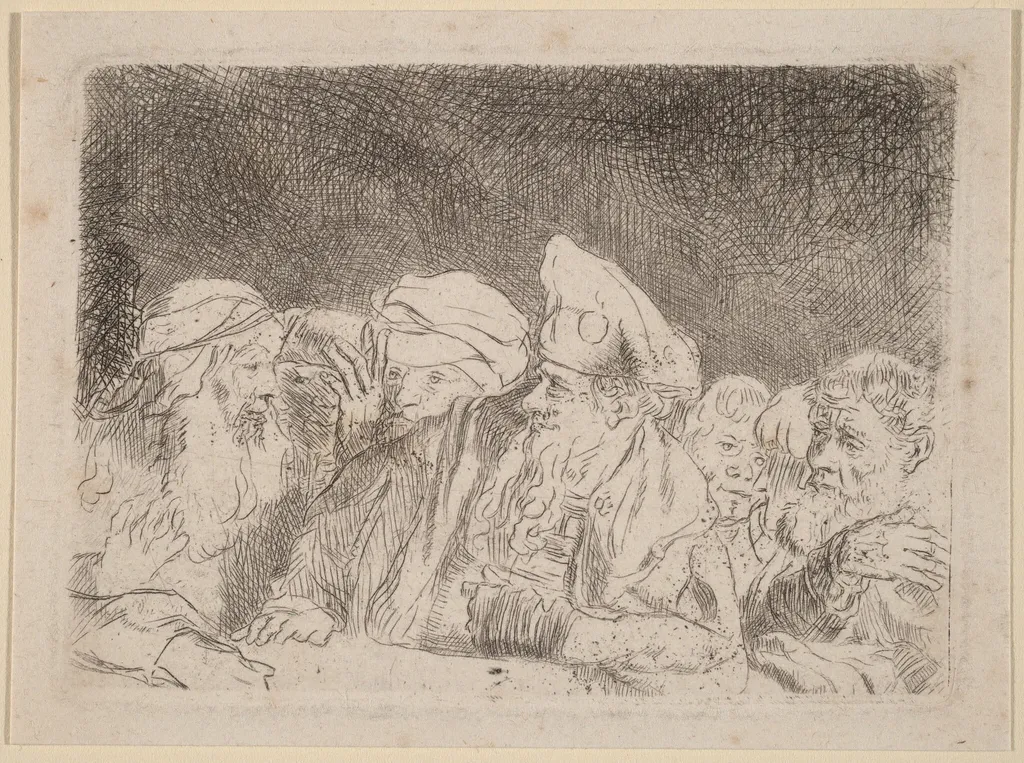
The Pharisees Debating (Fragment from the Hundred Guilder Print) is an ink print by the Baroque artist Rembrandt. It dates from 1649 and is held in the collection of the National Gallery of Art.
About this work
Overview
Created around 1649, this fragment derives from Rembrandt van Rijn’s extensive Hundred Guilder Print. Executed as an etching that combines drypoint and engraving on laid paper, the work captures a moment from a larger composition, preserving only a portion of the original scene.
Subject & Meaning
The image depicts several figures in long robes and turbans gathered around a table in a dim interior. Their gazes converge on an unseen focal point, and some raise their hands in animated gesture, suggesting a heated or scholarly debate. The composition conveys an atmosphere of concentration and solemn discourse.
Technique & Style
Rembrandt employed both drypoint, which yields soft, velvety lines, and engraving, known for crisp, precise incisions. The contrast between the deep shadows on the left‑hand side and the illuminated faces demonstrates his mastery of chiaroscuro, while the textured laid paper adds a tactile quality to the print.
History & Provenance
The fragment is a surviving piece of the original Hundred Guilder Print, a large-scale series produced by Rembrandt in the late 1640s. Over time, the complete sheet was broken or trimmed, and this portion entered collections as an individual work, retaining its attribution to the artist.
Context
The scene reflects 17th‑century European interest in biblical and historical subjects, portraying a group of Pharisees engaged in discussion. Such depictions allowed Rembrandt to explore complex human interaction and moral themes within a controlled, interior setting.
Artist & collection
Artist
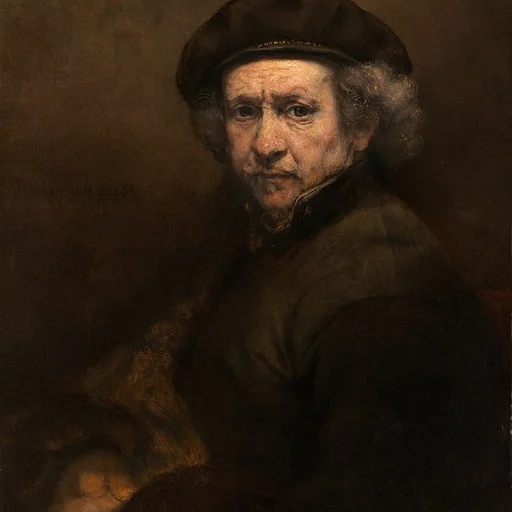
Rembrandt Harmenszoon van Rijn (15 July 1606 – 4 October 1669), known mononymously as Rembrandt, was a Dutch Golden Age painter, printmaker, and draughtsman.

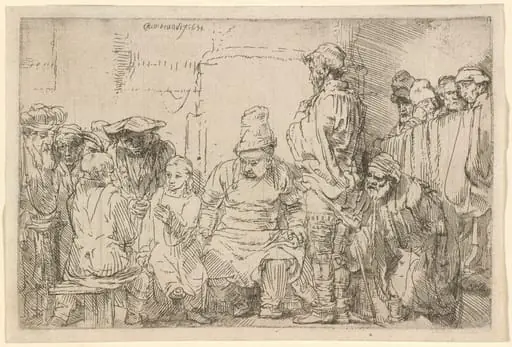 Christ Seated Disputing with the Doctors
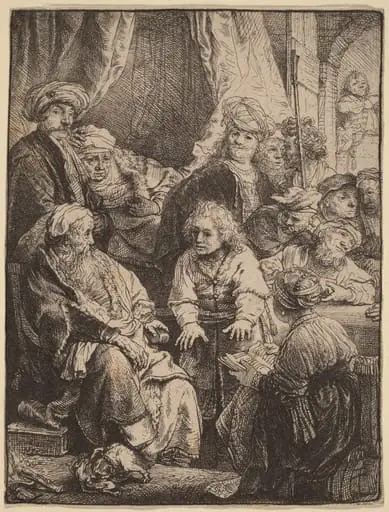 Joseph Telling His Dreams
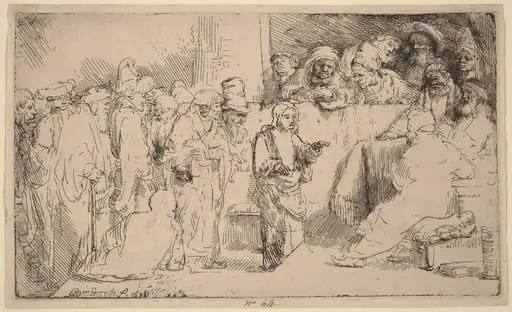 Christ Disputing with the Doctors: a Sketch
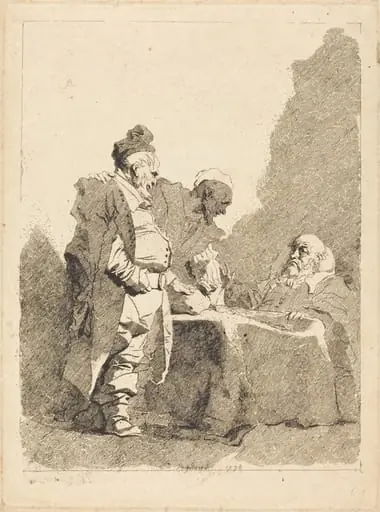 The Tax Collectors (Les traitants)
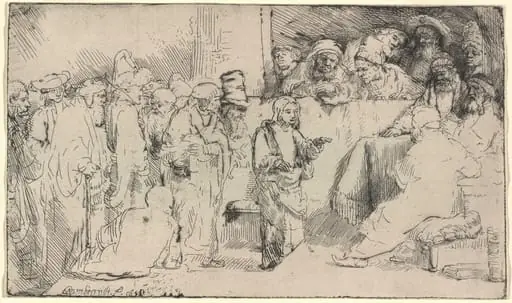 Christ Disputing with the Doctors: a Sketch
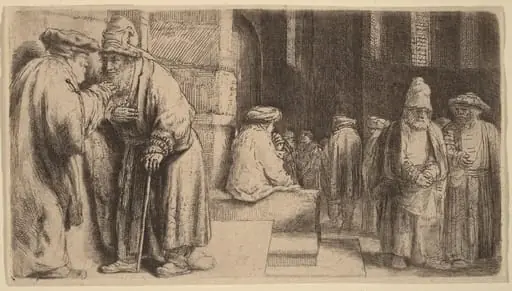 Jews in the Synagogue
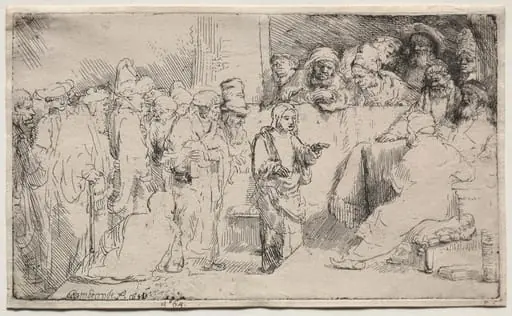 Christ Disputing with the Doctors: A Sketch
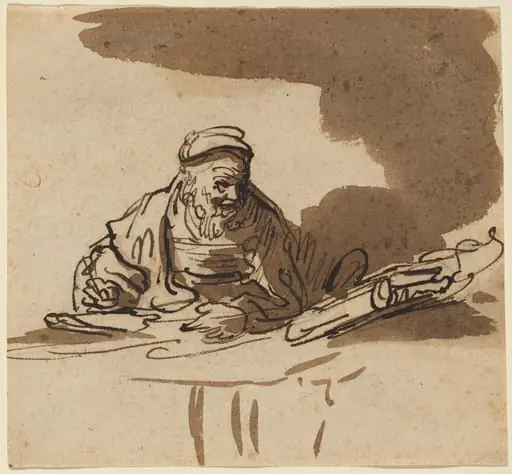 An Old Scholar at His Desk
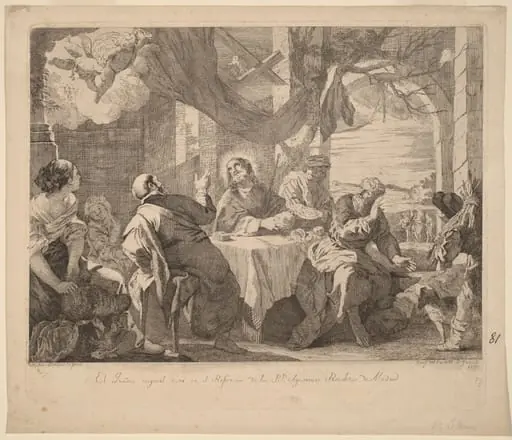 The Supper at Emmaus
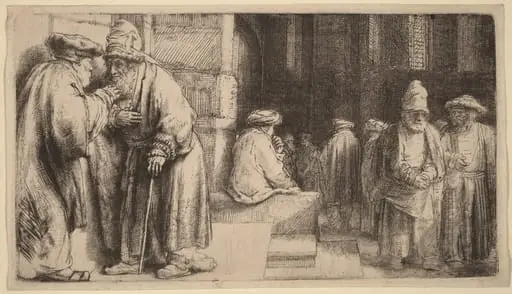 Jews in the Synagogue
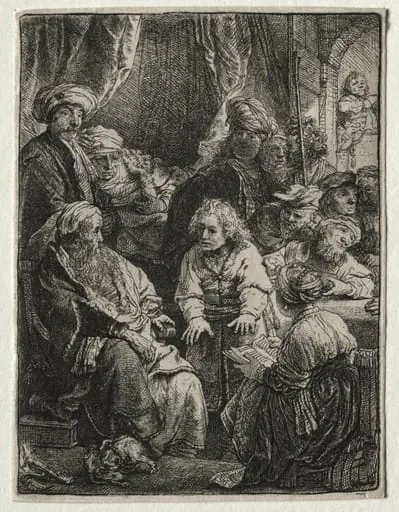 Joseph Telling his Dreams
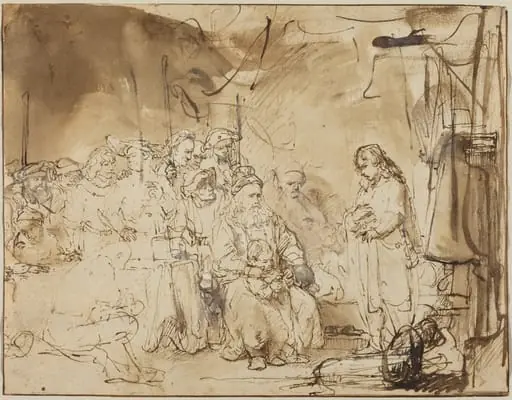 Joseph Recounting His Dreams