Artwork
Clement de Jonghe
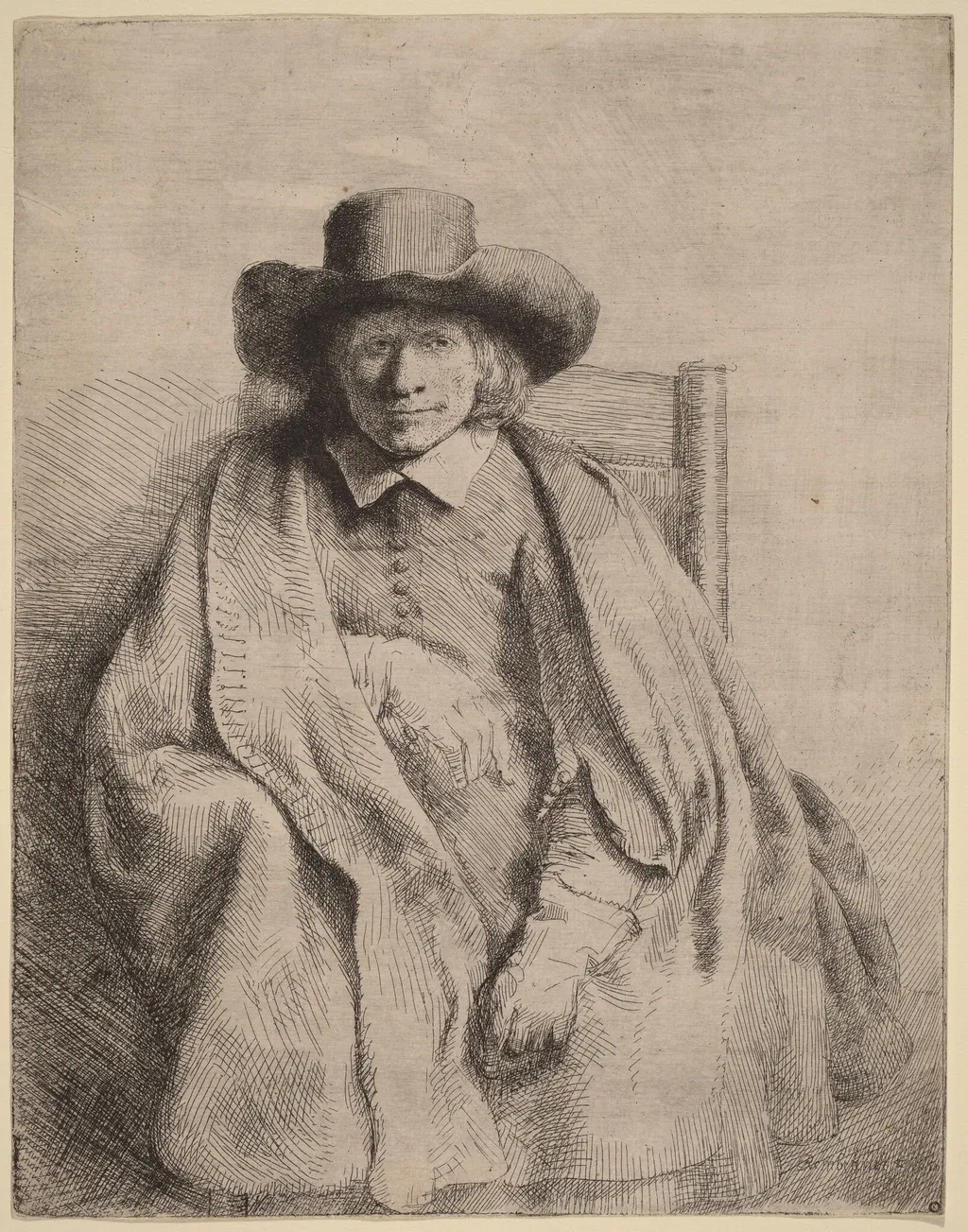
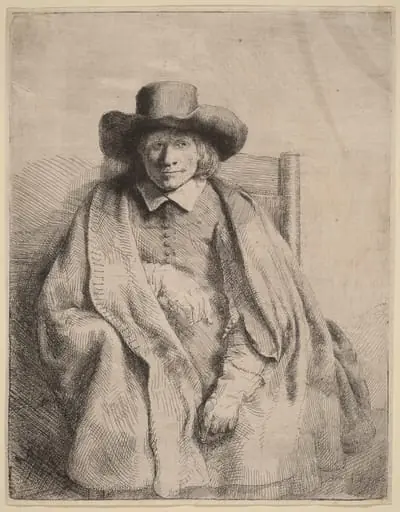
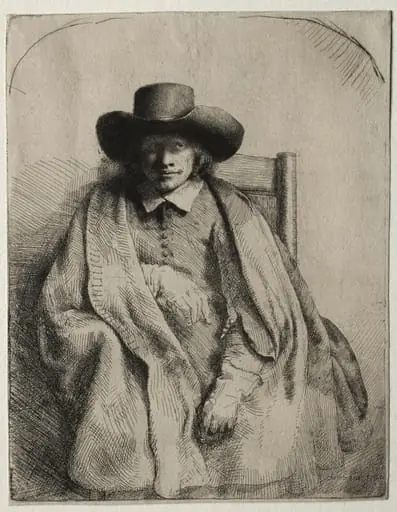
Clement de Jonghe is an ink print by the Baroque artist Rembrandt. It dates from 1651 and is held in the collection of the National Gallery of Art.
About this work
Overview
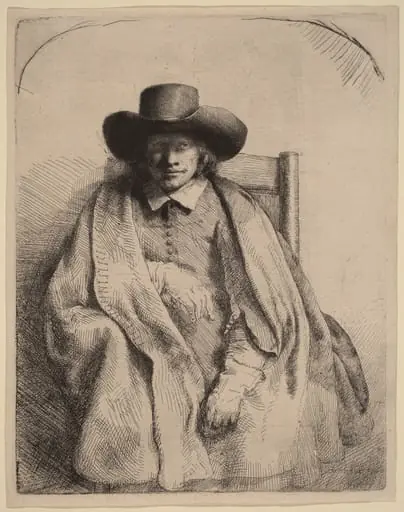
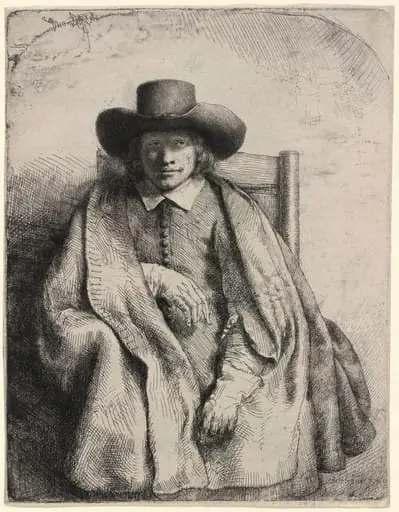
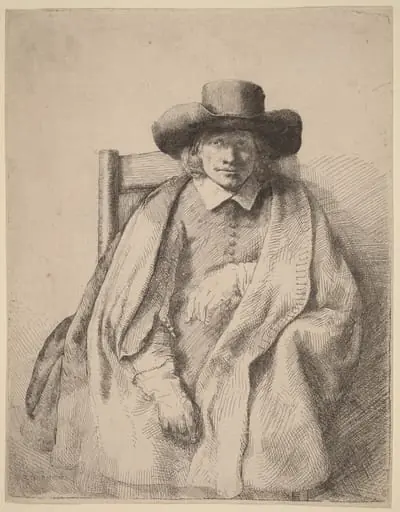
Rembrandt van Rijn's 1651 etching, *Clement de Jonghe*, is a portrait of a seated man rendered through a combination of etching, drypoint, and burin techniques on laid paper.
Subject & Meaning
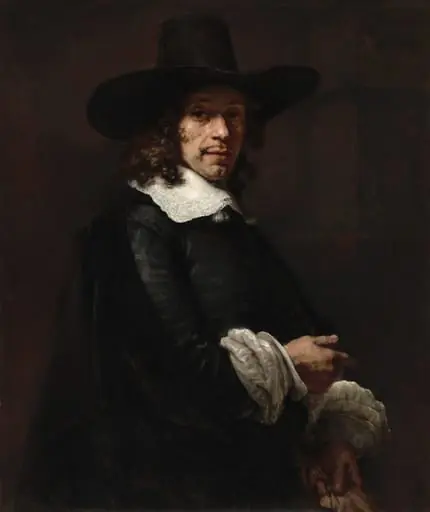
The subject, identified as Clement de Jonghe, is depicted in contemplative repose, dressed in a wide-brimmed hat and a long, collared coat. His direct gaze, coupled with the detailed rendering of his aged face, conveys a sense of introspective character.
Technique & Style
The etching showcases Rembrandt's mastery of mixed techniques: etching for broad strokes, drypoint for expressive lines, and burin for finer details, such as the deep wrinkles around the subject's eyes and mouth.
History & Provenance
Created in 1651, the etching's provenance is not detailed here, though it is attributed with certainty to Rembrandt van Rijn. The simplicity of the subject's attire and the plain background underscore the focus on the sitter's personality.
Context
This work reflects Rembrandt's period of intense etching activity in the 1650s, characterized by portraits that emphasized psychological depth over opulence.
Legacy
*Clement de Jonghe* stands as a representative example of Rembrandt's etching prowess, particularly in capturing nuanced portraiture, influencing later artists in the pursuit of expressive, psychologically rich prints.
Artist & collection
Artist
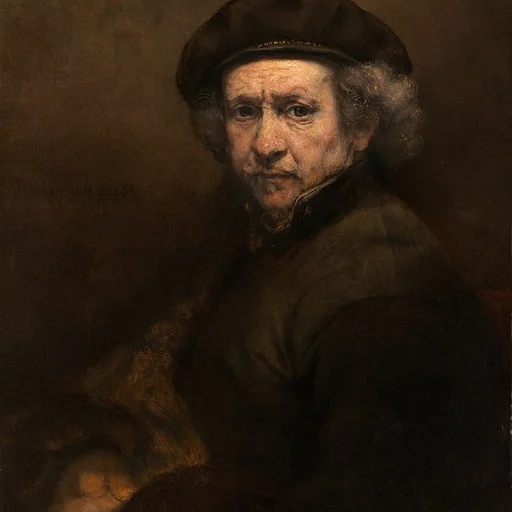
Rembrandt Harmenszoon van Rijn (15 July 1606 – 4 October 1669), known mononymously as Rembrandt, was a Dutch Golden Age painter, printmaker, and draughtsman.