Artwork
Clement de Jonghe
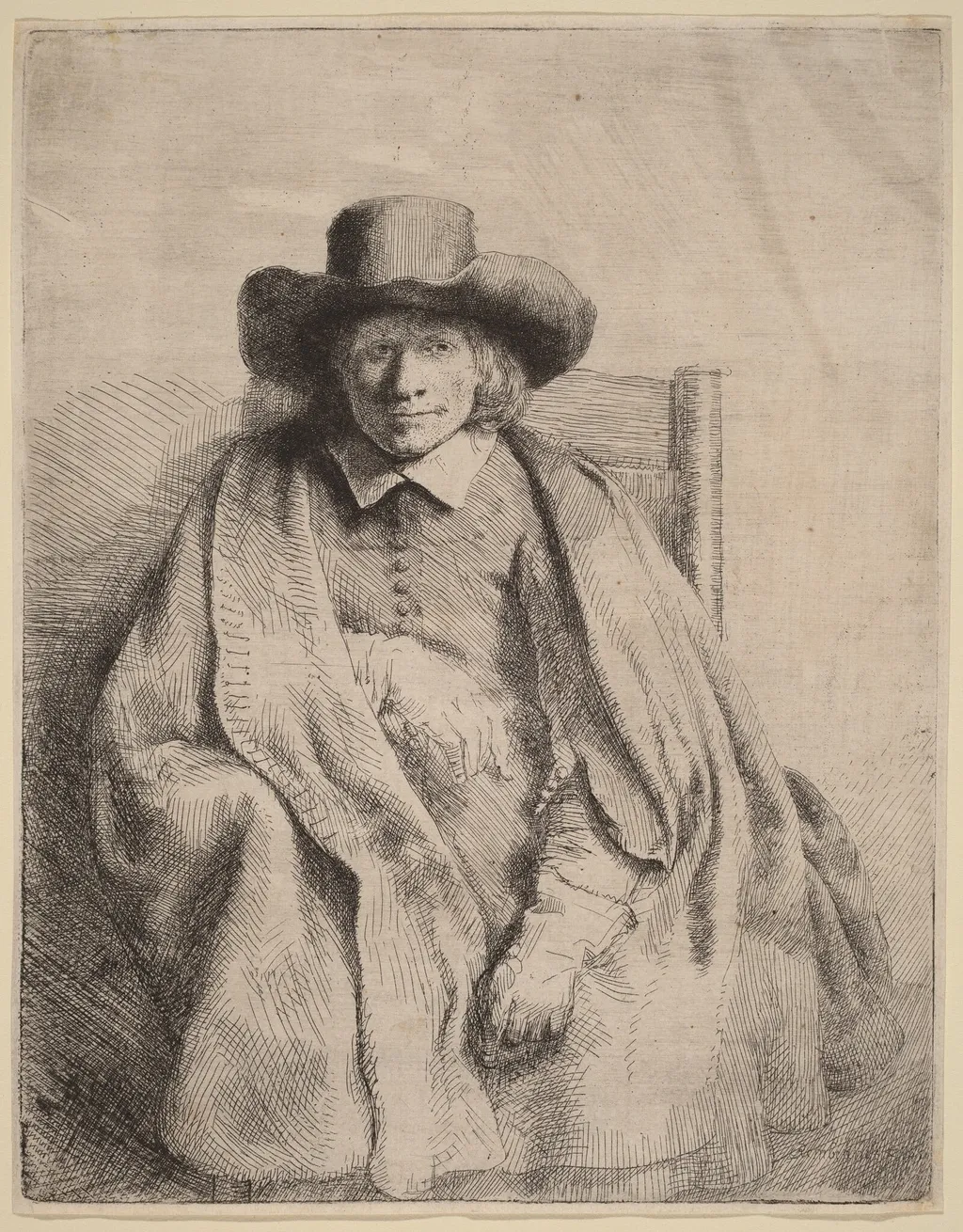
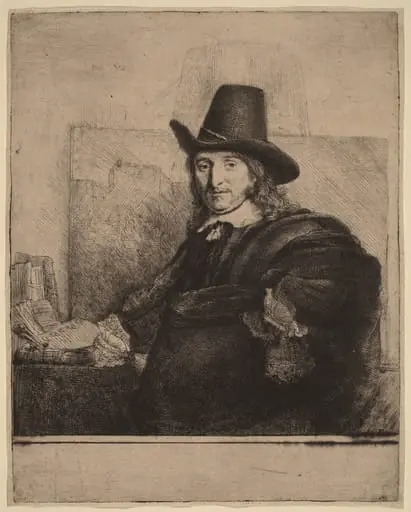
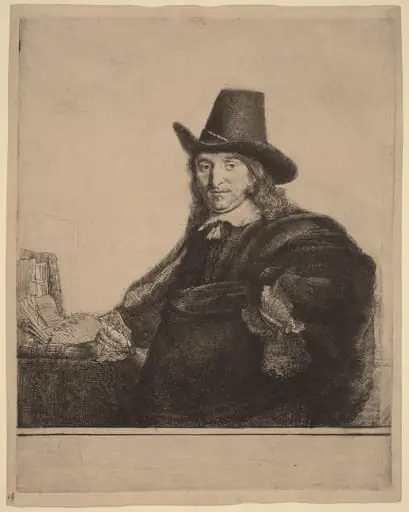
Clement de Jonghe is an ink print by the Baroque artist Rembrandt. It dates from 1651 and is held in the collection of the National Gallery of Art.
About this work
Overview
Created in 1651, this print by Rembrandt van Rijn depicts Clement de Jonghe, a Dutch merchant and acquaintance of the artist. Executed in etching, drypoint, and burin on laid paper, the work captures a seated figure with quiet intensity. The combination of techniques produces a rich interplay of fine lines and textured shadows, characteristic of Rembrandt’s late graphic style.
Subject & Meaning
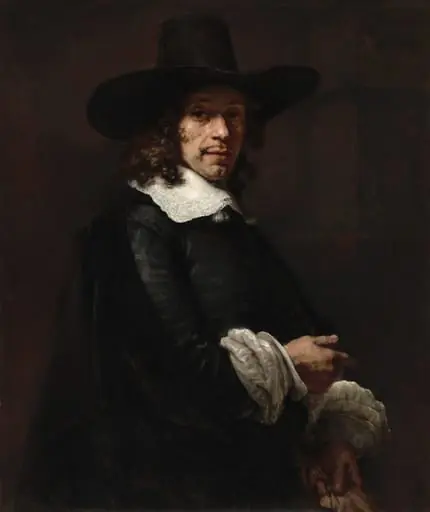
The subject, Clement de Jonghe, is portrayed in formal attire—a wide-brimmed hat and high collar—suggesting his status as a burgher. His expression is restrained, with deep etched lines around the eyes and mouth conveying introspection rather than emotion. The pose, one arm resting on a chair back, implies a moment of pause, inviting contemplation rather than narrative.
Technique & Style
Rembrandt employed three distinct intaglio methods: etching for controlled lines, drypoint for soft, velvety burrs, and burin for sharp, incised details. The layered application creates a tactile surface where roughness and precision coexist. The paper’s natural texture enhances the print’s organic feel, reinforcing the intimacy of the portrait.
History & Provenance
The print was made during Rembrandt’s later years in Amsterdam, a period marked by personal hardship and artistic experimentation. While the exact provenance of this impression is undocumented, it aligns with other portraits Rembrandt produced of local figures, likely intended for private circulation among patrons and collectors.
Context
In the 1650s, Rembrandt increasingly turned to intimate portraiture in print, moving away from grand historical subjects. These works reflect a shift toward psychological depth and technical innovation. The use of multiple etching methods was not merely practical but expressive, allowing nuanced rendering of character and light.
Legacy
This print exemplifies Rembrandt’s mastery of the graphic medium in his later career. Its influence extended to generations of printmakers who studied his layered techniques and emotional economy. Though not widely exhibited in his lifetime, it remains a key example of 17th-century Dutch portraiture in print.
Artist & collection
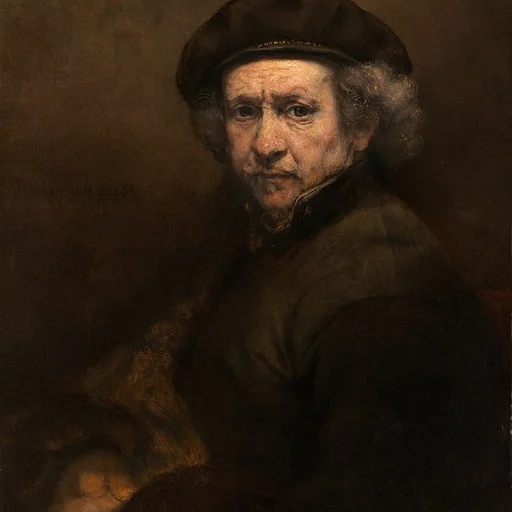
Artist
Rembrandt Harmenszoon van Rijn (15 July 1606 – 4 October 1669), known mononymously as Rembrandt, was a Dutch Golden Age painter, printmaker, and draughtsman.