Artwork
Clement de Jonghe
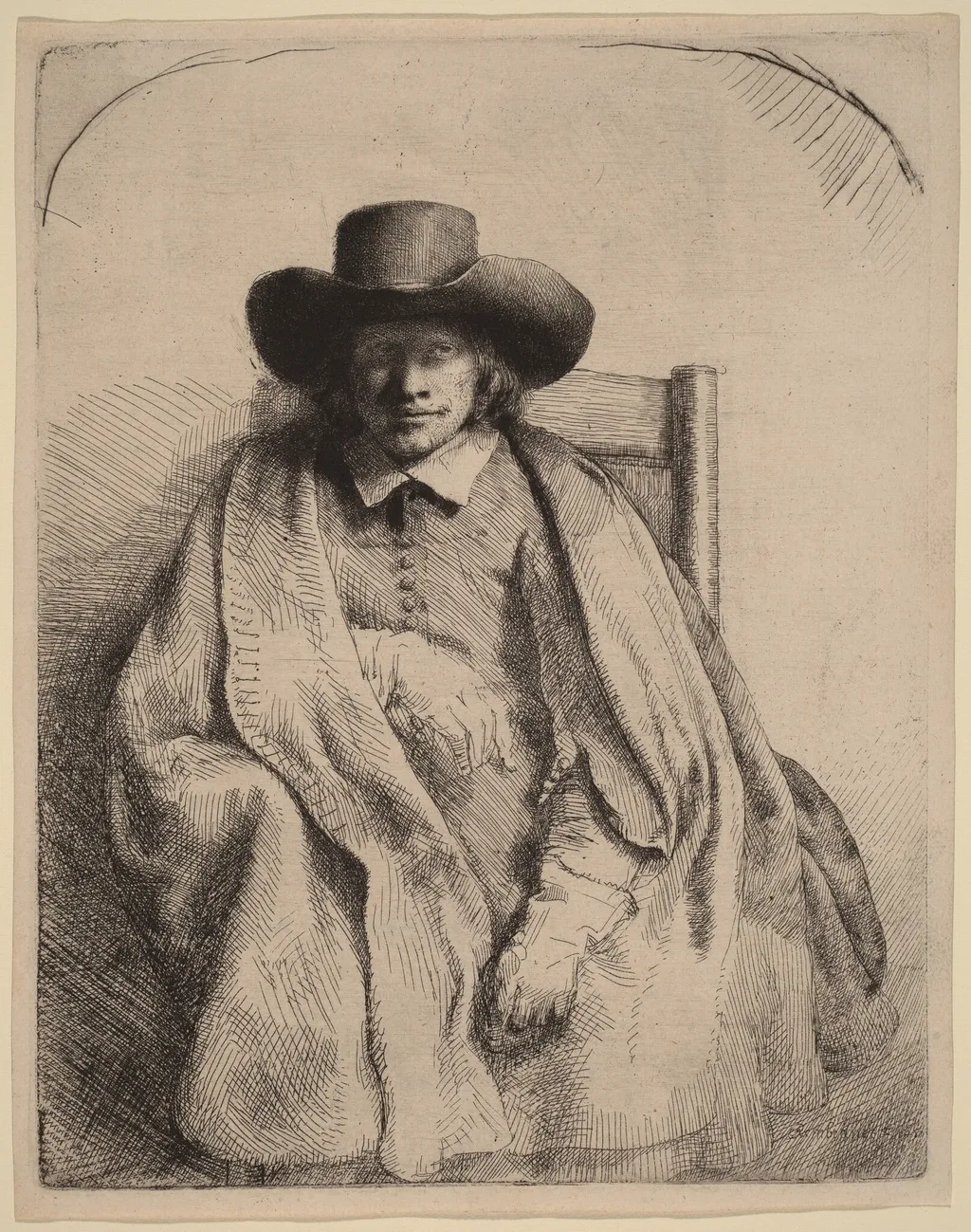
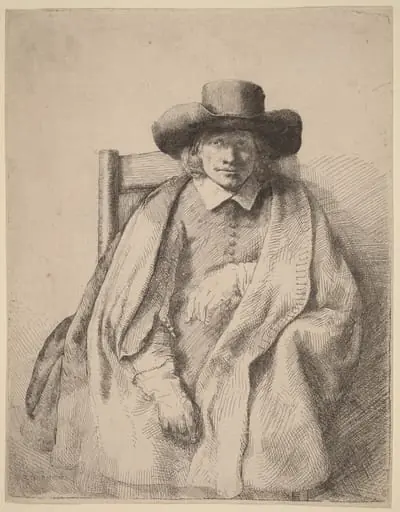
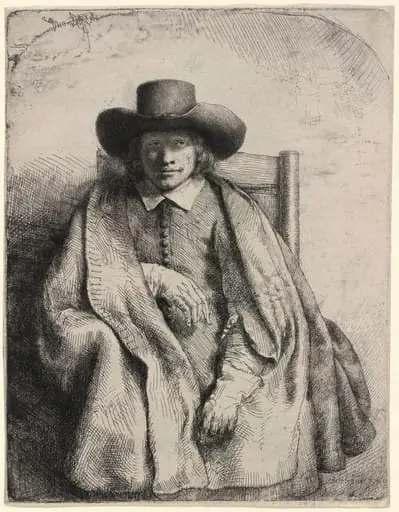
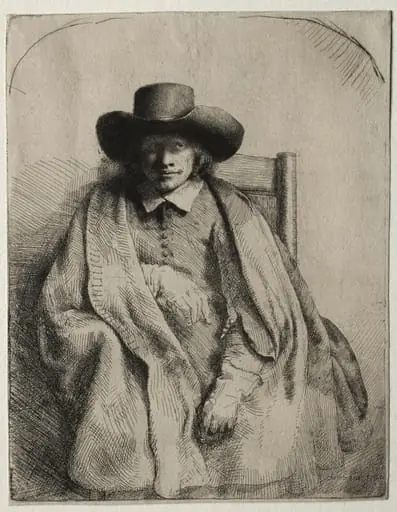
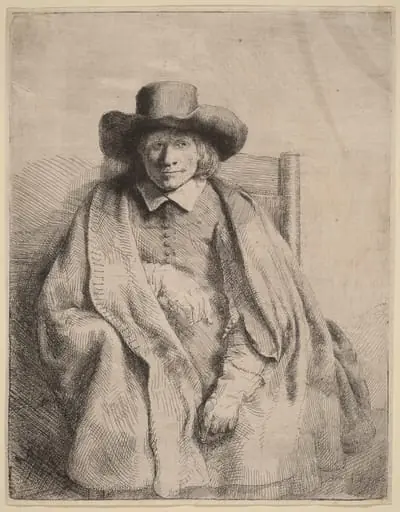
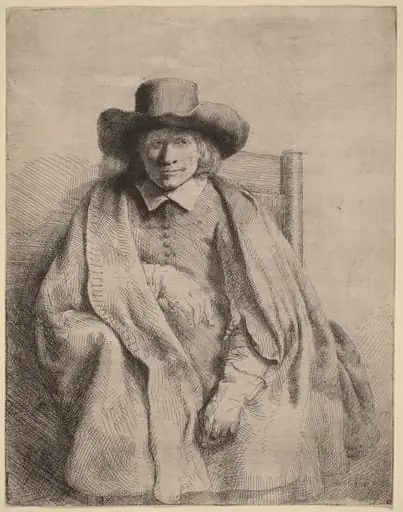
Clement de Jonghe is an ink print by the Baroque artist Rembrandt. It dates from 1651 and is held in the collection of the National Gallery of Art.
About this work
Overview
Clement de Jonge is a print executed by Rembrandt van Rijn in 1651. The work combines etching, drypoint and burin on laid paper, a typical material for the Dutch master’s graphic output in the mid‑seventeenth century.
Subject & Meaning
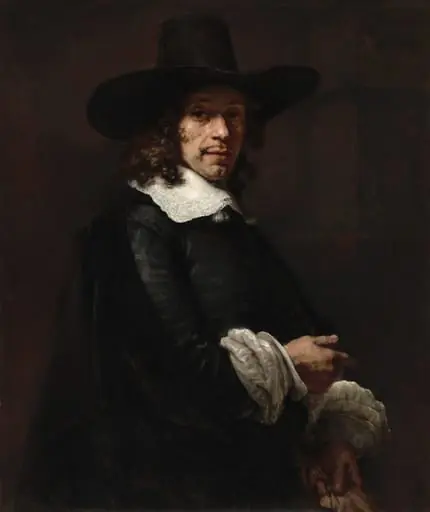
The image presents a solitary figure wearing a broad hat and a loosely draped coat, seated with one arm resting on a chair. The sitter’s expression is contemplative, and the loose handling of line suggests an informal, perhaps study‑like, observation of character.
Technique & Style
Rembrandt employed three complementary intaglio methods. Etching provides the overall composition, drypoint adds deep, velvety burr lines, and the burin contributes crisp, controlled strokes. The resulting texture varies from scratchy, dark outlines to softer, uneven shading, illustrating the artist’s mastery of mixed techniques.
History & Provenance
Created in 1651, the print belongs to the period when Rembrandt frequently experimented with combined intaglio processes. It is catalogued under the title Clement de Jonghe and has been recorded in several collections of the artist’s graphic works, confirming its attribution to Rembrandt’s workshop.
Artist & collection
Artist
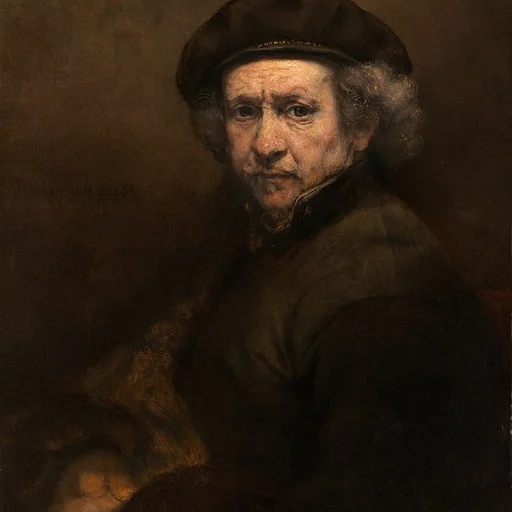
Rembrandt Harmenszoon van Rijn (15 July 1606 – 4 October 1669), known mononymously as Rembrandt, was a Dutch Golden Age painter, printmaker, and draughtsman.