Artwork
Clement de Jonghe
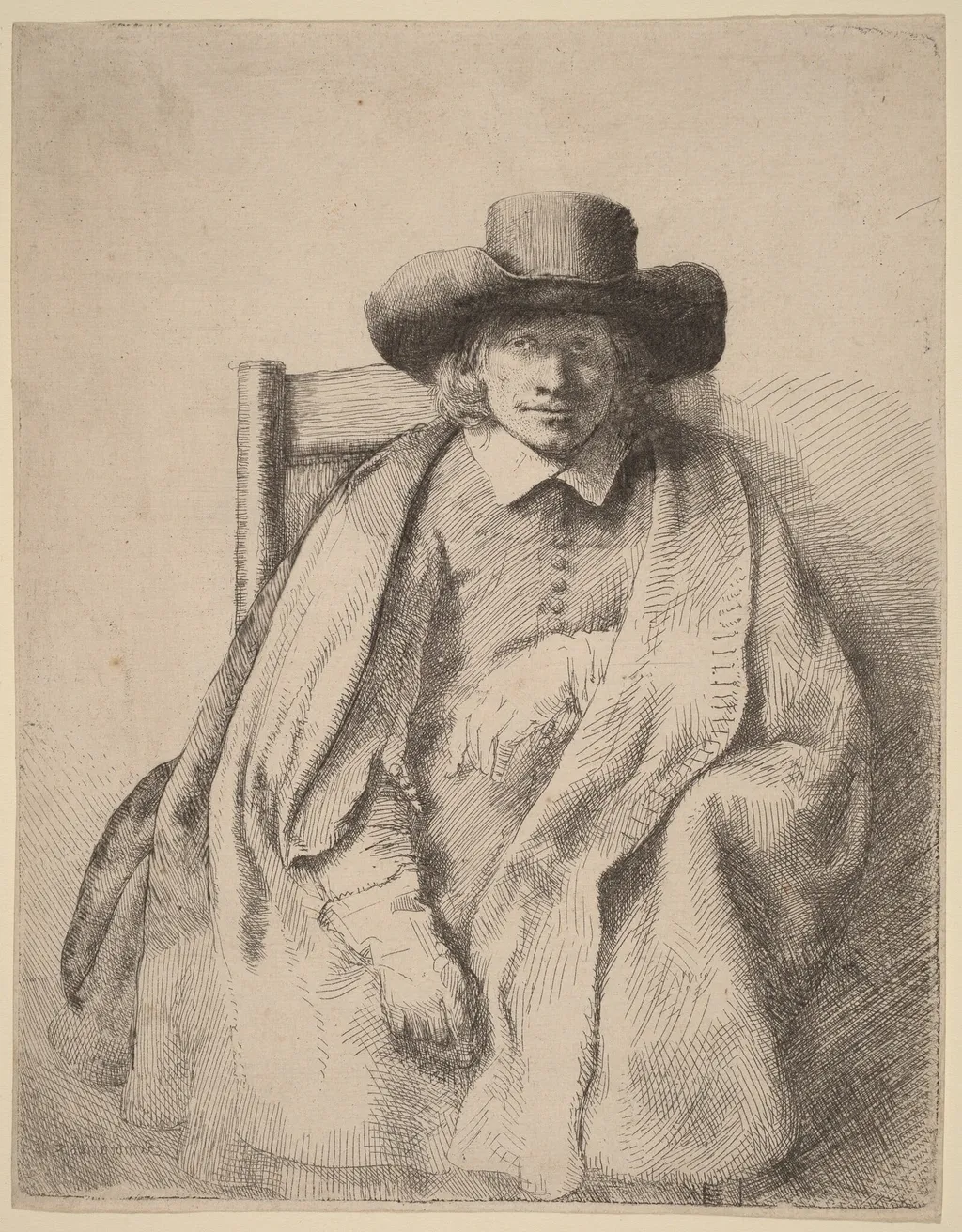
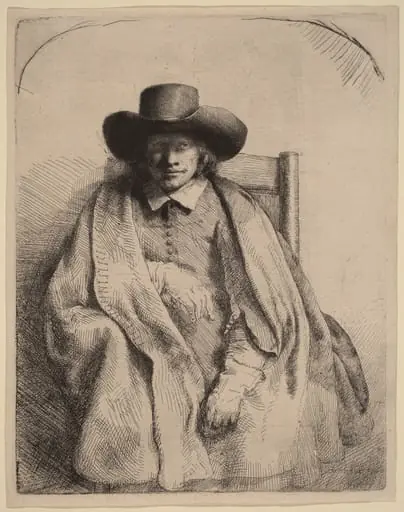
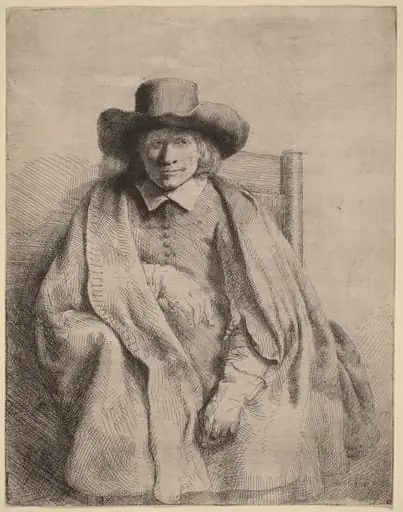
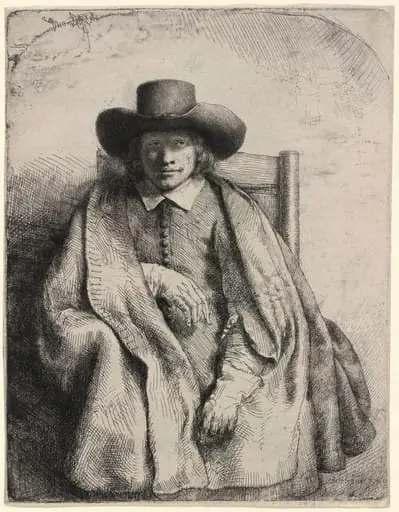
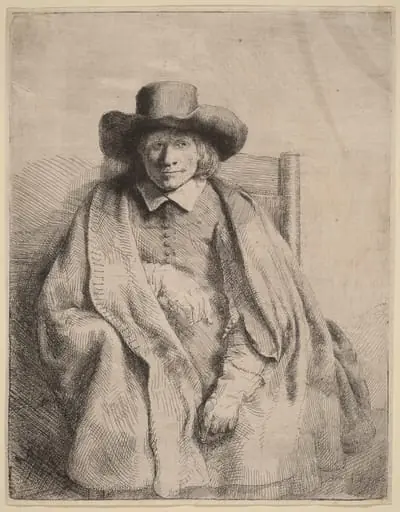
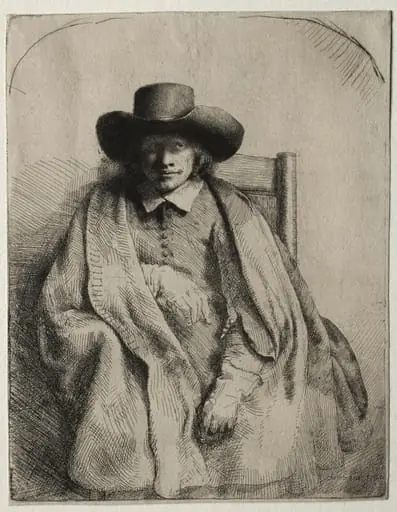
Clement de Jonghe is an ink print by the Baroque artist Rembrandt. It dates from 1651 and is held in the collection of the National Gallery of Art.
About this work
Overview
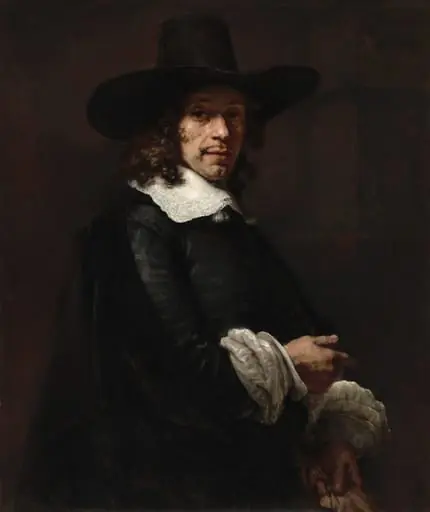
Clement de Jonge is a print produced in 1651 by Rembrandt van Rijn. Executed as a counterproof on laid paper, the work combines etching, drypoint and burin techniques. The image presents a solitary figure seated, his posture relaxed and his attire marked by pronounced folds and a high collar.
Subject & Meaning
The composition centers on a man wearing a wide‑brimmed hat, reclining in a chair. His relaxed bearing and the emphasis on clothing details suggest a study of character and fashion rather than a narrative scene, inviting viewers to contemplate the sitter’s demeanor.
Technique & Style
Rembrandt employed a hybrid approach: the etched lines define the overall structure, while drypoint’s needle‑carved burr produces the characteristic scratchy, jagged marks that add texture to the coat and background. The burin was used for finer, controlled lines, creating contrast between the loose strokes and sharper details.
History & Provenance
Created in the middle of Rembrandt’s prolific printmaking period, this work reflects his experimentation with mixed intaglio processes. The counterproof format indicates it was likely produced as a secondary impression, perhaps for personal study or limited distribution among collectors.
Context
In the early 1650s Rembrandt was exploring the expressive potential of drypoint alongside traditional etching, a practice that allowed him to achieve richer tonal variation. The depiction of a casually dressed figure aligns with his interest in everyday subjects, a departure from grand historical or biblical themes.
Artist & collection
Artist
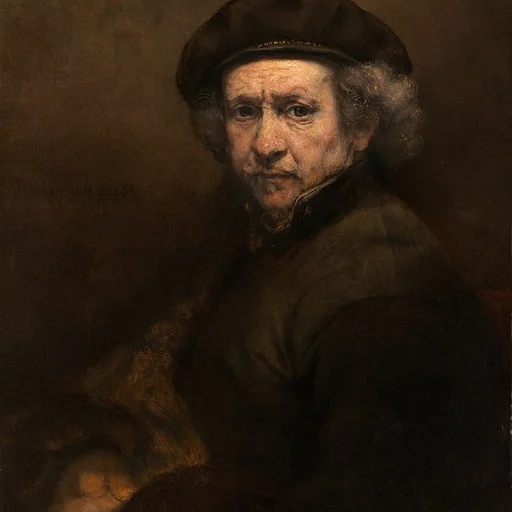
Rembrandt Harmenszoon van Rijn (15 July 1606 – 4 October 1669), known mononymously as Rembrandt, was a Dutch Golden Age painter, printmaker, and draughtsman.