Artwork
Young Man in a Velvet Cap (Petrus Sylvius?)
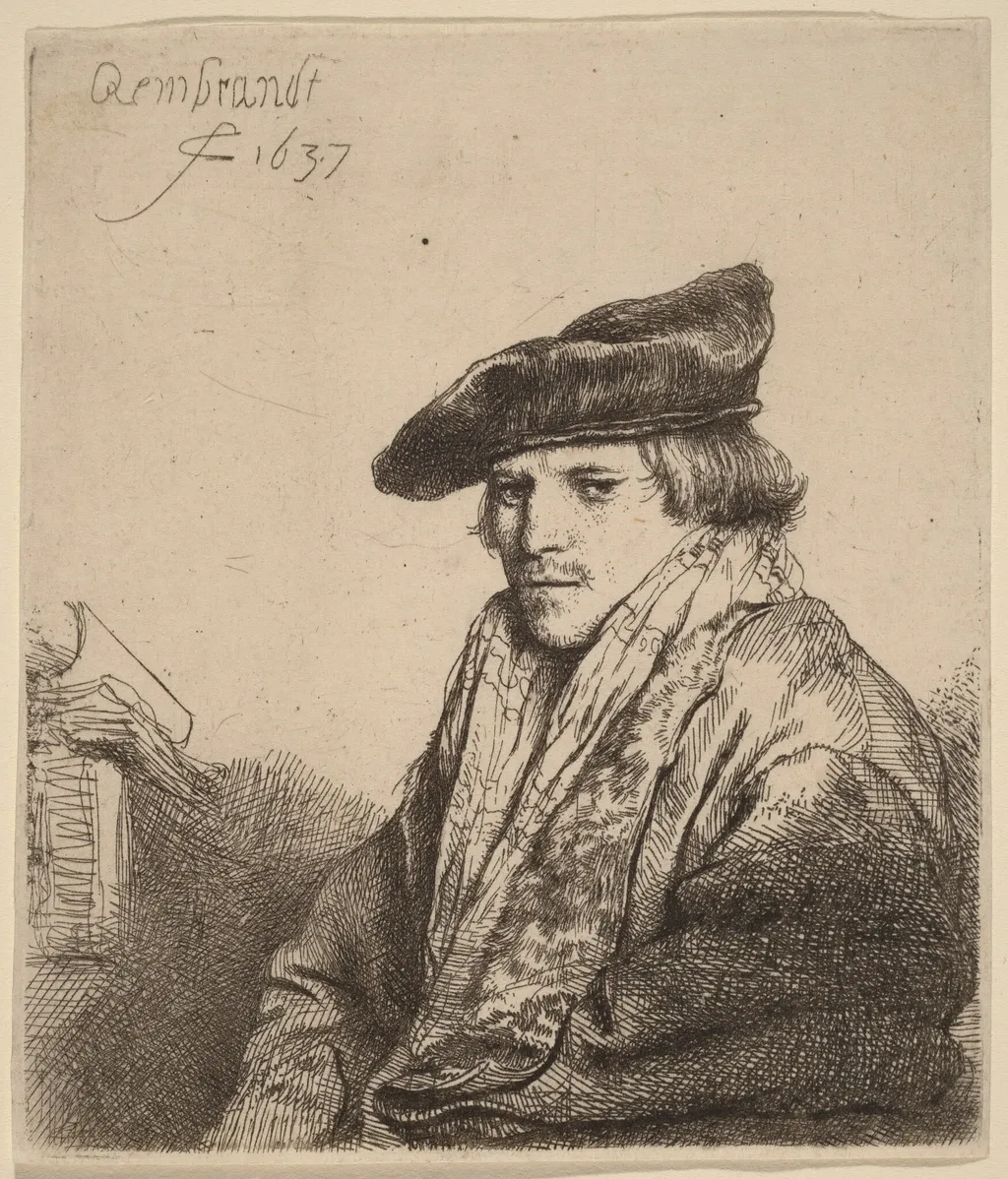
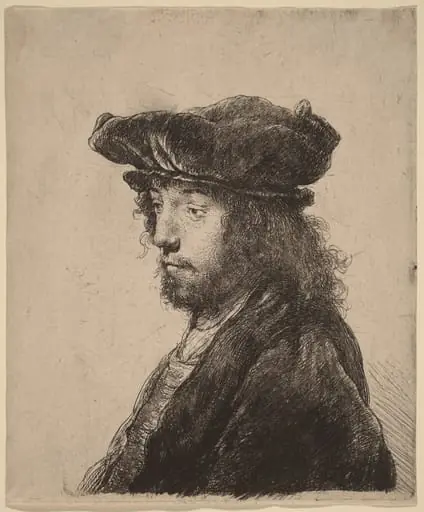
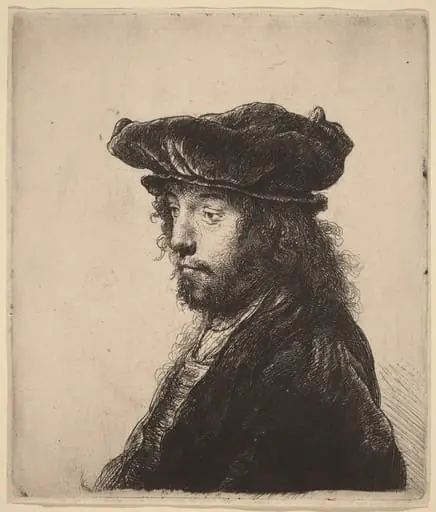
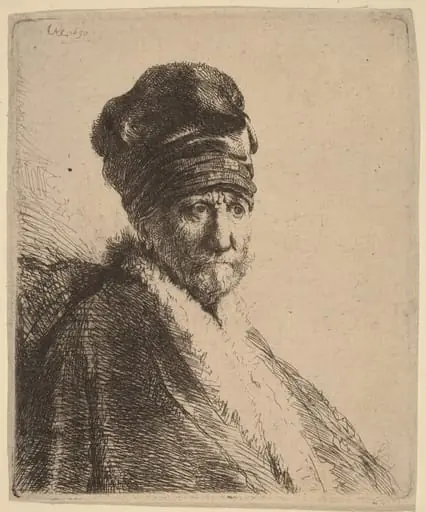
Young Man in a Velvet Cap (Petrus Sylvius?) is an ink print by the Baroque artist Rembrandt. It dates from 1637 and is held in the collection of the National Gallery of Art.
About this work
The lines are dark and scratchy, showing folds in his clothes and the texture of his hat.
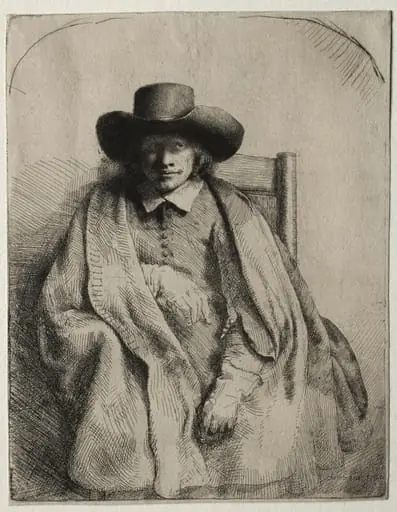
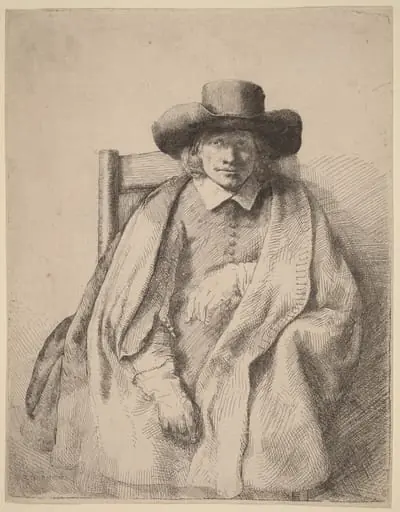
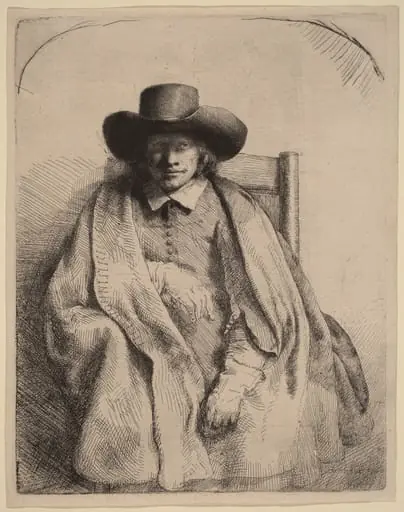
This drawing shows a man sitting, resting his chin on his hand. He wears a wide-brimmed hat and a ruffled collar. The lines are dark and scratchy, showing folds in his clothes and the texture of his hat.
The artist signed it in the corner with the year 1637. This style of drawing, where lines are carved into a metal plate, is called etching.
Next, look up etching to see how artists make prints like this.
Overview
This 1637 etching by Rembrandt van Rijn depicts a seated young man, his chin resting on his hand, wearing a broad-brimmed velvet cap and a ruffled collar. Executed on laid paper, the work is signed and dated by the artist in the lower corner. The image is rendered in fine, expressive lines that capture both form and mood, characteristic of Rembrandt’s approach to printmaking during this period.
Subject & Meaning
The figure, possibly identified as Petrus Sylvius, appears introspective, lost in thought. His posture and the soft shadowing around his face suggest contemplation rather than formal portraiture. The absence of context or narrative detail invites focus on the individual’s inner state, reflecting Rembrandt’s interest in psychological depth over external grandeur.
Technique & Style
Rembrandt employed etching to create fine, varied lines that convey texture and volume. The dark, scratchy strokes define the folds of the velvet cap and the delicate ruffles of the collar, while subtle tonal shifts suggest light falling across the face. The technique allows for both precision and spontaneity, revealing the artist’s mastery of the medium’s expressive potential.
History & Provenance
The print was made in 1637 during Rembrandt’s years in Amsterdam, a time of growing reputation and technical experimentation. While its early ownership is undocumented, it entered major collections in the 18th and 19th centuries. The attribution to Petrus Sylvius remains speculative, based on later scholarly conjecture rather than contemporary evidence.
Context
Created during Rembrandt’s peak period of printmaking, this work aligns with his exploration of individual character through intimate portraits. Etchings like this were often produced in small editions for collectors, distinct from large-scale paintings. The focus on a single figure without narrative elements reflects a broader trend toward psychological portraiture in Dutch art of the 1630s.
Legacy
This etching exemplifies Rembrandt’s influence on the evolution of printmaking as a medium for personal expression. Its emphasis on mood and texture inspired later artists to prioritize emotional resonance over technical polish. Though modest in scale, it remains a key example of how etching could convey depth and humanity with minimal means.
Artist & collection
Artist
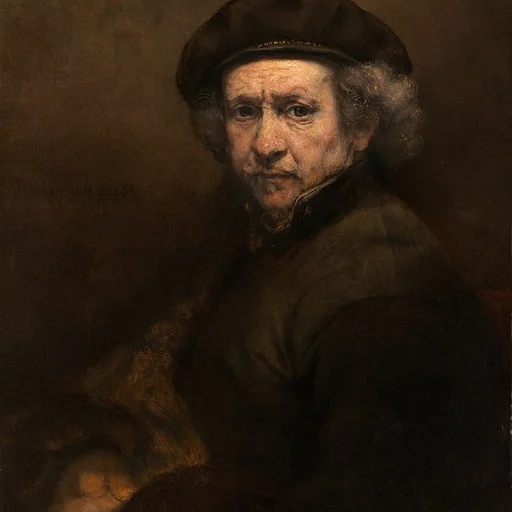
Rembrandt Harmenszoon van Rijn (15 July 1606 – 4 October 1669), known mononymously as Rembrandt, was a Dutch Golden Age painter, printmaker, and draughtsman.