Artwork
Portrait of Jan Six
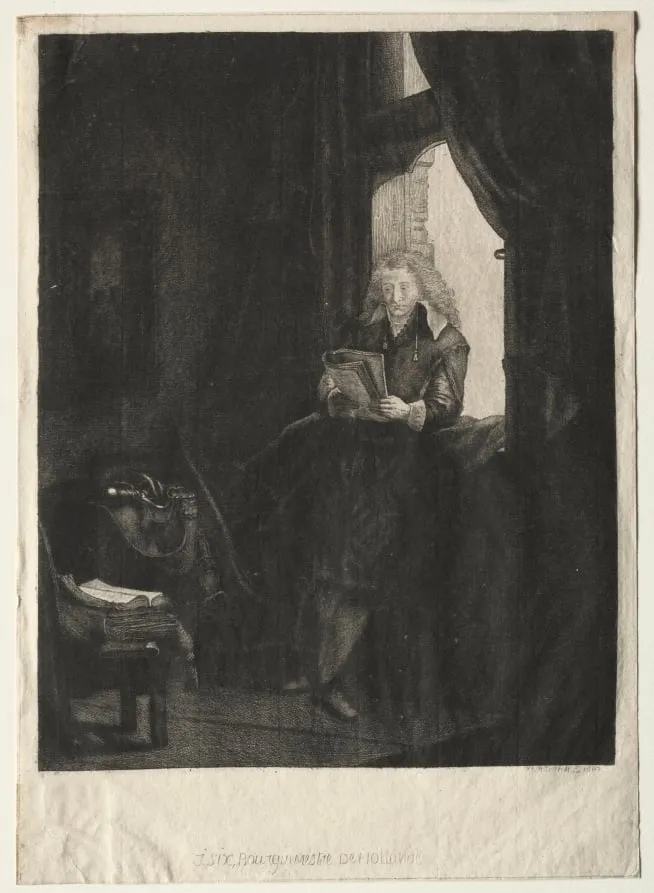
Portrait of Jan Six is a print by Rembrandt. It dates from 1647 and is held in the collection of the Cleveland Museum of Art.
About this work
Overview
Created around 1647, this etching by Rembrandt van Rijn depicts Jan Six, a prominent Amsterdam magistrate and patron. Unlike grand ceremonial portraits, this work presents its subject with quiet intimacy, rendered in ink on paper rather than oil on canvas. The print captures a moment of stillness, emphasizing the sitter’s presence through subtle tonal contrasts rather than elaborate detail.
Subject & Meaning
Jan Six was a well-connected figure in Amsterdam’s civic and cultural life, known for his support of the arts.
Jan Six was a well-connected figure in Amsterdam’s civic and cultural life, known for his support of the arts. Rembrandt portrays him not as a symbol of status but as an individual engaged in quiet contemplation. The restrained composition and direct gaze suggest introspection, aligning with the humanist values of the Dutch Golden Age, where character and intellect were valued over outward display.
Technique & Style
Rembrandt employed etching to achieve nuanced gradations of light and shadow, using fine lines and varying ink density to model the face and fabric. The chiaroscuro effect enhances the three-dimensionality of the figure, drawing attention to the texture of his collar and the softness of his skin. The background remains deliberately sparse, focusing the viewer’s attention entirely on the sitter’s expression and posture.
History & Provenance
The print was likely made for private circulation among Rembrandt’s circle, not for mass sale. It entered the Cleveland Museum of Art’s collection in the 20th century, having passed through several European collections since the 17th century. Its survival in good condition reflects its enduring appeal among collectors who valued Rembrandt’s mastery of the print medium.
Context
In mid-17th century Amsterdam, portraiture was increasingly personal, reflecting the rising influence of the merchant class. Rembrandt’s approach diverged from formal, idealized depictions common elsewhere in Europe. Instead, he favored psychological depth and naturalism, aligning with the city’s cultural emphasis on individual identity and moral seriousness.
Legacy
This portrait exemplifies Rembrandt’s influence on the evolution of printmaking as a vehicle for psychological insight. Later artists studied his use of line and tone to convey inner life. The work remains a touchstone in discussions of how simplicity and restraint can communicate profound humanity, shaping generations of portraitists in both print and paint.
Artist & collection
Artist
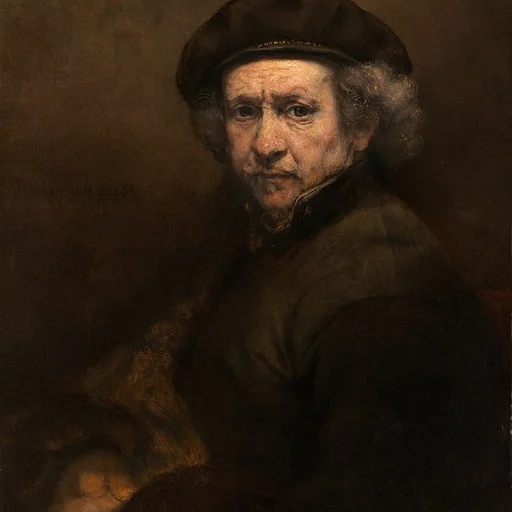
Rembrandt Harmenszoon van Rijn (15 July 1606 – 4 October 1669), known mononymously as Rembrandt, was a Dutch Golden Age painter, printmaker, and draughtsman.

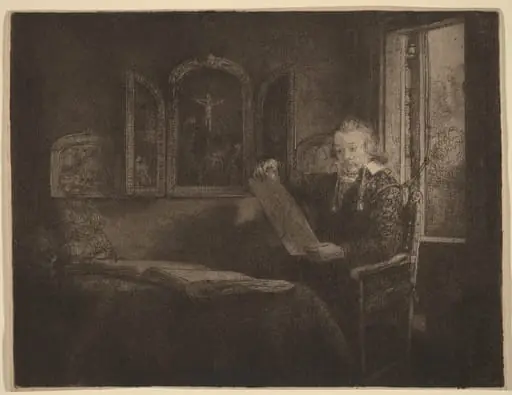 Abraham Francen
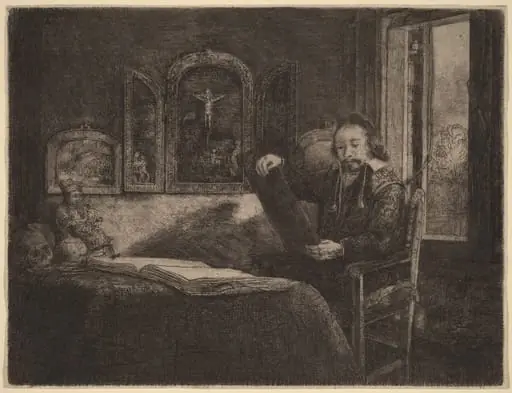 Abraham Francen
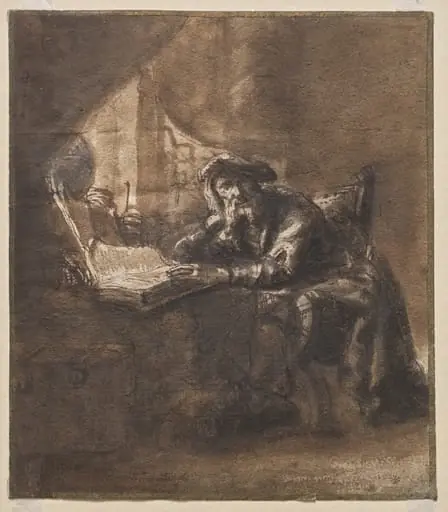 An Old Man Seated at a Table, His Head Resting on His Right Hand (recto)
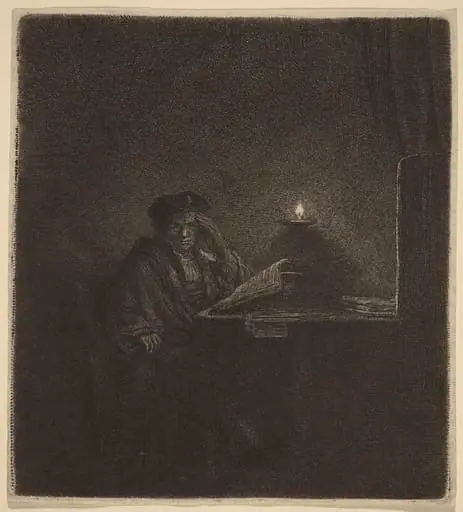 Student at a Table by Candlelight
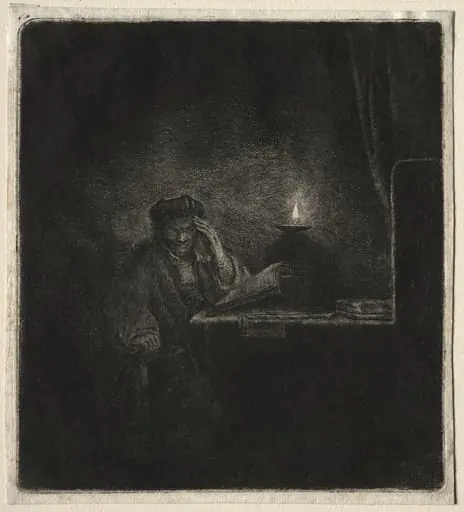 Copy of Student at a Table by Candelight
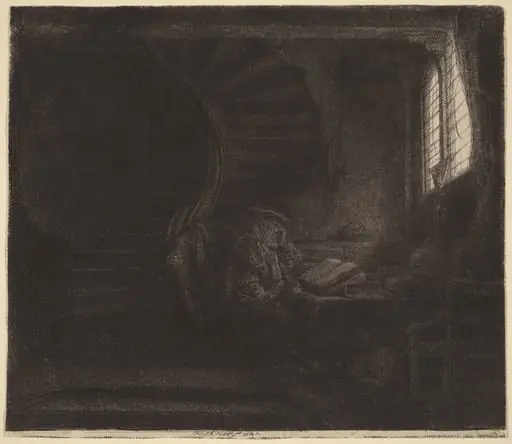 Saint Jerome in a Dark Chamber
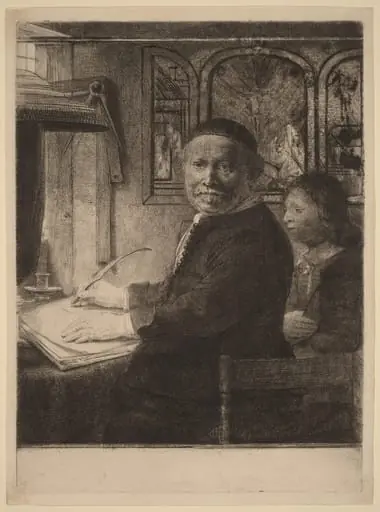 Lieven Willemsz van Coppenol: the Smaller Plate
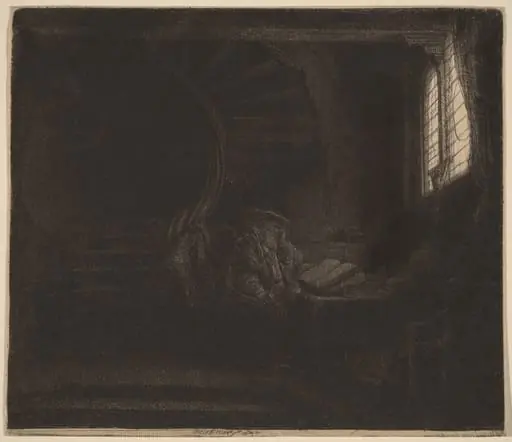 St. Jerome in a Dark Chamber
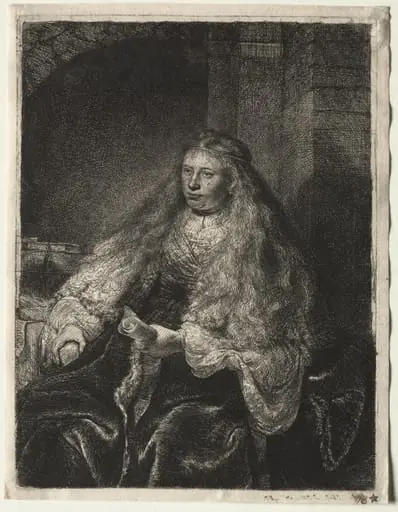 The Great Jewish Bride