Artwork
Self-Portrait in Velvet Cap with Plume
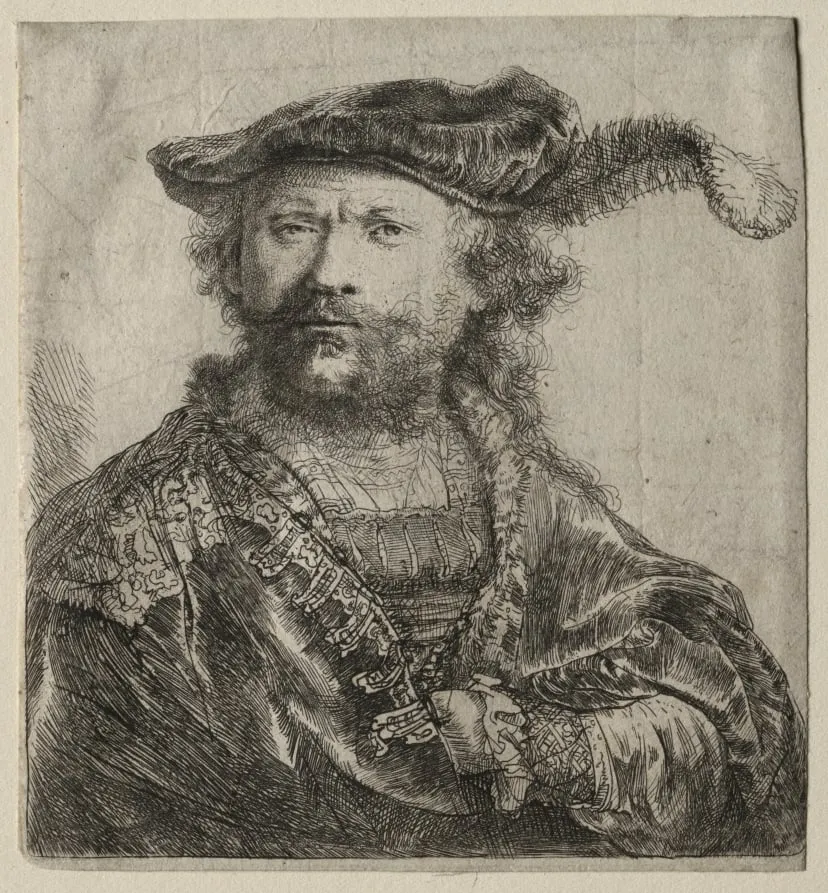
Self-Portrait in Velvet Cap with Plume is a print by the Baroque artist Rembrandt. It dates from 1638 and is held in the collection of the Cleveland Museum of Art.
About this work
Overview
The composition focuses on the upper body, with the subject’s gaze directed outward, engaging the viewer directly.
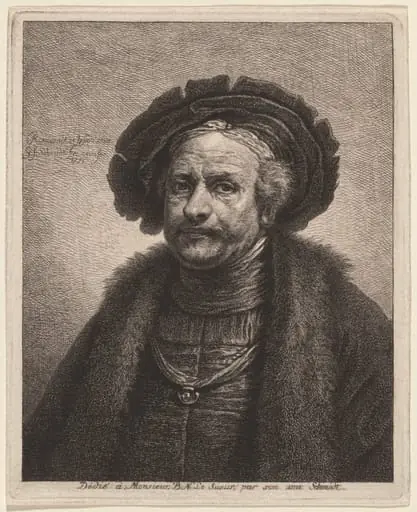
Created in 1638, this etching by Rembrandt van Rijn presents a self-portrait in monochrome, capturing the artist in a richly textured velvet cap adorned with a plume. The image is rendered with fine, deliberate lines that emphasize texture and form. The composition focuses on the upper body, with the subject’s gaze directed outward, engaging the viewer directly. The work is part of a broader series of self-representations Rembrandt produced throughout his career.
Subject & Meaning
The portrait depicts Rembrandt himself, dressed in fashionable attire that suggests both personal pride and professional identity. The velvet cap and feather signal status and artistic individuality, while the folded cloth in his hand may allude to his role as a painter or to the act of creation. His direct gaze conveys self-assurance, not vanity, reflecting a quiet introspection common in his self-images.
Technique & Style
Rembrandt employed etching to achieve subtle tonal variations through controlled line density and cross-hatching. The contrast between the dark cap and the lighter face enhances volume, while the feather’s delicate rendering suggests movement and realism. The intricate patterns of his clothing are suggested rather than fully detailed, relying on the viewer’s perception. This approach exemplifies his mastery of chiaroscuro in printmaking.
History & Provenance
The print entered the collection of The Cleveland Museum of Art in the 20th century, having passed through several private collections since its creation. It was produced during a period of relative financial stability for Rembrandt, when he was actively exploring self-representation in multiple media. The work’s survival in good condition reflects its early recognition and careful preservation.
Context
In the late 1630s, Rembrandt was experimenting with self-portraiture across painting, drawing, and printmaking, often using his own image to study expression, lighting, and identity. This etching aligns with broader Dutch cultural trends that valued personal reflection and the artist’s role as an observer. Unlike idealized portraits, his self-images embraced imperfection and psychological depth.
Legacy
This print contributes to a body of work that redefined self-portraiture in Western art, shifting focus from external likeness to internal presence. Later artists studied Rembrandt’s etchings for their expressive line work and emotional nuance. The image remains a key reference in understanding how printmaking could convey personal and artistic identity with remarkable intimacy.
Artist & collection
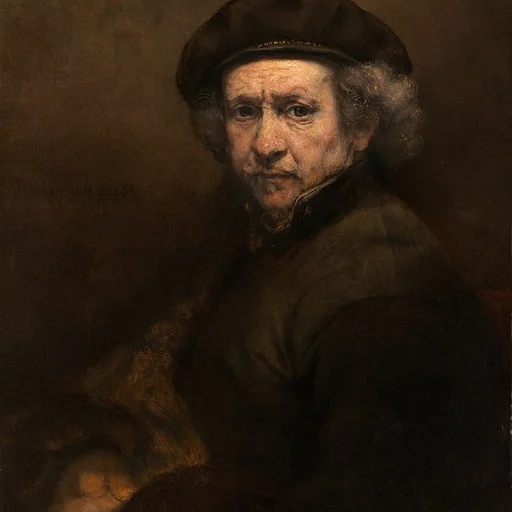
Artist
Rembrandt Harmenszoon van Rijn (15 July 1606 – 4 October 1669), known mononymously as Rembrandt, was a Dutch Golden Age painter, printmaker, and draughtsman.