Artwork
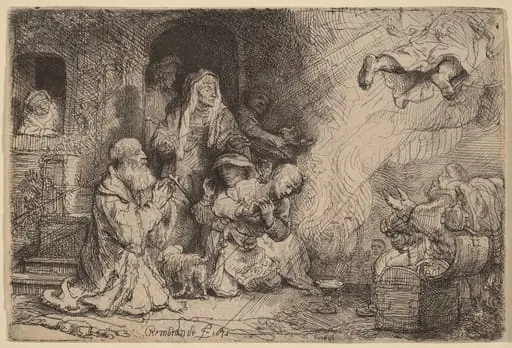
The Angel Departing from the Family of Tobit
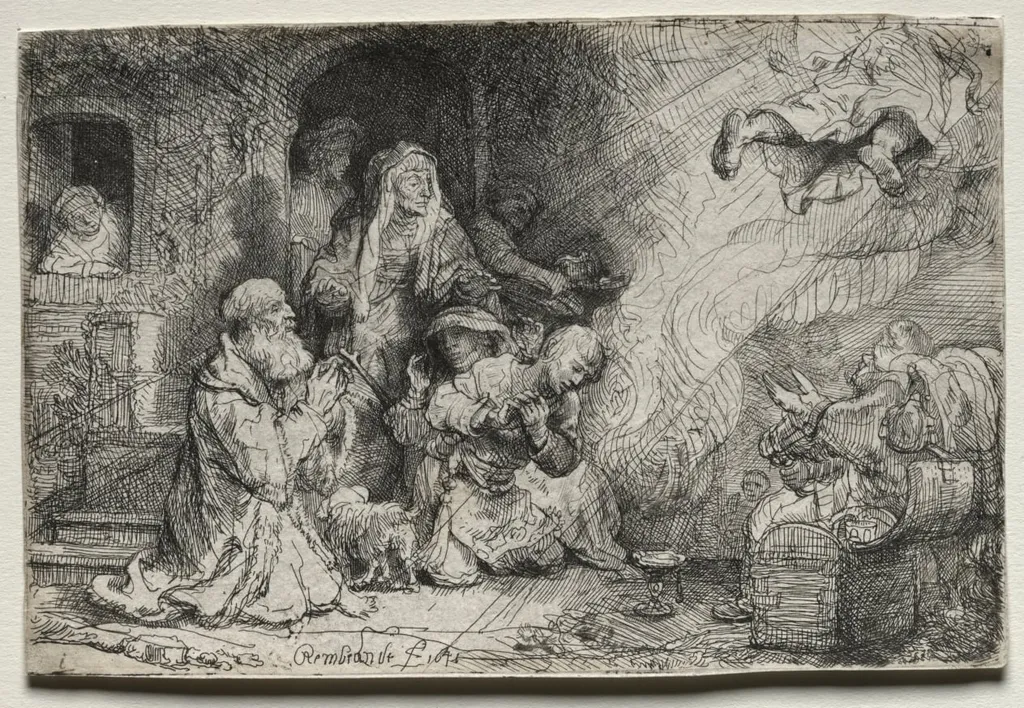
The Angel Departing from the Family of Tobit is a print by the Baroque artist Rembrandt. It dates from 1641 and is held in the collection of the Cleveland Museum of Art.
About this work
Overview
Created in 1641, this print by Rembrandt van Rijn depicts the biblical moment when the angel Raphael departs from the family of Tobit. Executed in etching and drypoint, it is part of the collection at The Cleveland Museum of Art. The scene captures a quiet, intimate transition between the earthly and the divine, rendered with exceptional sensitivity to light and emotional tone.
Subject & Meaning
The scene illustrates the angel’s farewell to Tobit, his wife Anna, and their son Tobias, following divine intervention that restored Tobit’s sight. The figures kneel in reverence as the angel ascends, their postures conveying grief and gratitude. The moment is not triumphant but tender, reflecting a personal resonance for Rembrandt, who had recently experienced the loss of several children.
Technique & Style
Rembrandt employed chiaroscuro with masterful restraint, using deep shadows to isolate the glowing angel and the warm lamplight that bathes the family. The angel’s wings radiate luminosity, contrasting with the dim interior. His use of etching and drypoint allowed fine, expressive lines to suggest texture and movement, enhancing the emotional gravity of the scene without overt detail.
History & Provenance
The print was made during a period of personal sorrow for Rembrandt, following the deaths of three of his children. It was likely produced for private circulation rather than public sale. The Cleveland Museum of Art acquired the work in the 20th century, where it remains among the most studied examples of his late graphic output.
Context
This print emerged during Rembrandt’s mature phase, when his religious subjects grew increasingly introspective. While biblical narratives remained common in Dutch art, his focus on quiet, human emotion distinguished his work. The emphasis on domestic space and emotional realism aligns with broader shifts in 17th-century Dutch visual culture toward intimate, psychologically rich imagery.
Legacy
The print influenced later artists through its emotional depth and innovative use of light. It exemplifies how Rembrandt transformed traditional religious iconography into a vehicle for universal human experience. Its enduring presence in museum collections underscores its role as a pivotal work in the evolution of printmaking as a medium for personal expression.
Artist & collection
Artist
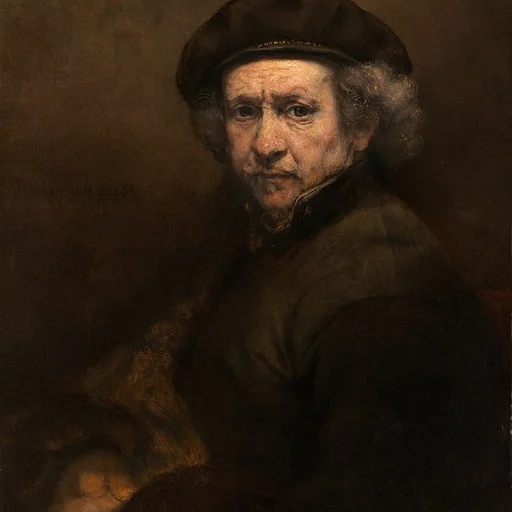
Rembrandt Harmenszoon van Rijn (15 July 1606 – 4 October 1669), known mononymously as Rembrandt, was a Dutch Golden Age painter, printmaker, and draughtsman.

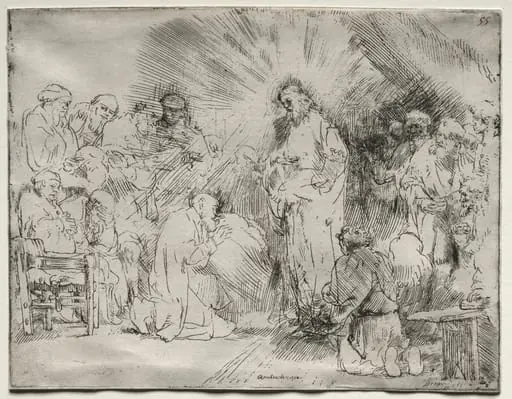 Christ Appearing to the Apostles
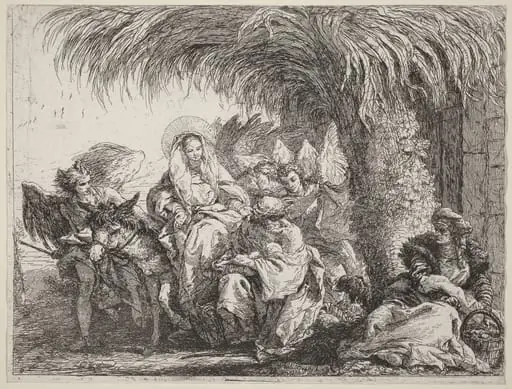 Joseph Kneels with the Child before Mary on the Donkey
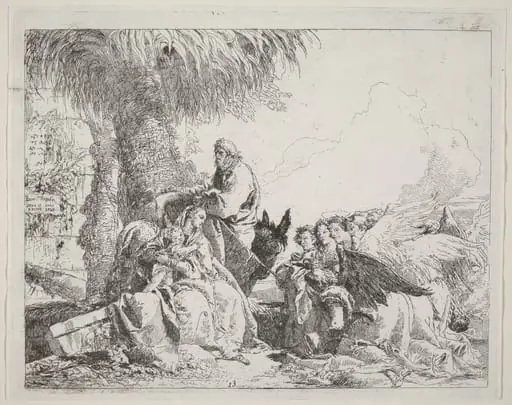 The Rest on the Flight, with Adoring Angels
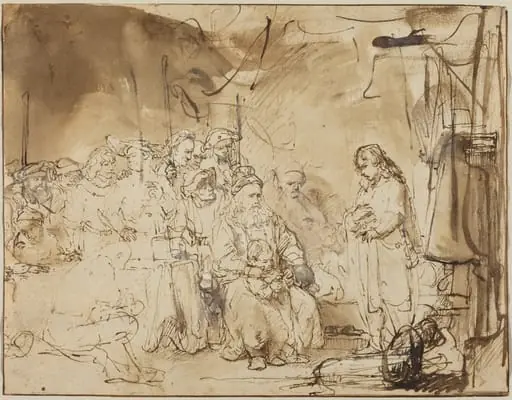 Joseph Recounting His Dreams
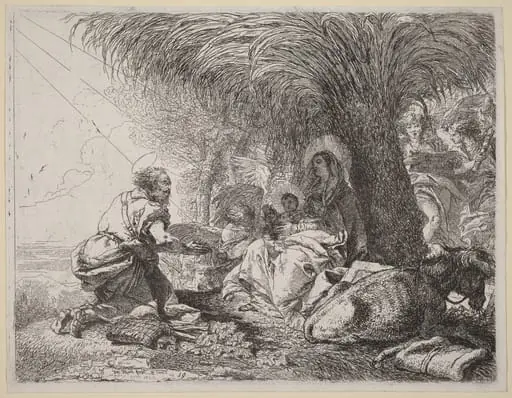 The Rest on the Flight with Joseph in Adoration
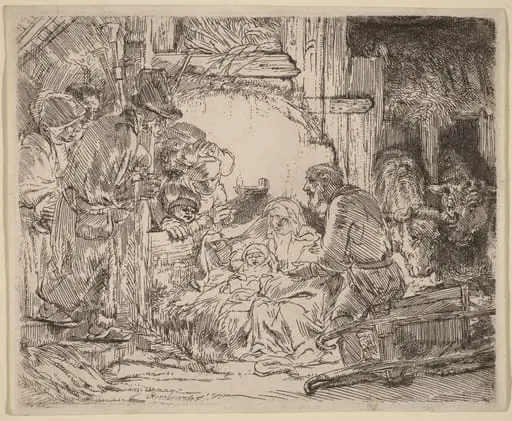 The Adoration of the Shepherds: with the Lamp
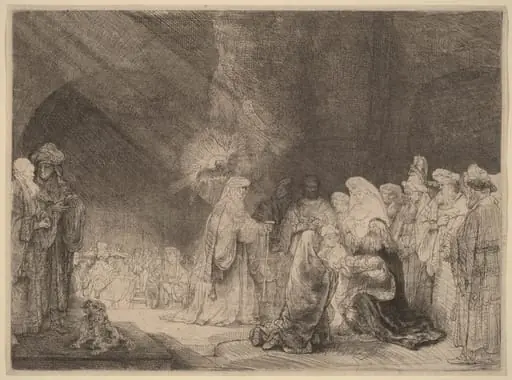 The Presentation in the Temple: Oblong Print
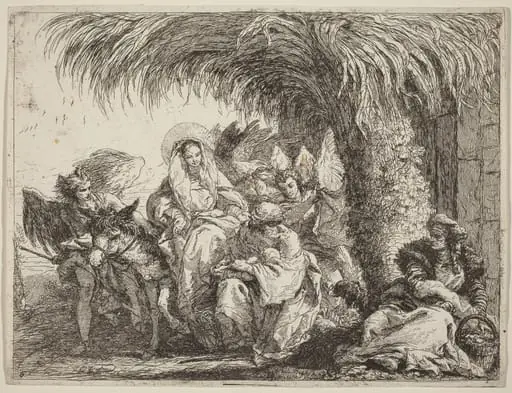 Joseph Kneels with the Child before Mary on the Donkey
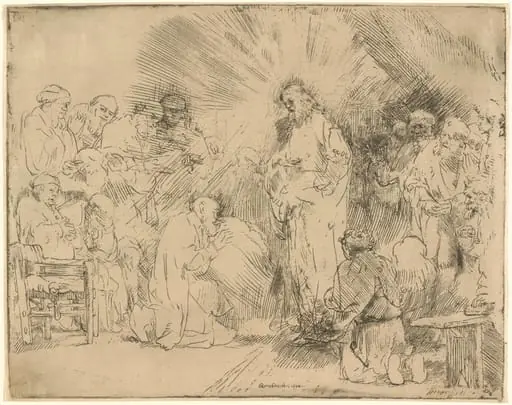 Christ Appearing to the Apostles
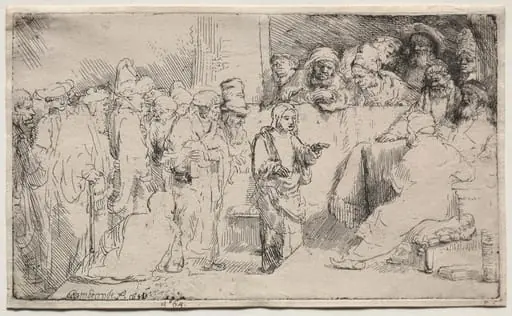 Christ Disputing with the Doctors: A Sketch
 Christ healing the sick: 'The hundred guilder print'
 The Angel Departing from the Family of Tobias