Artwork
Christ Appearing to the Apostles
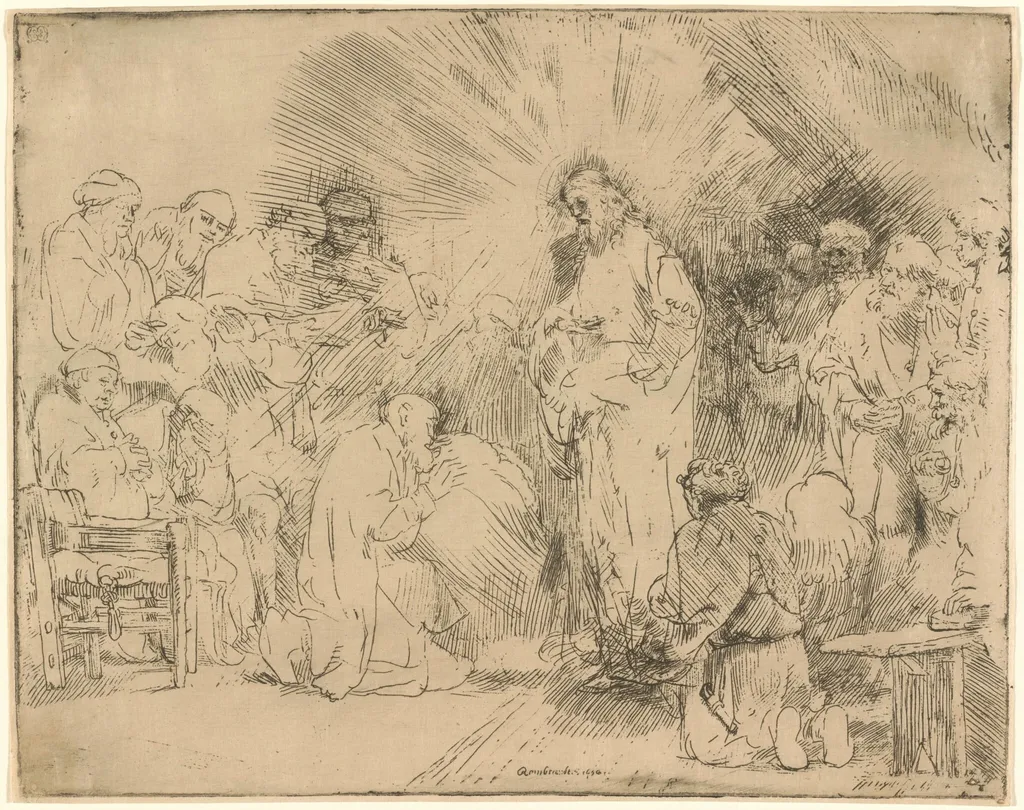
Christ Appearing to the Apostles is an ink print by the Baroque artist Rembrandt. It dates from 1656 and is held in the collection of the National Gallery of Art.
About this work
Overview
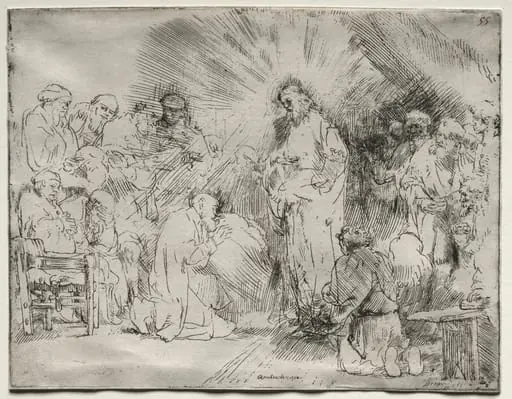
The composition is dominated by stark contrasts between light and shadow, with figures emerging from darkness through layered, expressive lines.
Created in 1656, this etching by Rembrandt van Rijn depicts a moment of divine revelation among the apostles. Rendered in ink on paper, the work captures a quiet, intimate scene rather than a grand spectacle. The composition is dominated by stark contrasts between light and shadow, with figures emerging from darkness through layered, expressive lines. The medium’s capacity for fine detail and tonal depth is fully exploited to convey emotional gravity.
Subject & Meaning
The central figure, identified as the resurrected Christ, stands with arms outstretched, likely addressing the apostles after his resurrection. Surrounding figures react with varied gestures—reaching, kneeling, or withdrawing—suggesting awe, disbelief, or contemplation. The absence of overt narrative detail invites introspection, emphasizing the personal, internal nature of the encounter rather than its doctrinal significance.
Technique & Style
Rembrandt employed etching with a free, almost spontaneous hand, using varied line weights and cross-hatching to build volume and texture. Ink accumulates along the grooves of the plate, creating rich, velvety blacks that enhance the sense of luminosity where light falls. The rough, urgent quality of the lines suggests immediacy, as if the scene was recorded in real time, reinforcing the spiritual intensity of the moment.
History & Provenance
The print was made during Rembrandt’s later years, a period marked by personal hardship and artistic experimentation. Though not commissioned, it circulated among collectors and fellow artists, reflecting his growing reputation for spiritual depth in printmaking. Surviving impressions are held in major museum collections, with variations in ink tone and paper indicating multiple states and careful hand-inking by the artist.
Context
In mid-17th century Amsterdam, religious imagery remained vital despite the Protestant climate, which discouraged overtly devotional art. Rembrandt responded by focusing on human emotion and psychological realism rather than iconographic tradition. This etching aligns with his broader interest in portraying sacred moments as intimate, personal experiences accessible to the viewer.
Legacy
This work exemplifies Rembrandt’s mastery of etching as a medium for emotional expression. His use of light, texture, and spontaneous line influenced generations of printmakers who sought to convey inner states through graphic means. The piece remains a touchstone for artists studying how minimal marks can evoke profound spiritual presence.
Artist & collection
Artist
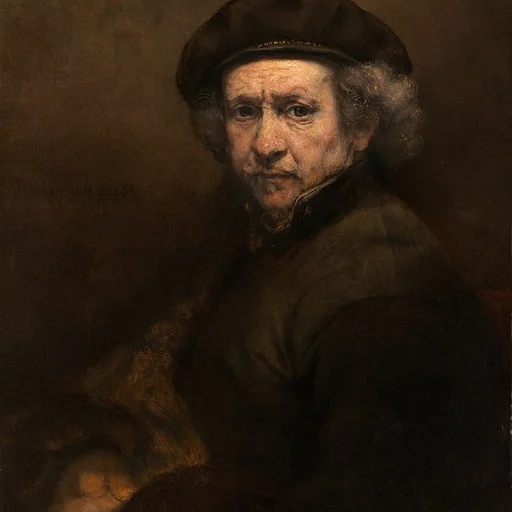
Rembrandt Harmenszoon van Rijn (15 July 1606 – 4 October 1669), known mononymously as Rembrandt, was a Dutch Golden Age painter, printmaker, and draughtsman.

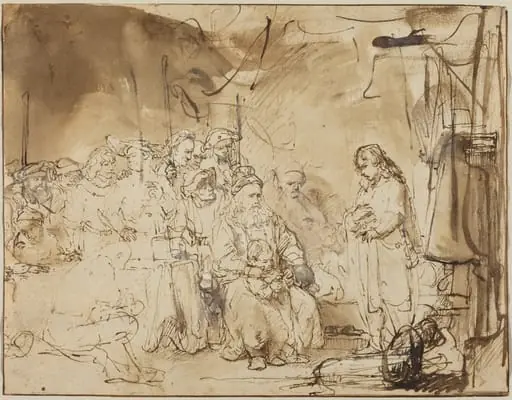 Joseph Recounting His Dreams
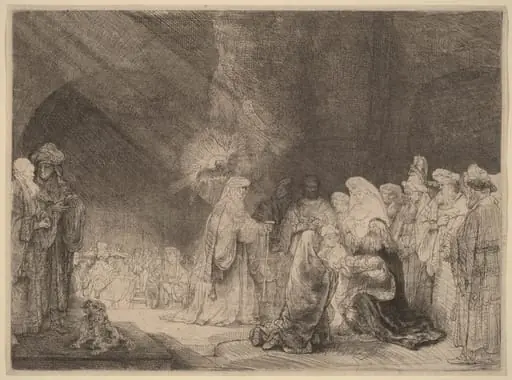 The Presentation in the Temple: Oblong Print
 The Tribute Money
 Christ healing the sick: 'The hundred guilder print'
 Christ Preaching (The Hundred Guilder Print)
 Christ at Emmaus: the Larger Plate
 The Angel Departing from the Family of Tobias
 Holy Family with Saint Anne and Female Head in Profile
 Birth Scene
 The Mystic Marriage of Saint Catherine
 Christ Preaching (The Hundred Guilder Print)
 Christ Appearing to the Apostles