Artwork
The Adoration of the Shepherds: with the Lamp
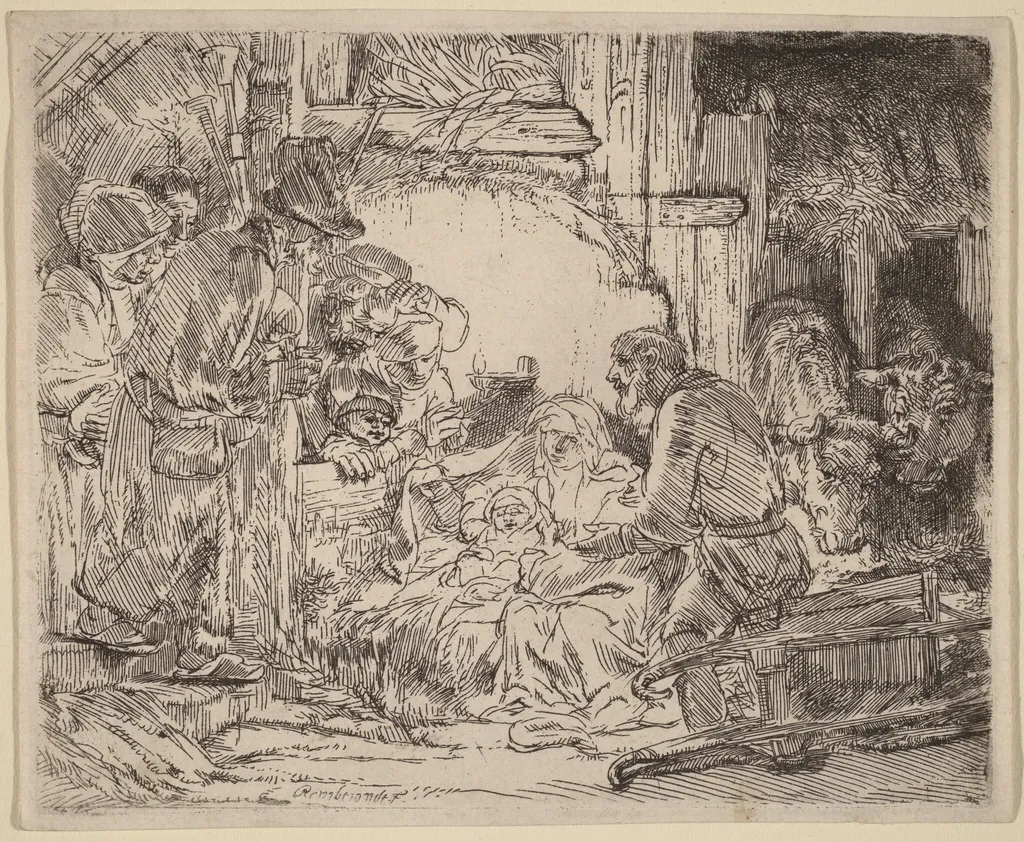
The Adoration of the Shepherds: with the Lamp is an ink print by the Baroque artist Rembrandt. It dates from 1654 and is held in the collection of the National Gallery of Art.
About this work
Overview
Rembrandt’s print titled *The Adoration of the Shepherds: with the Lamp* dates from around 1654. Executed as an etching, the work captures a nocturnal gathering of figures around the infant Christ, illuminated by a single lantern held aloft. The composition is rendered entirely in line and tone, without any applied colour.
Subject & Meaning
The scene portrays the biblical episode in which shepherds, drawn to the newborn Messiah, kneel and stand in reverent attendance. The presence of a lamp emphasizes the theme of divine light breaking into darkness, while the crowded arrangement conveys a sense of communal wonder and humility.
Technique & Style
Rembrandt employed traditional etching methods, using acid‑bitten lines on copper. Where the biting proved insufficient, he reinforced the image with a burin, adding sharper, incised strokes. The resulting marks are brisk and expressive, creating a textured surface that suggests movement and immediacy despite the static subject.
History & Provenance
The print belongs to the later period of Rembrandt’s career, a time when he frequently revisited religious subjects in print form. It is catalogued among his mid‑17th‑century works and has circulated in various collections, though specific ownership details remain limited.
Context
Created during a phase when Rembrandt explored the dramatic potential of chiaroscuro in printmaking, the work reflects his interest in rendering light sources within a monochrome medium. The nocturnal setting aligns with contemporary Dutch devotional art that emphasized intimate, emotionally charged biblical moments.
Legacy
Although not as widely reproduced as some of Rembrandt’s other prints, this etching illustrates his mastery of line and his capacity to convey narrative depth without colour. It continues to be studied for its technical ingenuity and its contribution to the evolution of narrative printmaking in the seventeenth century.
Artist & collection
Artist
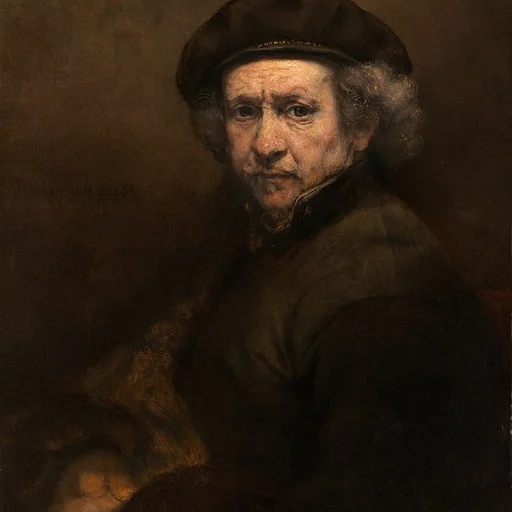
Rembrandt Harmenszoon van Rijn (15 July 1606 – 4 October 1669), known mononymously as Rembrandt, was a Dutch Golden Age painter, printmaker, and draughtsman.

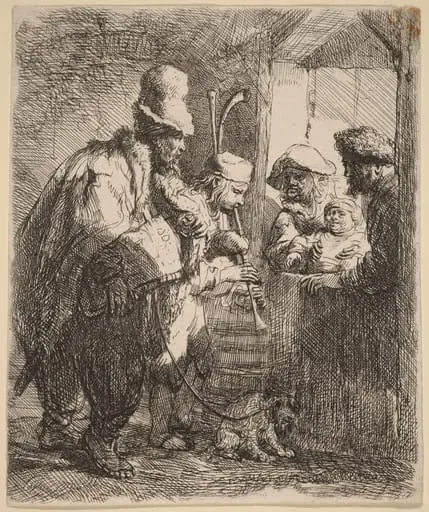 The Strolling Musicians
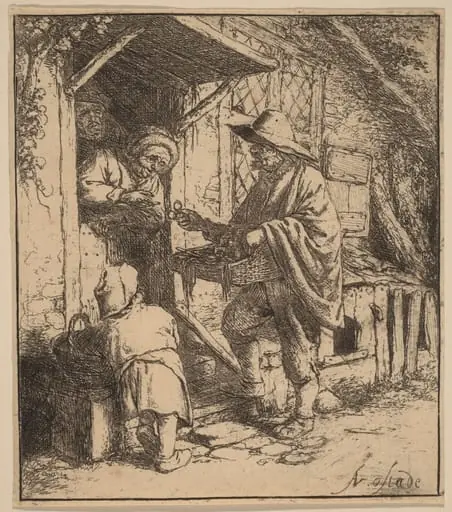 Street Vendor Selling Spectacles at the Door
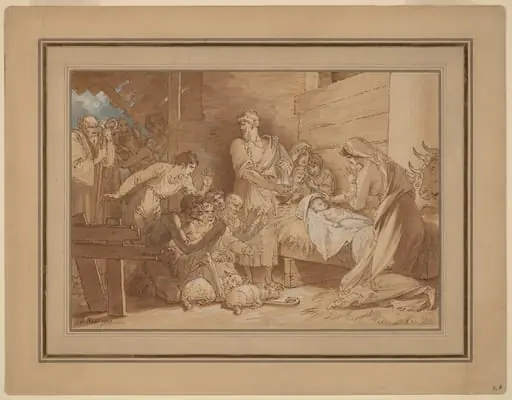 The Adoration of the Shepherds
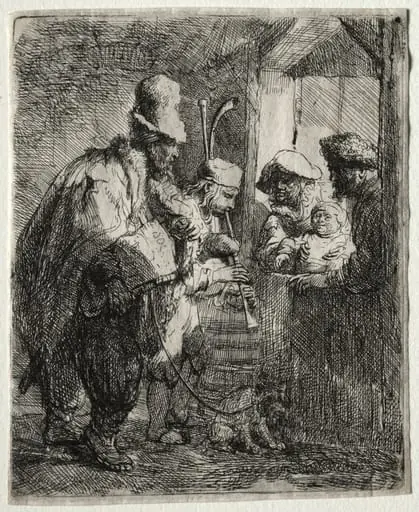 The Strolling Musicians
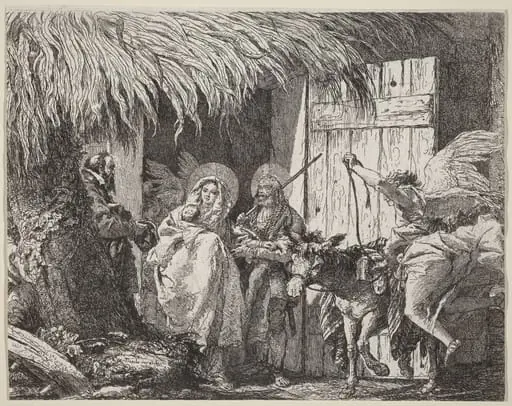 Joseph and Mary Prepare to Leave
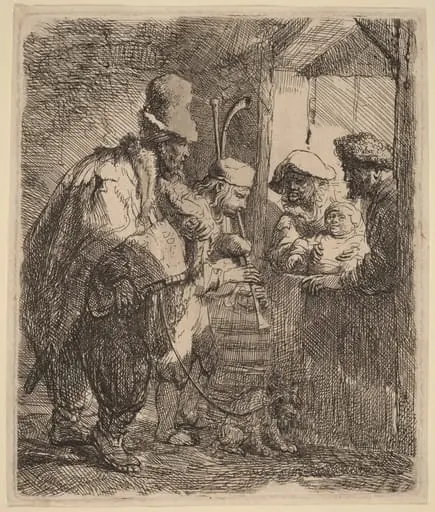 The Strolling Musicians
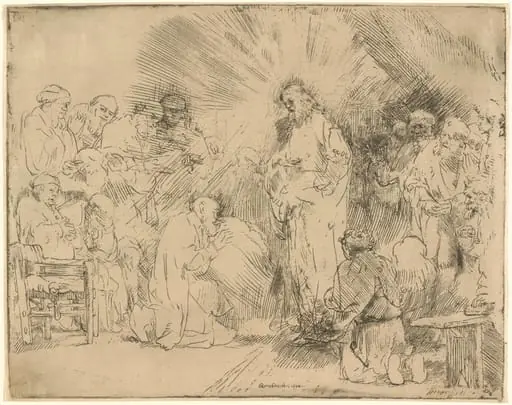 Christ Appearing to the Apostles
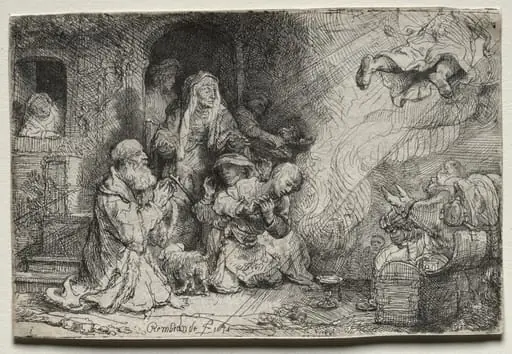 The Angel Departing from the Family of Tobit
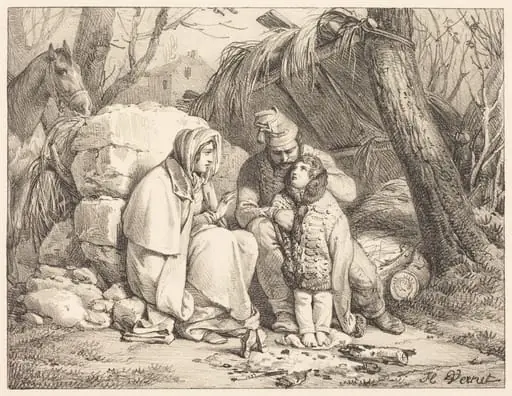 Soldier's Family Encamped
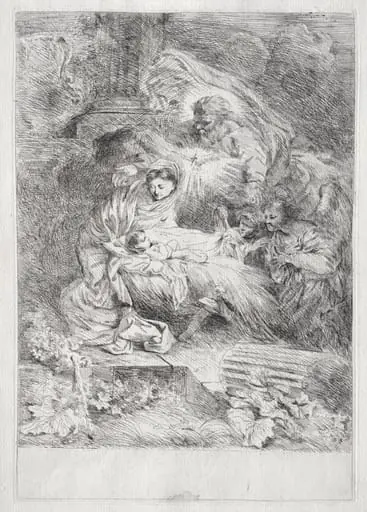 The Nativity with God the Father and the Holy Spirit
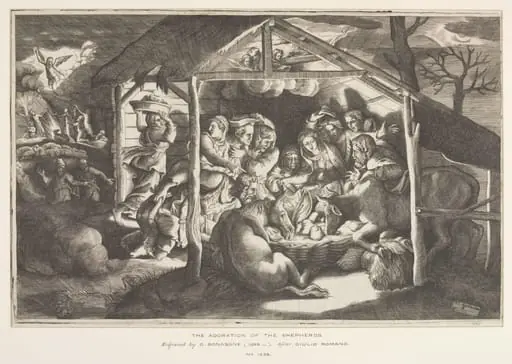 The Adoration of the Shepherds
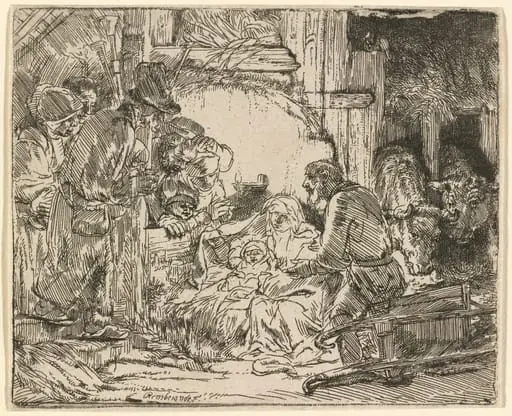 The Adoration of the Shepherds: with the Lamp