Artwork
Landscape with a Square Tower
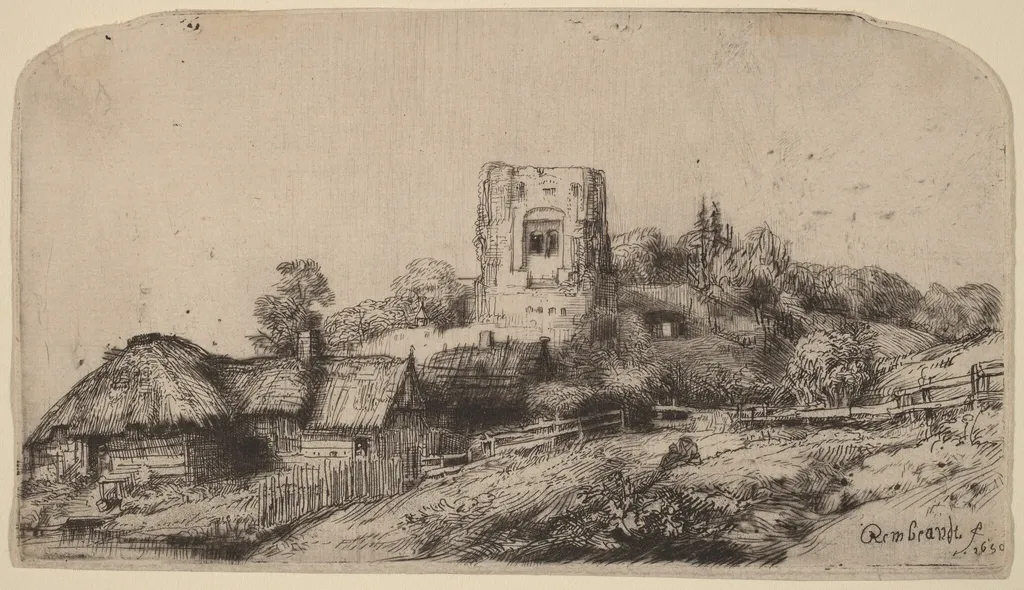
Landscape with a Square Tower is an ink print by the Baroque artist Rembrandt. It dates from 1650 and is held in the collection of the National Gallery of Art.
About this work
Overview
Created in 1650, this print by Rembrandt van Rijn combines etching and drypoint to depict a tranquil rural scene. The composition centers on a modest village of thatched-roof dwellings set against rolling hills, while a prominent square tower with arched windows rises in the distance. A solitary figure is positioned in the lower right, emphasizing the expansive landscape.
Subject & Meaning
The work presents an everyday countryside, highlighting the relationship between human habitation and the natural environment. The modest scale of the figure against the broad terrain suggests a contemplative view of daily life, while the tower, isolated among trees, may serve as a focal point that balances the composition and draws the eye toward the horizon.
Technique & Style
Rembrandt employed both etching and drypoint, allowing for a range of line qualities—from delicate, sketch‑like strokes to deeper, richer burr lines. This dual approach creates subtle variations in light and shadow, giving the scene a soft, atmospheric quality that blurs the boundary between precise detail and impressionistic suggestion.
History & Provenance
The print belongs to Rembrandt’s prolific series of landscape works produced in the mid‑seventeenth century, a period when he explored subjects beyond portraiture and biblical narratives. While specific ownership records are limited, the piece is documented among his printed oeuvre and has been cited in catalogues of his etchings.
Artist & collection
Artist
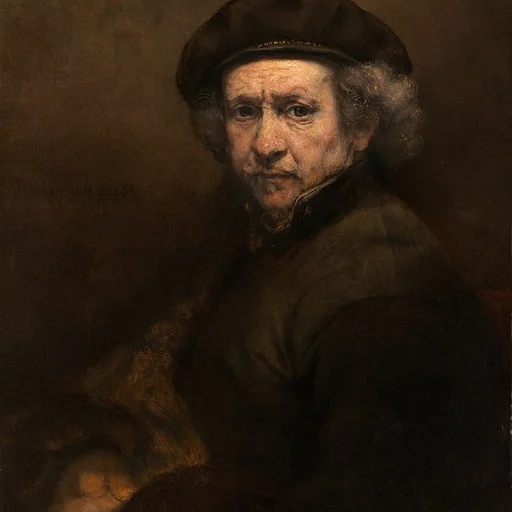
Rembrandt Harmenszoon van Rijn (15 July 1606 – 4 October 1669), known mononymously as Rembrandt, was a Dutch Golden Age painter, printmaker, and draughtsman.


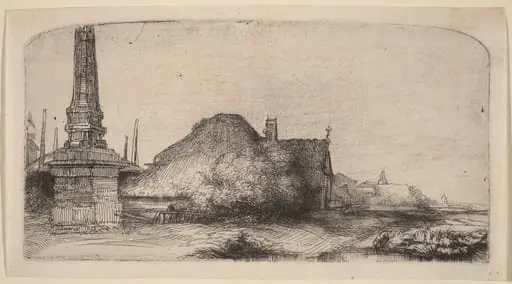 Landscape with an Obelisk
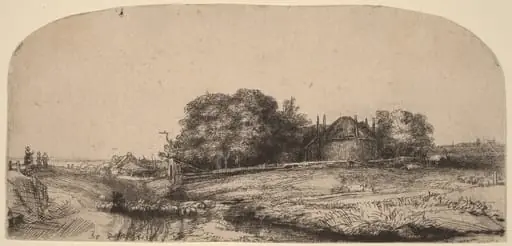 Landscape with a Hay Barn and a Flock of Sheep
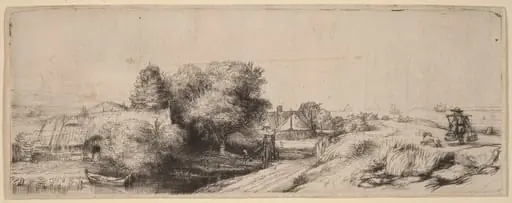 Landscape with a Milkman
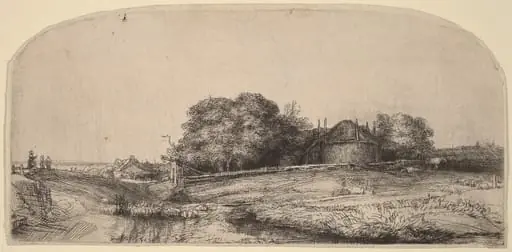 Landscape with a Hay Barn and a Flock of Sheep
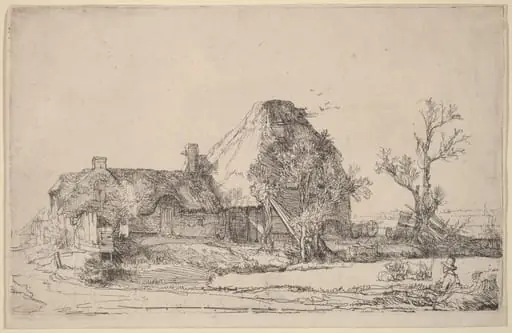 Cottages and Farm Buildings with a Man Sketching
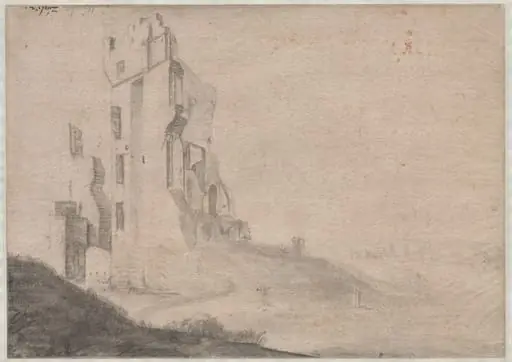 Ruin of the huis Ter Kleef near Haarlem
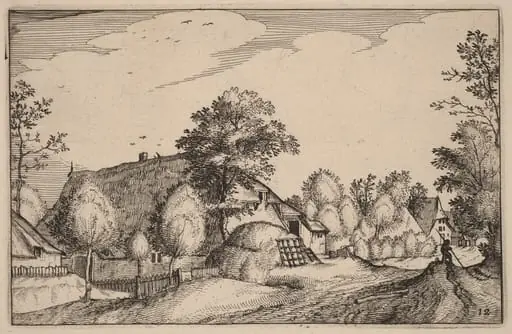 Village Road
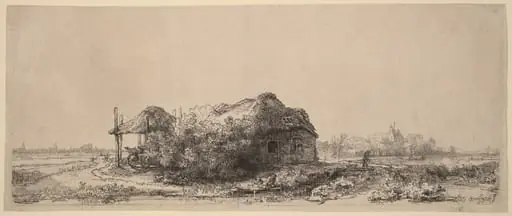 Landscape with a Cottage and Hay Barn: Oblong
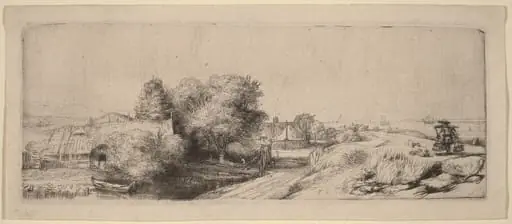 Landscape with a Milkman
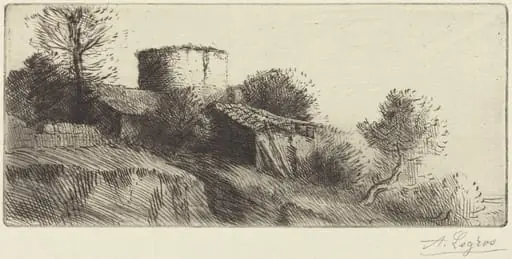 Pigeon Tower (La tour aux pigeons)