Artwork
Landscape with Three Gabled Cottages beside a Road
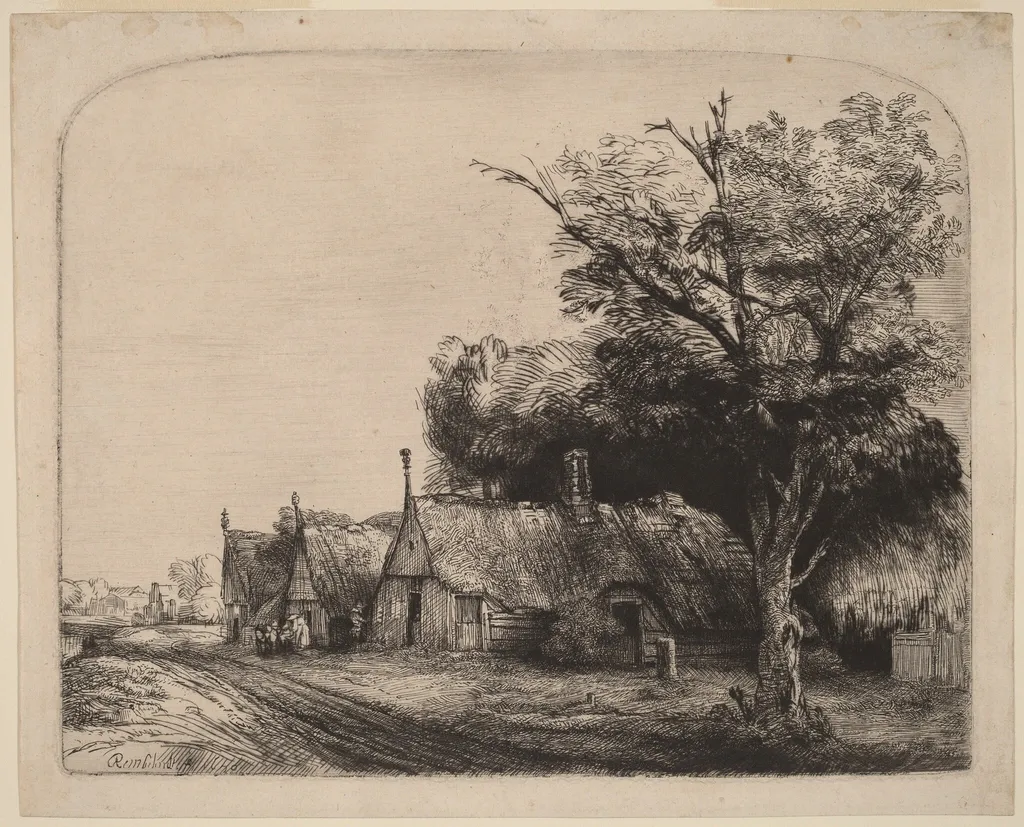
Landscape with Three Gabled Cottages beside a Road is an ink print by the Baroque artist Rembrandt. It dates from 1650 and is held in the collection of the National Gallery of Art.
About this work
Overview
Landscape with Three Gabled Cottages beside a Road is a 1650 etching and drypoint print by Rembrandt van Rijn, depicting a serene rural scene.
Subject & Meaning
The print portrays a tranquil village setting with three thatched-roof cottages along a dirt road, inhabited by a few pedestrians, and dominated by a prominent, intricately detailed tree in the foreground, its shadows cast across the ground.
Technique & Style
Rembrandt achieved the work's textured, detailed appearance through etching and drypoint techniques, evident in the fine lines rendering the tree's bark, the cottages' thatched roofs, and the subtle play of shadows.
History & Provenance
Created in 1650, specific provenance details for this print are not provided in the available information.
Context
This etching reflects Rembrandt's exploration of Dutch countryside themes, characteristic of 17th-century Dutch Golden Age art, where everyday landscapes were often elevated to works of contemplative beauty.
Legacy
As part of Rembrandt's etched oeuvre, Landscape with Three Gabled Cottages beside a Road contributes to the artist's enduring influence on landscape and printmaking traditions.
Artist & collection
Artist
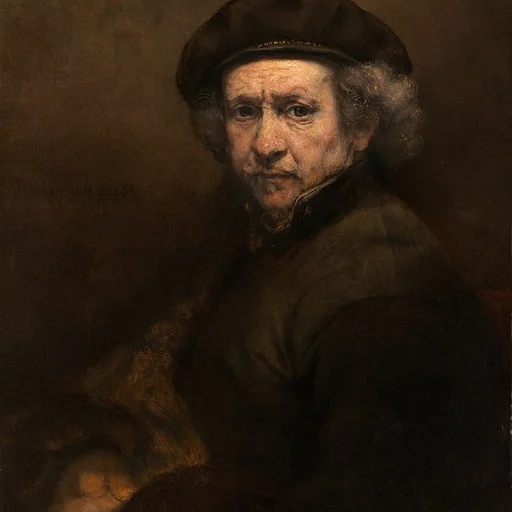
Rembrandt Harmenszoon van Rijn (15 July 1606 – 4 October 1669), known mononymously as Rembrandt, was a Dutch Golden Age painter, printmaker, and draughtsman.

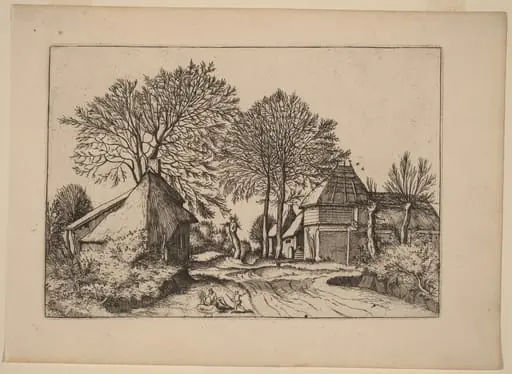 Road with Barn and Cottages
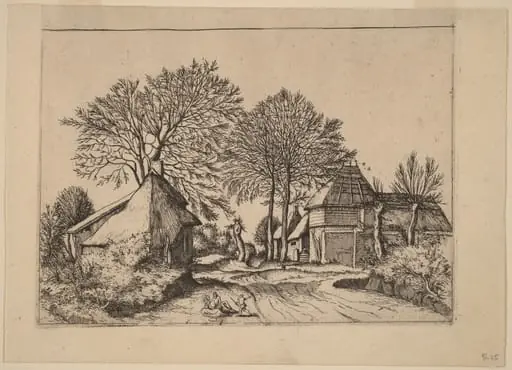 Road with Barn and Cottages
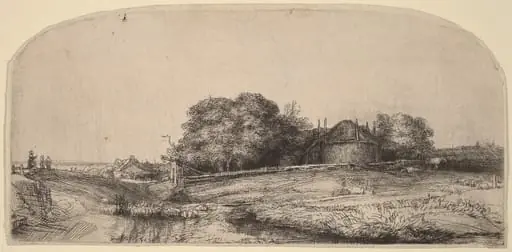 Landscape with a Hay Barn and a Flock of Sheep
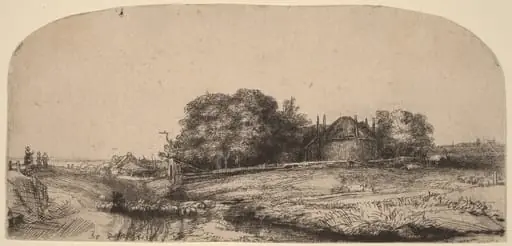 Landscape with a Hay Barn and a Flock of Sheep
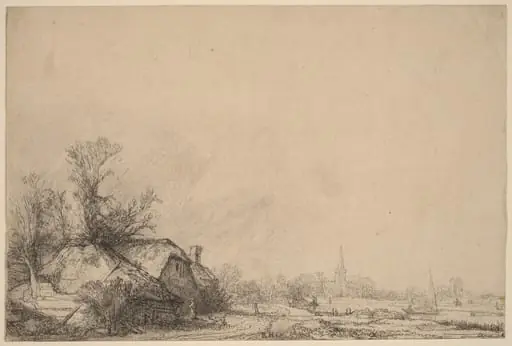 Cottage beside a Canal
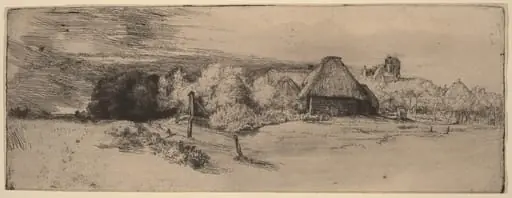 Landscape with Trees, Farm Buildings and a Tower
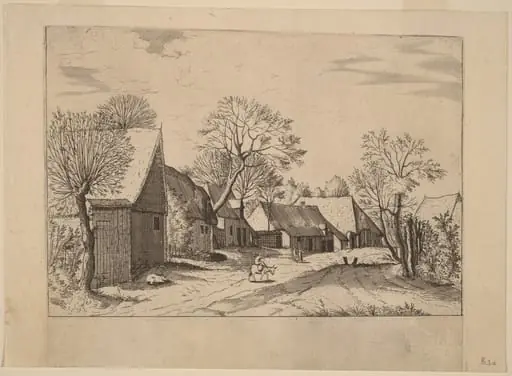 Farms and Shed
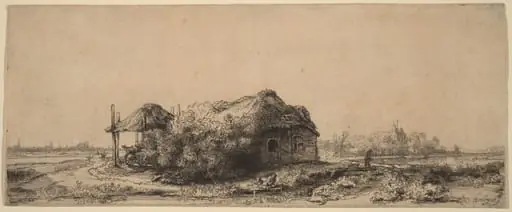 Landscape with a Cottage and Hay Barn: Oblong
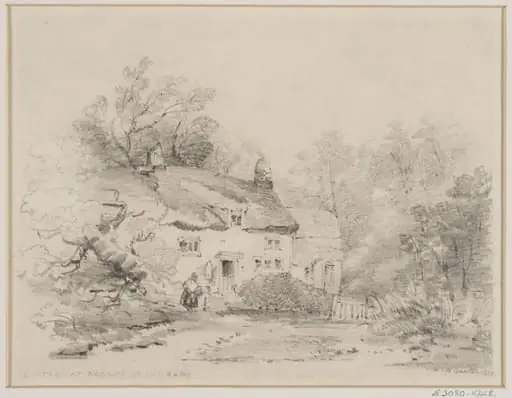 Cottage at Scalby, nr. Scarborough
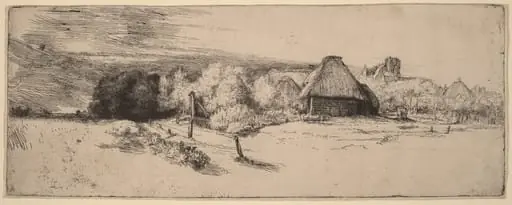 Landscape with Trees, Farm Buildings and a Tower