Artwork
Consecration of St. Nicholas
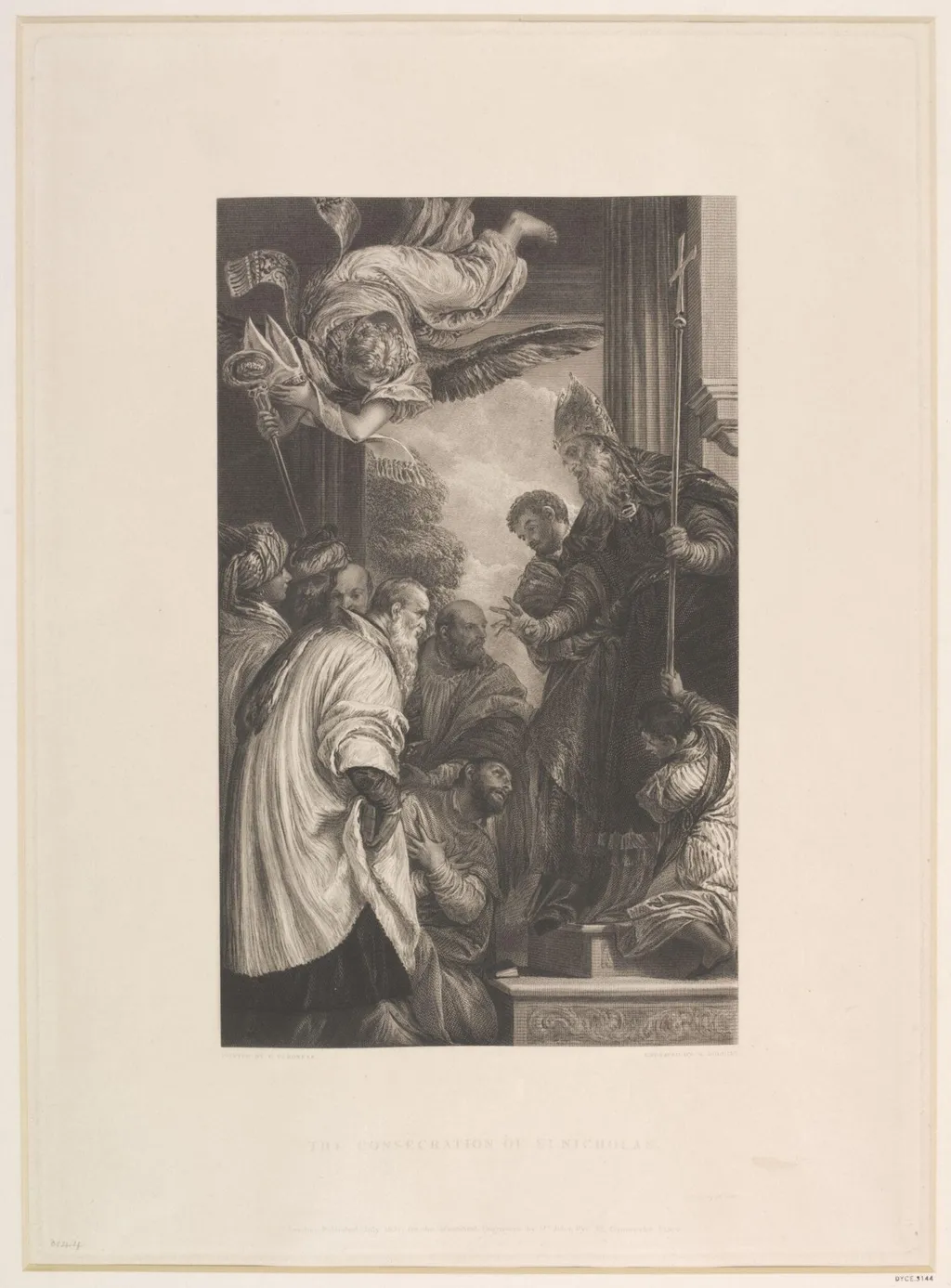
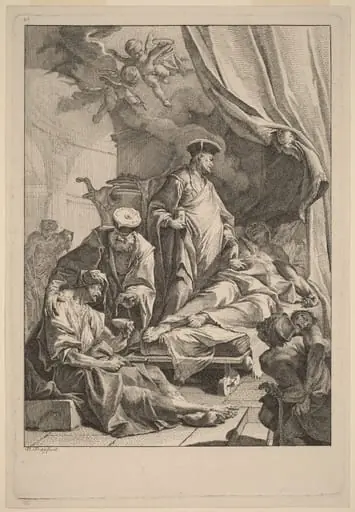
Consecration of St. Nicholas is a print by the Romanticist artist Richard Golding. It dates from 1800 and is held in the collection of the Victoria and Albert Museum. This print reproduces a scene from Paolo Veronese’s painting depicting the consecration of St.
About this work
Overview
The composition captures a ceremonial moment in which a religious figure is formally installed into his ecclesiastical role.
This print reproduces a scene from Paolo Veronese’s painting depicting the consecration of St. Nicholas, a 4th-century bishop revered for his piety and miracles. The composition captures a ceremonial moment in which a religious figure is formally installed into his ecclesiastical role. The print, executed on paper, translates Veronese’s oil painting into a graphic medium, preserving its hierarchical arrangement and solemn tone while adapting its visual language for wider dissemination.
Subject & Meaning
The scene illustrates the ritual investiture of St. Nicholas, likely by a higher church authority, as indicated by the staff and book held by central figures. The gathering of robed attendees underscores the communal recognition of sacred authority. The upward gaze of the onlookers reinforces the spiritual significance of the moment, framing the act not merely as administrative but as divinely sanctioned. The setting suggests a celestial or heavenly dimension, aligning the event with sacred tradition.
Technique & Style
The print employs strong contrasts of light and dark to emphasize the central figure, echoing Veronese’s use of chiaroscuro. Atmospheric depth is achieved through layered clouds and architectural elements receding into the background, lending the scene a sense of spatial grandeur. Figures are rendered with restrained detail, prioritizing compositional clarity over individual expression, consistent with reproductive print practices of the period.
History & Provenance
The original painting by Veronese was held in the National Gallery, London, and served as the model for this print. While the exact date and maker of the print are not specified, its existence reflects the 18th- or 19th-century practice of disseminating religious imagery through engraved or etched reproductions. Such prints were often used for private devotion or educational purposes in churches and monasteries.
Context
During the Renaissance and later centuries, depictions of saintly consecrations reinforced ecclesiastical authority and doctrinal continuity. Veronese’s composition, rooted in Venetian grandeur, was adapted for print to reach audiences beyond elite collectors. The emphasis on ritual and hierarchy mirrored broader societal values, where religious institutions played a central role in public life and moral order.
Legacy
This print preserves a visual record of how religious narratives were translated across media and audiences. Though not an original work, it contributed to the circulation of Veronese’s imagery and the enduring iconography of St. Nicholas. Its existence highlights the role of reproductive prints in shaping devotional practices and maintaining visual continuity within Christian traditions over centuries.
Artist & collection
Artist
Richard Golding or Goldynge was an Irish judge who was twice Chief Baron of the Irish Exchequer. The Golding family were notable for producing three judges of the same Court in two generations.

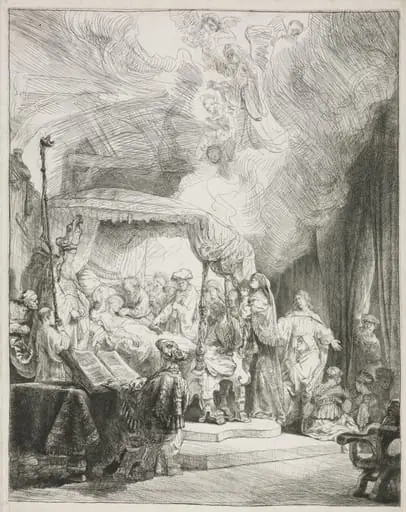 Death of the Virgin
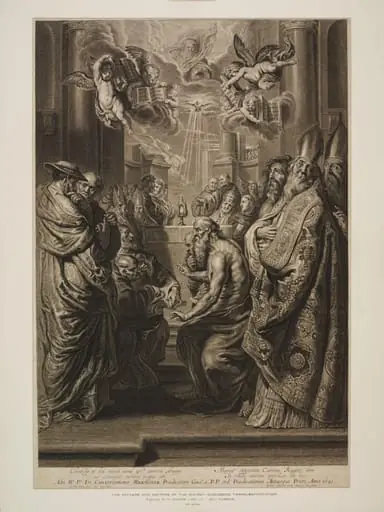 Untitled
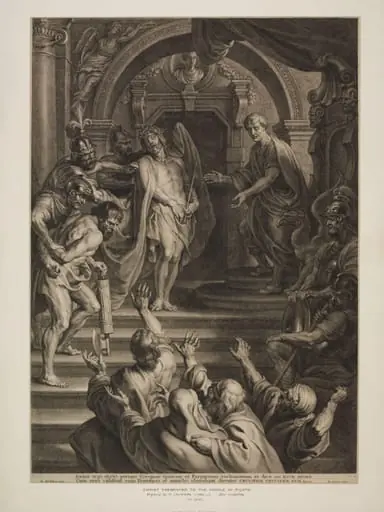 Jesus Christ before Pontias Pilate
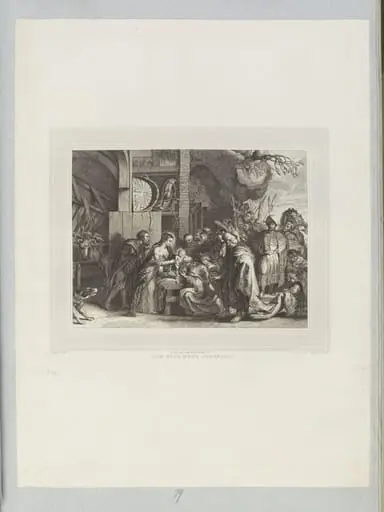 The Wise Men's Offering
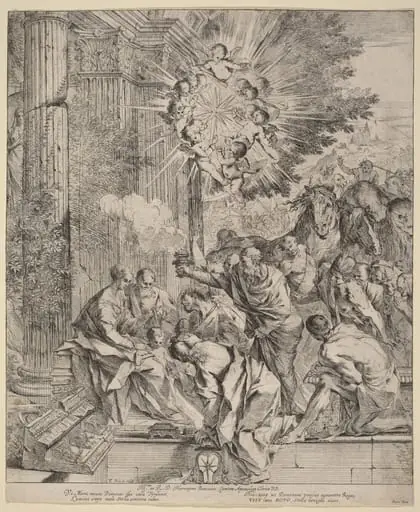 The Adoration of the Magi
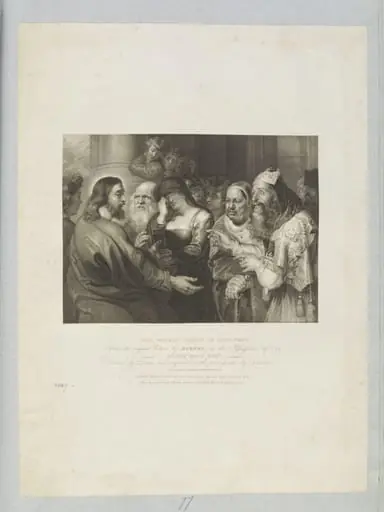 The Woman Taken in Adultery
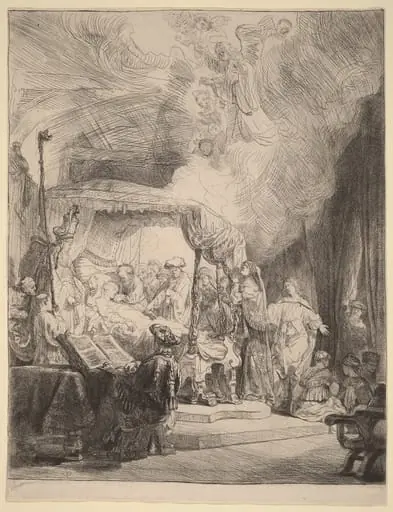 The Death of the Virgin
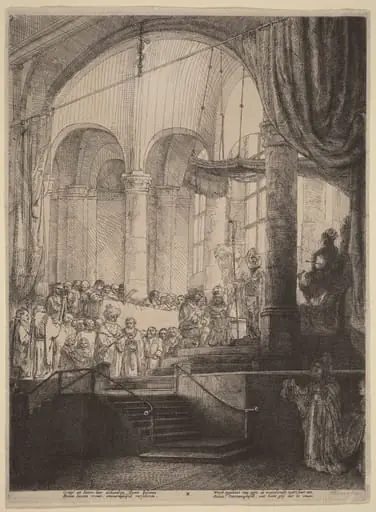 Medea, or the Marriage of Jason and Creusa
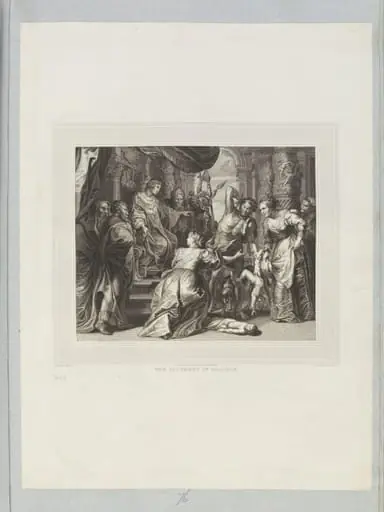 Judgment of Solomon
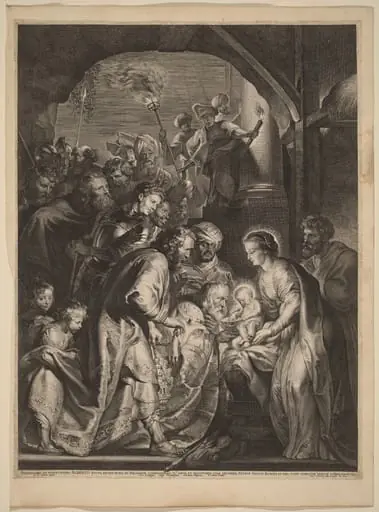 The Adoration of the Magi
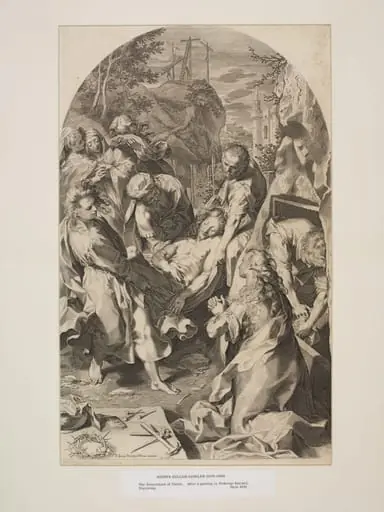 The Entombment of Christ
 Saints Cosmas and Damian Caring for the Sick