Artwork
The Good Samaritan (Le bon samaritain)
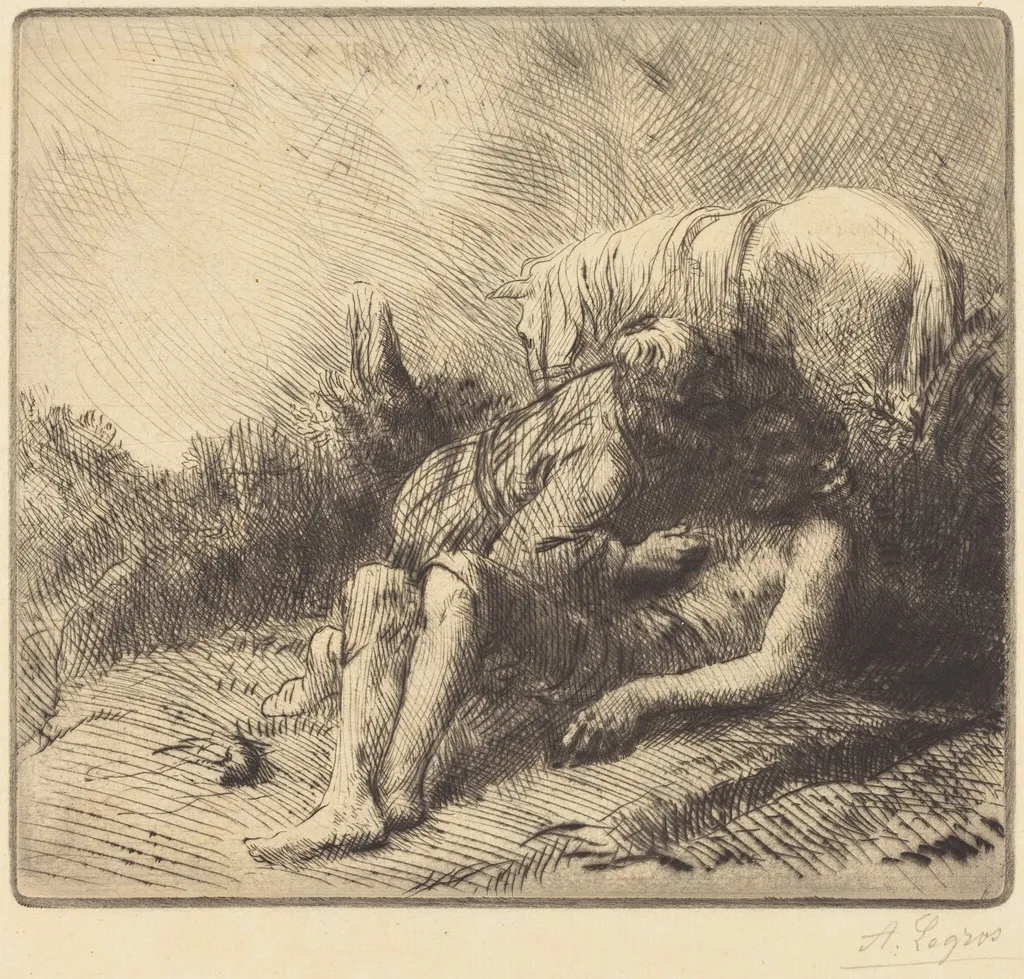
The Good Samaritan (Le bon samaritain) is an ink print by the Romanticist artist Alphonse Legros. It dates from 1874 and is held in the collection of the National Gallery of Art.
About this work
Overview
The Good Samaritan (Le bon samaritain), an 1874 etching and drypoint print by Alphonse Legros, depicts a poignant scene from the biblical parable of the same name. Characterized by expressive lines and rich tonal contrasts, the work exemplifies Legros's contribution to the British etching revival.
Subject & Meaning
The print captures a moment of compassion: a kneeling figure assists a wounded man, bandaged and lying on the ground, set against a backdrop suggestive of a natural environment. The scene conveys themes of altruism and aid, rooted in its biblical inspiration.
Technique & Style
Legros employed etching and drypoint to achieve a detailed, textured composition. The predominant use of dark colors, coupled with intricate lines and shadows, enhances the emotional depth and intimacy of the encounter.
History & Provenance
Created in 1874, The Good Samaritan reflects Legros's dual role in promoting printmaking as both an artistic practice and an educational tool, aligning with his influence in the British etching revival movement.
Context
As a French artist based in Britain, Legros's work bridged continental and British artistic traditions, contributing to the revitalization of etching in 19th-century Britain.
Legacy
The Good Samaritan is part of Legros's broader oeuvre that encouraged the appreciation and technical exploration of printmaking, influencing subsequent generations of artists and print enthusiasts.
Artist & collection

Artist
Alphonse Legros (French pronunciation: ; 8 May 1837 – 8 December 1911) was a French, later British, painter, etcher, sculptor, and medallist.

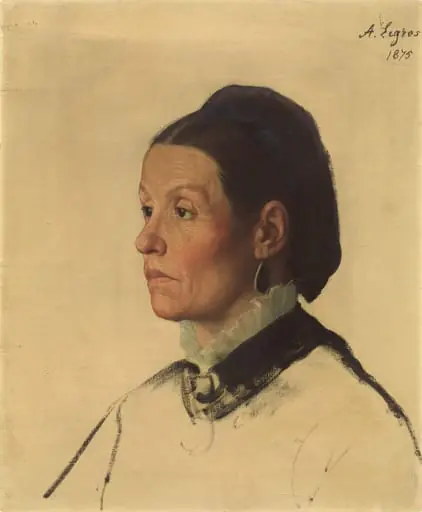
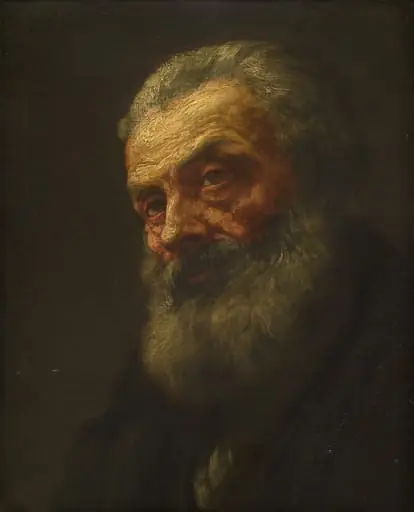
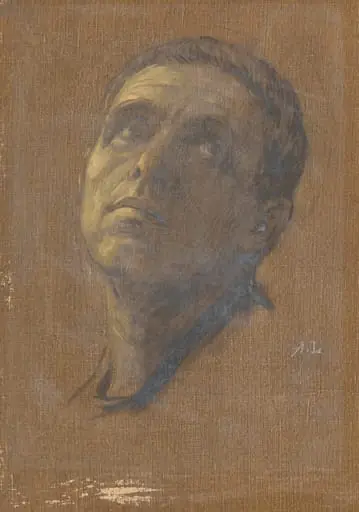
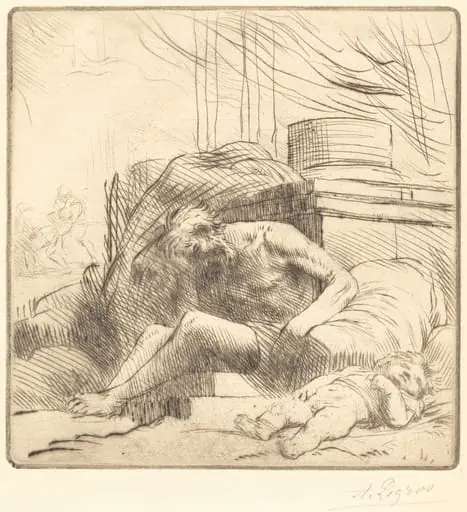 Victim of a Fire (Victime d'un incendie)
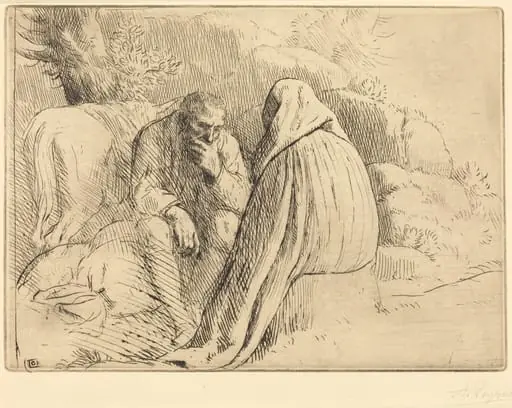 Bohemien Encampment (Campement de bohemiens)
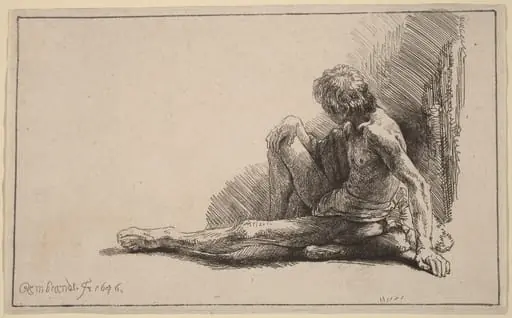 Nude Man Seated on the Ground with One Leg Extended
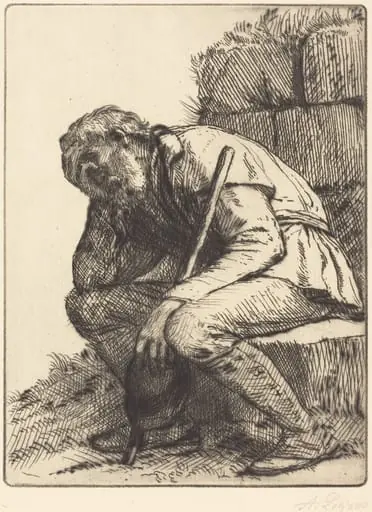 Desperate Man (Le desespere)
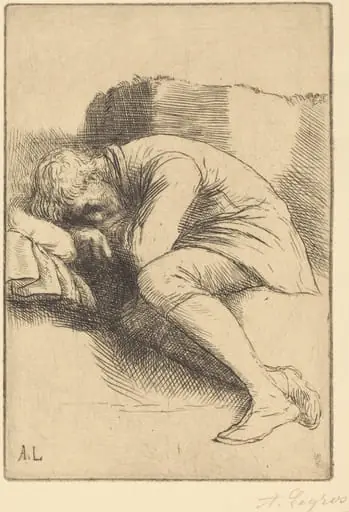 Sleeper (Un dormeur)
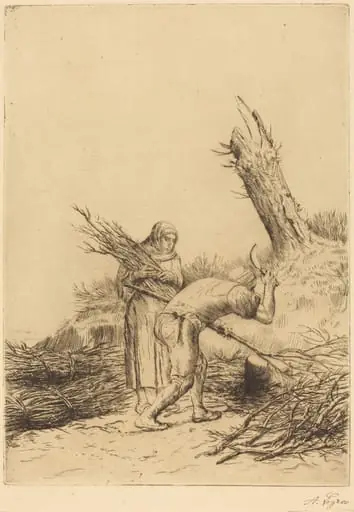 Fagot-makers (Les faiseurs de fagots)
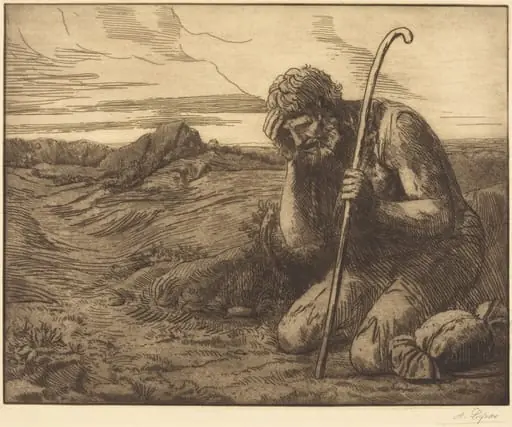 The Prodigal Son, 6th plate (L'enfant prodigue)
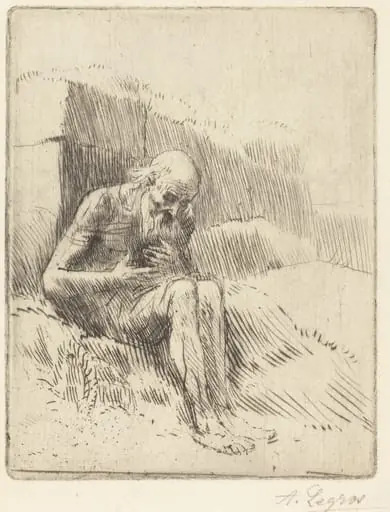 Job, 2nd plate
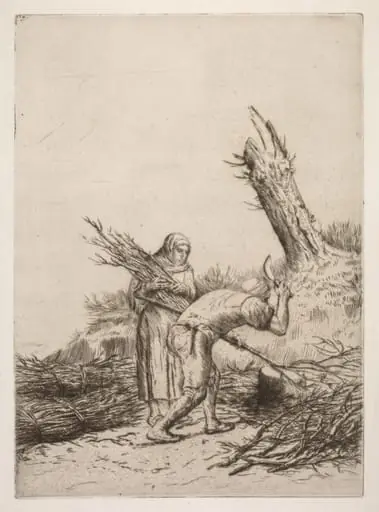 Les faiseurs de fagots
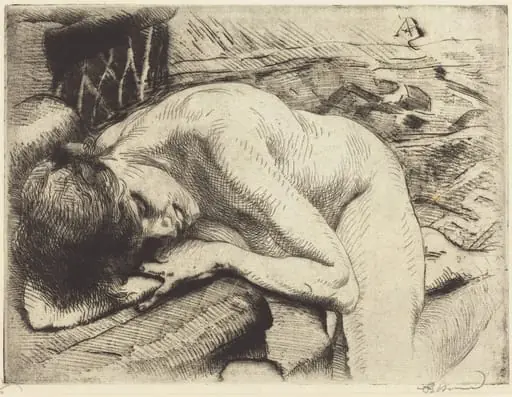 Model Asleep on the Floor (Le modèle endormi à terre)