Artwork
Saint Jerome beside a Pollard Willow
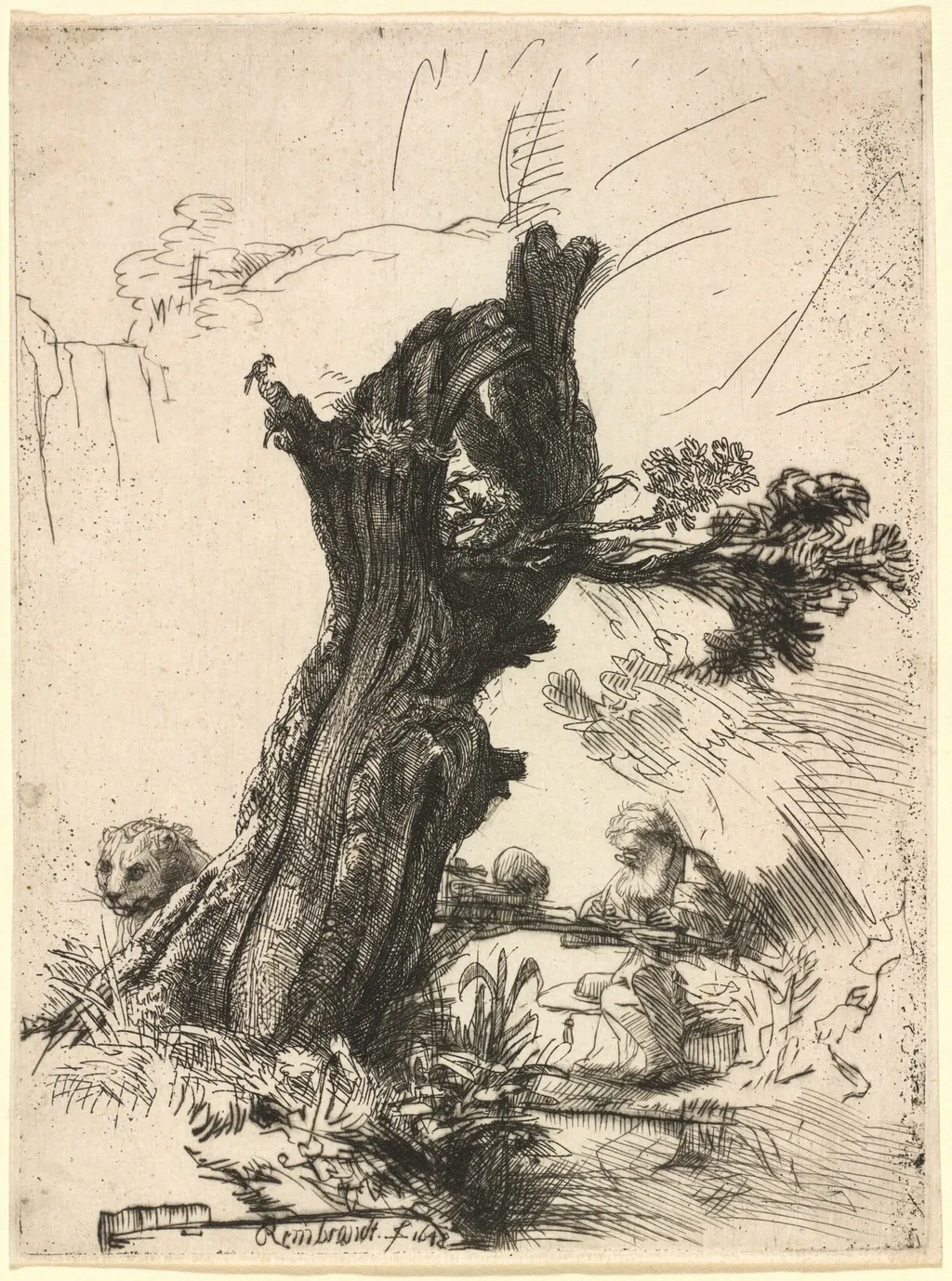
Saint Jerome beside a Pollard Willow is an ink print by the Baroque artist Rembrandt. It dates from 1648 and is held in the collection of the National Gallery of Art.
About this work
Overview
Created in 1648, this print by Rembrandt van Rijn combines etching and drypoint to depict Saint Jerome in a contemplative moment beside a pollard willow. The work belongs to a series of religious subjects rendered with intimate immediacy, emphasizing texture and mood over formal precision. Its sketch-like quality reflects Rembrandt’s interest in capturing transient states of thought and solitude.
Subject & Meaning
The scene evokes Jerome’s scholarly solitude in his desert retreat, translating theological devotion into a quiet, human moment.
Saint Jerome, identifiable by his cardinal’s robe and beard, is shown seated on a rock, gazing downward in quiet reflection. The gnarled pollard willow above him, with its twisted limbs, may symbolize endurance or spiritual struggle. A small dog rests at his side, a traditional emblem of loyalty and vigilance. The scene evokes Jerome’s scholarly solitude in his desert retreat, translating theological devotion into a quiet, human moment.
Technique & Style
Rembrandt employed etching for fine, controlled lines and drypoint for richer, burr-heavy strokes that catch the light. The tree’s bark is rendered with jagged, overlapping marks, while the foliage appears as delicate, floating clusters. The ground is suggested through loose, energetic lines, avoiding detail in favor of atmospheric suggestion. The result is a tactile, almost tactile surface that prioritizes emotional resonance over polished finish.
History & Provenance
The print was made during Rembrandt’s later years in Amsterdam, a period marked by personal hardship and artistic experimentation. It circulated among collectors and print enthusiasts, valued for its expressive depth rather than commercial appeal. Surviving impressions are held in major institutions, including the Rijksmuseum and the British Museum, with few known state variations.
Context
In the late 1640s, Rembrandt increasingly turned to intimate religious subjects, often depicting saints in moments of solitude rather than grand narrative. This shift coincided with his move away from large commissions toward personal, introspective works. The pollard willow, a common sight in Dutch landscapes, was reimagined here as a symbolic counterpart to human contemplation.
Legacy
This print exemplifies Rembrandt’s influence on the expressive potential of printmaking. His use of drypoint to create rich, velvety blacks and his willingness to leave areas unfinished inspired generations of artists to embrace imperfection as a vehicle for emotional truth. It remains a key example of how print could convey depth without grandeur.
Own this work as a print
Artist & collection
Artist
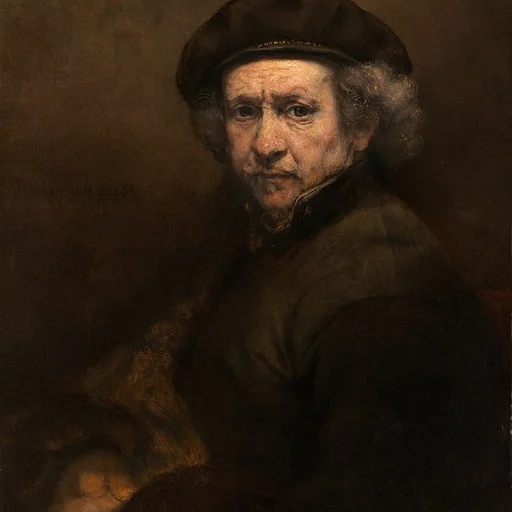
Rembrandt Harmenszoon van Rijn (15 July 1606 – 4 October 1669), known mononymously as Rembrandt, was a Dutch Golden Age painter, printmaker, and draughtsman.

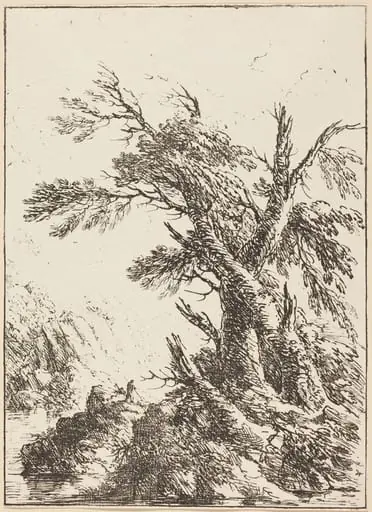 Landscape with Old Trees by Water
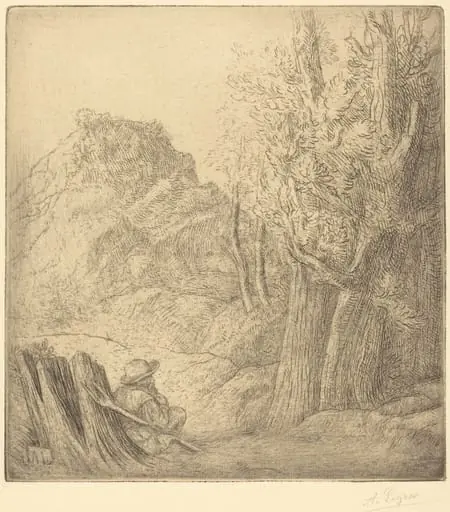 Old Village (Ville vieille)
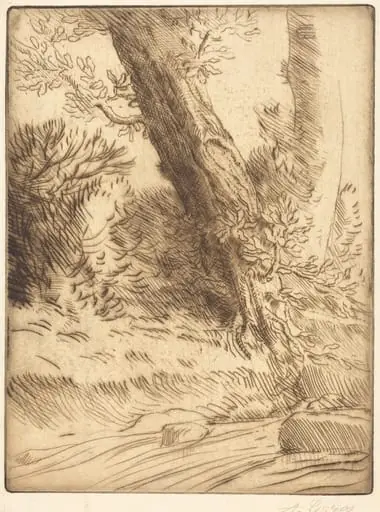 Edge of a Brook (Bord de ruisseau)
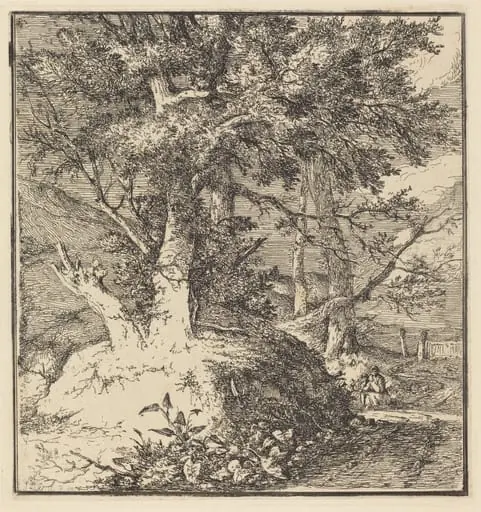 Tree on a Mound
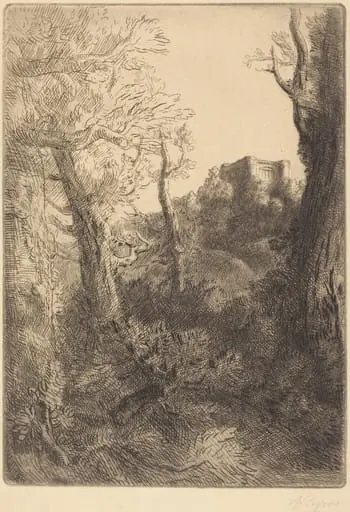 Landscape (Paysage)
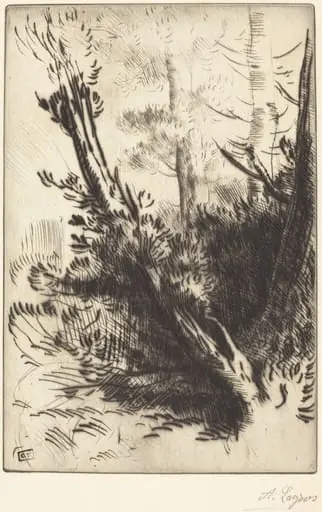 In the Woods (Dans les bois)
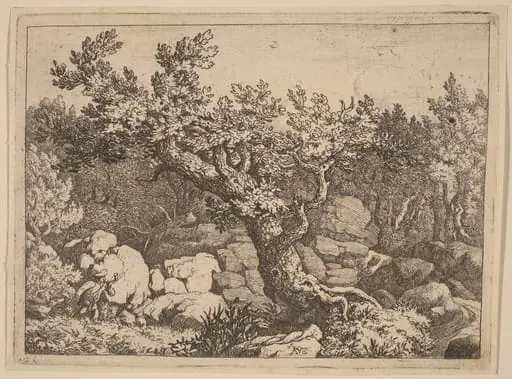 Sportsman near a Large Tree
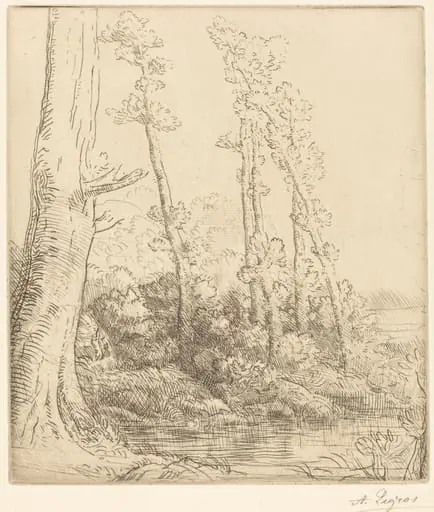 Little Pond (La petite mare)
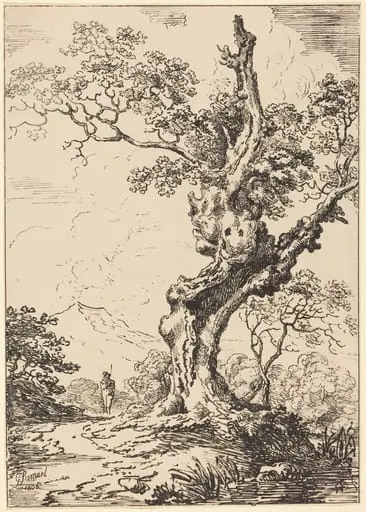 Study of an Old Oak Tree, Water on Right, a Man on Left
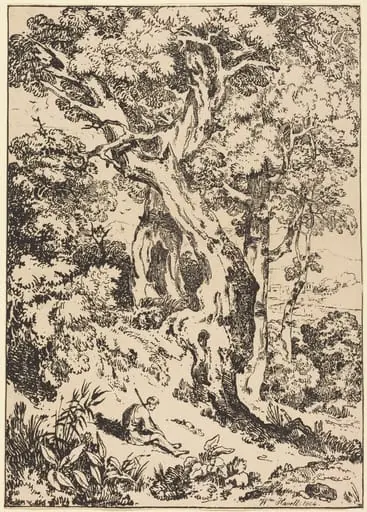 Study of Trees and Shrubs with Seated Figure
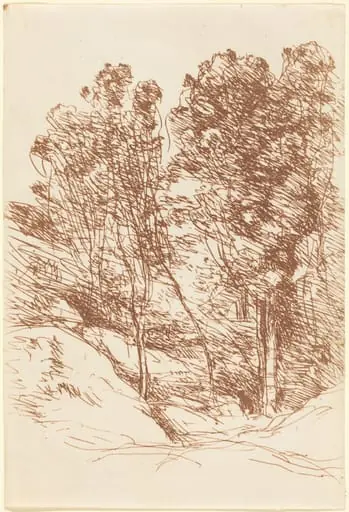 Souvenir of the Sole Valley (Souvenir de la Vallee de la Sole)
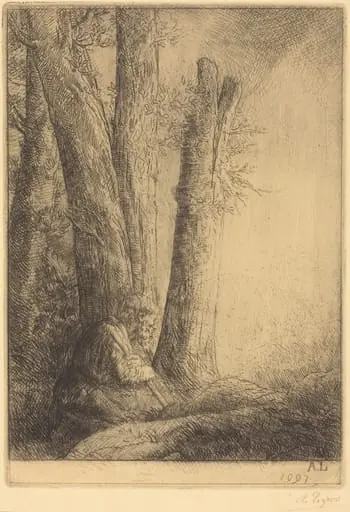 Study for the Prodigal Son (Etude pour L'enfant prodigue)