Artwork
Saint Jerome Reading in an Italian Landscape
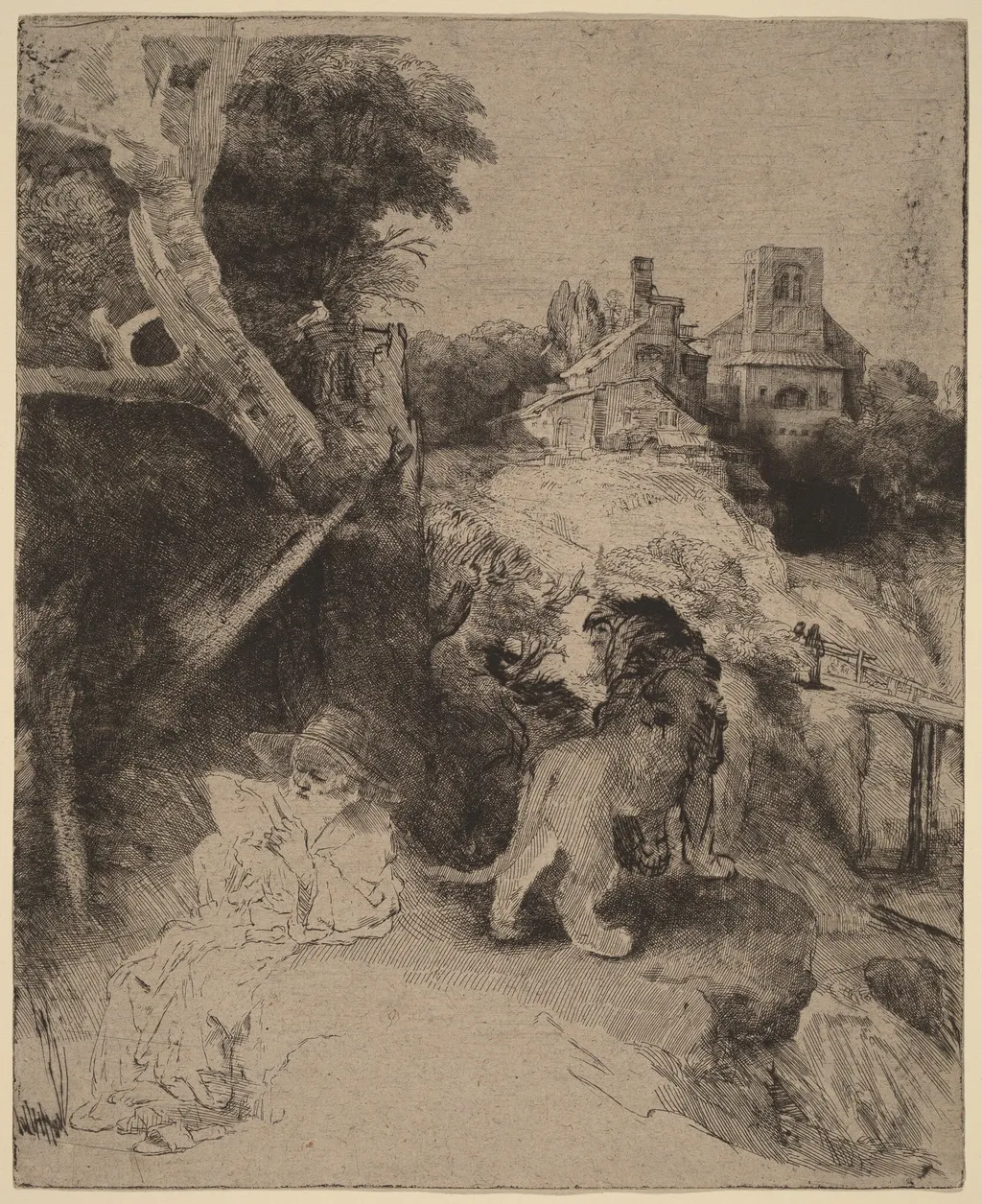
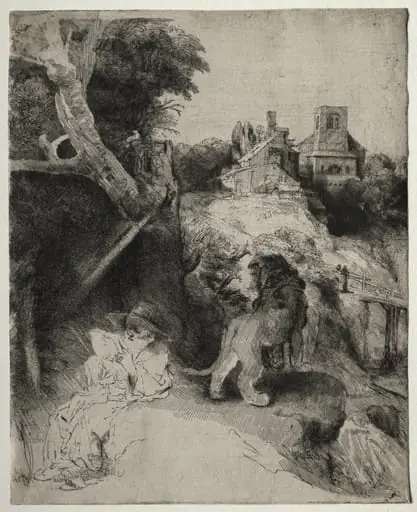
Saint Jerome Reading in an Italian Landscape is an ink print by the Baroque artist Rembrandt. It dates from 1653 and is held in the collection of the National Gallery of Art.
About this work
Overview
Created around 1653, this print by Rembrandt van Rijn combines etching, engraving and drypoint to portray Saint Jerome seated on a rock within an Italian countryside. The composition balances natural elements—trees, distant architecture and a lion at the saint’s feet—with the figure’s quiet study, producing a measured, contemplative atmosphere characteristic of the artist’s later period.
Subject & Meaning
The work presents the biblical scholar Saint Jerome absorbed in his translation work, his gaze fixed on a book while a lion, traditionally linked to his legend, rests nearby. The tranquil landscape and the saint’s calm demeanor suggest an idealized harmony between scholarly pursuit and the natural world, emphasizing themes of devotion and intellectual solitude.
Technique & Style
Rembrandt employed a layered approach, beginning with fine engraving lines, enriching the image through broader etching washes, and adding delicate drypoint marks for texture. This combination yields subtle tonal variations and a sense of depth, especially in the foliage and distant structures, while the crisp lines define the figure and the lion, exemplifying Baroque attention to detail and chiaroscuro effects.
History & Provenance
Attributed to Rembrandt’s workshop in the mid‑seventeenth century, the print reflects the artist’s interest in religious subjects rendered within landscape settings. Though specific ownership records are scarce, the piece is catalogued among Rembrandt’s known prints from the 1650s and is cited in scholarly inventories of his later graphic output.
Artist & collection
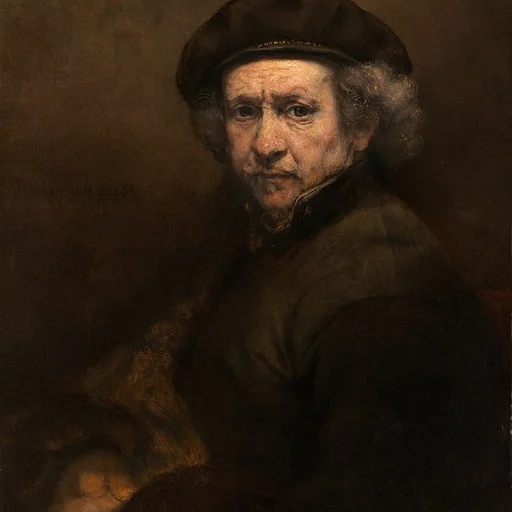
Artist
Rembrandt Harmenszoon van Rijn (15 July 1606 – 4 October 1669), known mononymously as Rembrandt, was a Dutch Golden Age painter, printmaker, and draughtsman.

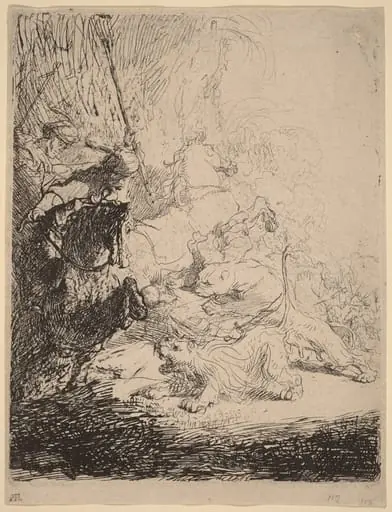 The Small Lion Hunt (with Two Lions)
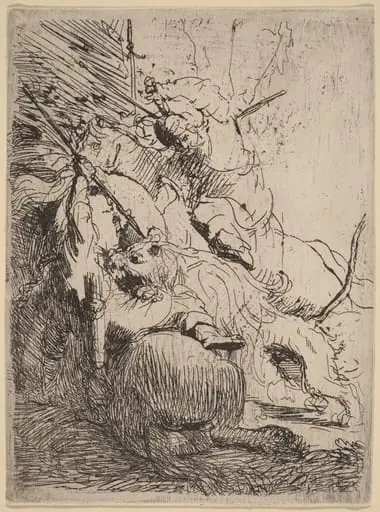 The Small Lion Hunt (with One Lion)
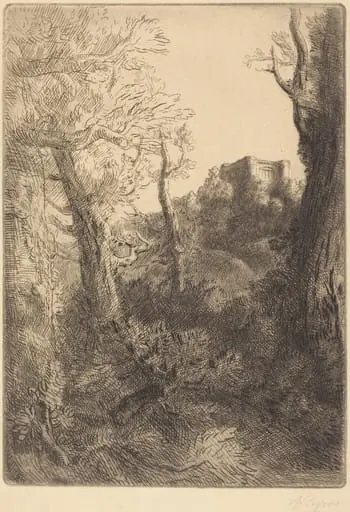 Landscape (Paysage)
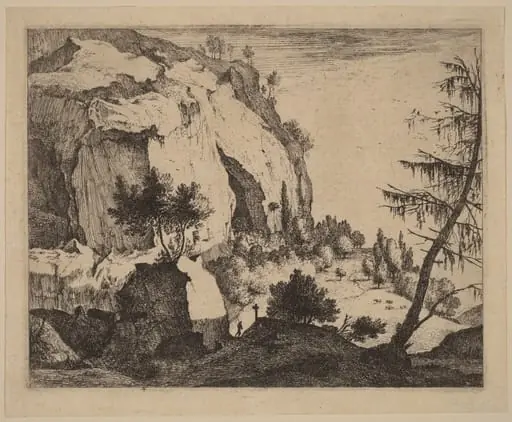 Rocky Landscape with Fir: pl.4
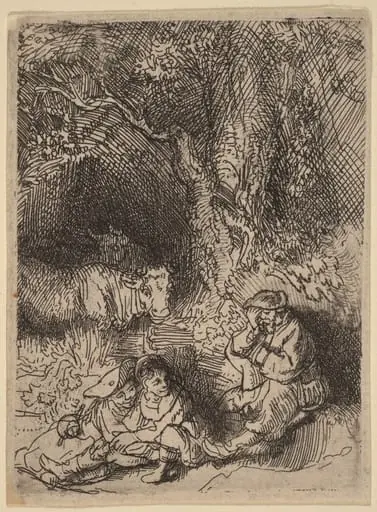 The Sleeping Herdsman
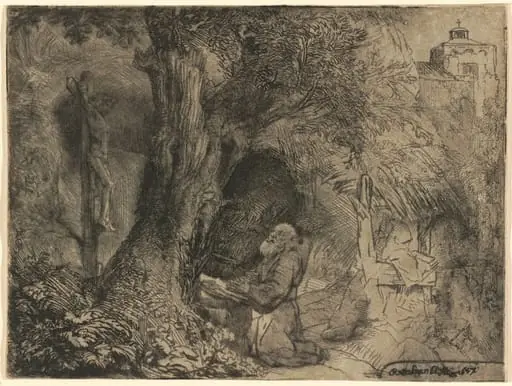 Saint Francis beneath a Tree Praying
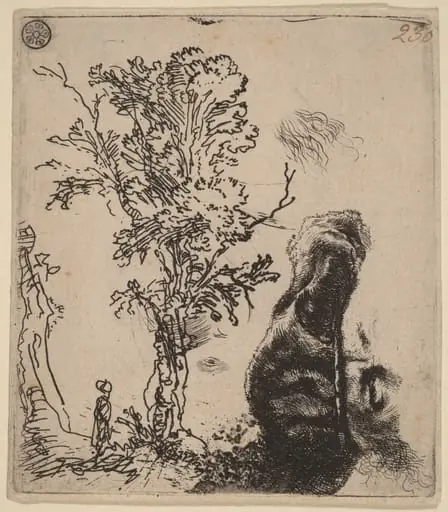 Sheet with Two Studies: a Tree, and the Upper Part of a Head of the Artist Wearing a Velvet Cap
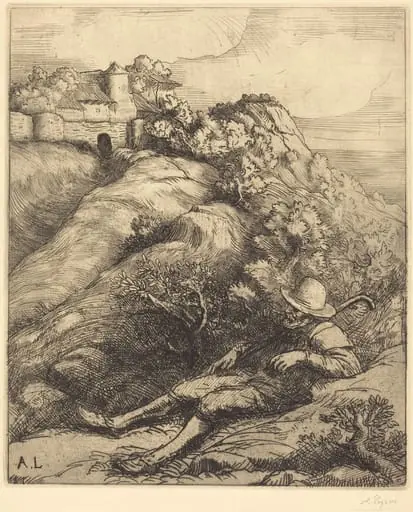 Sleeping Shepherd (Le repos du berger)
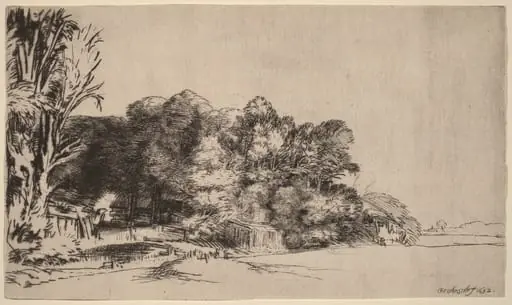 Clump of Trees with a Vista
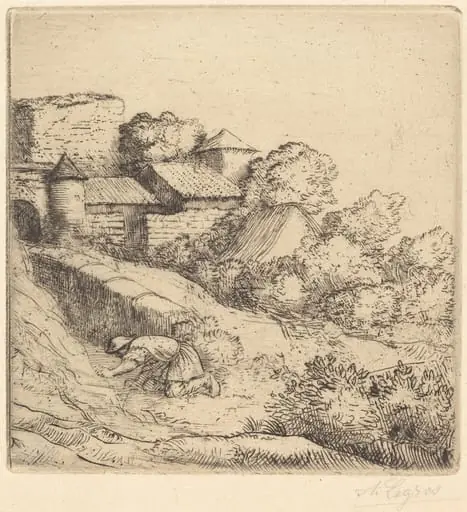 Little Burner of Grass (Le petit bruleur d'herbe)
 Ponte San Rocco at Tivoli
 St. Jerome Reading in an Italian Landscape